


Toothaches can leave you feeling miserable the whole day. If you happen to be in a painful situation during math class, while watching a new series, or just trying to take a nap, a sudden toothache will make wanting to do anything other than feel the pain impossible. But before you use drugs or contact the dentist in a panic, try this simple natural remedy that is quite effective: fennel oil for a toothache.
Yes, you heard that right — fennel. That crunchy, licorice-flavored vegetable that your grandma may love to put in her tea is one of the last things you would expect to have powerful analgesic properties against tooth pain. Actually, the essential oil that is derived from the seeds of the fennel is receiving more and more attention as a soft, herbal substitute for the use of harsh drugs.
For sure, if tooth pain has been haunting you for a while, and if your teeth have been decaying all the time, or even if you just don’t like your smile. Hollywood Smile is what you should go for, and it is professionally done by experts using the most recent technology in a classy, comfortable, and stress-free atmosphere. And Lema Dental Clinic in Istanbul, Turkey, is definitely the place.
What Makes Fennel Oil Effective Against Tooth Pain?

The good thing is that fennel oil is a completely natural product, but its soft smell should not challenge you. The oil is very rich in anethole, the substance which is considered a natural analgesic and repressor of inflammations. Consequently, it not only hides the pain but also helps to relax whatever entity is responsible for the pain. When one has an infected gum or a tooth in which the nerve is affected, applying fennel oil can be the way to get a large portion of the relief that you seek.
But the story is not where it ends: in addition to it all, fennel oil is equipped with antibacterial and antifungal properties, which means it is able to remove the bacteria that caused a toothache at the very place. Unlike synthetic products that numb everything, fennel oil does not just stop the pain, but also helps your body fight off the infection, thus being a smarter long-term move, especially if you are trying not to use antibiotics.
Also, it would not be good to forget another point that might be a reason for someone to use it: the fantastic aroma. Unlike the extremely strong and spicy clove oil, the oil from the sweet, light, and soothing fennel is like a breath of fresh herbal air.
Best Ways to Apply Fennel Oil to Aching Teeth
Is it true that you want to go and inquire about the miraculous effects of Fennel oil? Good! Fennel oil, like most essential oils, is very concentrated, and this means it is necessary to dilute it before using it on your gums or teeth. Wait a moment, it’s not right to just pour the oil in your mouth!
Procedure done by safest half: Shaking off one or two drops of natural oil of fennel with a teaspoon of liquid carrier like coconut oil, almond oil, or even olive oil. It should be mixed to the point that it forms a complete one. Then take a clean cotton swab or Q-tip, dip it directly into the affected area, and dab it. You can also use your fingertip — just make sure your hands are clean first!
One more option? Mouth rinsing: A drop of fennel oil is to be added to a small cup of lukewarm water, and then the solution is to be swirled in the mouth for 30 seconds. It behaves in a similar way to a natural mouthwash, but it is more comforting, antibacterial, and rejuvenating.
Regardless of the method you prefer, spit it out every time. Essential oils are for external use only. And keep in mind, a little is a lot!
Safety Tips When Using Fennel Oil in Your Mouth
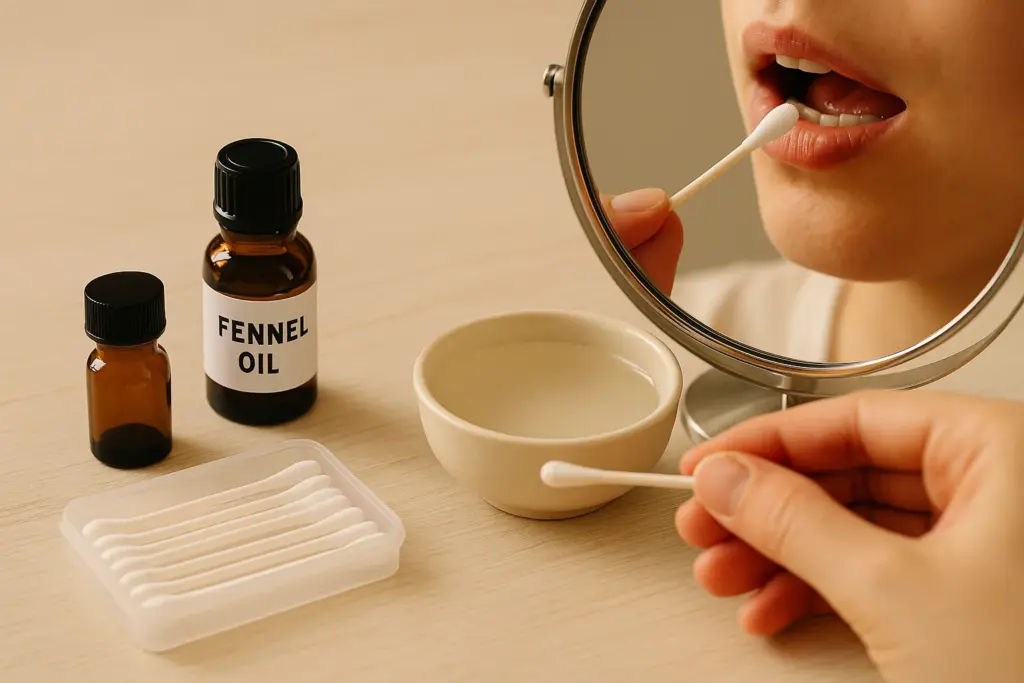
Although it is a natural product, it is not completely free of risks. Just like any other herbal remedy, the use of fennel oil should be done carefully. A properly diluted solution can make a difference. Direct application of fennel oil, if not diluted, can cause a burning sensation on your gums, lead to irritation, or increase your pain instead of relief.
Make sure that the oil you are using is 100% pure and is the essential oil of the fennel plant. Fennel-flavored oils or perfumes should not be used as a source of nourishment in your mouth, for these are not safe to be put in your mouth. Reading the label of the product is a strong recommendation, and always check if the level of the product is suitable for medicine or food.
Moreover, if you are hypersensitive to the carrot or celery family, e.g., parsley or mugwort, then you might be allergic to fennel, as it could be the cause of the allergic reaction. Do a small amount of skin test before applying the product to the body, especially the oral area.
Fennel oil is, however, not recommended for kids under 10 years, and it’s better not to use it if you are a pregnant or lactating mother unless a doctor agrees to it. When you are really uncertain, seek professional advice before use.
Fennel Oil vs. Other Natural Toothache Remedies
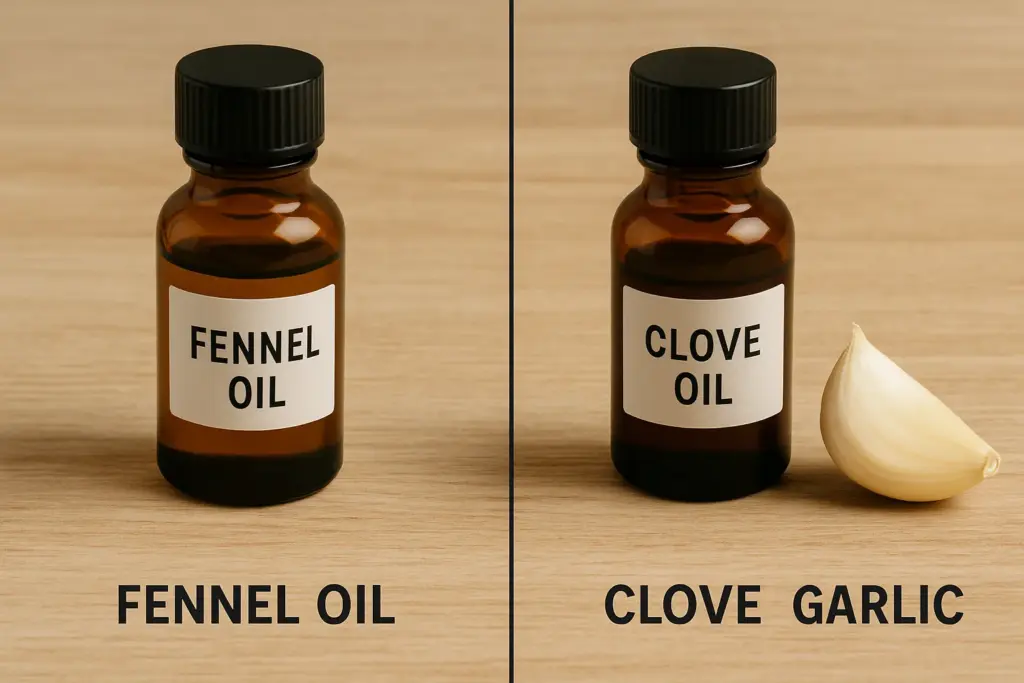
So, how does an independent herbalist’s favorite, fennel oil, fare versus his counterparts? To be honest, not too bad. On one side, there is the highly famous clove oil, which is considered the most efficient of all natural remedies against toothaches. Even so, its awful burning sensation can make it a less attractive choice for people with sensitive mouths.
Fennel oil is far more accommodating — even in the case of a standard dilution — hence it is the first choice of those seeking essential oils for the tooth that do not cause a fiery sensation to the mouth.
Still, garlic paste is another toothache-fighting method dating back to the old times. Think about it: It kills bacteria as well, but who can deny that it makes your breath stink like an Italian restaurant for at least a couple of hours? Not so for Fennel oil – it is refreshing!
Saltwater rinses are really good for a short time when you need relief or want to clean the area, but they don’t have the same anti-inflammatory effect as fennel oil. So, even though fennel oil isn’t the only one in your herbal collection, it is the most versatile and one of the most delightful to use.
When to See a Dentist About Your Toothache
Seriously, lucky fennel oil is a band-aid, not a solution. If you are struggling with severe dental issues like an infected tooth root, gum abscess, or broken filling, then no essential oil is going to solve it completely.
But here is a list of situations when you ought to see a dentist as soon as possible:
- The pain continues for more than 48 hours
- There is swelling, bleeding, or you have a fever
- Eating becomes hard
- The pain goes to your jaw, ear, or neck
- Pus is coming out or there is a bad smell
For such conditions, it is not only about the pain to be eased, but also about the cause to be solved. And that’s where Lema Dental Clinic in Istanbul, Turkey steps in.
FAQ: How to Use Fennel Oil for Toothache Relief
Yes! Fennel oil contains powerful anti-inflammatory and antibacterial compounds that make it effective for short-term relief of tooth pain.
You can apply it 2–3 times a day, always diluted. But if your pain doesn’t improve in 2 days, you should visit a dentist.
Not usually. Children under 10 should avoid essential oils unless directed by a pediatrician or dentist.
Possible side effects include gum irritation, allergic reactions, and digestive upset if swallowed. Always use a diluted version and spit it out after rinsing.
Absolutely. Fennel oil offers temporary relief, but only a dentist can fix the underlying issue and prevent long-term damage.

