Using an interdental brush is a great way to improve your oral hygiene routine by targeting those hard-to-reach areas between your teeth. Unlike regular toothbrushes, which can’t always get into the small gaps, interdental brushes are designed to fit between your teeth, helping to remove plaque, food particles, and bacteria. This simple yet effective tool is a fantastic addition to your daily dental care routine, especially if you’re looking to prevent gum disease, cavities, and bad breath. At Lema Dental Clinic, we recommend incorporating interdental brushes into your oral hygiene habits for a healthier smile.
How to Use Interdental Brushes?
Interdental brushes are a simple and, at the same time, very effective tool to get rid of the bacteria and leftovers in spaces between your teeth that are impossible for a toothbrush to reach. You can keep to the practice of using an interdental brush, which is easy, and it is also a very successful way of removing plaque, waste, and food particles from your teeth’ interdental gap. Here are the five steps to follow:
- Choose the Right Size: When it comes to interdental brushes, they are available in a variety of sizes, and making the right choice is essential. For narrow gaps, choose a smaller brush, whereas for wider crevices, select a larger brush. In a lot of stores, you may come across sets with multiple sizes available, allowing you to choose the best fit.
- Insert the Brush Gently: When you have already chosen the right size, smoothly put the brush between your teeth. Do not put the brush with force, and avoid any pain or irritation by doing it carefully, because of previous experience. The brush should pass through the teeth with less effort.
- Move Back and Forth: During the process of inserting the brush, the next thing you need to do is to move the brush slowly back and forth to clean the area. Ensure that the entire area is not left out, especially both the closest sites, as the plaque tends to separate in multiple corner units.
- Rinse the Brush: After each use, wash the brush to remove food particles and plaque stuck in its bristles. For a great result, make sure your brush is always clean. You should clean it before and after applying it to keep it efficient.
- Repeat for All Gaps: The same steps are to be done for all parts of the teeth that are between the teeth. You may use different sizes if the space between the teeth changes frequently because of your braces or dental work, than the rest of your teeth.
By using it regularly, an interdental brush can be of great help to you in addition to tooth brushing, as it reaches those areas that a toothbrush cannot, thus it can contribute to the prevention of gum disease and dental cavities.
Features of Interdental Brushes?
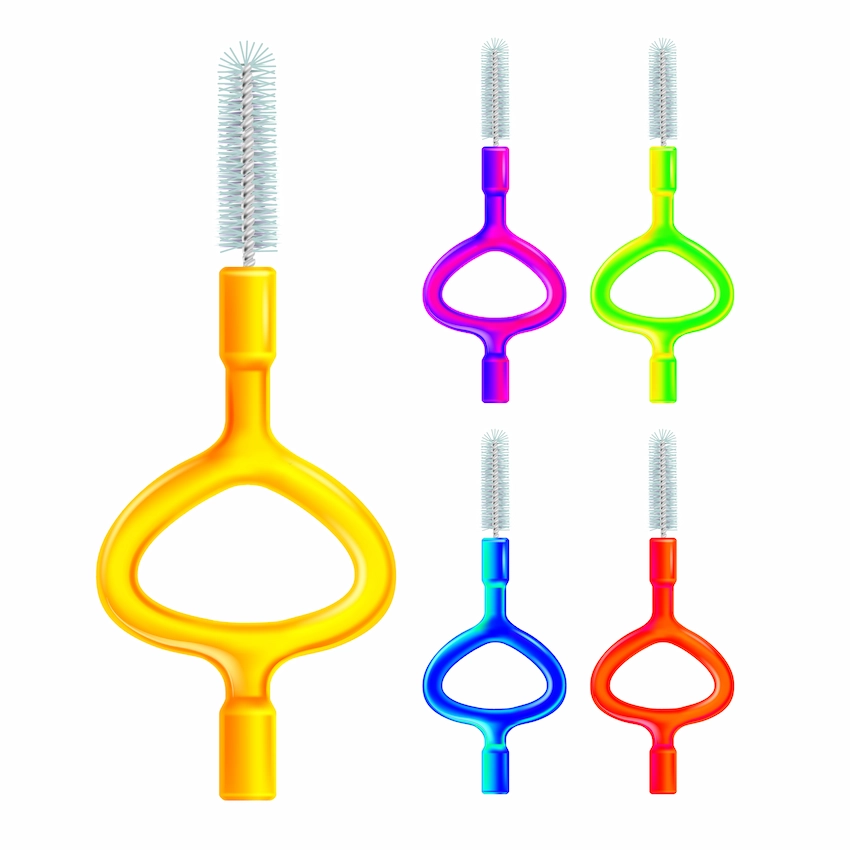
Amid the variety of interdental brushes, each is specifically made to clean between teeth with accuracy. They possess different characteristics that make them way more effective than traditional flossing. Some of the most common characteristics are:
- Small Bristles: The bristles used are small and flexible, so that they can easily penetrate the thin spaces between the teeth. The size of the bristles can easily be changed to fit the user’s dental requirements, thus rendering you many better cleaning possibilities with a single brush.
- Durable Handles: Almost all interdental brushes have handles that are comfortable to hold. These handles come in angles that make it very easy for you to access the back of the mouth, and in turn, they will make the cleaning process friendlier and manageable for the user.
- Flexible Wire: Normally, the brush is connected to a flexible wire that you can change the shape of to get into difficult areas around your teeth or to change the brush’s accessibility for your different uses. The brush’s pliability makes sure that it will get the work done on the teeth of all kinds of people.
- Plastic Coating: The one coated with plastic is the type of brush that has this feature, and this prevents the wire from wearing away your tooth and gum tissues. The plastic coating not only protects the user but also makes the use of the brush way more comfortable than in other cases.
- Plenty of Sizes: There are interdental brushes in various sizes which are available in the market. They will allow space for small, tight ones and provide wider, larger ones as well.
- On-the-go Use: Most interdental brushes are portable and do not occupy large spaces, which makes them very convenient for mobile use.
The characteristics are what make interdental brushes a superior and convenient solution when it comes to cleaning the spaces in between your teeth in comparison to the ordinary way of cleaning, which is using dental floss.
What Are the Various Interdental Brushes Available?
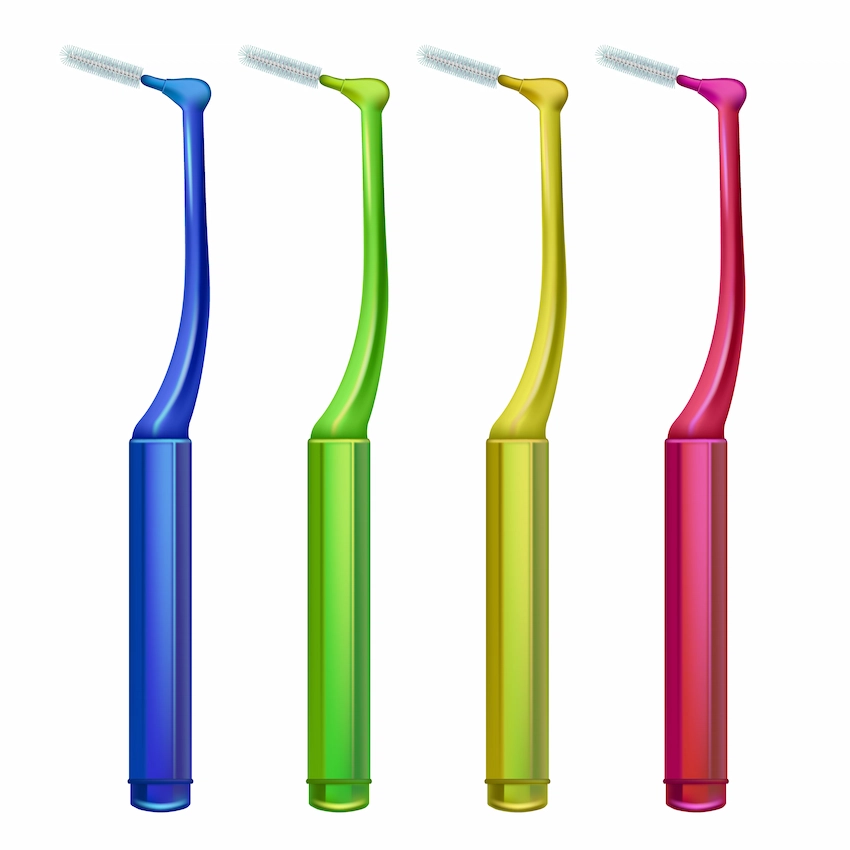
Different types of interdental brushes have been made to meet different needs and preferences. The most popular sorts are as follows:
- Standard Interdental Brushes: The most versatile and often bought interdental cleaning tools. They are available in a wide range of sizes and suit most people with normal interdental spaces.
- Mini Interdental Brushes: This small type is ideal for those people who have spaces that are really too small to get between their teeth. Hence wild space access is permitted for proper periodontal debridement entirely.
- Angle Brushes: Angle brushes are the ones with a flexed handle for easier application in elderly people’s hands and in the backside of the teeth, where the most difficult access is. The rearrangement facilitates the multiple angles feasible to approach all the parts of the oral cavity.
- Disposable Interdental Brushes: A one-time-use type of brush that can be a lifesaver in situations like when you are on a trip and in dire need of a quick cleaning. They are the fastest way in such a case, although they are not as long-lasting as the reusable ones.
- Ergonomic Brushes: There can be a variety of handle shapes, most of them with the main purpose of making the device easier to hold. In general, the handles are usually of a larger diameter to give a feeling of being in control, especially for the old and reduced dexterity. The comfort handle design will ensure that you are able to brush the areas quite effectively within the mouth.
- With or Without Protective Covers: A few designs come out with accompanying small caps that act as covers to keep your item tidy while in transit or not in use.
The choice of a particular brush model directly depends on your dental situation and personal preferences. The professionals of Lema Dental Clinic are willing to provide the required information to guide you in making a decision.
Who Should Use Interdental Brushes?
Interdental brushes are not only suitable for patients with braces or dental implants. A large number of people benefit from their use. Let’s see who these people are:
- Brace Wearers: When you are wearing braces, your teeth are isolated from the wire and the brackets. The area between the wire and the brackets is where bits of food and biofilm can get stuck most easily. Interdental brushes are the most efficient way to clean the spaces and the only proper way to prevent the occurrence of plaque and gum disease.
- Users of Dental Implants: Dental implants need the right choice of oral hygiene to take care of them so that the surrounding gums are kept away from infections. Thus, interdental brushes are those particular tools that can remove food particles and plaque around the implants and will thus keep the person free from routine infections.
- Those with Teeth Spaces: Big spaces between teeth caused by genetics, orthodontic treatment, or age may be addressed using interdental brushes. Nursing the cavities and gum disease will become easier, and you are likely to remain with only the cleaning part after use.
- Troubled by Gum Disease: Patients with confirmed gingivitis or periodontitis will be satisfied using interdental brushes in their treatment, as it is the very best way to control and thereby prevent further disease.
- Flossing Difficulties: Many people face the challenge of flossing mainly due to the close fit of their teeth or their inability to use the right procedure. Therefore, interdental brushes are a more suitable option as they are not complicated and at the same time are more effective.
- Those with Handicaps: Brushing with interdental brushes, which apart from that are also easier to use, suits perfectly people with disabilities or rather little space in your room because of medical equipment or your family members having health problems.
If you are not sure whether an interdental brush is right for you, you could always schedule an appointment with a doctor at Lema Dental Clinic, who would give you good advice on how to maintain your oral hygiene as effectively as possible.
How Long Are Interdental Brushes Usable?
Interdental brushes are made in a way to is good for a certain period of time, depending on the frequency of usage and the way they are looked after. Normally, an interdental brush should be thrown out and replaced every 1 or 2 weeks, but this may change according to how often and how long it has been used, and also the condition the brush is in. If the bristles bend, shred, or become less effective, it’s high time you replaced them with a new set. As often as not, be sure to let your toothbrush dry in a well-ventilated place after you have cleaned it, and also, wash it thoroughly so that you can use it for a longer time.
For a successful and useful cleaning process, regular changes of the brush are necessary. When the brush is no longer effective, it can’t be sure of performing as it’s supposed to, and it can even lead in one way or another to gum irritation.
FAQ: How to Use an Interdental Brush?
Interdental brushes and dental floss are both excellent in cleaning between your teeth, but the interdental brush can be the most suitable option for people with braces or wider gaps, as it is easier to handle. The floss can get in very tight spaces, but some areas may lose its effectiveness.
Using an interdental brush once a day is the optimal frequency, usually, after cleaning your teeth, to guarantee that all places between your teeth are thoroughly cleared and plaque is not being formed.
Of course, an interdental brush can be of great help in cleaning around the braces. The small bristles can move through the brackets and wires, thus making it easier to get the particles of food and plaque off the mostly unreachable areas.
The main role of the interdental brush is to clean between your teeth by removing the plaque, food particles, and bacteria that can cause cavities, gum disease, or bad breath. It is worth noting that a more efficient job than a regular brush is assured.
It may not be everyone’s need, but an interdental brush is a highly beneficial instrument for those who have dental devices, such as braces or dental implants, or those who have quite wide spaces between their teeth. It might also be useful if you can hardly cope with the flossing process or are more susceptible to being affected by gum disease as a result of the disease.