


What are Dental Crowns?
In short, dental crowns are uniquely made covers that are attached to a rotten or injured tooth to restore its function, shape, and even color. With the help of specialists like Dentist Polen Akkılıç and her team, dental crowns are made from strong materials like porcelain, ceramic, or metal to give both material and visual benefits. In fact, they may be used to protect sick teeth, restore those that are heavily decayed, or simply to make the teeth that are stained or structurally weakened, look better. So, a crown is the outer layer that is designed to provide a long and stable solution to a great variety of dental problems while the tooth is still being protected from any further damage.
The acquisition of a dental crown is a process that normally involves the removal of the decayed part of the tooth, reshaping the rest of the structure, and making a custom mold for the crown.
During this operation, Professor Doctor Coşkun Yıldız is the one who makes sure that the tooth is well-prepared for the crown and hence, a temporary crown is placed in the meantime until the permanent one is available. A permanent crown, after it is made, is the one that is carefully fitted and glued to the tooth thus, enabling the tooth to work as if it were one of nature, healthy. With good maintenance, the replacement interval for a crown is usually between 10 and 15 years.
Benefits of Dental Crowns
- Protecting the Weakened Ones: Teeth that have been compromised through wear or injury can have their power restored through dental crowns. This makes the teeth not only safe but also viable for a longer period of time. Moreover, the reinforced teeth are guarded against breaking up and decay.
- Better Looking: Crowns are able to make the teeth that have lost their color or have irregular shapes look better and thus help the client to have a natural and attractive smile.
- Return of Tooth Functionality: Through the use of dental crowns, a tooth that has lost its function will regain the ability to be used in chewing and speaking without causing any pain or difficulty.
- Long-lasting: Porcelain, metal, or ceramic are some of the materials that make up a dental crown, and thus dental crowns are very durable. With good maintenance, the period of their existence can be between 10 and 15 years.
- Loss of Teeth Prevented: If a tooth is damaged and a crown covers and protects it, then a crown can be the reason for the prevention of the need for more complicated treatments such as tooth extraction.
- Embracing the Large Ones: The large filling that has weakened a tooth will be given support if a crown is installed on the tooth. Furthermore, the part that is already weak will not break anymore.
Why Does a Gap Form Between the Crown and Gum?
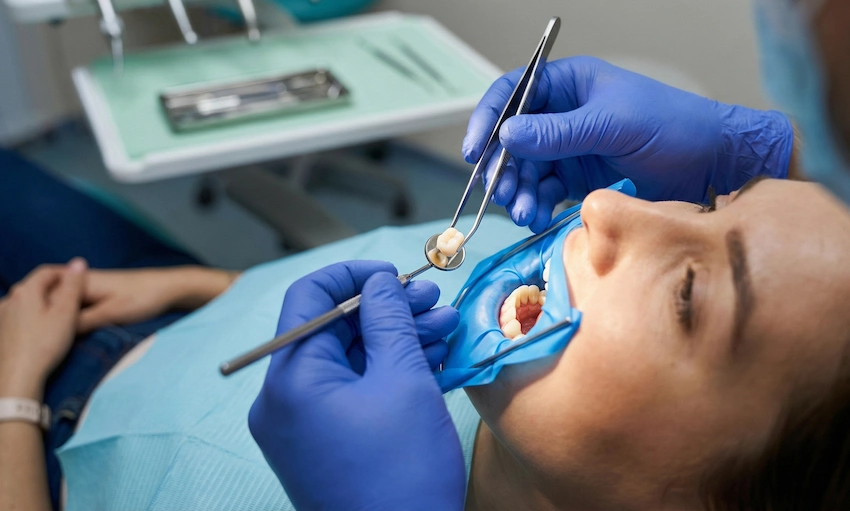
There may be a space or void between the dental crown and the gum line which arises from different root causes. One of the major reasons is receding gums, where the shrinking back of the gum tissue exposes the edges of the crown and a gap between the crown and the gum line is left. Causing receding gums can be done by brushing too hard, having a bad oral hygiene routine, or simply getting older. When the gums receded bacteria can easily infiltrate the newly exposed area which can eventually lead to infection, tooth decay as well as other complications under the crown. Regular dental check-ups with professionals like Professor Doctor Coşkun Yıldız cannot only help with monitoring and treating gum issues but also prevent gaps from occurring.
Apart from that, an incorrectly fitting crown before the initial placement can also be the reason for a gap between the two. In case the crown was not fitted or sealed properly during the operation, there can be small spaces between the crown and the gum that arise. These spaces slowly become bigger,which may cause symptoms such as discomfort, sensitivity, and in turn, further complications like tooth decay. Team at the practice of Dentist Polen Akkılıç is extremely competent in the process of crown fitting from the start thereby, a gap formation leading to the problem of the gradual increase of space is minimized to a great extent.
Detecting the Gap: Signs and Symptoms
Signs of a dental crown gap are generally very clear when you carry out your daily activities like eating, brushing, or flossing. One of the very first signs that can be pointed out is the appearance of a noticeably open space between the crown and the gum line. Besides, you may also experience discomfort or even pain, especially when eating or drinking hot or cold things because the area that is exposed will be the one that changes temperature and will be affected more. If bacteria happen to take advantage of the gap for their accumulation, you may also be experiencing bad breath and a foul taste in your mouth.
Besides signs like these, there might be trouble in chewing or the feeling of looseness or movement of the crown. The problem of pain and discomfort on biting might go together with these symptoms and be an indicator that the crown is no longer securely fixed in place. If you are witnessing these signs, it is wise to see Dentist Polen Akkılıç and her assistants without delay, as the identification of a problem at an early stage and the intervention can save energy and money by preventing damage to the tooth and the gum. Care given in time will be the way to not only regain your crown’s proper fit but also its normal function.
Effective Solutions to Close the Gap
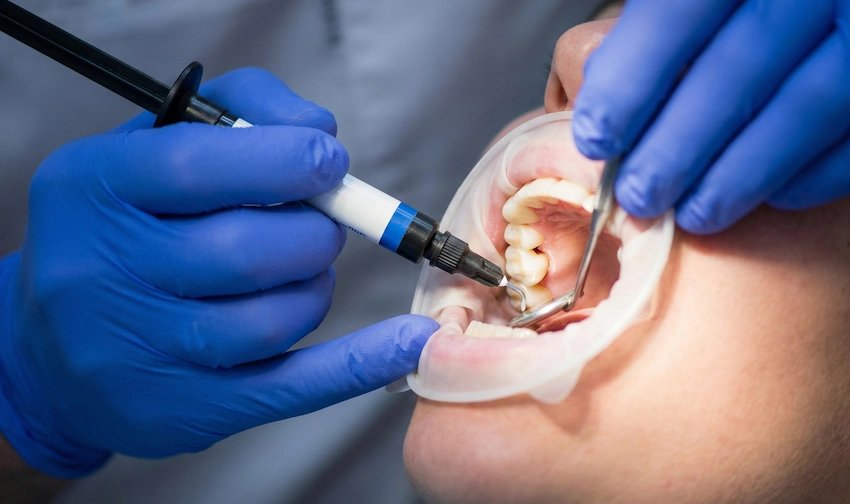
- Crown Replacement: The best way to solve a problem of a gap due to a bad or damaged crown is to get a new one that fits perfectly. The new crown will be the one to cover the gap and to make the seal safe.
- Gum Grafting: If the space results from gum recession, then tissue grafting from the gums will not only help regain lost gum but also close the gap between the crown and the gum line.
- Dental Bonding: When the gap is very small, dental bonding material may be used to fill the space on a temporary basis, thus providing an immediate solution until a more permanent one is made.
- Periodontal Treatment: If the cause of the gap is gum disease or inflammation, then the solution is to implement effective periodontal treatments that will resolve these problems and restore the gums around the crown to health.
- Crown Adjustment: There are times when the fit of the current crown can be improved and any gaps closed just by making a slight adjustment. If the crown has moved a little or wasn’t sealed properly during placement, this is a less invasive way of solving the problem.
| Treatment Option | Description | Duration |
| Crown Adjustment | Adjusting the existing crown to fit properly and seal the gap. | 30-60 minutes |
| Crown Replacement | Replace the crown with a better-fitting one to close the gap. | 60-90 minutes |
| Gum Grafting | Surgical procedure to restore receded gum tissue around the crown. | 60-120 minutes |
| Dental Bonding | Temporary solution using bonding material to fill the gap. | 20-30 minutes |
| Gum Treatment | Treatment for gum issues such as inflammation or infection. | 30-60 minutes |
Preventing Future Gaps After Crown Placement
If one wants to stop the appearance of spaces in dental crowns in the future then oral hygiene should be kept very well. One of the manners of which is to use a toothbrush with fluoride toothpaste twice a day and flossing regularly. By these actions, plaque and food particles are removed from the crown area and the gum line, thus the risk of gum recession is lowered. A soft-bristled toothbrush should be used not only for the teeth to be cleaned but also for the gums not to be irritated, which can lead to recession and the development of gaps.
Moreover, through the avoidance of such actions as grinding or clenching your teeth you can to a very large extent keep your dental crowns in a good condition for a longer period. Professor Doctor Coşkun Yıldız in most of his recommendations, suggests that grinding patients should wear a nightguard in order to protect their crowns from the forces of grinding. Besides that, it will be good for you to make regular appointments with your dentist where he will assess not only the fit of your crown but also the health of your gums.
When Should You Consult a Dentist Immediately?

In case your dental crown fell off and you are experiencing discomfort or sensitivity, you should definitely not keep it to yourself and see Dentist Polen Akkılıç and her team as soon as possible. A visit to a dental professional is a must when the gap between the crown and the gum line gets significantly larger or you feel pain in the area while chewing. Leaving the condition untreated for a while may lead to the development of infections or the decay of the tooth that is located under the crown.
Furthermore, in the case of swelling, redness, or pus around the crown, it may signify an infection or abscess that necessitates being there immediate attention. The problems that result from these symptoms may become quite severe, leading to the loss of the tooth or damage to the bone. It never hurts to speak with your dentist right away if you have any concerns, so that the problem of the gap can be taken care of without delay and thus avoid further complications.
FAQ: How to Fix Space in a Dental Crown?
A gap can form in a dental crown due to gum recession, poor fitting, or wear over time. Gum recession exposes the crown’s edges, making it vulnerable to gaps, while an improperly fitted crown may not seal well.
Maintaining excellent oral hygiene and avoiding teeth grinding are essential to prevent gaps. Regular visits to your dentist, like Dentist Polen Akkılıç and her team, will also ensure that your crown stays secure and your gums remain healthy.
Yes, a gap in a dental crown can be fixed by adjusting or replacing the crown, or through gum treatments if gum recession is the cause. Professor Doctor Coşkun Yıldız can determine the most effective solution for restoring your crown.
Fixing a gap in a dental crown is usually not painful. Local anesthesia will be used to ensure comfort during the procedure, and most patients experience minimal discomfort.
Ignoring a gap in a dental crown can lead to tooth decay, gum disease, or an infection. Seeking prompt treatment from Dentist Polen Akkılıç and her team helps prevent these complications.
A well-maintained dental crown can last between 10 to 15 years. Regular check-ups and care will help extend the life of your crown and maintain optimal oral health.
Yes, if a crown doesn’t fit properly, Dentist Polen Akkılıç and her team can replace it with one that fits securely and comfortably. Proper fitting ensures long-term success and prevents future gaps.
It is recommended to visit the dentist every six months after getting a crown for regular check-ups and cleanings. Professor Doctor Coşkun Yıldız advises patients to ensure their crowns remain intact and their overall dental health is maintained.
- Akkılıç, P., & Yıldız, C. (2023). The role of dental crowns in restoring tooth function and aesthetics. Lema Dental Clinic Journal, 18(2), 45-53.
- American Dental Association. (2022). Dental crowns and bridges.
- Kwon, Y. D., & Lee, S. W. (2020). Gum recession and its impact on dental crown fit: Clinical findings and solutions. Journal of Periodontal Research, 56(3), 275-283.
- Petersen, L. A., & Smith, J. T. (2021). Common issues with dental crowns: Causes and treatments. International Journal of Dentistry, 48(6), 101-112.
- Wilson, M. S., & Brown, J. H. (2021). Dental restorations: Ensuring longevity and proper fit of dental crowns. Journal of Prosthetic Dentistry, 125(4), 319-325.

