Let’s be Honest – When Did You Last Change Your Toothbrush? 🤔
Every day it is in your bathroom. You use it (hopefully) twice a day. The thing is that your toothbrush is probably already very old. 🧓
Most people don’t give toothbrush bristles much thought until they look like a tiny tornado has hit them. But doing this is definitely not good for your teeth.
So how often should you change your toothbrush?
Short answer: every 3 months.
Long answer: Keep reading! 😉
🧪 Why Changing Your Toothbrush is Necessary
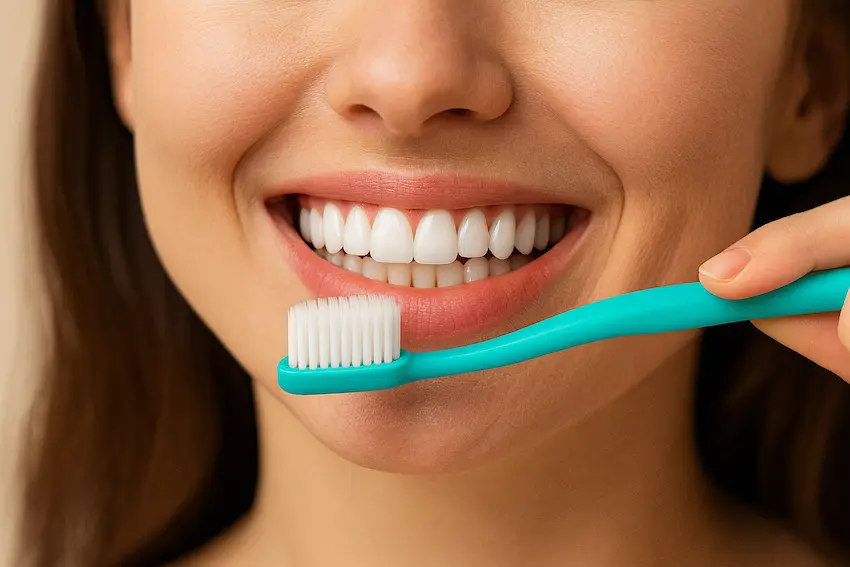
Your toothbrush is your #1 weapon against:
- The formation of plaque🦠
- Maintaining the health of your gums 💉
- Preventing tooth decay 🦷
- Helping your breath to smell nice 😮💨
But with time your toothbrush will lose its power to clean your teeth – and will even be somewhat disgusting to you. 😬
This is the reason:
1. Damaged Bristles Can’t Do the Job Properly
The wear and tear of old bristles are such that they lose their shape and the toughness is also gone.
In these situations, where are the crevices and the gumline that they cannot even touch leaving plaque and food particles uncleaned? It means that you are a person who brushes twice a day yet there are still some areas that you cannot reach!
2. Over Time Bacteria Multiply
Even if you rinse your toothbrush thoroughly, it still gets the following:
- Water
- Saliva
- Bacteria from your mouth
- Airborne particles (especially if it is near a toilet 🚽)
Not something to be happy about, right?
Changing your toothbrush regularly makes the whole process cleaner and safer.
3. Old Toothbrushes May Hurt Your Gums
Brushed with frayed or stiff bristles are not only ineffective, but they can also be the cause of enamel scratching or gum irritation, especially if you apply too much force.
Healthy mouth = soft brushing with fresh soft bristles.
📆 So…Every 3 Months?
Exactly. The opinion of the American Dental Association (ADA), as well as of the dental professionals across the globe including those at Lema Dental Clinic in Istanbul, is:
👉 Substituting your toothbrush (or the brush head) with a new one every 3 to 4 months.
Write it down in your phone as a reminder. Or alternate it with the seasons—new brush and new season! 🍂❄️🌸☀️
🚩 Signs You Need a New Toothbrush Now
However, if your toothbrush is not new, and it is only 3 months old, you should change it in a case of following signs:
- The bristles of your toothbrush are frayed, bent, or discolored.
- The toothbrush smells, and rinsing does not eliminate the odor.
- You have been sick (cold, flu, strep, COVID) 🤒.
- Your toothbrush came in contact with someone else’s 🤢.
- It landed on the bathroom floor (yep, that counts) 🙃.
It is always better to be on the safe side than to regret later!
🧑⚕️ What About Electric Toothbrushes?
If you own an electric toothbrush (more power to you! 👏), then the condition is the same:
👉 The brush head should be replaced every 3 months or if the bristles show wear before that.
To some extent, the manufacturers even develop bristles that become lighter as soon as it is time for replacement. Pretty intelligent, isn’t it?
🧼 How to Care for Your Toothbrush in the Meantime
Do you want the toothbrush that you use between replacements to be clean to the highest extent?
These are the things that you have to do:
- After every use, rinse it with water thoroughly
- Store it vertically in a holder or container
- Use it in a dry-out process (don’t put a cap on it while it is wet)
- Do not place it close to the toilet so as not to pick up germs present in the air
- Never hand over your toothbrush to anyone—not even to family members 😷
Extra tip: When going on a trip, use a ventilated travel case and let your brush dry completely once you come back home.
🚸 Do Kids Need New Toothbrushes More Often?
Definitely! 🙋♂️
The behavior pattern of kids includes:
- Brushing more harshly
- Gumming the bristles
- Frequently dropping their toothbrushes
- Being sick more often
For these reasons, children’s toothbrushes may need to be replaced every 2–3 months.
Why not let your child choose a whimsical pattern or color to get them motivated about brushing (as well as replacing!).
🏥 Why Lema Dental Clinic Cares About Your Toothbrush
Oral hygiene at Lema Dental Clinic in Istanbul, is not only about cleanings and treatments but also about the habits we practice every day.
When getting a check-up, your dentist usually:
- Inspects the wear on your bristles
- Supports brushing with good habits
- Suggests the good brush type for your smile
- Performs cleanings that can remove areas inaccessible to your toothbrush
They will even reveal the difference when using a new toothbrush and if accompanied by flossing and routine cleanings, the effectiveness will be at its peak.
💡 Toothbrush Type Matters, Too!
Toothbrushes differ considerably in terms of their designs and materials. The healthiest brushing routine is well supported by dental professionals through the following recommendations:
✅ Soft-bristled toothbrushes (safe for gums and enamel)
✅ Small heads to access your teeth easier, especially those in the back
✅ Electric toothbrush to maintain a rhythm of pressure and movement
✅ Fluoride toothpaste to provide additional protection
The dental experts at Lema can assist you in finding the right one for your smile, sensitivity, and dental needs.
✨ Final Thoughts: Small Habit, Big Impact
Switching your toothbrush might be the last thing on your mind but this small change really can make a big impact on your oral health. New clean bristles = cleaner teeth, healthier gums, and lower risk of dental problems in the future.
So don’t forget to make it a habit.
Change that brush every 3 months (or earlier).
And if you are avoiding a dental visit for a long time, get a Lema Dental Clinic appointment in Istanbul—where big smiles start with smart habits.
Your mouth will thank you. 💙
Even if it looks fine, bristles wear out and collect bacteria over time. Stick to the 3-month rule.
Look for frayed bristles—or just play it safe and start fresh
Yes! Always change your toothbrush after illnesses like the flu, strep throat, or COVID.
Not necessarily. It’s about the bristle quality and how you care for it—not the price tag.
You can rinse it in hot water or soak it briefly in antibacterial mouthwash, but nothing replaces regular replacement.