


Lately stressed out? Well, maybe your teeth will be the last people to complain, but certainly they can’t keep quiet for too long. Stress is not a mere destruction to nerves and sleep; it also impacts the teeth, gums, and jaws to the extent you may not even be aware of it. Likewise, you could be squeezing your jaw so hard that you don’t even realize it, or you could be getting up with the sudden painful molars without knowing that it is the stress that is the origin of all this; stress is everywhere–literally!
At Lema Dental Clinic in Istanbul, we take pride in saying that a bright smile is not just perfect teeth, but it also points to your overall health. Therefore, our team of specialist dentists employs a holistic approach in sharing the insight that mental health, lifestyle, and stress all have an impact on dental health.
Regardless of whether you suffer from anxiety, bruxism, or want a new smile with porcelain veneers or a full Hollywood Smile transformation, we are here to help you. Lema Dental Clinic, due to its proficiency in dental beauty, is not only a partner in your aesthetics but also a partner that promises confidence, comfort, and calm. True beauty is a journey from harmony through the middle of the way and ends with a dazzling smile.
What Happens to Your Mouth When You’re Stressed?

If overloaded, the mechanism of body shifts into survival mode. This works perfectly in getting away from danger; however, not in the case of your smile. Your brain dispatches the stress hormones, like cortisol and adrenaline, which cannot only cause a tightening of your muscles, but also increase inflammation can be increased, and your mouth can dry out. Surely that tight jaw and dry tongue? Stress-related!
Besides, your mouth is among your body’s quick response systems. If you constantly feel anxious, you might be clenching your jaw, biting your nails, or grinding your teeth without even realizing it. These behaviors, over time, will not only wear down your enamel but also cause gum irritation and allow your teeth to shift. So if stress ever knocks on your door again, give your jaw a quick check—it might be that it is in distress and you have not noticed it.
One Of The Most Frequent Causes Of Anxiety – Teeth Bruxism
Have you ever woken up with your teeth aching or your jaw feeling stiff? Well, that could be called bruxism, which stands for teeth grinding and is closely related to the fact that anxiety is one of the major sources of mouth disorders in general. People grind at night while they are in deep sleep and usually without their awareness, particularly during times of stress like exams, work deadlines, or emotional upheaval.
Along with time, grinding your teeth will lead to the loss of the biting surface of your molars, the development of tiny cracks in the enamel of your teeth, and fractured teeth in the worst cases. Bruxism is also the major cause of jaw tension and TMJ (temporomandibular joint) disorders. The soreness and tiredness after sleep should be a sign that you need to go to a dentist for sure, and a therapist, maybe. Keep in mind: just like stress, which doesn’t rest, neither do your teeth, and therefore, bruxism takes place at night.
Is Stress A Possible Cause Of Tooth Pain Or Sensitivity?

Yes, stress can cause a toothache, and no, it’s not all in your head. Stress induces inflammation in the body, which can lead to gum soreness, and in which case, even minor oral issues that you have may become exacerbated. The pain may come as sharp shocks while drinking cold water or if you are brushing your teeth too vigorously.
One more thing that can cause the problem is clenching your jaws at the time or during your sleep. This action irritates your teeth’s nerves and roots. With such steady irritation, it is possible that the feeling of a cavity or a cracked tooth is imitated, provided that no decay is found in your teeth. Therefore, if dental pains occur in your teeth while the dentist finds no problem, stress might be the reason for those pains, which is invisible.
Stress, Dry Mouth, and the Risk of Cavities
Dry mouth is not only annoying, but it is also a hidden enemy to your teeth. When you are nervous or stressed, the production of saliva might be less than usual in your body, and that is a big problem. Saliva is the mouth’s natural protective system. It makes the washing of the acids, food particles, and the enamel possible by the mouth.
If there is an insufficient amount of saliva, bacteria that are harmful to the mouth get comfortable in the mouth, which leads to the creation of plaque, the aroma of the mouth, and a high risk of cavities. If your mouth becomes as dry as the Sahara Desert during stress, then you are not the only one who has this problem, and you are not in a hopeless situation. Water, sugar-free gum, and relaxation methods can help to regain the dry mouth that is lost, giving the mouth a healthy pattern again.
Tips for Managing Dental Health Under Stress
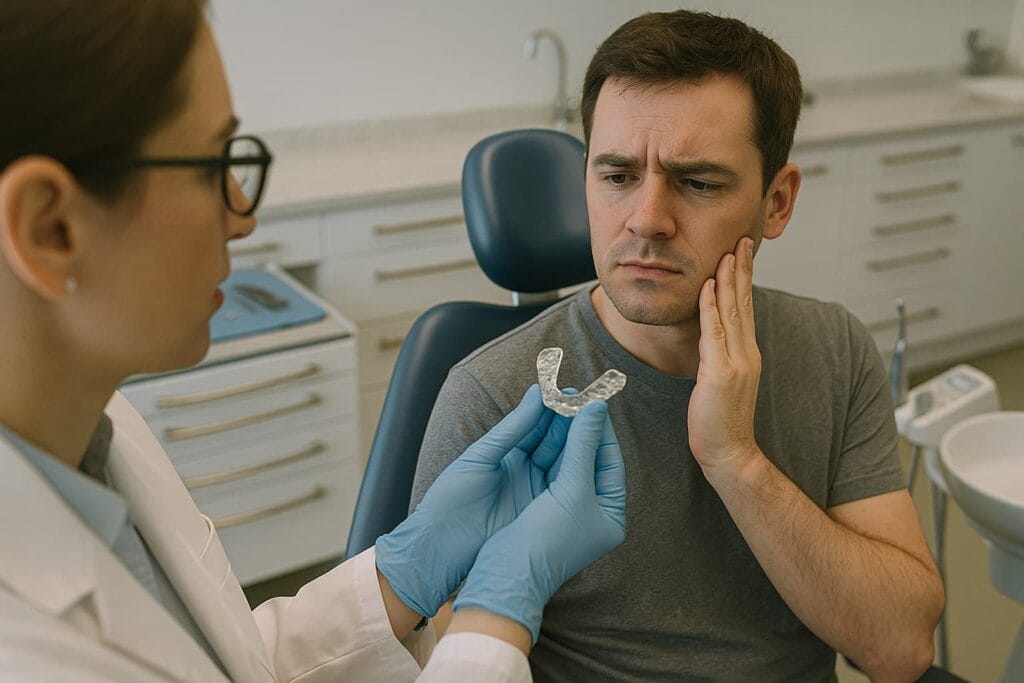
Firstly, you cannot always get rid of stress, but you can certainly have control over how to protect your smile from it. Primarily, practice mindfulness. When you find yourself tensing your jaw or grinding your teeth, stop immediately, relax your jaw, and take a deep breath. The awareness of early clenching is the first step towards its elimination.
Secondly, seek advice from your dentist and let him/her decide if you require a mouthguard, e.g., if you experience grinding at night. It definitely changes the point of view and saves your enamel from damage, in addition to the relief of the tightness in your jaw. Also, don’t forget to include self-care in your daily routine: water, nutritious meals, a daily walk, and sleep all support the mind and body, and together with that, oral health is also strengthened. Your teeth will definitely celebrate this!
FAQ: Can Stress Show Up in Your Teeth?
Yes, stress can cause tooth pain by triggering jaw clenching, inflammation, and sensitivity, even without any visible cavities or infection.
Common signs include jaw pain, worn-down teeth, headaches, cracked molars, and a sore face—especially in the morning.
Absolutely. Anxiety often leads to muscle tension, which can cause persistent jaw pain and discomfort around the ears and temples.
Yes, chronic stress weakens your immune system and increases inflammation, which can lead to gum disease—and if untreated, even tooth loss.
Wear a mouth guard at night, practice jaw relaxation, stay hydrated, and keep up with regular dental visits to prevent long-term damage.

