Healing after wisdom tooth extraction is not only about relieving the pain. It is considered the first step to lead the way for a healthy, confident smile. At Lema Dental Clinic in Istanbul, all the treatments are seen in a broader perspective. We believe in the holistic approach to healthcare and visualize every dental surgery as an opportunity for beauty to be brought back to the mouth and not only—also to provide the required function. If we talk about the recovery after tooth extraction or the complete transformation of a Hollywood Smile with veneers and implants.
What Happens to Your Mouth After Wisdom Tooth Removal?
For some, their wisdom teeth removed are just one smaller part of a larger series of consents, and perhaps it is perceived as a minor activity. At the time of the removal, the body undergoes the first phase of recovery, and the blood clot starts to form in the incision area. The clot is a major protector of the bone and nerve layers beneath it and is a vital element to the healing process. As time passes, the clot may become loose; or if you mess with it too much (by being frightened or disturbed by eating and talking), it will break up, and the result is dry socket, a very painful condition which usually lasts a few days, and for this reason, it needs medical attention.
Swelling, irritation, and some amount of bleeding naturally come with the territory. It will most likely feel as if one’s jaw has been subjected to a mini wrecking ball, but the pain usually subsides in a couple of days. Your mouth might become swollen and red, and you can still feel the effects of the anesthesia, so your mouth may stay shut a little longer than you expect. The body will heal on its own over time, and with the appropriate care, you won’t even remember that it ever hurt.
Always remember: your jaws are your body, and therefore, need to treat them with the greatest respect.
How Long Does It Take to Heal After Wisdom Tooth Removal?

Everybody would always like to know, “How long before it is entirely permissible for me to have a slice of pizza again?” But as for the simple answer? It all depends. For the most part, it takes people 3- 5 days to feel much better, but the whole process of healing does not restrict itself to that time frame only. Your soft tissue (like gums) usually takes about two weeks to heal and close entirely. However, the bone tissue, which is deeper and less capable of being filled again, may take 6-8 weeks or sometimes a few months to fully regenerate the previous state.
Your treatment’s recovery timeline will also show the slowness if a difficult extraction process is involved. For example, a simple wisdom tooth removal that is non-impacted would be quicker to recover from than a surgical procedure where pain or an infection is observed. The first few days are the ones when swelling is at its worst, and you may feel very low in energy. The situation changes by the end of the first week, and then the pain should be lighter, and you will be more lively. Remember, though, that even if you are not in pain, that does not indicate that you have fully healed, so wait until your dentist gives you the green light before trying to eat whatever you like or performing strenuous exercises.
What’s Normal and What’s Not During the Healing Process

You have to agree with this; the process of healing is quite a queer thing, at times. You are likely to wake up on the third day with worse swelling than you did on the first. You will have some tingling or stiffness in your jaw, maybe. And you may even sense a little metallic taste of blood. That’s the game plan. A little bleeding after 24 hours is kind of par for the course. Pain, swelling, and basically, your body’s response to the healing process are indicators that the recovery is in progress. Redness and bruising can be observed on your cheeks and neck – not the nicest thing to look at, but an irrelevant issue health-wise.
However, be careful to resolve all of the situations at a time. Therefore, in the cases where, rather than epiduris, true intensification of pain notes, or you can understand that the condition has taken a turn for worse, through some instances like a bad taste in your mouth or the things that occurred at the transplantation place, there is a need to consult a doctor. High temperature, severe pain, or feeling no sensations could signal either the existence of an infection or a problem with a nerve. A clot that comes off, so-called dry socket, hurts a lot and is a factor that may make it take a longer time for the wound to heal. What to remember? If the situation seriously deteriorates instead of improving, you should contact your dentist at once.
Best Aftercare Tips for a Smooth Recovery
Is there a possible way to recover like a boss? Why, the answer lies in getting enough rest. This means no gym, no jumping around, and no bending over for the first two days. Help reduce swelling by applying the ice packs to your cheeks during the first 24 hours—20 minutes is ok, then 20 minutes off. After one day, if needed, switch to a warm compress. The advice is to be hydrated while the straw is a no-go (seriously, the clot is gone and dry socket is the result).
Generally, the food should be soft, gentle, and not hot. Mashed potatoes, smoothies (served with a spoon!), yogurt, scrambled eggs, and soup are kindly recommended to you. Do from your diet every crispy, cohesive, or tough food. After the surgery day, brush your teeth a little, be gentle to the surgical area, and don’t forget to rinse your mouth with saltwater 2-3 times a day. Saltwater rinsing, a run to the doctor, and the rest of your teeth get cleaned as always, covering the next few days, but the surgical area should be avoided. Finally, you may want to forget about the vice and the alcohol for the initial week at least, since they prolong the healing process.
When to Call Your Dentist About Pain or Delayed Healing
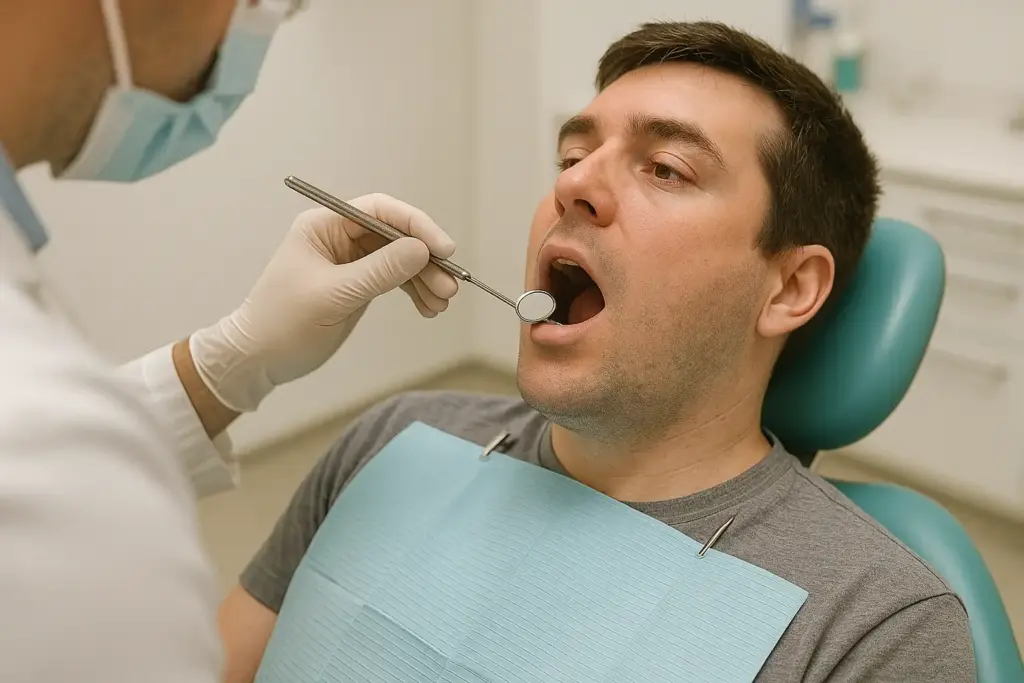
The majority of people have quick recoveries, but if you know when to seek help from your dentist, you will be able to avoid developing serious issues. The sudden inflow of pain after a few days is an indication of a big problem, and you should see a dentist immediately. Dry socket pain mostly starts between Days 3–5+, and the person experiences a sharp, severe, and throbbing intensity of that pain, and this pain normally irradiates to the ear or temple. In case you feel that your cut is not on the way to recovery but, instead, it’s getting worse, then that is the time to make a call.
You might need to call your dentist if these symptoms persist or appear: heavy uncontrolled bleeding that is not solved by gauze pressure, a temperature above 38°C (100.4°F), bad breath despite brushing, or pus around the site of tooth extraction. Another indication is when you are unable to move or to open your mouth widely to the extent that it becomes uncomfortable for a week after the tooth extraction. In essence, if you have a hunch that something is amiss, you are advised to run it by your dentist.
FAQ: Healing After Wisdom Tooth Extraction
You’ll feel better in 3–5 days, but full tissue healing takes around 2 weeks.
Soft foods like mashed potatoes, yogurt, and soup are safe for the first few days.
Yes—swelling and discomfort are expected and usually improve within 3 days.
You can start brushing gently the day after, avoiding the surgical site.
Look out for severe pain, pus, foul breath, and fever—they may signal infection.