


What is the CDT D9110 Dental Procedure Code?
The CDT D9110 dental procedure code is recognized by the American Dental Association (ADA) as “palliative (emergency) treatment of dental pain—minor procedure”. It is a code that is associated with dental treatments that are done for the immediate relief of oral pain or discomfort, where the main focus is on temporary management instead of definitive treatment.
The main intention of this code is to record the clinical and professional time that is necessary to provide acute care for pain, inflammation, or trauma in the oral cavity. In dentistry, palliative treatment is an indispensable link between diagnosis and definitive therapy that helps patients to be stabilized if they are in distress before any more extensive procedures can be done.
This code is very important especially in situations of dental emergencies and walk-in dental clinics, where patients come without prior appointments and are usually in severe pain or distress. Dentists employ D9110 to chronicle the occurrences of medicament placement, abscess drainage, prosthetic adjustment, or temporary fillings. Each of these deeds concentrates on the immediate restoration of the patient’s comfort and function. The correctness of this code is in its precision: D9110 denotes the care that was given only for the alleviation of symptoms and no initiation of long-term or comprehensive restorative processes.
When is Dental Code D9110 Used?
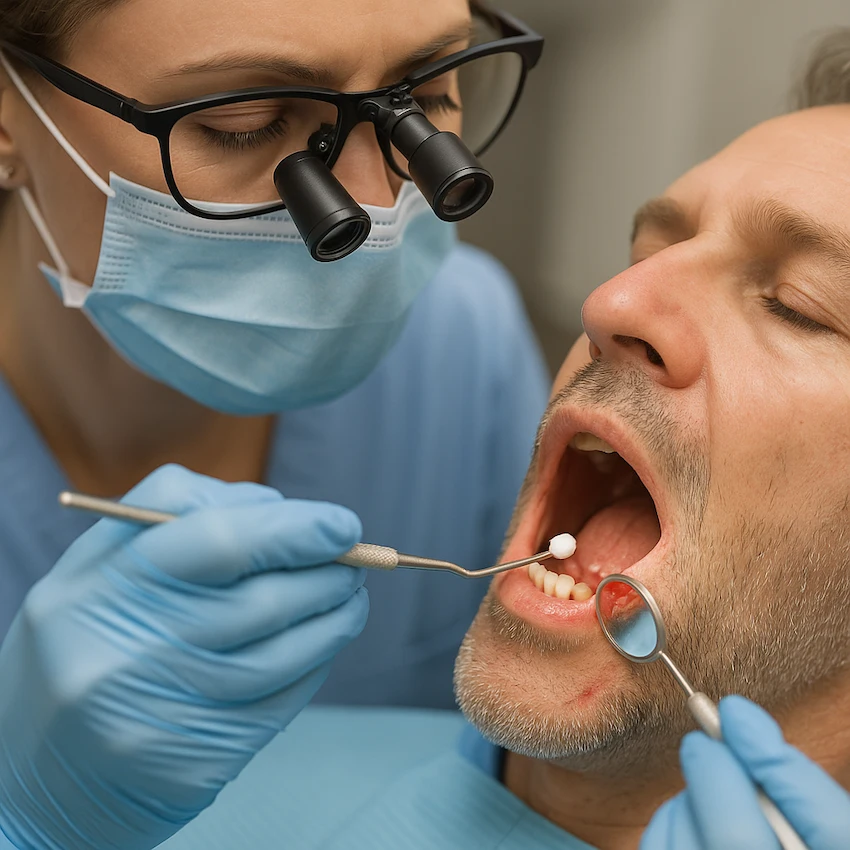
D9110 code is only used when the dentist performs investigations of a very limited nature and in an emergency-oriented way to relieve pain. It is applied when a patient has a sudden toothache caused by pulpitis, periapical abscess, exposed dentin, or irritation with the prosthesis. For instance, a patient with severe pain resulting from a filling loss or infection around a partially erupted wisdom tooth can receive immediate treatment under D9110. The doctor may use the application of soothing medicaments, or if there is pus accumulated, cut the area and let the pus out to eliminate the pain and reduce the swelling. Such services are not a part of the programmed care but are performed in emergencies for immediate symptom relief.
This code is also used by dentists in situations where they have to postpone the treatment for some other reasons like patient anxiety, lack of radiographic clarity, and ongoing medical therapy contraindicating full intervention. In these scenarios, D9110 serves as a record of activity that brings practical clinical benefit while ensuring the patient’s safety and current state of health. In dental clinics, the right application of the D9110 code is one of the ways by which they maintain accurate billing practices, transparency in documentation, and compliance with the ethical standards of patient management.
D9110 Palliative Care: What is Included and What is Excluded?
D9110 is a code that outlines the ways in which pain and discomfort can be eased locally. These methods are normally those that emerge from complications of another illness that have not been directly treated. For instance, some of the uses might be the insertion of a sedative dressing in a deeply excavated area, the alteration of a prosthetic device causing the soft tissue to be injured, or the increase and drainage of a limited abscess. Besides that, this code also allows for the topical local anesthetic application, desensitizing agents, or temporary restorations with the help of calming compounds like zinc oxide eugenol (ZOE). All these methods share one common clinical goal: to alleviate pain and keep the oral function going until the underlying cause can be appropriately dealt with.
Moreover, a significant measure in D9110 is those that provide a perspective of the long-term solution to the problem. These include permanent restorations, extractions, root canal treatments, and periodontal therapies. In Addition, there is a ban on comprehensive examinations and rarely any radiographic assessments are done during the same appointment. The guideline behind it is quite straightforward: D9110 should only be used as temporary relief. Incorrect usage of the code – for example, as in the case of coding it together with a full restorative or endodontic procedure on the same day – may result in inconsistencies in billing and possible compliance issues. The appropriate separation of palliative and definitive care helps patient records to be well-organized and both the provider’s and patient’s rights to be protected.
Inclusions and Exclusions Under D9110
| Included (Covered by D9110) | Excluded (Not Covered by D9110) |
| Placement of sedative or medicated temporary filling | Full root canal therapy or extraction |
| Incision and drainage of a localized abscess | Permanent restorative treatment |
| Adjustment of the prosthesis is causing mucosal irritation | Surgical or periodontal therapy |
| Application of a soothing topical anesthetic or dressing | Comprehensive exam and radiographs |
| Desensitization for exposed dentin or enamel sensitivity | Scaling, root planing, or definitive treatment |
How Do Dental Practices Use D9110?
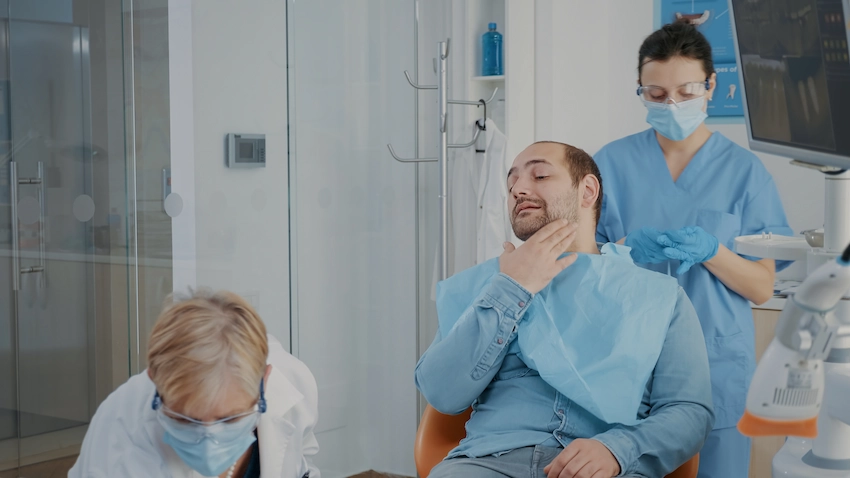
In most modern dental situations, D9110 is considered a must-have item for the management of emergencies and triage. It is the local intervention under the dentist’s direct supervision that the doctor performs a clinical examination and then gives the intervention immediately after that. A dentist might take a sample of an abscess, insert a temporary filling, or, if the problem is caused by a tight-fitting denture, take out the pressure. By means of this action, getting back to normal in both comfort and function is the aim in the quickest way possible. The patient is later scheduled for the next visit to complete the treatment plan when the stabilization has been attained.
Dental clinics also use D9110 in their electronic health record (EHR) and insurance coding systems. It is compulsory that every time a D9110 is recorded, it should be accompanied by the documentation of the patient’s complaint, the procedure(s) done, the materials used, and the doctor’s recommendations. Many dental software solutions have made it possible for clinicians to link D9110 directly with the categories of emergency visits thereby creating a standard and compliant way with both ADA and payer regulations. Correct coding lowers the chances of billing disputes and indicates that the dentist is a good listener, morally upright, and can be trusted even in situations that were not anticipated.
What Are the Advantages of Using Dental Code D9110?
The employment of D9110 is accompanied by various benefits in both the healthcare and managerial spheres. Clinically, the code allows dentists to deliver fast pain relief to patients who might postpone visiting a dental clinic due to problems with scheduling or financial issues. Infections spreading, abscesses enlarging, or even general health getting worse due to inflammation may result if timely palliative treatment is not administered. It also gives the dentist the opportunity to carry out a professional examination while taking into account the patient’s endurance and preparedness for full dental procedures. Therefore, D9110 is a great example of an emergency dental care solution that is based on scientific evidence and puts the patient first.
On the administrative side, D9110 leads to improved medical coding and billing precision. This code makes sure that both time and materials consumed during an emergency visit are properly compensated. This openness is good for both sides – the patient who is clear about the reason for the treatment and the clinic that is carrying out its ethical compliance. Moreover, in conjunction with the separate coding of emergency palliative visits, healthcare providers can analyze these data sets to better understand the pain causes that lead to recurrent visits in their local population thus better informing preventive care strategies. So to sum up, apart from its billing functions, the D9110 code acts as a stepping stone towards the creation of a dental care culture focused on accountability and continuous improvement.
Warnings and Cautions Related to the Dental Code D9110
It is recommended that the usage of D9110 should be limited and ethical notwithstanding its efficiency. It is the responsibility of the dentists to see to it that the reason for the palliative intervention is obvious, a precise procedure is described and it is confirmed that no definitive treatment was done in that appointment for every D9110 entry. Failure to provide these details can result in rejection of insurance claims or compliance audits questioning the necessity of the medical procedure. It is a good practice to have both narrative and patient consent notes affirming the treatment as temporary and further care being required.
The issue of overusing D9110 is also a matter that can raise professional concerns. Excessive palliative visits without follow-up definitive treatment may insinuate the mismanagement or neglect of the case. Dentists should not only provide short-term relief but at the same time make sure that patients are booked for permanent solutions like fillings, root canals, or prosthetic repairs. The ethical principle of beneficence, i.e., doing what is best for the patient, is the one that determines the proper use of D9110. Being fully compliant with ADA and payer guidelines keeps professional credibility intact and is a way of showing patient trust.
Main Points of D9110 Performance
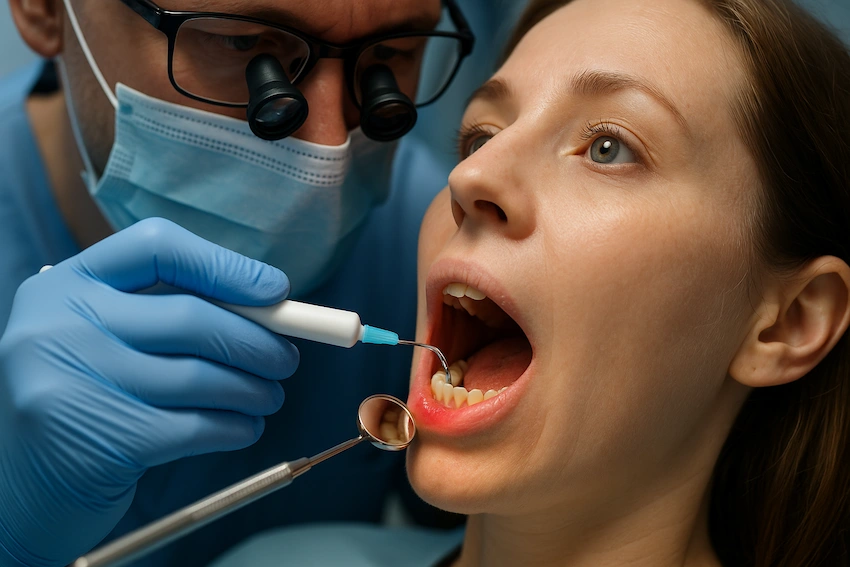
Delivering a D9110 palliative treatment is a structured, safe and efficient clinical process based on evidence studies with patient comfort taken into account. The most important steps are:
- Revising patient history in detail and looking for contraindications.
- Performing a limited intraoral examination to determine the exact source of pain.
- Local or topical anesthesia is administered if necessary for comfort.
- The palliative intervention is carried out (e.g., sedative filling, drainage, prosthesis adjustment).
- Inflammation is reduced by the application of soothing or medicated dressings.
- Post-procedure care instructions are given, and medication is prescribed, if indicated.
- Recording the whole performance in the dental chart including patient response and follow-up plan.
Each step of the way, the focus has to be on infection control, material safety, and patient communication. It is a must that the doctors inform the patients that the relief is just temporary and that they need to come back for a permanent solution. By standardizing the workflow in clinics, they can keep the same quality level, meet the requirements of the regulations, and also the ethical standards of care.
Sample Case for D9110
A male patient aged 39 years came with a complaint of a constant toothache in the left mandibular molar region. Upon examination, the decay was found by the dentist to be very deep and close to the pulp chamber, but no abscess was seen. After the dentist removed the debris, he placed a copper dressing with calcium hydroxide paste as a sedative and covered it with a temporary filling. The pain was relieved immediately and the patient was instructed to come back for root canal therapy. The record comprises the material used, clinical findings, and the patient’s consent for palliative care. This is a case that perfectly demonstrates the correct D9110 usage.
Another time, a 60-year-old complete denture-wearing patient came with a complaint of painful mouth lining under the upper denture. On looking, the dentist saw sore spots from rubbing and reddened tissue. The dentist by reshaping the denture flange, polishing the abrasive surface, and applying a protective ointment containing triamcinolone relieved the pain. The patient says instant comfort and progress were achieved. Since this visit was only about pain relief without a definitive prosthetic reconstruction, the correct CDT code recorded is D9110.
Common Materials and Techniques Used in D9110
First of all, the material and the method used for the palliative operations have to be the right ones if the desired outcome is going to be achieved:
- Sedative Dressings: The materials used may be zinc oxide eugenol, calcium hydroxide, or temporary glass ionomer ones.
- Topical Agents: These are lidocaine gel, benzocaine, or corticosteroid-based anti-inflammatory mastication.
- Irrigation Solutions: Use chlorhexidine or saline to clean infections.
- Prosthetic Modifications: Denture components such as acrylic trimming burs, silicone polishers, and soft liners.
With the help of these instruments and consumables the dental practitioners can comfortably perform the pain relief tasks in a way that is compatible with the biology and causes minimal tissue trauma. The right choice of palliative means is a guarantee for quick symptom disappearance and thus the patient becomes more willing to undergo the required definitive treatment later on.
References:
- American Dental Association. (2023). CDT 2024: Dental Procedure Codes. American Dental Association Publishing.
https://www.ada.org/resources/practice/dental-coding/cdt - Christensen, G. J. (2019). Palliative dental care: Relief of pain and anxiety in clinical practice. Journal of the American Dental Association, 150(3), 178–183.
https://doi.org/10.1016/j.adaj.2018.12.015 - Fricton, J. R., & Dubner, R. (2020). Orofacial Pain: Guidelines for Assessment, Diagnosis, and Management (6th ed.). Quintessence Publishing.
- Glick, M., Feagin, J., & Burgette, J. (2022). Documentation and coding in dental practice: Ethical and administrative implications. Journal of Dental Education, 86(9), 1052–1061.
https://doi.org/10.1002/jdd.12872 - Hargreaves, K. M., & Berman, L. H. (2021). Cohen’s Pathways of the Pulp (12th ed.). Elsevier.
- Heymann, H. O., Swift, E. J., & Ritter, A. V. (2020). Sturdevant’s Art and Science of Operative Dentistry (7th ed.). Elsevier.
Frequently Asked Questions About D9110 – Palliative Treatment of Toothache
It identifies palliative procedures aimed at immediate relief of pain or discomfort without addressing the root cause permanently.
During emergency or unplanned visits when the patient requires urgent relief but no major restorative or surgical treatment is performed.
It can be paired with a limited evaluation (D0140) only if each service is distinct and separately documented.
Sedative dressings like zinc oxide eugenol, calcium hydroxide, and temporary glass ionomer materials are common choices.
No, it provides temporary comfort until a definitive treatment plan can be executed.
Clinical notes must include the patient’s symptoms, the palliative method used, and a statement confirming no permanent procedure was completed.
Yes, when documentation proves that palliative treatment was medically necessary and performed ethically.
Only when separate, clearly documented emergency episodes occur. Continuous use for the same condition is not advised.
It ranges between $80–$160 per visit, depending on clinic standards, materials, and regional pricing.
It ensures that patients receive timely, compassionate relief while protecting the dentist’s ability to code and bill accurately for emergency interventions.

