


Understanding Dental Code D7220
Dental Code D7220 refers to the surgical removal of an impacted tooth which necessitates the removal of bone in a controlled manner and the division of the tooth. Dentist Polen Akkılıç together with her team, uses this code when dealing with instances where a tooth is stuck under the bone tissue and has to be accessed via an advanced surgical method. Besides helping the doctor to keep precise records, the use of this code facilitates better communication with insurance providers during claims. Moreover, it mirrors the level of clinical complexity that was necessary for the removal as well as the detailed follow-up care.
Impacted molars or canines are the most common causes of discomfort, swelling, and limitation of jaw movement. Professor Doctor Coşkun Yıldız elaborates that D7220 serves as a tool for the classification of challenging cases that need the use of specialized techniques like high-speed bur sectioning and sterile irrigation. By using this code, your dental team also becomes capable of monitoring the results over time and keeping up with the clinical records. The code’s transparency is instrumental in facilitating predictable treatment planning and evidence-based oral surgery.
When to Use D7220 Dental Code?
- Dentists refer to D7220 when the scenario is such that the tooth is either fully or partially covered with bone and needs a surgical approach, which includes flap reflection and controlled bone removal.
- Dentist Polen Akkılıç and her team decide on this code when the radiographs indicate that a tooth is horizontally, mesially, or distally positioned in a manner that a simple extraction is not possible.
- This code is employed when the surgeon is obliged to divide the tooth into several pieces for a safe extraction without causing any damage to the adjacent teeth or nerve structures.
- Professor Doctor Coşkun Yıldız implants D7220 in his repertoire for dense cortical bone, abnormal root anatomy, or deep impaction cases.
- D7220 is the eventuality where the patient has recurrent pericoronitis, swelling, or structural pressure that cannot be alleviated without surgical intervention.
- The code is implemented when the complexity of the operation surpasses that of D7210 or D7230 and the use of advanced instrumentation is necessary.
- Dentists assign this code to impacted teeth that could lead to the development of a cyst or the progression of bone inflammation.
How the D7220 Procedure Works: What to Expect?
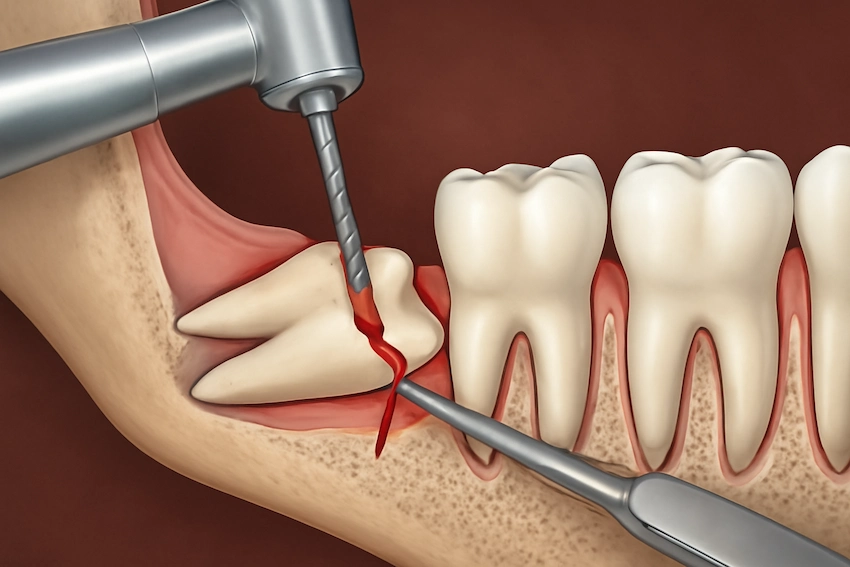
While performing a D7220 operation, the dentist Polen Akkılıç starts the procedure with the injection of a local anesthetic aimed at complete pain control. Sedation might be administered for nervous patients after a clinical assessment. After the numbing of the area, a mucoperiosteal flap is lifted to get access to the impacted tooth. The surgical team detaches the tooth in a controlled manner by using a rotary instrument and sterile saline irrigation.
Once the tooth is exposed, the dentist cuts the crown and the roots to be able to remove each part separately in a controlled manner. The surgical site is washed with sterile saline to remove debris and lower bacterial load. Sutures are put in place to aid primary healing and to keep the soft tissues firm. Patients are usually given ibuprofen for pain relief and amoxicillin if there is a risk of infection. The care team gives the post-operative instructions such as gentle rinsing with chlorhexidine mouthwash for maintaining oral hygiene.
Advantages and Disadvantages of Using Dental Code D7220
Advantages
- D7220 is an excellent example of detailed documentation of intricate surgical maneuvers such as bone removal and tooth sectioning, thus, it is very helpful in giving the right insurance classification.
- The code assists Dentist Polen Akkılıç and her team in conveying the surgical challenge in a very clear way to the insurance providers and specialists.
- If D7220 is correctly employed, it serves as a safeguard for medical records by showing the surgical intervention in detail.
- Medical records reflect the true extent of the surgical intervention when D7220 is used properly. In this way, it aids in predictable treatment planning by setting clinical standards for an impacted tooth removal operation.
- Professor Doctor Coşkun Yıldız employs this code to bring about uniformity in the surgical records of complex oral surgery cases.
Disadvantages
- As the procedure is inherently surgical in nature, D7220 can lead to increased post-operative swelling, which necessitates a more carefully planned aftercare regimen.
- Patients might be required to take drugs like ibuprofen or amoxicillin in order to relieve the symptoms of inflammation and to lower the risk of infection.
- The recovery period is longer as compared to that of a simple extraction; hence, patients should adhere to very strict hygiene and activity instructions.
- The operation demands the skill of an advanced operator; thus, it might not be available in clinics that lack personnel with surgical training.
- Certain insurance plans may require additional documentation before giving the green light to their reimbursement for surgical extractions.
Cautions Related to Dental Code D7220
Your dentist will look through your medical history before carrying out the D7220 operation as systemic health conditions in general, may still influence the healing process. In particular, people with heart diseases, insulin-dependent diabetes in poor control, or bleeding disorders might have to change their medication or obtain a medical clearance. A few patients may also be given a prophylactic antibiotic such as amoxicillin to keep the infection at bay. The clinical team takes the responsibility to ensure that all decisions are made for safety and the expected outcome.
After surgery, patients should keep the area safe by not doing any hard physical work or smoking. Dentist Polen Akkılıç is telling her patients to clean their teeth and mouth gently and not to interfere with the sutures. Soothing saltwater rinses and the use of chlorhexidine as prescribed help to relieve the inflammation and keep the area clean. Following these directions will guarantee the proper healing of the wound and the chances of experiencing complications will be very low.
Comparison of D7220 with Related Dental Codes
Dental Code D7220 is a unique surgical extraction code that is different from other codes in that it specifies the operations where the removal of the bone and the sectioning of the tooth are involved. When the tooth is erupted but it needs surgical access D7210 is the code that is referred to and when the tooth is a partially bony impaction D7230 is the code that is used. Professor Doctor Coşkun Yıldız states that each code is in line with the different anatomical features and surgical difficulty levels. The right choice of the code helps to record the treatment accurately.
Comparison Table
| CDT Code | Definition | Surgical Complexity | Tooth Condition |
| D7210 | Removal of an erupted tooth requiring bone removal | Moderate | Visible tooth, surgical access needed |
| D7220 | Surgical removal of an impacted tooth with sectioning | High | Fully or mostly trapped in bone |
| D7230 | Removal of a partially bony impacted tooth | Moderate | Partially trapped tooth |
This table supports clear distinctions between procedures, helping your dentist apply the most appropriate code. Accurate communication reduces errors and strengthens your dental documentation.
Example Case for D7220
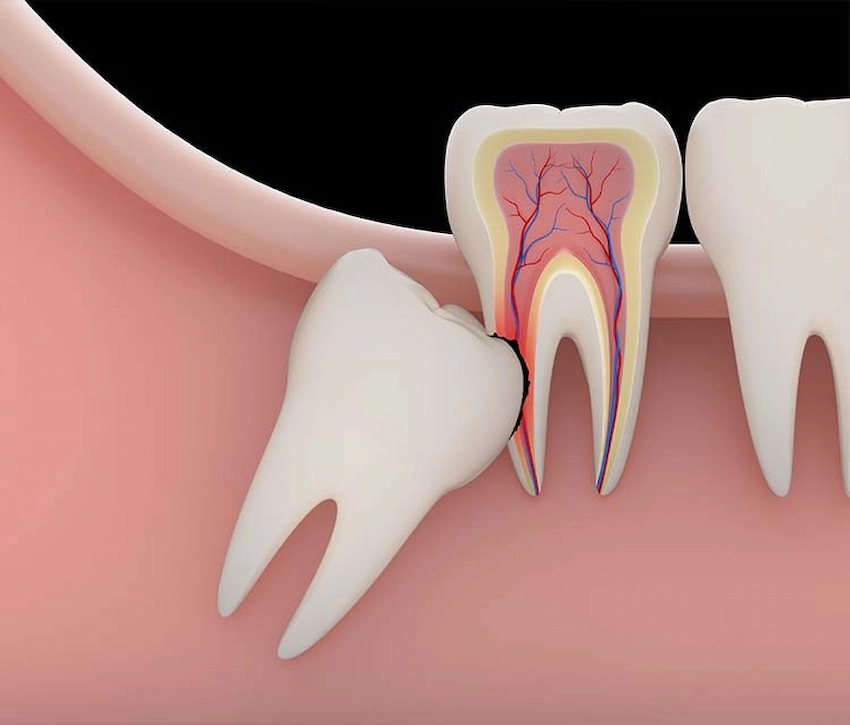
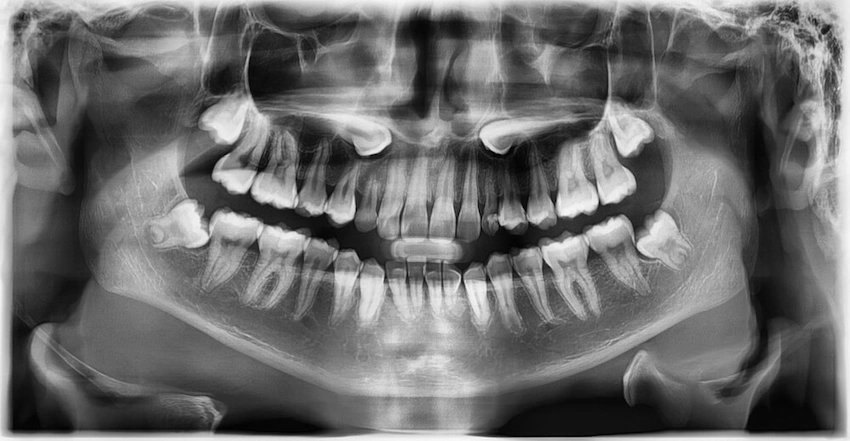
Dentist Polen Akkılıç treated a 29-year-old patient with swelling and pain in the lower jaw. The x-ray revealed a horizontally impacted mandibular third molar that was the cause of the second molar being pressed. The surgical team decided on a D7220 extraction as a way to alleviate the pressure and keep the area free from repeated infections. They gave the patient lidocaine and with the aid of a surgical drill, divided the tooth into three separate fragments for easy removal.
The patient was administered ibuprofen 400 mg orally right after the operation to alleviate pain and was given a short amoxicillin course as a preventive measure against infection. Sutures were used to fix the surgical area and to firm up the soft tissue from the time of healing. On the check-up visit, the patient reported that the jaw movement was more comfortable, and the swelling and redness had subsided. This case serves as a reference to the capability of D7220 in the removal of the surgically mounted third molar.
References:
- American Dental Association. (2024). Current dental terminology (CDT 2024): The ADA practical guide to dental procedure codes. American Dental Association Publishing.
- Peterson, L. J., Ellis, E., Hupp, J. R., & Tucker, M. R. (2019). Contemporary oral and maxillofacial surgery (7th ed.). Elsevier.
- Bergenholtz, A., & Nanci, A. (2020). Management of impacted teeth: Diagnostic criteria and surgical approaches. Journal of Oral and Maxillofacial Surgery, 78(4), 612–620. https://doi.org/10.1016/j.joms.2019.12.010
- Chiapasco, M., & Zaniboni, M. (2017). Surgical techniques for impacted mandibular molars. International Journal of Oral and Maxillofacial Surgery, 46(9), 1157–1165. https://doi.org/10.1016/j.ijom.2017.03.014
- Saghafi, S., & Dodson, T. B. (2021). Postoperative outcomes and complication management after impacted third molar removal. Oral Surgery, Oral Medicine, Oral Pathology, Oral Radiology, 132(3), 281–289. https://doi.org/10.1016/j.oooo.2021.05.005
Frequently Asked Questions About Dental Code D7220
The code refers to the removal of a surgically impacted tooth in a situation where bone removal and sectioning are required. Dentists use it for extractions that are difficult and that require advanced access.
Not at all. Dentists use D7220 for any one of the impacted teeth if it is necessary to remove the bone. The code is based on the surgical difficulty, not the type of tooth.
Patients are made comfortable as the operation is done under local anesthesia, for instance, lidocaine, which is a complete numbing agent. It is a slight pain that disappears after taking drugs like ibuprofen.
The majority of patients need sutures to help the healing process. Your dentist checks them during the follow-up visits.
Most insurance providers consider it a surgical code. Coverage, however, is dependent on your specific plan.
Most patients recover within 1-2 weeks if they take proper care. Your dentist will give you the instructions that will help the healing process be safe.
Yes, bone removal is what makes the tooth removal safe. It shields the adjacent parts and lessens the chances of a surgical risk.
A surgeon, Dentist Polen Akkılıç and her team, might be able to do it. Professor Doctor Coşkun Yıldız can take over the referral of complex cases.
If there is a need to relieve the pain, dentists normally recommend Ibuprofen, and Amoxicillin is the medicine that is given in case a bacterial infection is expected. They will give you a prescription that is most suitable for you.
The first day after the operation you have to take it easy. Gradual return to daily activities helps the healing process be safe.

