


Dental Code D5512
Dental Code D5512 points to a clinical program in which a complete denture base repair after a break is involved. Highly likely, this situation is the result of a prosthesis fracture due to the functional stress of the patient’s daily life. In the case that you use a denture as a complete masticatory support, the acrylic material may get weaker and create visible cracks. Dentist Polen Akkılıç and her team not only treat this problem but also perform a very exact diagnostic assessment to figure out the depth, direction, and root of the mechanical causes of the fracture. Their procedure allows you to get a repair that stabilizes the denture again thus restoring structural integrity and comfort. In addition, this code acts as a guarantee for the documentation of your treatment record, which reflects the exact clinical service you receive.
At Lema Dental Clinic, Professor Doctor Coşkun Yıldız says that the identification of the right CDT code is a great help for the continuity of care. In case you suffer from recurrent fractures or pressure ulcers as a result of a damaged denture, the D5512 code is an indication of your treatment history thus the team bringing you care will track it. The thoroughness of documentation at this level facilitates the next steps in a safer way and gives a chance for quicker decision-making of long-term solutions such as new dentures or implant-supported options. The knowledge of this code helps you to understand that your care is conducted in accordance with medical standards and the reason why precise documentation is protective of your oral health.
When to Use D5512 Dental Code
- When the fractured denture base of a complete denture is clearly visible and the structure needs to be fixed.
- When the break extends through the midline or the palate area of the denture.
- When the denture becomes unstable because of a damaged acrylic base.
- When the broken part causes pain, irritation of the mucosa, or manifestation of pressure in the cheek during grinding of food.
- When the support with denture base resin can perform the function completely and safely again.
The Working Parts of the D5512 Procedure: What to Expect?
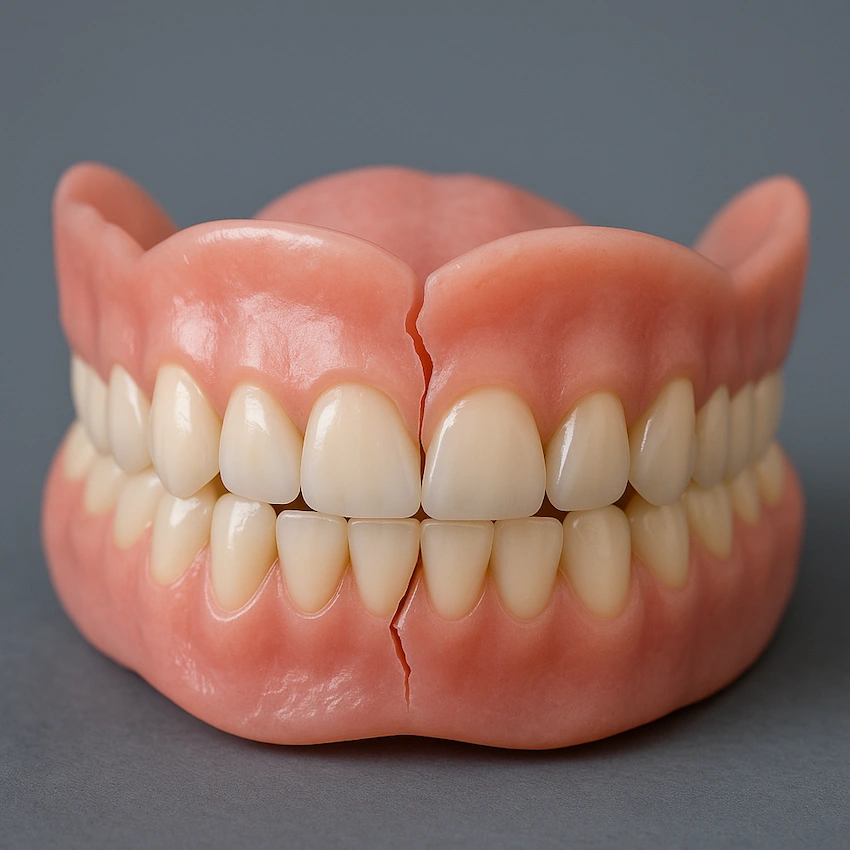
An essential part of the D5512 procedure is the initial evaluation of the denture that has been damaged. Along with Dentist Polen Akkılıç, the crew disinfects the splitting line, gets rid of the loose fragments, and by bonding prepares the acrylic surface. Through the use of high-strength denture base resin, they piece the denture parts together, thus making sure that the new material is firmly incorporated with the old one. The whole controlled process happens in a specialized laboratory where the technicians not only contour but also match the thickness and color of the denture to its original.
Therefore, you are provided with denture repair that is not only visually consistent but also has the structural integrity of the original one. It is after that that the team finishes the job by polishing the acrylic as well as smoothing the parts that go inside the mouth, thus preventing irritation. Ortho Surgeon Professor Doctor Coşkun Yıldız examines the bite relationship and performs an evaluation of denture stability during functional movements.
It is an assurance that the reconnected base is able to support the correct morsel processing as well as pressure distribution from the oral tissues on an equal level. Moreover, you obtain instructions for the use, cleaning, and storage of your denture so as not to damage the repair while leaving the clinic. Equipped with such a regimen, the Lema Dental Clinic offers a durable and comfortable dental prosthesis that is in line with the safety requirements of daily use.
Advantages and Disadvantages of Using Dental Code D5512
Advantages
- After a denture base has been broken and fixed, it offers a standardized way of recording the repair in the code system.
- Dentist Polen Akkılıç and her team use it as a tool to document the procedure in detail.
- It is in line with the transparent billing and treatment planning process.
- It is a means of ensuring that the repair is done in accordance with evidence-based prosthodontic protocols.
- When there are concerns about the denture in the future, it is a way of retaining clinical clarity.
Disadvantages
- The disassembly of the denture base only, without removal of the denture teeth, is the only case in which it is applicable.
- In case of component-wise repair, it is necessary to have extra CDT codes besides this one.
- If the denture no longer fits properly, it may not be a solution to long-term problems.
- First of all, it will not be able to stop repeated fractures in severely weakened dentures.
- It can be an indication of a new denture or an implant-supported prosthesis in the future.
Cautions Related to Dental Code D5512
In the case where your denture is mended, the device should still be handled with caution not to cause new breaks again. A dentist, Polen Akkılıç, provides you with the correct cleaning methods and informs you how to prevent biting with too much force, especially when eating hard foods. Advising to wash the denture while holding it on a towel so as not to let it fall not to break yourself is what she explains. These safety measures will lower the risk of your denture being damaged and will make it possible for the denture to have the same strength after the D5512 repair. Using these methods, you create the conditions for your prosthesis to be with you for a longer time and at the same time, you make sure that your soft tissues are not irritated.
Repeated breakage, in some instances, may be misconstrued as surface problems only, which eventually will be entrusted to Prof. Doctor Coşkun Yıldız for an in-depth evaluation of your occlusion, bone structure, and bite force. After thorough examination she can tell if the base of your denture is over the break is the cause of continued fractures. If it is the case that your base keeps breaking, it may be time for a new denture or an implant-supported device at the Lema Dental Clinic to be your solution. You can thus avoid the continuous ailments and keep your oral function stable and safe with this advanced approach.
Comparison of D5512 With Related Dental Codes
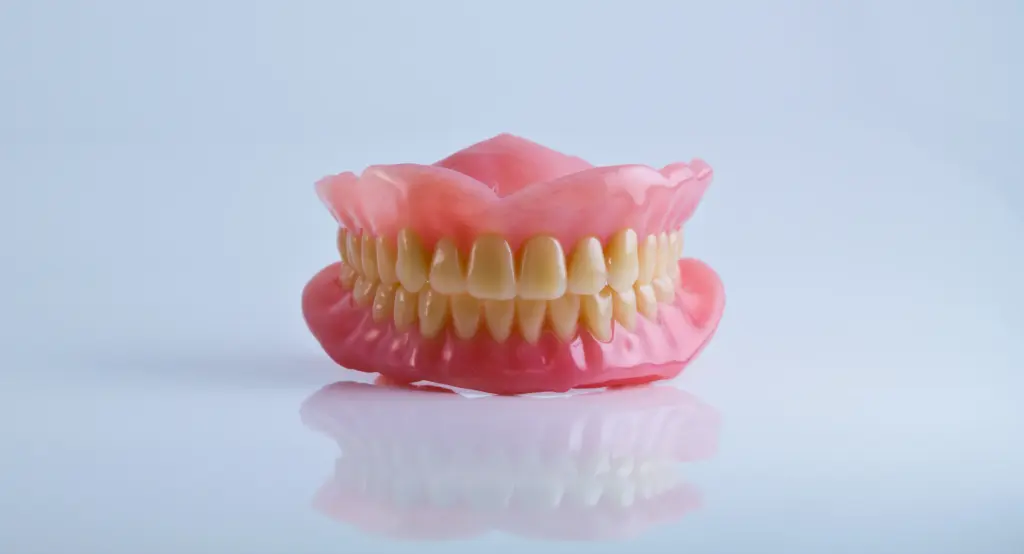
D5512 is a code that refers to the mending of a fractured complete denture base, whereas D5520 or D5500 are different types of codes. Dentist Polen Akkılıç states the differences in these codes to make it easier for you to decide which service fits your prosthesis the best. Partial denture-related codes or those repairing the denture teeth are not the ones of D5512. By distinguishing these codes emphatically the clinic can provide precise treatment records and you get directions concerning the financial side of your care. This precision removes misunderstanding and enables you to get the repair process.
The denture Professor Doctor Coşkun Yıldız analyzes the related codes when evaluating your denture. He can also use D5512 along with other operations if your prosthesis has cracked teeth, worn occlusion, or is in need of reinforcement. With this method, you are guaranteed that your treatment will be complete, and every component of your prosthesis will be taken care of. You get the benefit of a tailored oral care plan that fits your needs of oral health and also makes future comfort possible.
Example Case for D5512
Once a patient came to Lema Dental Clinic with a complete upper denture broken at the midline due to functional wear over several years. The dentist Polen Akkılıç evaluated the denture and pointed out that D5512 was the right CDT code for the repair. Her team executed the planned repairing procedure, supported the weakened acrylic, and polished the denture to get rid of surface irregularities. The repair not only returned the denture’s functionality but also made the patient comfortable with chewing again. Following the operation, the patient was handed the instructions for the step-by-step method of care for the repaired denture and the precautions against future damage.
Before giving the denture back to the patient, Professor Doctor Coşkun Yıldız conducted a complete occlusal examination. To see how the denture fitted with the lower arch, he looked closely and made small adjustments to the high points that could cause stress. The patient said that he was feeling relieved because the denture after restoration was comfortable and stable. This example explains how safe function is facilitated by D5512 repairs and why intervention at an early stage is a way of protecting your oral tissues from possible complications.
Treatment Overview Table
| Treatment Step | Description |
| Initial Evaluation | Denture fracture assessment by Dentist Polen Akkılıç |
| Laboratory Repair | Reinforcement using high-strength denture base acrylic |
| Finishing | Polishing to improve comfort and reduce irritation |
| Final Fit Check | Occlusal evaluation by Professor Doctor Coşkun Yıldız |
References
- American Dental Association. (2023). Current Dental Terminology (CDT 2024): The official coding guide for dental procedures. American Dental Association Publishing.
- Craig, R. G., Powers, J. M., & Wataha, J. C. (2019). Dental materials: Properties and manipulation (11th ed.). Mosby Elsevier.
- Zarb, G. A., Hobkirk, J., Eckert, S., & Jacob, R. (2013). Prosthodontic treatment for edentulous patients: Complete dentures and implant-supported prostheses (13th ed.). Elsevier.
- Felton, D. A. (2011). Complete edentulism and denture therapy: Clinical outcomes and patient satisfaction. Journal of Prosthodontics, 20(2), 100–108.
- Tokar, L., & Graser, G. (2020). Repair protocols for fractured complete dentures: Laboratory reinforcement and clinical considerations. Journal of Prosthetic Dentistry, 124(4), 456–462.
Frequently Asked Questions About Dental Code D5512
Dental Code D5512 represents the clinical repair of a broken complete denture base using high-strength acrylic. This code ensures clear documentation and describes the exact procedure performed during your denture repair.
Dentists use D5512 when the denture base has a structural fracture that requires laboratory reinforcement. The code guides safe treatment planning and helps protect the long-term function of your denture.
D5512 applies only to repairs of the complete denture base and not to damaged denture teeth. Additional CDT codes are required if tooth replacement or clasp repair is needed.
This code helps Dentist Polen Akkılıç and her team create accurate treatment records and ensure you receive a repair that meets clinical quality standards. It also allows Professor Doctor Coşkun Yıldız to monitor your denture’s long-term performance.
A D5512 repair reestablishes the structure of the denture; however, the endurance over time will still be reliant on a well-fitting denture and routine care. In case of repeated breaks, your dentist might suggest a new denture or an implant-supported prosthesis.
Usually, the D5512 hardware rewiring is finished on the same day or the following day at the latest, this depends on the intricacy of the fracture. The working process at the laboratory is what guarantees the outcome to be both safe and long-lasting.
A D5512 repair works best for single-area fractures and might not be able to address issues resulting from a stretched or improperly fitting denture. The decision of which option would be more comfortable in the long run, a repair or a new denture, will be made by your dentist.
The fixing makes the part that is weakened strong, but it is not able to stop fractures that can be caused by bite pressure, changes in the bone, or if the denture is used incorrectly. Good daily care and regular visits to Lema Dental Clinic will help keep the denture stable.

