


Dental bridges and partial dentures are two typical remedies that can greatly help a person when they are facing the problem of missing teeth. These two solutions are the most discussed alternatives when the subject is replacing lost teeth. Generally, both are methods of bringing back the lost teeth to the user and improving the chewing function of the mouth. Nevertheless, finding out the advantages, the differences, and the key factors that matter in choosing the right one is the only way to be able to decide which one of them will be the most suitable ones.
What is a Dental Bridge?
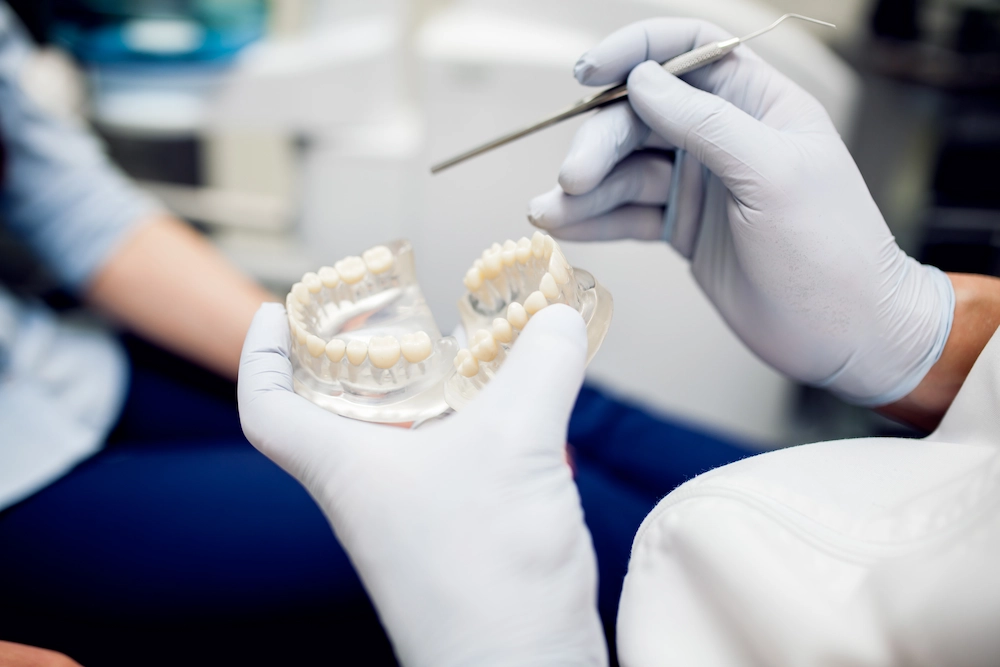
The term dental bridge refers to the use of a fixed dental appliance for the replacement of missing teeth.
As the name suggests, the bridge directly “bridges” the empty space that has been caused by the lack of teeth, hence the neighboring teeth are linked up. Usually, the bridge is a couple of crowns for the adjacent teeth and in the middle, there are one or more artificial teeth placed. The first and foremost aspects to be considered in the production of bridges are materials, which are often metal-ceramic alloy and zirconia or their mixture in this case, to provide the properties of long-life and naturalness.
Benefits of Dental Bridges:
- Durability: Dental bridges are permanently attached and hence give off the longest possible results, making them a profoundly dependable solution.
- Restored Functionality: Bridges not only restore the lost part of the mouth when it comes to chewing and speaking but they also prevent the rest of the neighboring teeth from moving into the empty space.
- Beauty Improvement: Dental bridges provide a natural-looking one that matches well with your existing dentition.
Considerations for Dental Bridges:
- Tooth Preparation: The reshaping procedure of the adjacent teeth required for crowns might be disliked by some patients.
- Cost: Dental bridges are generally more expensive than partial dentures.
- Maintenance: Good oral hygiene is very important to stop the development of plaque around the crowns which will then lead to the bridge being long-lasting.
What is a Partial Denture?
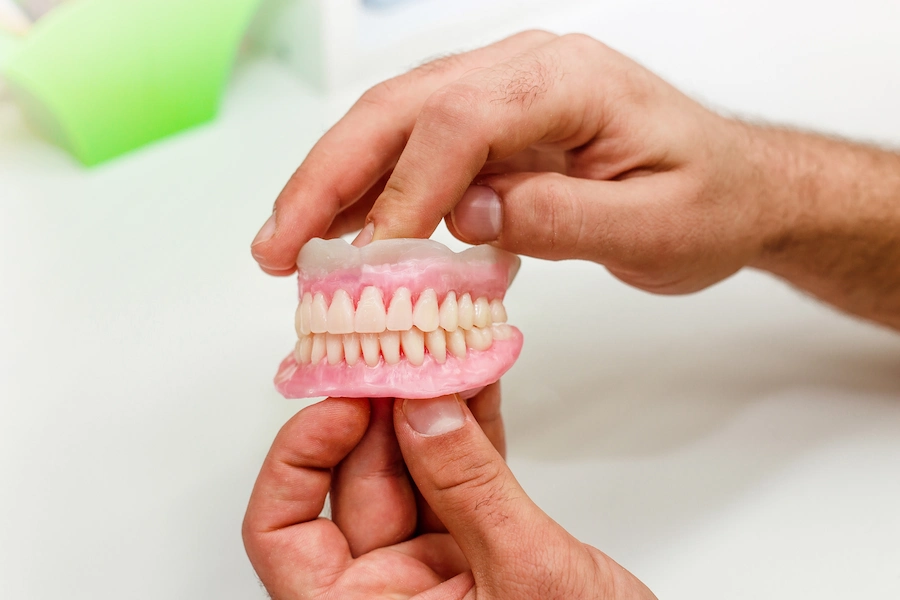
A partial denture is a device that can be taken out and is made to replace one or more missing teeth. It is a metal or acrylic base with artificially made teeth attached to it. The partial dentures are designed so that they fit snugly in the mouth and they rest on the remaining natural teeth.
Benefits of Partial Dentures:
- Removability: Partial dentures can be removed, hence, they can be easily cleaned and the oral hygiene can be easily maintained, which is from an oral hygiene perspective.
- Less Invasive: In contrast to dental bridges, partial dentures are not designed to cut or reshape the existing teeth, hence, they are a less invasive option.
- Cost-Effective: Partial dentures are mostly less costly than dental bridges, thus they are a solution that is friendly to the budget.
Considerations for Partial Dentures:
- Comfort: There are some patients who might argue that they feel the partial dentures as uncomfortable to wear because they are bulky or they cause irritation to the gums.
- Aesthetic Limitations: Though the look of partial dentures has changed for the better, they might still not be able to make a match as good as dental bridges.
- Maintenance: To maintain the denture and protect it from plaque, a regular cleaning routine is required.
Dental Bridge vs Partial Denture: Key Differences
| Feature | Dental Bridge | Partial Denture |
| Durability | Long-lasting, fixed solution | Removable, may need replacement over time |
| Cost | More expensive | More affordable |
| Tooth Preparation | Requires modification of adjacent teeth | No need to modify adjacent teeth |
| Comfort | Fixed, no movement | Removable, may feel bulky or uncomfortable |
| Aesthetic Appearance | Natural-looking, blends well with existing teeth | May be less seamless in appearance |
| Maintenance | Requires good oral hygiene around the bridge | Requires regular cleaning and care |
Which is the Best Solution for Missing Teeth?
Picking a dental bridge or a partial denture is a matter of what is medically necessary for your mouth, which includes your desires and available money. If a fixed, long-lasting solution is what you want, and you are ready to pay for the necessary treatment, then a dental bridge would be the best option for you. Whereas, if your concern is mainly keeping costs low and having the freedom of a removable device, then partial dentures would be a better alternative.
First of all, the best decision can only come from the dentist’s consultation. The dentist’s diagnosis will be based on your dental health, will take into account your aspirations, and will offer you the advice that best suits you to live your life more smoothly.
How Are You Going to Find the Right Way Out at Lema Dental Clinic?
We, at Lema Dental Clinic, can provide you with the best and the most effective solutions to your missing teeth problem, either with dental bridges or partial dentures. Our professional dentists will team up with you to develop a goal-oriented treatment plan that is perfectly suited to your needs and oral condition.
Both of them can be regarded as permanent solutions, and by the means of Lema Dental Clinic’s innovative technology and skilled intervention, you will receive the best solution tailored for your condition.
Frequently Asked Questions (FAQ)
A dental bridge is a fixed restoration that spans the gap created by missing teeth, while a partial denture is a removable appliance that also replaces missing teeth, but it can be taken in and out of the mouth for cleaning.
Yes, dental bridges are a permanent solution as they are fixed in place by crowns on the adjacent teeth, providing long-lasting results.
Partial dentures can last between 5 to 10 years, depending on the materials used and how well they are maintained.
Dental bridges are fixed and may feel more comfortable because they don’t move, while partial dentures are removable and may initially feel bulky or cause some gum irritation.
Partial dentures are generally more affordable than dental bridges, making them a budget-friendly option for many people. However, the cost depends on the materials used and the complexity of the treatment.

