


What Does Dental Code D2928 Mean?
Dental Code D2928 describes the installation of a prefabricated porcelain or ceramic crown, which is a regular and well-known practice at Lema Dental Clinic by professionals such as Dentist Polen Akkılıç and her team. This dental operation is the last resort for a tooth that is extremely damaged or decayed, and thus, needs a restoration that is both strong and functional.Prefabricated crowns are usually chosen as they are already made for the prepared tooth; thus, the restoration can be done quickly and efficiently.
The D2928 operation is a guarantee that the tooth will be restored in all aspects; thus, both its capacity and its beauty will be kept. The porcelain or ceramic pieces of the D2928 crown are strong, and at the same time, they resemble natural teeth; thus, the best solution both from the functional and the cosmetic point of view. These materials have a high degree of compatibility with the human body; in other words, they do not irritate the tissues or gums surrounding the tooth.
The Prefabricated Porcelain/Ceramic Crown Procedure
- Tooth Preparation: The dentist after evaluation starts the process by cutting away decay or old filling materials from the tooth. The technician does this in a careful manner so that the remaining tooth tissue can be used to hold the new crown tightly.
- Impression/Scan: The dentist either takes an impression or a digital scan of the tooth prepared for the crown. These are the methods that enable accurate fitting of the crown and also help visually align with the other teeth present.
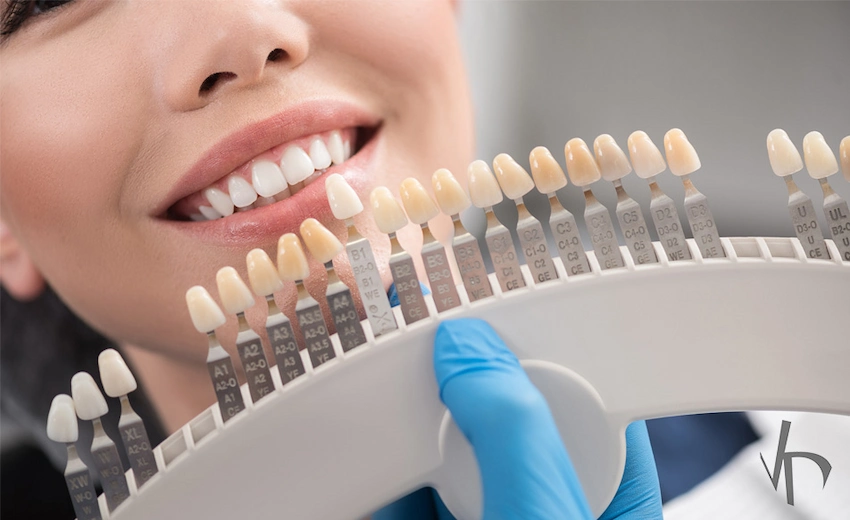
- Crown Selection: The dental technician chooses a porcelain or ceramic dental crown from the ready-made ones depending on the size, shape, and color needed for the restoration. The main advantage of these materials is that they are durable, can last for a long time and at the same time, can take the appearance of a natural tooth.
- Crown Placement: The dentist places a prefabricated crown on the prepared tooth, making sure the fit is accurate and proper. The dentist finds any space between the fitting of the crown and the adjacent teeth and the opposite jaw he/she adjusts it in good contact and, if necessary, makes sure it is comfortable as well.
- Final Adjustment: If it is necessary, the dentist may make very small changes to the patient’s comfort and the proper functioning of the tooth after crown placement. The doctor in this case may adjust the bite or polish the edges of the crown.
- Post-Procedure Care: Patients are advised to keep their oral hygiene in good condition and not to consume those foods that can easily break the new crown. They might also have to come for a visit to the dentist to check if the crown is still firmly fixed and the tooth is still functioning well.
When Should the D2928 Dental Code Be Utilized?
The dental code D2928 indicates the use of a pre-manufactured unit ceramic or porcelain crown to restore the function and beauty of a tooth that has been damaged by decay, wear, or a traumatic injury. This operation is the most suitable choice for a patient whose tooth is extensively fractured but still has sufficient solid parts for a crown to be implanted. In essence, it is an excellent way to bring back the tooth’s function and aesthetic for the patients.
In general, the code D2928 helps save the damaged tooth, especially after a root infection treatment which paves the way for the need of a long-term infection protection plan. The reason is that the use of D2928 helps to consolidate the tooth structure thus restraining the weakening or cracking phenomenon. This treatment method can be suitable in cases where patients should not opt for the more time-consuming and complicated making of custom crowns.
What Are the Advantages of Using the Dental Code D2928?
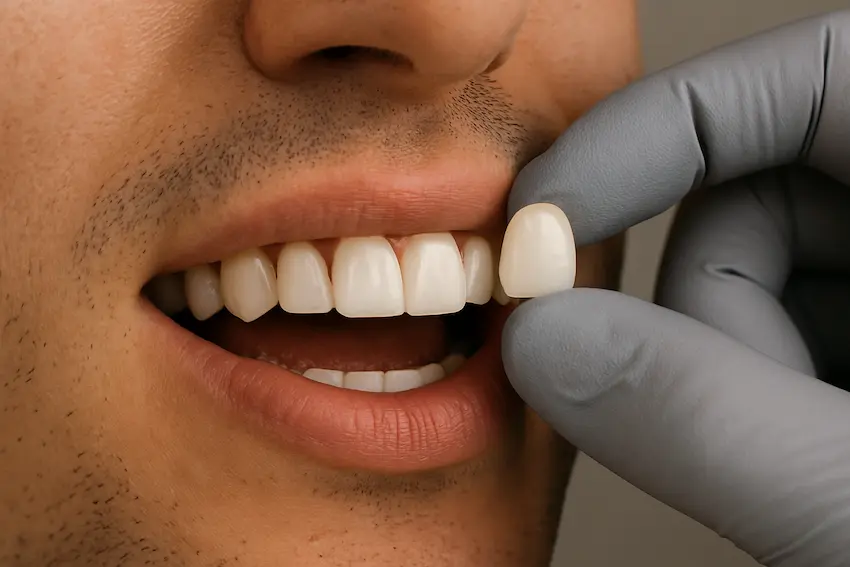
Prefabricated porcelain or ceramic crown placement by means of Dental Code D2928 can bring a lot of benefits to the user. The biggest one is essentially the restoration of the tooth’s complete functionality. Post-implementation of the crown, the tooth is capable of handling the forces of mastication and occlusion, similar to that of a regular tooth. Besides that, aesthetically, porcelain and ceramic crowns imitate natural teeth to a large extent, thus the denture becomes inconspicuous to the patient’s smile. Hence, D2928 is a perfect compromise of strength and beauty for the dental patient.
There is also the advantage wrapped in the durability of the D2928 crown to be unveiled next. Porcelain and ceramic are resistant to various degradative processes including wear, staining, and chipping; hence, the implementation of these materials can be regarded as a long-term restorative solution to dental problems. At the same time, these materials do great biocompatible work, hence the absence of tissue irritation or other harmful effects in the usage area. Following careful hygienic maintenance, D2928 crowns can be long-lived and thus great solutions visually and functionally for the patients.
Warnings and Cautions for the Dental Code D2928
- Improper Tooth Preparation: The procedure of the ill-fitting and uncomfortable dental crown can be the case if the tooth is not prepared adequately before the placement of the crown. The wrong preparation can lead to the patient biting off and the failure of the crown.
- Sensitivity and Discomfort: A temporary feeling of sensitivity in the treated tooth can be experienced by some patients after the treatment. This discomfort will be lessened if the patient follows the care instructions given after the treatment, for example, not eating hot or cold foods.
- Incorrect Bite Alignment: The incorrectly fitted dental crown may cause the patient’s bite to be off. As a result, the neighboring teeth can become subjected to uneven and excessive pressure and, consequently, dental problems such as jaw pain may arise.
- Crown Failure: The crown can be broken or become loose due to the unfit or weak tooth condition where the crown is placed. Hence, it is good to be making your visits to the dentist for follow-ups to be sure that the crown is in good working condition.
- Gum Irritation: The ill-fitting dental crowns may cause irritation area around the gums which can cause inflammation or an uncomfortable sensation in some cases. Getting properly fitted and making adjustments can help solve and prevent such problems.
- Tooth Grinding (Bruxism): Patients who are used to grinding their teeth, can wear the crown to wear at a faster rate than usual. Therefore, it is very necessary that the problem of bruxism is solved by protective means, such as the use of a nightguard.
When Is It Necessary to Stop Using D2928 and Use Something Different?
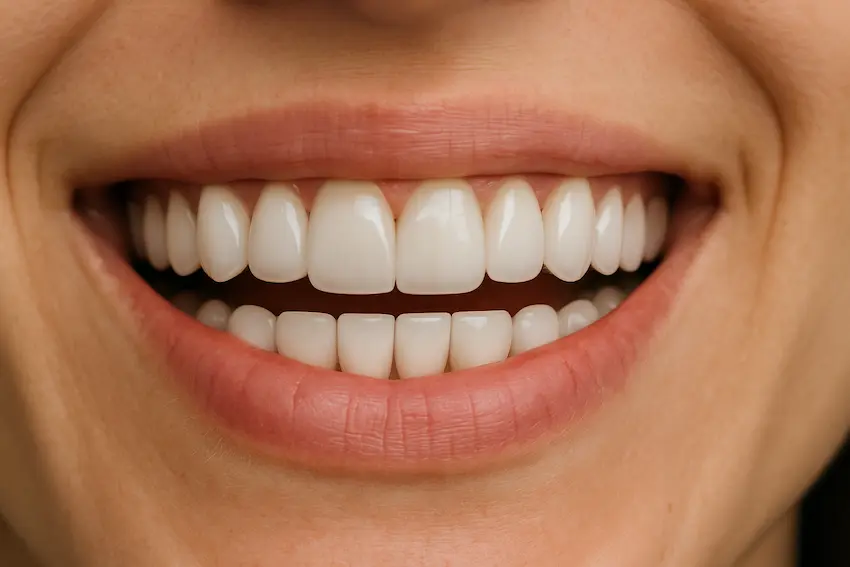
D2928 refers to a regimen that is not applicable in a circumstance where the dental structure is so severely compromised that it is not possible to place a prefabricated crown. For instance, a case where a tooth is broken extensively or there is scarcely any part of the tooth that is healthy might be considered as such. Therefore, a custom crown or some other restorative treatments could be the right decision. In these cases, people working at Lema Dental Clinic like Professor Doctor Coşkun Yıldız can offer you different solutions, for example, dental implants or full-coverage crowns depending on what you need.
Additionally, a metal cap from the factory might not be able to supply a patient enough support if the patient has heavy bruxism (teeth grinding). In case a stronger material can be selected, or some other treatments, for example, the wearing of night guards, may be suggested to prevent the breaking of the crown. Patients with bruxism, who also have significant tooth loss or structural problems, can use dental technologies to be the best solution for them to get back the use of their mouth and the beauty of their smile.
Example Case for D2928
A situational example of D2928 might be a scenario where a patient has a severely decayed molar that is still functional but obviously needs a huge restoration. After the evaluation, Dr. Polen Akkılıç from Lema Dental Clinic decided that a pre-made porcelain crown would be the perfect solution. The decayed parts are removed delicately, and the healthy parts of the tooth are molded to fit the crown. The adjustment is done with a digital scan followed by placing the pre-made porcelain crown on the ground tooth. The patient goes out with his tooth restored and functioning like a natural one.
This is a perfect example of how D2928 can serve the purpose of restoration of a tooth that is still viable but has been heavily compromised both functionally and aesthetically.
Comparison of Crown Types
| Crown Type | Material | Durability | Aesthetic Quality | Cost |
| D2928 (Porcelain/Ceramic) | Porcelain, Ceramic | High | Excellent (Natural Look) | Moderate |
| Metal | Metal (e.g., gold, silver) | Very High | Fair (Visible) | High |
| Resin | Resin Composite | Moderate | Fair (Less Natural) | Low |
References
- American Dental Association. (2022). Dental crowns: What you need to know. https://www.ada.org/en/member-center/oral-health-topics/crowns
- Akkılıç, P. (2025). Restoring smiles: The use of porcelain and ceramic crowns at Lema Dental Clinic. Lema Dental Clinic.
- Yıldız, C. (2025). Porcelain crowns in restorative dentistry: Benefits and techniques. Professor Coşkun Yıldız’s Dental Journal, 12(4), 45-50.
FAQ: What Does Dental Code D2928 Mean?
Dental Code D2928 refers to the procedure for placing a prefabricated porcelain or ceramic crown, typically used to restore a decayed or damaged tooth at Lema Dental Clinic.
This code is used when a prefabricated porcelain or ceramic crown is needed to restore a tooth’s function and appearance after it has been severely damaged.
D2928 crowns restore a tooth’s natural function, provide an aesthetically pleasing solution, and are durable, resistant to staining, and biocompatible.
Improper tooth preparation, misalignment of the bite, or inadequate fitting of the crown can lead to discomfort or complications. It’s important to rely on expert professionals like Dentist Polen Akkılıç for proper care.
With proper care, a D2928 crown can last for several years, maintaining its appearance and functionality throughout.
D2928 is typically used for teeth with enough remaining healthy structure to support a prefabricated crown. It is ideal for teeth with significant damage but still functional.
Yes, D2928 crowns can be replaced if damaged by simply removing the old crown and placing a new one.
Compared to metal crowns, D2928 porcelain or ceramic crowns offer a more natural aesthetic and are preferred for their tooth-like appearance.
D2928 crowns are made from porcelain or ceramic, both known for their durability, aesthetic appeal, and biocompatibility.
While no special care is needed, maintaining good oral hygiene through brushing, flossing, and regular checkups is essential to prolong the crown’s life.

