


It is quite confusing when there is a dental invoice indicating a code with which you are not familiar, such as D4910. However, your dentist is definitely not the one who would tell you that you need a mere “regular cleaning” if that is the case with this particular code you have found.
Simply speaking, the term dental code d4910 means “periodontal maintenance.” It is an intervention aimed at cleaning only those patients who were initially diagnosed with periodontal disease and subsequently treated for gum disease (periodontitis).
This blog will tell you in depth the meaning of d4910, the reasons why it is different from a normal cleaning, and why it is essential for your oral health in the future.
Understanding the Diagnosis: Why D4910 Becomes Necessary
The main and foremost definition of D4910, according to the American Dental Association (ADA), is:
“Periodontal maintenance – The treatment is, first of all, therapeutic, then it goes on in intervals that vary and are determined by the clinical dentist’s evaluation, the lifetime of the teeth, or the implants that replaced them. It deals with the removal of bacterial plaque and calculus from the teeth and gum surfaces, both above and below the gums, scaling, and root planing in places where it is indicated and polishing the teeth.”
We can understand the definition a bit more simply:
- It is a procedure follow-up: D4910 is the code which indicates the work that is done after the patient’s active periodontal treatment, which usually refers to deep cleaning such as scaling and root planing.
- It is continuous: As a chronic disease, periodontal maintenance is the method of treatment of this disease for a lifetime as opposed to a one-time solution.
The procedure gets the gumline below and above the teeth infected with periodontal pockets thoroughly cleansed: The work is aimed at disinfecting the areas not only above the gumline but also below the gumline where the periodontal pockets have formed.
D4910 vs. Other Dental Cleaning Codes: A Detailed Comparison
Many patients are confused about why they can’t just have a “regular cleaning.” The table below provides a clear, detailed comparison.
| Feature | D1110 (Adult Prophylaxis – “Regular Cleaning”) | D4346 (Scaling & Root Planing – “Deep Cleaning”) | D4910 (Periodontal Maintenance) |
|---|---|---|---|
| Purpose & Goal | Prevention. To prevent the onset of gum disease in a healthy mouth. | Active Treatment. To arrest and control active periodontal disease. | Disease Management. To prevent the recurrence and progression of a treated chronic condition. |
| Patient Health Status | Healthy gums, no bone loss, gum pockets 1-3mm deep. | Active periodontitis with diagnosed bone loss and pockets typically 4mm+. | History of periodontitis. The disease is now controlled/in remission, but deep pockets and bone loss remain. |
| Procedure Focus | Above the gumline only. Removes plaque, calculus, and stains from the crowns of teeth. | Below the gumline. Intensive cleaning of the root surfaces in areas of active infection, often under local anesthesia. | Comprehensive. Cleans above and below the gumline, focusing on monitoring and maintaining areas with a history of disease. |
| Clinical Re-evaluation | Basic visual inspection and probing. | Full periodontal charting (measuring all pockets) before and after treatment. | Full periodontal charting at every visit. This is essential to track stability or progression. |
| Frequency | Every 6 months. | A one-time, per-quadrant procedure to halt active disease. | Typically every 3-4 months, as the bacterial flora associated with periodontitis can repopulate to destructive levels in this timeframe. |
| Analogy | Changing the oil in a healthy car to keep it running well. | Major engine repair to fix a broken-down car. | Ongoing, specialized maintenance for that repaired engine to ensure it doesn’t break down again. |
Why Is Periodontal Maintenance So Vital?

If you were to have a history of periodontal disease, then a normal cleaning would not suffice. Hence, the importance of the D4910 code:
- Manages a Chronic Condition: Periodontal disease is a chronic condition, just like diabetes or high blood pressure. It is not “cured” by a single treatment, but the right continuous care will keep it in control.
- Stops Disease Progression: The bacteria that cause gum disease are never-ending. That is, every 3 to 4 months, a maintenance visit is provided with antimicrobial interventions that remove bacteria, thus stopping bacteria from causing more harm, preventing pocket deepening, bone loss, and tooth loss is accomplished.
- Puts Your Body in Good Shape: Until now, among the side effects of heart disease, stroke, diabetes, and respiratory problems that come along with the untreated periodontal disease, the latter has also been linked to these other conditions. So by managing your oral health, you are still managing the health of your entire body.
- How It Works for You Monetarily: The cost of periodontal maintenance is much lower than that of complicated treatment if your gum disease is at an advanced stage, e.g., surgery, bone grafts, or replacing teeth with implants or bridges.
What Happens During a D4910 Appointment
The appointment for periodontal maintenance includes various things besides a simple standard cleaning:
- Examination and Charting: The dental hygienist or dentist will visually and physically measure the depth of gum pockets around each tooth and also note any bleeding, swelling, or changes in depth.
- Medical History Review: The staff members who are responsible for taking and recording the medical history of the patient will ask questions regarding your overall health and if there have been any changes in your medication that could possibly affect your periodontal condition.
- Supragingival and Subgingival Scaling: The ultrasonic scaler, in addition to the use of hand instruments, will be used for the removal of plaque and tartar that are both on the tooth surfaces and, most importantly, below the gumline.
- Root Planing (if necessary): Root planing helps in cutting out the rough surface of the tooth that is driving infection and, simultaneously, helps with the reattachment of the gum.
- Polishing: The dentist will give a polishing to your teeth to remove the stains present on the surface.
- Reconfirmation and Suggestion: Your dentist will disclose their evaluation and fix your next maintenance appointment, which will usually be 3-4 months later.
A D4910 Appointment Step by Step
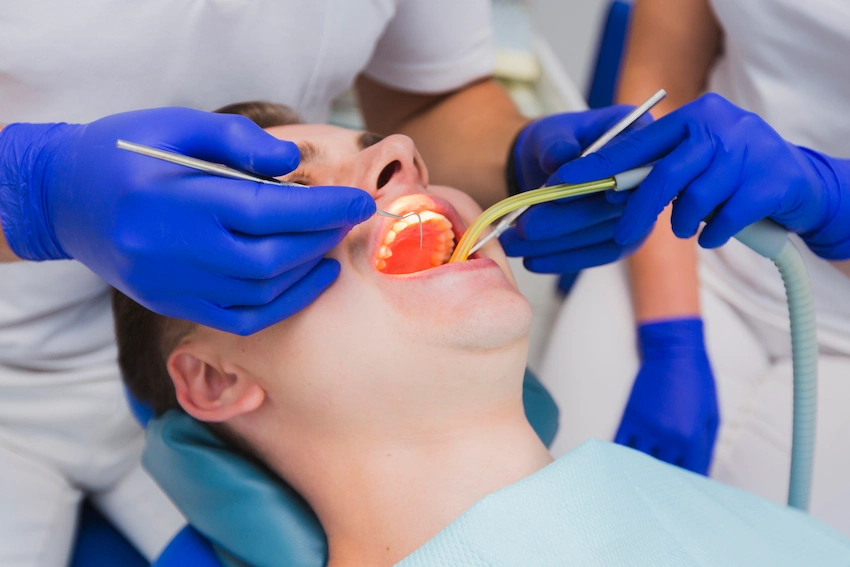
Familiarizing yourself with a d4910 appointment can be very helpful in calming down your anxiety. A typical D4910 visit is a step-by-step one, and all the decisions are based on data.
- Updated Medical History Review: Your hygienist will ask you about any changes in your health that can significantly impact your periodontal health. For example, a new diagnosis of diabetes, pregnancy, new medications, etc.
- Oral Cancer Screening: The doctor looks and feels the lips, tongue, cheeks, and throat for any unusual things during the visual and tactile method.
- Full Periodontal Charting: This is the most vital point which makes the biggest difference between D4910 and prophy. A dental hygienist or dentist would employ a periodontal probe to check the depth of the pocket around each tooth. They would also note:
- Pocket Depth: Every extent of 4mm or more is being closely monitored.
- Bleeding on Probing (BOP): This is a sign of inflamed tissue.
- Tooth Mobility: Any looseness detection is performed here.
- Recession: Measurement of how far the gums have retreated from the tooth.
Radiographs (X-rays): Regular X-rays (usually once per year) are essential to be able to see the bone that holds your teeth and to make sure that there is no further bone loss, although they are not done very often at every visit.
The Cleaning Process:
- Supragingival Scaling: The removal of plaque and calculus from the crowns of the teeth, which are above the gumline, is normally done with the ultrasonic scaler.
- Subgingival Scaling: To clean the roots in the pocket areas thoroughly and delicately, the hygienist takes thin, special hand tools (curettes) and, by dissolving the bacteria that cause the disease, removes them.
- Local Root Planing: If certain pockets are very inflamed, the roots might be planed (smoothed) in these particular areas to make sure that bacteria do not find the surface to reattach themselves.
- Polishing: The patients who request it are given the surface stain removal step.
Re-evaluation and Discussion: The doctor will talk to you about their discoveries. They would present your periodontal chart to you, compare it with the previous visits, and indicate not only the areas that are stable but also the areas that require more home care.
Oral Hygiene Reinforcement: You will be shown the correct usage of floss, a guide for interdental brushes, a water flosser, or an antimicrobial rinse for oral hygiene by a dentist or hygienist. The appliance or product will be a means of oral hygiene maintenance and personalized to the exact problems of your mouth.
Next Appointment Scheduling: The day of your next appointment for periodontal maintenance will be determined, normally 3 or 4 months in advance.
The Critical Importance of Periodontal Maintenance: More Than Just Your Teeth
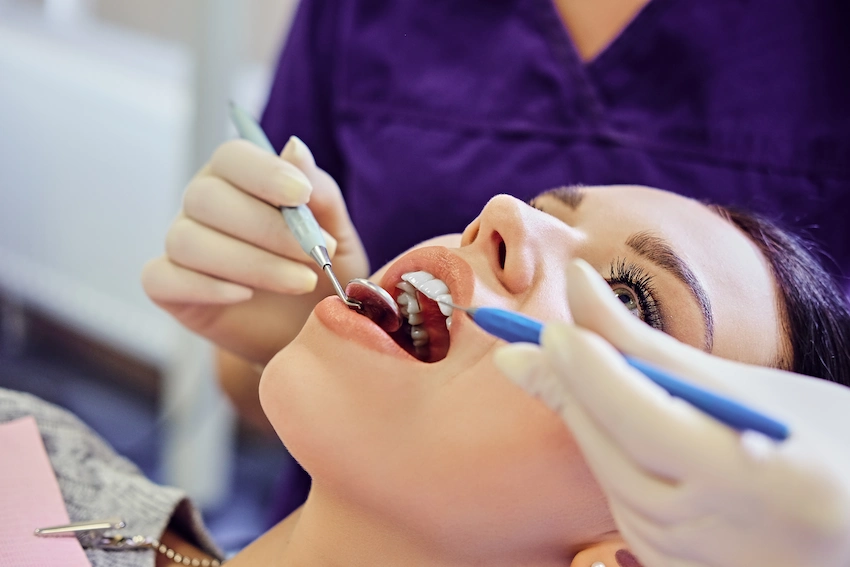
Adhering to your D4910 schedule is not a matter of choice; it is a necessity for different, very convincing reasons:
- Treats a Chronic Medical Condition: Periodontal disease cannot be cured, but it can be managed to a significant extent. D4910 is the continuous care that takes up this chronic disorder, thus, preventing flare-ups.
- Stops Further Destruction: The primary goal here is to put an end to bone loss going any further. Once bone is lost, it cannot be restored naturally. Therefore, saving the bone structure that you still have is very important if you want to keep your teeth forever.
- Improves Your Overall Health: A lot of scientific evidence has been accumulated that supports the strong link between inflammation resulting from periodontitis and major health issues like:
- Cardiovascular Disease: Infections in the gums can lead to the entry of bacteria into the blood, which then causes heart disease and stroke.
- Diabetes: Inflammation of the gums resulting from diabetes affects blood sugar levels and diabetes worsens gum disease—a continuous cycle.
- Respiratory Infections: Bacteria inhaled from the mouth can cause pneumonia.
- Pregnancy Complications: Low birth weight and premature birth are linked.
- It Saves You A Lot of Money: The cost of a D4910 visit over a lifetime is only a very small fraction of the cost of various tooth replacements that result from the neglect of diseases of the periodontium. The choices—dental implants, bridges, and dentures—are complicated, time-consuming, and a lot more expensive than you think.
- Preserves Your Quality of Life: There is nothing good enough that can be a substitute for your natural teeth. By keeping them, you will be able to eat, speak, and smile with confidence for many years to come.
Conclusion About D4910: An Investment in Your Health

The D4910 dental code is a major change in your dental care—simpler prevention is replaced by active, lifelong disease management. This is a future-oriented, scientifically-based routine that aims at both the conservation of your natural teeth and the maintenance of your overall health.
If your dentist tells you that you need periodontal maintenance, then do not hesitate. Actually, this is a temporary control card handed to you over a chronic condition with an effective strategy. Work with your dental team, keep your appointments, and don’t forget to do your oral hygiene at home. In fact, this kind of steady work is the ultimate way to keep your smile for a lifetime.
References:
- American Academy of Periodontology (AAP). (n.d.). Gum Disease Information. Retrieved from https://www.perio.org/for-patients/gum-disease-information/
- Cobb, C. M. (2002). Clinical significance of non-surgical periodontal therapy: an evidence-based perspective of scaling and root planing. Journal of Clinical Periodontology, 29(s2), 6-16.
- Wilson, T. G., Jr., & Kornman, K. S. (Eds.). (2003). Fundamentals of Periodontics (2nd ed.). Quintessence Pub.
- American Dental Association (ADA). (2023). Current Dental Terminology (CDT 2023). American Dental Association.
- Lang, N. P., & Tonetti, M. S. (2003). Periodontal risk assessment (PRA) for patients in supportive periodontal therapy (SPT). Oral Health & Preventive Dentistry, 1(1), 7-16.
- Pihlstrom, B. L., Michalowicz, B. S., & Johnson, N. W. (2005). Periodontal diseases. The Lancet, 366(9499), 1809-1820.
Frequently Asked Questions (FAQ) About D4910 Dental Code
4910 is a “gum disease maintenance cleaning.” It’s a deeper, more thorough cleaning for patients who have had gum disease in the past, designed to keep it under control for life.
This is the most important distinction. A regular cleaning (D1110) is preventive and for healthy gums. It cleans only above the gumline. D4910 is therapeutic and for patients with a history of gum disease. It cleans both above and below the gumline in areas where gum pockets have formed.
No. A “deep cleaning” (Scaling and Root Planing, codes D4341/D4342) is the initial, intensive treatment to stop active gum disease. D4910 is the ongoing maintenance care that comes after the deep cleaning to prevent the disease from coming back.
For most patients, it is not painful. Because you are on a frequent maintenance schedule, large tartar deposits don’t have time to build up, making the process more comfortable. If you have sensitivity, a local anesthetic can be used to numb the area.
It typically takes between 45 and 60 minutes, significantly longer than a standard 30-minute cleaning. This is due to the detailed charting and subgingival cleaning required.
Most plans do cover it, as it is medically necessary. However, coverage is often different from a regular cleaning. It may be covered at 80% instead of 100%, and most plans allow 2-4 D4910 visits per year. You must check with your specific insurance provider.

