


D0389 Procedures
After a periapical dental x-ray is taken, the D0389 dental code is assigned. Periapical radiograph is an advanced imaging technique where the focus is on the roots and the bones around the teeth. This cutting-edge tool, a favorite of Dentist Polen Akkılıç and her staff, is a mainstay in troubleshooting root infections that might be invisible to the naked eye. Besides that, the periapical radiograph can be very effective in medical conditions that involve infections, fractures, cysts, or the build-up of pus in the root region or in the adjacent tissues. This method is just one of the many ways through which Lema Dental Clinic in Istanbul, Turkey operates to facilitate diagnosis and treatment planning of high precision.
Using the periapical radiograph, Dentist Polen Akkılıç or any other dental professional at Lema Dental Clinic aims at getting as clear a picture as possible not only of the root system of the diseased tooth but also of the bone surrounding it and the periodontal ligaments. The super-detailed visuals they get are priceless in figuring out root infections that can cause even more problems if left untreated, like going farther down the bone, which all leads to devising effective treatment regimens that in turn lead to the improvement of the general oral health of the patient.
When Is D0389 Used?
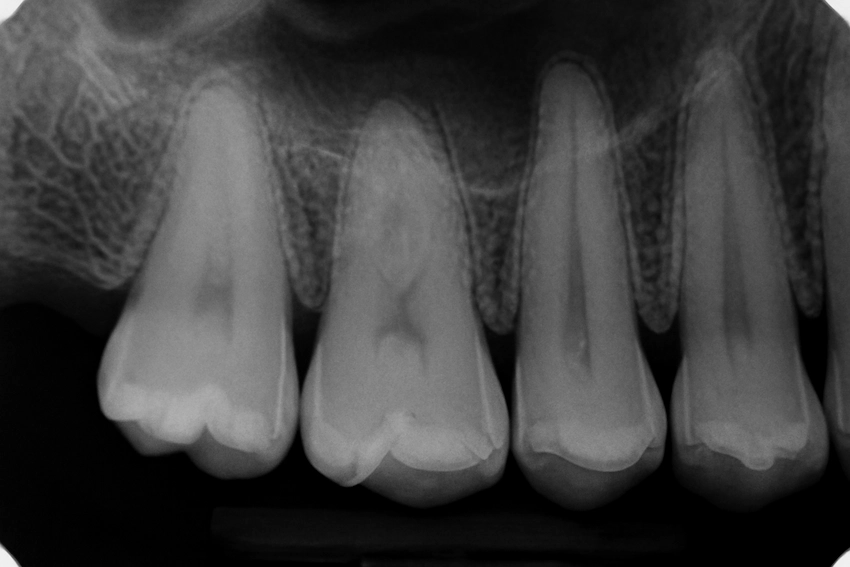
The D0389 code is a must if a dentist is keen on getting a close-up radiographic image of the root below a specific tooth as well as the structures that support it. Professor Doctor Coşkun Yıldız can be the one suggesting the necessity of executing such diagnostic imaging when there is an indication of root area infections or abnormalities that are not visible during clinical examination. This image is of great help in the cases of traumatic injury, root infections, or abscesses as it provides further insight into the topic. Moreover, it plays an essential role in carrying out the post-treatment follow-up sessions by allowing the dentist to confirm the success of the performed Root Canals or dental implants.
Such a diagnostic is also frequently turned to by patients planning major dental treatments. D0389 radiographs are the must-have checkpoints before the start of a root canal or implant procedure which is the plan of Dentist Polen Akkılıç, to certify that no latent infection or architectural damage will be the cause of treatment failure. A D0389 radiographic image would be taken to show how normal the bones and roots are around the spot that will receive the implant for an increased success rate of the implant.
How Do Dental Practices Use D0389?
- Root and Bone Health Diagnostic Tool:
One of the main dental procedures is the periapical radiograph, which is focused on roots and bones and is done through the D0389 method. The detailed images are very helpful in discovering the hidden dental problems that are not visible to the eye of a regular clinical exam, such as infections, fractures, or abscesses. The process is usually done at their local dental clinics, including Lema Dental Clinic.
- Planning of Treatments with the Help of D0389:
Dr. Polen Akkılıç and her team of dentists utilize the D0389 procedure to check the condition of the root canal and dental implant, as well as other prior treatments. The dental X-ray is used to find out whether the infection has been completely removed or if the bone is properly healing after implant placement.
- Initial Symptoms Identification:
The D0389 technique for imaging allows dental professionals to get a grasp of the issue well in advance, thus, before things get out of hand. As an example, what it can do is isolate a root infection that, if allowed to fester, would ultimately result in tooth loss.
Doctor Coşkun Yıldız, the Professor, uses radical methods such as D0389 to conduct follow-up Evaluations and track the progress of the patients’ recovery after operations like root canals. In this way, they are assured that no scenarios such as reinfection or tissue damage have occurred.
- Monitoring supports for complicated cases:
With the help of D0389, which is a very useful tool, the extent of the problem of roots and bones can be thoroughly monitored in the detailed examination of complicated cases, such as patients with periodontal disease or suffering from trauma, and decisions made concerning intervention at the right time and in the right way can be precise.
What Are the Advantages of Using Dental Code D0389?
The most significant reason for the usage of the D0389 dental code is that the said code helps in the very early identification of those conditions that are not even visible to the naked eye of the routine visual examination. This, in turn, ensures that infections or fractures in the root area, for example, are not easily overlooked and that they do not get the chance to develop into other more serious problems. At the forefront of the situation, dentist Polen Akkılıç, and her team of professionals are always ready and willing to employ the D0389 procedure on the patients who come to them to seek these sorts of timely interventions. Hence, in this way, they are able to not only save the patients from spending a lot of money on costly treatments but also from the trouble of having to undergo procedures that are more complicated than those needed at the initial stages.
The next notable feature of D0389 is its perfect capability to furnish very clear and focused pictures that give the professionals a big plus when it comes to the preparation of the treatment plan. When the D0389 dental code is in use, it is also guaranteed that the provided diagnosis will be both accurate and trustworthy, and therefore, the dentist will have no problem in deciding on and prescribing the right kind of treatment for the patient.
Cautions Related to the Dental Code D0389
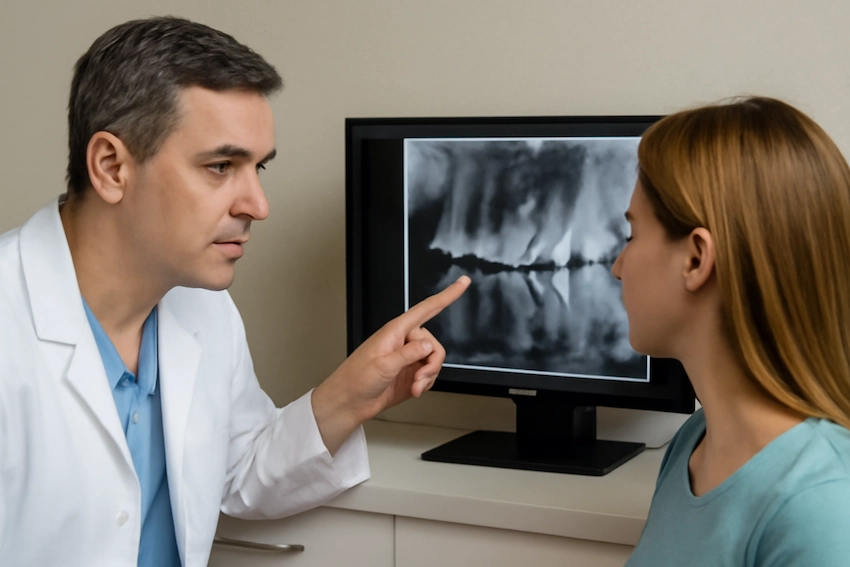
The D0389 operation is a significant diagnostic tool; however, one still needs to exercise a fair amount of caution when implementing its use so as to limit the radiation exposure to patients. Though the amount of radiation used in the most up-to-date dental X-rays is quite minimal, Dentist Polen Akkılıç and her team are very cautious about whether or not they should be employing this method for each instance. They only resort to it when the situation absolutely calls for it, thereby using it sparingly. Besides, the X-ray has to be always executed by a skillful individual who is capable of correctly positioning the equipment to accomplish excellent images.
Moreover, one should remember that the D0389 technique is in no way proper if full-mouth radiographs are the objective, while the use thereof should be solely limited to instances wherein a comprehensive view of the periapical region is indubitably necessary. Hence, for example, in the case of a patient like Mustafa Demir, who may require full-mouth imaging for taking care of a broader dental concern, other codes will be at his disposal to provide for his dental imaging needs. In his position as a professor, Doctor Coşkun Yıldız stresses the significant role that the right choice of imaging methods plays in the reduction of unnecessary radiation exposure as well as the attainment of the desired diagnostic details concurrently.
D0389 Procedures: What Is Included and What Is Excluded?
- Included in D0389:
Periapical Radiographic Image: The central component of the D0389 operation is the development of a fine-detail periapical radiograph that shows the tooth root and the supporting bone around it.
Focused Imaging of Specific Areas: This action mainly concentrates on the tooth root area, getting the most detailed pictures that show the exact state of the root like infections, abscesses, fractures, or cysts.
Identification of a Single-Tooth or Root: When used, D0389 means that it is mostly a tool for pointing out the problem of a single tooth or a root part, a highly specialized diagnostic instrument for solving local issues.
Radiographic Analysis: It is a very involved process where highly specialized machinery is used to take extremely clear and precise pictures, following which experts from the dental team, like Dentist Polen Akkılıç, thoroughly study them to discover health defects of the tooth or bone that might be concealed.
- Excluded from D0389:
Full-Mouth Radiographs: D0389 is a targeted local periapical radiographic procedure and hence is not used for full-mouth radiographs.
Soft Tissue Imaging: The given treatment does not encompass imaging of soft tissues like gums or inner cheeks. The concentration is fully on the bone and root structures of the teeth.
Panoramic Imaging: If you want to have a comprehensive view of the jaw together with the other parts outside the periapical region, different dental codes should be used.
General Oral Examination: The main aim of D0389 is the periapical area’s thorough investigation, meaning that it doesn’t involve or suggest the general oral examination of other dental problems, like cavities, which can be easily identified by different radiography methods.
Main Points of D0389 Performance

One of the key elements leading to the successful execution of the D0389 performance is the correct placement of the dental X-ray sensor. It is the factor that makes the root and the surrounding tissue seen in the pictures. Dentist Polen Akkılıç and her team make sure that every patient is positioned accurately to capture the area of interest, thus, distortion of the image is almost excluded. The correct positioning of the device, which is essential for getting very clear results, is at the same time a necessity for Polen Akkılıç and her team to avoid mishaps. Apart from improper positioning resulting in unclear or incomplete images that will likely hinder diagnosis, poor handling of the imaging equipment cannot be without effect chain.
Besides accurate positioning, the reduction of radiation exposure is another key point in the execution of D0389. Professor Doctor Coşkun Yıldız and the team at Lema Dental Clinic conduct the process in such a way that radiation doses to the patient are kept at a minimum level while detailed images are still achieved. The dental crew performs all radiation safety measures to make sure the D0389 procedure is not only efficient but also harmless to the patient.
Key Advantages of Using D0389 Dental Code
| Advantage | Explanation |
| Early Detection | D0389 allows for the identification of infections, fractures, and abscesses before they become serious. |
| Targeted Imaging | Focuses exclusively on the periapical region, providing detailed insights into the tooth roots and bone structure. |
| Precision in Diagnosis | Offers high-resolution images that help Professor Doctor Coşkun Yıldız create accurate, tailored treatment plans. |
| Minimal Radiation Exposure | The procedure is designed to minimize radiation, following strict safety protocols to protect the patient. |
| Enhanced Treatment Planning | Provides clear, focused images that inform treatment decisions, ensuring the most effective care |
References:
- American Dental Association. (2020). Dental radiography: A guide for the dental team. American Dental Association.
- Hsu, J. R., & Yu, S. H. (2018). Periapical radiographs and their role in diagnosing root fractures and infections. Journal of Dental Research, 97(2), 215-222. https://doi.org/10.1177/0022034518775631
- Kim, S. M., Lee, J. H., & Ahn, S. H. (2019). The diagnostic value of periapical radiographs in endodontic treatment planning. Clinical Oral Investigations, 23(3), 1181-1187. https://doi.org/10.1007/s00784-018-2680-6
- Kohn, D. N., & Rutenberg, J. B. (2017). Radiology in dental practice: Principles and techniques. Elsevier.
- White, S. C., & Pharoah, M. J. (2019). Oral radiology: Principles and interpretation (8th ed.). Elsevier.
FAQ About D0389 Procedures
The D0389 dental code is used to capture periapical radiographs, which focus specifically on the tooth roots and surrounding bone. This imaging procedure helps identify conditions such as infections, fractures, and abscesses that may not be visible during a regular visual exam.
D0389 provides a detailed image of the periapical region, allowing dentists like Dentist Polen Akkılıç and her team to detect issues such as infections or fractures that affect the tooth root. Early detection through this procedure enables more effective treatment planning and timely interventions.
Yes, the D0389 procedure is safe, with minimal radiation exposure. The team at Lema Dental Clinic ensures that all safety protocols are followed to protect the patient while obtaining accurate diagnostic images.
No, D0389 is specifically designed for periapical imaging and does not provide a full-mouth radiograph. For a comprehensive examination, different codes and imaging techniques would be used.
D0389 is typically used when there is a need to assess a specific area, such as the root or surrounding bone. It is not part of routine exams but is used when a dental issue is suspected in the periapical region.
D0389 offers clear and detailed images that allow Professor Doctor Coşkun Yıldız and his team to detect hidden dental issues. This early detection helps prevent complications and allows for more targeted treatments.
The main risk of D0389 is radiation exposure, though it is minimal and controlled. Dentists follow strict safety measures, including the use of protective equipment, to ensure the procedure is as safe as possible for the patient.
The D0389 procedure is quick and typically takes just a few minutes. The time required mainly depends on the position of the patient and the quality of the image being captured.
Patients will sit in a dental chair while the X-ray sensor is placed inside their mouth. The procedure is quick, painless, and generally involves minimal discomfort.
Yes, the D0389 procedure can be used for children when there is a need to examine the tooth roots and surrounding bone. However, care is taken to minimize radiation exposure, especially in younger patients.

