


Dealing with dental bills and insurance paperwork is as difficult as cracking a secret code. Among the numbers and letters, one code is the most common for a regular dental visitor: it is D0120.
If you have ever wondered what this code stands for, why it is on your invoice and what you are actually paying for, then you are at the right place. The detailed exploration of the D0120 dental code will not only explain to you your “routine check-up” but also show you that it is one of the most important investments in your health over the long run.
What is the D0120 Dental Code?: A Simple Definition
The Code on Dental Procedures and Nomenclature (CDT), which is a standardized dental language, identifies D0120 as the code of “Periodic Oral Evaluation.”
It is the formal term for the dental check-up that you usually get. It is a comprehensive “once-over” from your dentist which is normally done along with the cleaning and preventive care visit. It is very important to know that D0120 is a separate charge from the professional cleaning (prophylaxis, coded D1110), and any diagnostic X-ray (like D0272 or D0274). Each of these is different work with its own price and purpose.
The Periodic in Periodic Evaluation: Who is it For?
What is important with D0120 is the word “periodic.” This code is only for established patients. In other words, you have a dental practice record with you and it is for a routine, scheduled examination that you are coming back.
The American Dental Association (ADA) sees this code as a reevaluation made to “recognize changes in the patient’s dental and medical health status since a previous comprehensive or periodic evaluation.” So, it is a comparative assessment, an important element in the chain of the continuous record of oral health.
What to Expect From Your D0120 Evaluation: It Is More Than a “Quick Look”

Often routine dental exam which a patient has in his/her mind turns out to be very different from the great disappointment of a D0120 reality. A dental exam referred to as D0120 is essentially a detailed, systematic, and multi-faceted checkup, not a “quick look” and it carries considerable preventive measures. The following describes the activities of dental professionals during your dental check-up:
1. Updated Medical History Review
A dentist or dental hygienist, even before the first look at your mouth, will definitely want to know if there have been any changes in your general health or medications. It is really very helpful. Disease conditions such as diabetes, heart disease, pregnancy, and medicines (for instance, blood thinners or drugs that cause dry mouth) may change the state of oral health which will eventually influence treatment planning.
2. Extraoral and Intraoral Soft Tissue Examination (Oral Cancer Screening)
An oral cancer screening is done by the dentist in a very efficient and painless manner. The doctor will:
- Visually inspect and palpate (feel) your face, neck, lips, cheeks, and jaw joints (TMJ).
- Examination of the mouth for any abnormality of the soft tissues, checking the tongue (top, bottom, and sides), floor of the mouth, and palate for any changes in color, ulcers, bumps, or other abnormalities.
3. Comprehensive Dental Examination
- Caries Detection: Every tooth will be checked thoroughly for newly-developed deciduous (decay), as well as the nature of the already existing fillings, crowns, bridges, and other restorations will be assessed.
- Periodontal Assessment: The gums are the dental arches’ bed. The dentist will inspect them for the presence of gingivitis (inflammation, bleeding) or periodontitis (gum disease signs), which could also be accompanied by the measurement of the depth of pockets around the teeth.
- Occlusal Analysis: The dentist closely examines whether the bite is proper- i.e., whether the lower and upper teeth fit each other well. Having a bad bite may cause tooth wear, fractures, and even pain in the jaw area.
4. Review of Diagnostic Findings
Along with the diagnostic findings, the dentist will also take into consideration the latest X-rays that you have had. The X-ray is a window into what is going on beneath the surface and can uncover cavities between teeth, bone infections, and other hidden problems.
5. Discussion, Diagnosis, and Treatment Planning
The examination’s final point. The dentist will communicate the exam results to the patient, provide the answers the patient asks, and propose an individualized plan to preserve the patient’s health or to treat the problems that have been found.
D0120 vs. Other Common Evaluation Codes: Knowing the Difference
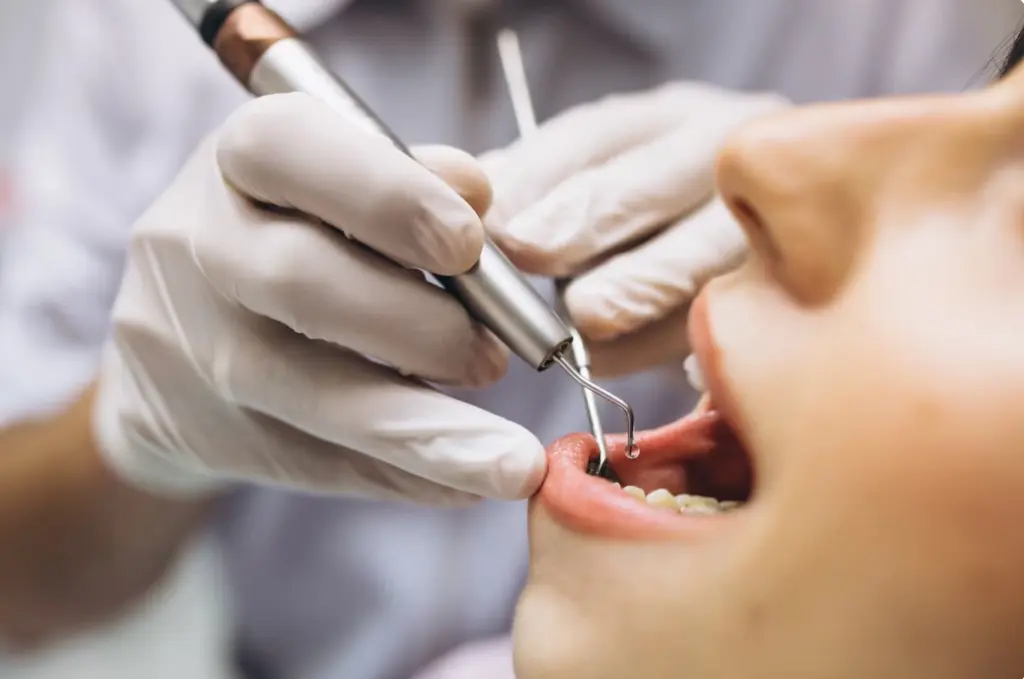
Knowing the distinctions between dental codes should provide you the knowledge of the process and the bills. Understanding the distinction between dental codes will provide you with more knowledge regarding your therapy and the invoices.
- D0120 (Periodic Oral Evaluation) vs. D0150 (Comprehensive Oral Evaluation):
- D0120 is your routine, “maintenance” check-up as an established patient.
- D0150 is a significantly more detailed examination and is generally the case for new patients, who haven’t been seen for a long time, or in the case of an established patient with a complicated new condition. Besides a full-record assessment, it also includes a thorough extraoral and intraoral examination, and very often a more detailed diagnosis and treatment plan.
D0120 (Periodic Oral Evaluation) vs. D0140 (Limited Oral Evaluation – Problem Focused):
- D0120 is a comprehensive assessment of your overall oral health.
- D0140 refers to the situation when you focus on a specific, local, and urgent dental-related problem, for example, a toothache, a broken tooth, or a swollen gum. The examination is only a few steps, and the main emphasis is on finding that single problem.
Insurance and Cost: Is There Coverage for a D0120 Exam?
The great thing is that preventive services are highly valued by most dental insurance plans. Therefore, a D0120 periodic oral evaluation is frequently covered at 100% if done once or twice within a year under preventive care benefits. So, you probably do not pay anything out of pocket for the examination, but you may have co-pays for the cleaning or X-rays.
You should always be:
- Confirming that your plan has certain limits in terms of the number of times a service can be utilized, e.g., one D0120 every six months.
- Check that your dentist’s office is within your insurance network so that you can get the maximum coverage.
- Looking at your explanation of benefits (EOB) to find out how the D0120 code was applied.
Without insurance, the price for a D0120 is usually quite affordable, and the D0120 dental code is one of the most cost-effective procedures across the whole healthcare sector since it can stop the demand for expensive treatments in the future.
Why Skipping Your D0120 Exam is a Risk You Can’t Afford

Putting off or not coming to your periodic evaluation is a risky game with your health and money. The reasons why the D0120 is non-negotiable for a healthy smile are as follows:
- First and foremost, Early Detection is Key: A small cavity (D1351) is an easy and cheap filling. If it is not detected, it may develop into a large cavity that will need to be covered (D2740), or even infect the nerve, causing the need for a root canal (D3340) and a crown to be done, i.e., the procedures will be much more time-consuming and expensive than the first one.
- Gum disease that’s progressing silently: Periodontal disease is usually without pain, in its initial stage. The dentist, during the D0120 exam, will notice the first signs of the disease (gingivitis) and advise treatment, thus, it will be prevented from going further to the bone loss (periodontitis) stage, which is irreversible.
- Oral Cancer can be Overcome—If It Is Detected Early: The five-year survival rate for oral cancer is more than 80% when diagnosed at an early stage. Therefore, the dentist is the first and main point of the essential screening.
- The Mouth-Body Connection: Oral health is closely related to overall health. Gum disease, that caused by chronic inflammation, has been linked to serious illnesses such as heart disease, strokes, and diabetes complications. Your D0120 examination is a check-up of your entire body’s well-being.
D0120 is Your Base for Lifelong Oral Health
The D0120 dental code is more than just a line item on a bill. It is the proactive, preventive dental care in a nutshell. The process is systematic, thorough, and of great value; it serves as a shield for your health, a wallet saver, and a stress reliever.
The next time the words “D0120 – Periodic Oral Evaluation” appear on your statement, you will know it for what it really is: a wise, necessary step in your path leading to a long-lasting, healthy, and confident smile.
References
The information in this blog post was compiled using authoritative sources in dentistry to ensure accuracy and reliability.
- American Dental Association (ADA): The primary source for dental procedure codes and their definitions.
- Code on Dental Procedures and Nomenclature (CDT) – Provides the official description for the D0120 code.
- ADA Council on Dental Benefit Programs – Offers guidance on the use and reporting of dental codes.
- American Dental Hygienists’ Association (ADHA): Provides resources and information on the standards of preventive oral care and the importance of regular evaluations.
- Oral Cancer Foundation: Provides statistics and information on the importance of early detection through oral cancer screenings, a key component of the periodic oral evaluation.
- Peer-Reviewed Journals: Insights on the mouth-body connection and the critical role of preventive care are supported by research published in journals such as the Journal of the American Dental Association (JADA) and the Journal of Periodontology.
Frequently Asked Questions (FAQs) About D0120 Dental Code
The D0120 code is your regular dental check-up. It’s the standard code dentists use to bill for the examination part of your routine visit, typically recommended every six months. This code covers the dentist’s thorough evaluation of your teeth, gums, and mouth to check for cavities, gum disease, oral cancer, and other potential issues.
Dental code D0120 is the standardized code for a “periodic oral evaluation.”
In simple terms, it’s the official billing code for your routine dental check-up or exam.
This code covers the dentist’s time and expertise to:
Perform an oral cancer screening.
Check your teeth for new cavities.
Examine your gums for signs of disease.
Review your medical history.
Assess the condition of existing dental work.
The standard recommendation for most adults and children is every six months. However, your dentist may recommend a different schedule based on your individual oral health status. Patients with a history of gum disease, a high risk for cavities, or certain medical conditions may need to be seen more frequently, such as every 3-4 months.
X-rays are not always included in the D0120 exam. However, if necessary, they may be taken to detect underlying dental issues that are not visible during the visual examination.
D0120 is a standard periodic exam for a generally healthy patient. D0180 is a “comprehensive periodontal evaluation,” which is a more detailed exam specifically for patients with a history of or current gum disease. It involves more precise measurements of gum pockets and bone loss.
Yes, an extraoral and intraoral soft tissue examination, which includes an oral cancer screening, is a standard and essential component of the D0120 periodic evaluation.
The clinical examination portion with the dentist is often quite efficient, typically taking 5-10 minutes. However, this does not account for the time spent with the hygienist for cleaning, taking X-rays, or the dentist’s time reviewing your records and X-rays before or after seeing you.

