Baby teething has begun, your child – great! But why are they crying so much? And is that a fever? The world of teething and fever is a wild one, and every parent is left asking: What’s normal, and what’s not? Here is the ultimate guide to cutting teeth fever to help you understand baby teething symptoms and illness and the exact time of calling the doctor for teething.
When you decide that your smile needs a transformation to become something spectacular, flashy, and perfect for a photo, the Lema Dental Clinic is here with the best solution: the Hollywood Smile. No matter whether you are trying to fix gaps, discoloration, or uneven teeth, our treatments – like porcelain veneers, dental implants, and personalized smile design – have the trust of patients from all over the world.
Can Cutting Teeth Really Cause a Fever?
It’s one of the topmost parenting questions: Can teething really cause a fever? And the reply may shock you. Although a lot of parents report their babies feeling warm when their teeth start to erupt, pediatricians declare that cutting teeth fever isn’t really an occurrence. Yes, that is the case—proper fever (characterized as above 38°C or 100.4°F) is an indicator of a disease other than teething.
However, the story has a turn here: a baby’s teething may lead him/her to a slightly raised body temperature. How so? Because those little teeth pushing through the gums will cause inflammation of the gums, and your child’s minor inflammation may be the reason that your baby’s body temperature is slightly elevated. It usually is under the fever line, though. Therefore, if your baby is hot, it could be teething or something else.
That is why doctors definitely advise parents to not combine the treatment of the fever and teething. Never just assume that the temperature you notice is a result of “teething only”.Track the progression of other symptoms and rely on your instincts if they tell you to seek medical help.
Common Teething Symptoms vs. Signs of Illness
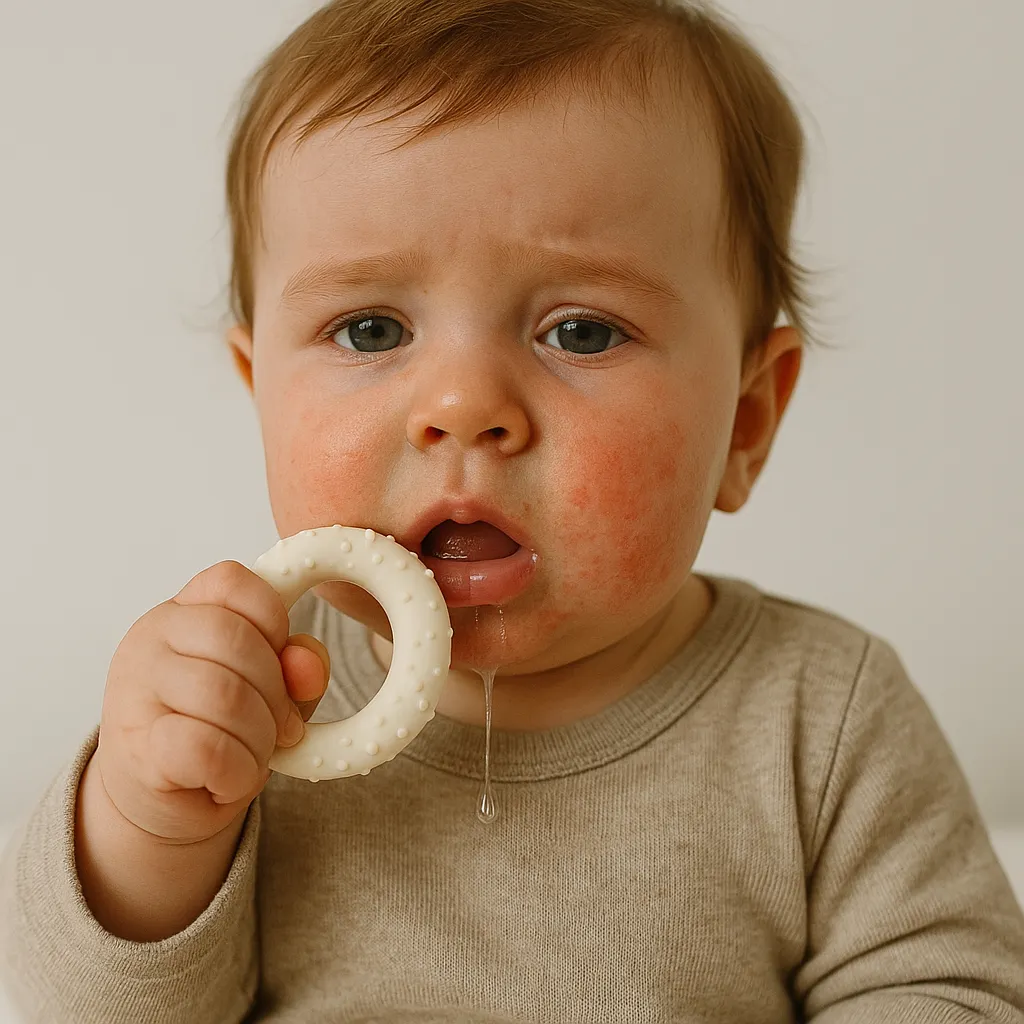
So, what are the differences between normal and abnormal baby teething symptoms? Here’s a brief of it:
Teething symptoms in babies that are considered normal are:
- Quite a lot of drooling (like… if you had to…)
- Gums that are both swollen and red
- Everything that the baby can get his/her hands on (fingers, toys, your shoulder!) is put into the mouth for chewing
- The baby getting fussy and being irritable
- Encountering sleeping problems or minor changes in appetite
- The child having a low-grade fever (up to 38°C)
However, there are some signs that indicate that an illness might be behind the symptoms are:
- High fever that is over 38°C (100.4°F)
- Vomiting along with diarrhea
- Skin rashes that are spreading
- Cough or nasal congestion
- Severe weakness or lethargy that is very different from the usual tiredness
- The baby who is totally not willing to eat or drink
In some instances, teething can coincide with illness, making the situation more confusing. But here is the principle: if you notice several symptoms from the “not normal” list, then it’s not just teething, call your doctor.
What Is a Normal Temperature During Teething?
Body temperature of babies can vary slightly during the day. Usually, a normal range of temps is between 36.5°C and 37.5°C (97.7°F to 99.5°F). A situation where teething and fever occur at the same time is when the thermometer is allowed to go up a little, maybe up to 37.8°C or even 38°C.
But if it is any lower, then the fire should not be associated with teething. 🤯 That kind of increase mostly signals that your baby’s body is fighting a virus, i.e., a cold, ear infection, or virus. One of the most frequent mistakes is acting as if a real fever is “just teething” when it is not. That is particularly dangerous for infants who are younger than 6 months old.
Always have a digital thermometer around; it is one of the best tools you have as a parent. If you feel that something is wrong, measure the temperature accurately and frequently.
When Should You Call the Doctor About a Fever?
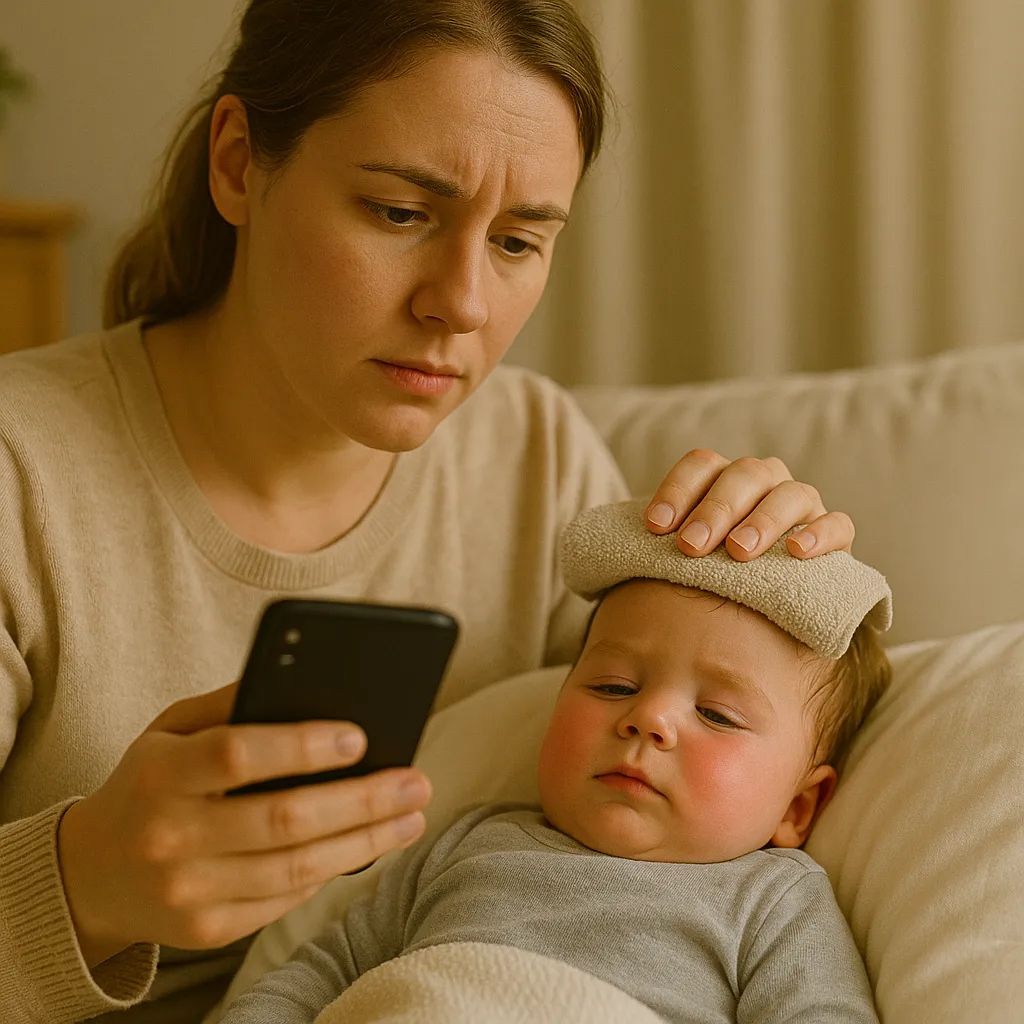
Figuring out when it is necessary to call a doctor in case of teething is very important in terms of the baby’s safety and the parents’ peace of mind. The following are the signs that indicate the time to call the doctor:
📞 Call your doctor if:
- The baby is less than 3 months old and the fever is 38°C or more
- The child aged between 3 and 6 months has a fever exceeding 38.3°C (101°F)
- The infant of more than 6 months has a fever above 39°C (102.2°F)
- The fever continues for longer than 2 days
- The baby has other symptoms, for instance, vomiting, rash, cough, or is refusing to drink fluids
There are times when your child just appears not to be quite right—not smiling, not reacting like usual, or sleeping too much. No one knows your baby better than you, so always go with your gut feeling. Pediatricians say it is better to be safe rather than sorry.
Tips to Comfort a Teething Baby with a Mild Fever
Babies going through their first teeth are on a teething roller coaster, and so are the parents who are riding it right next to them. If your baby has a mild fever associated with teething and is visibly uncomfortable, the following are the ways you can do it safely:
🧊 Cold comforts – A cold and clean washcloth, teething ring from the fridge, or even a chilled spoon can be a source of relief. Nevertheless, do not use frozen items solely, as they can cause gum injuries.
🖐️ Massage those gums – Gently rub your baby’s gums with a clean finger. The pressure can give pain relief.
🍎 Chilled purees – Babies can be given cold applesauce, yogurt, or mashed bananas to eat, which will give a nice and cooling relief to the mouth.
💊 Medication (only if necessary) – The pediatrician’s go-ahead, along with the baby being older than 3 months, will make it possible for you to give infant acetaminophen (or ibuprofen for babies over 6 months) to lower the temperature and alleviate the pain. The dosage should be strictly followed.
💧 Keep the baby hydrated – A fever can cause dehydration. Your baby should be eating breast milk, formula, or water (if of suitable age) in sufficient amounts.
FAQ: Cutting Teeth and Fever
No, teething doesn’t cause a real fever. If your baby has a temperature over 38°C, it’s likely something other than teething.
Anything above 38°C (100.4°F) is considered too high to be caused by teething. Call your doctor if the fever spikes or lasts more than 2 days.
Teething symptoms are mild and mostly gum-related. If your baby has high fever, vomiting, rash, or sleepiness, it’s likely an illness.
With your pediatrician’s approval, you can give infant acetaminophen or ibuprofen. Always follow the dosage based on weight and age.
If your baby is under 3 months with any fever or older than that with a fever above 39°C, call your doctor. Always reach out if your baby shows other concerning symptoms too.