


Inlays suit small cavities, while onlays are better for larger ones.
Ceramic Inlays vs. Onlays: Which One Is Right For Your Smile?
When you enter Lema Dental Clinic, the personnel do not regard you as a number on a chart but as a human being whose smile needs to be healed. Frequently, we refer patients to us who have dental caries or a broken tooth that requires more than a conventional filling but does not deserve the invasive strategy of a dental crown.
That is the situation in which ceramic inlays and onlays appear. At our clinic in Turkey, our rector Prof. Dr. Coşkun Yıldız figuratively refers to these restorations as “the diamond of dentistry”—precise, lasting, and custom-made to fit your tooth perfectly, just like a piece of a jigsaw puzzle.
But how are you going to figure out which one is yours?
The Anatomy of a Restoration: Inlay vs. Onlay
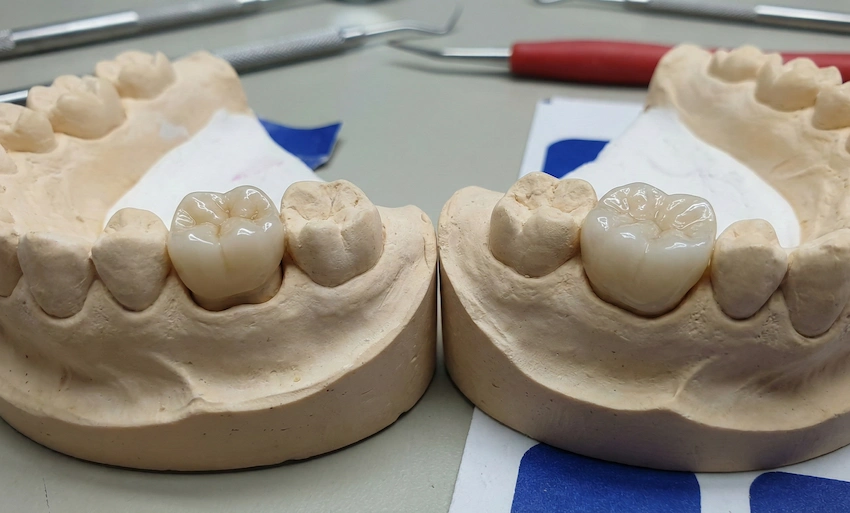
The fine line that separates these two is the location—literally the location of your tooth’s surface:
What is a Ceramic Inlay?
Imagine a ceramic inlay as an upscale, workshop-created variation of a filling.
Should the disruption be located several layers down the crevices or “valleys” (i.e., pits and fissures) of your tooth and remain uncontacted by the “peaks” (cusps), an inlay would be the ideal treatment for you. That is the main reason why, when made from pure ceramic, it doesn’t behave like composite fillings in terms of shrinking or expanding with temperature changes.
What is a Ceramic Onlay?
It’s a fact that in some cases damage can be quite heavy. So, if the fracture or decay has “eaten” one or more of the tooth’s cusps, an inlay won’t offer sufficient mechanical support.
Herein lies the function of the onlay. An onlay—sometimes termed a partial crown—covers both the biting surface and the peaks of the tooth. It is a gentle step toward the elimination of your natural tooth pot without a full crown.
Why We Choose Ceramic at Lema Dental Clinic
Dentist Polen Akkılıç and her team pay close attention to the materials that are going to be used. Gold or composite are among the possibilities; however, we almost always suggest ceramic for our foreign patients in Turkey.
What is the reason? Ceramic is very close to the translucency and light-reflecting abilities of natural tooth enamel. In addition, it is biocompatible, which means your gum tissues will not only tolerate it but will be just as enamored with it as your mirror.
Moreover, ceramic also has a “monolithic” feature in terms of its strength. Upon bonding with the tooth, it actually strengthens the remaining structure, thus acting like a protective helmet for a vulnerable tooth.
Comparing Your Options: At a Glance
The following table outlines the key differences we discuss with our patients during their initial consultation.
| Feature | Ceramic Inlay | Ceramic Onlay |
| Area of Treatment | Inner grooves/valleys of the tooth. | Covers one or more tooth cusps. |
| Structural Support | Moderate; reinforces the core. | High: protects the biting surface. |
| Tooth Preservation | Excellent; removes minimal tissue. | Good; preserves more than a crown. |
| Longevity | 10–15+ years with care. | 10–15+ years with care. |
| Typical Use Case | Large cavities, failing old fillings. | Cracked teeth, heavy wear, cusp damage. |
The Lema Experience: Precision in Turkey
At Lema Dental Clinic, based on our clinical experience, the solution is digital precision. We don’t revert to the old, uncomfortable impression trays that were really messy (“goopy”).
On the contrary, our team uses scanners that take very high-resolution intraoral images and generate a 3D model of your mouth. With this data, they create your restoration with a level of precision measured in microns. The analogy would be the contrast between buying a ready-made suit and having one made to measure in Savile Row.
What Is The Difference Between The Two?
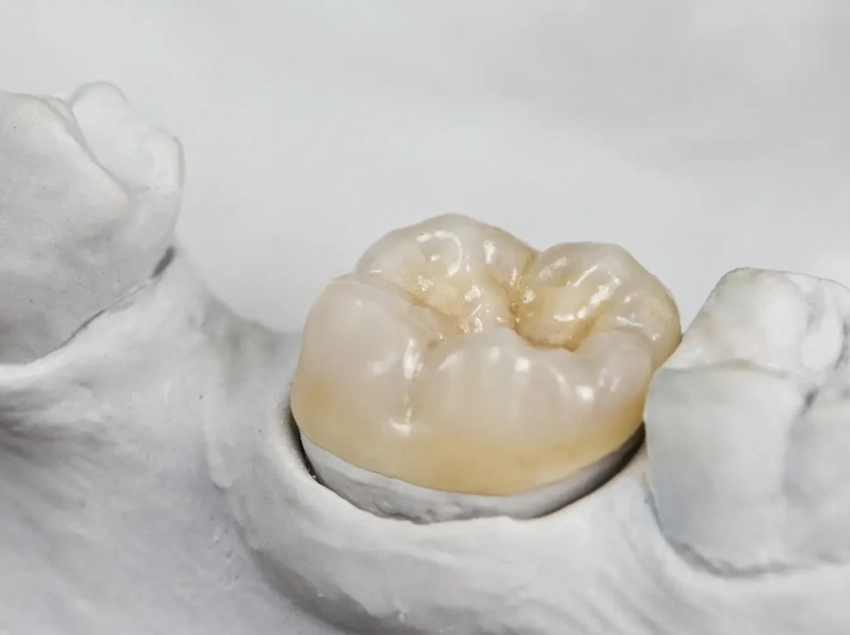
The truth is that neither is “better”—it’s about what your tooth needs to last for another 30 years. If we manage to preserve your natural cusps, then the choice will always be inlay. Whenever the strength of the tooth is compromised, the onlay serves as the savior. We always want to do “biomimetic” dentistry – copying nature to put back the function.
FAQ: Direct Answers from Our Experts
Not at all! We take every measure to ensure the area is completely numb. Besides, most of our patients have reported that the whole procedure felt much simpler than a traditional filling as the “hard work” (the making) is done in our lab, not on your teeth.
Normally, we can get everything done for you within 2 to 4 days. That means the digital scanning, your ceramic piece’s custom milling, and the bonding of the final product.
In fact, one of the major advantages of the porcelain Lema Dental Clinic uses is its good stain resistance. For instance, unlike composite resin, a ceramic piece of good quality can resist staining even if you regularly enjoy coffee, tea, or red wine.
Basically the same as you would care for a natural tooth. Brush twice daily, floss thoroughly, and refrain from using your teeth as tools (no bottle opening!). Besides, to make sure that the bond is kept sealed, visits to the dentist should not be neglected.
Basically, it is all about the perfect collaboration of Dentist Polen Akkılıç and her team, and the state-of-the-art technology. So, we merge the aesthetic sensibility of a cosmetic expert with the bone and tissue knowledge of a master surgeon to present you with a restoration that no one will be able to notice.
- Abduo, J., & Sambrook, R. J. (2018). Longevity of ceramic onlays: A systematic review. Journal of Esthetic and Restorative Dentistry, 30(3), 193-205.
- Guess, P. C., Stappert, C. F., & Strub, J. R. (2011). Preliminary clinical results of a prospective study of CAD/CAM-generated all-ceramic inlays and onlays. International Journal of Prosthodontics, 24(1).
- Magne, P., & Belser, U. (2002). Bonded Porcelain Restorations in the Anterior Dentition: A Biomimetic Approach. Quintessence Publishing.
- Thompson, V. P., & Rekow, E. D. (2004). Dental ceramics and the molar crown: testing and analysis. Journal of Oral Rehabilitation, 31(11), 1099-1114.
- Yıldız, C., & Akkılıç, P. (2023). Digital workflows in restorative dentistry: Clinical outcomes of ceramic restorations in a high-volume Turkish clinic. Journal of Modern Stomatology.

