


Yes, you can swim with denture adhesive, but well-fitted dentures are safer and more reliable.
Summer vacation is a time for relaxation and recreation for most people. But those people who wear removable dentures, standing by the water, feel uneasy because they fear that their teeth may fall out at some point.
Actually, denture wearers can swim with their dentures on, but just trusting adhesive glue for it is not quite safe, and you need to be aware of the pitfalls it brings.
Below are our typical encounters at the clinic when patients enquire about protecting their smile during a vacation.
The Effects of Water on Your Pastes
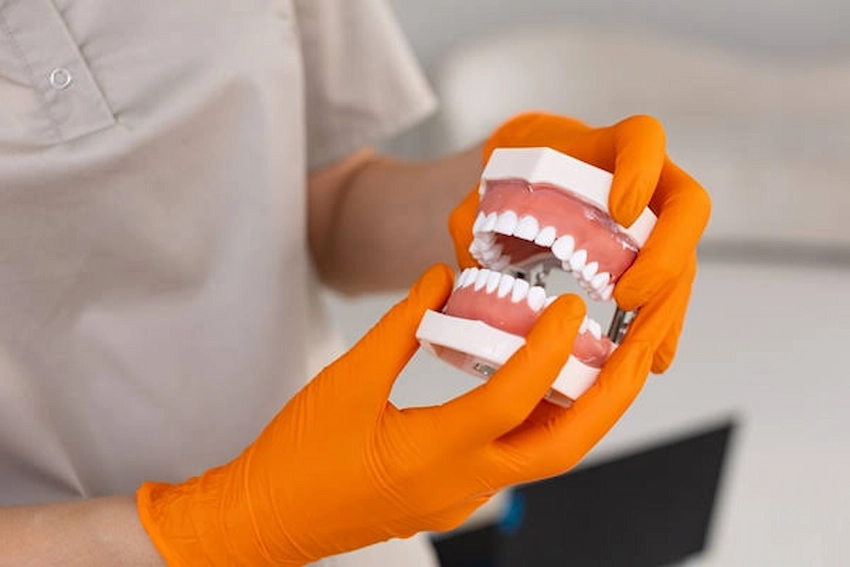
Denture adhesive works like the mortar that holds bricks together; i.e., when you put it on dry, it creates a very tight suction hold.
However, let’s analyze what happens when underwater.
Generally speaking, water has the effect of dissolving most dental pastes. Current pastes incorporate high-tech polymers that resist salivary breakdown mainly. However, such materials are not fully waterproof marine sealants. The highly saline water of the ocean and heavily chlorinated pool water gradually degrade the edge parts of the adhesive layer.
Professor Doctor Coşkun Yıldız frequently mentions, “The mouth environment is extremely dynamic, so when swimming, you most likely breathe heavily through your mouth. This large water flow over the denture edge accelerates the breakdown process of the glue.”
The Forces Involved When Swimming with Dentures
Other than the chemical reaction of the adhesive materials, physics should not be neglected. Swimming includes, among other things, abrupt movements, fluctuating pressures, and unexpected splashes. Even a minor splash on the face may tear the vacuum-like seal securing the upper tooth.
In the experience of our clinic, Lema Dental Clinic in Turkey, we have seen many international patients complaining about losing prostheses in the sea. The emotional impact on them can be quite significant, sometimes much more than the monetary cost of new teeth.
Dentist Polen Akkılıç and her team at Lema Dental Clinic place a big emphasis on good application methods to prevent such incidents.
- Grooves a dry prosthetic first
- Sprinkles the adhesive in a thin layer only
- Places the prosthesis and waits at least 15 minutes before taking the plunge
The time lag here allows the polymer chain of the material to become fully intertwined with the gum tissues.
You and the Water – Your Decision
Your comfort while water activities is completely based on your type of teeth.
Jawbone supports your teeth just like a building foundation supports the floor. If you choose adhesive, you are, in a way, like setting up your tent on top of the ground, so it feels stable until the winds are fierce. Whereas dental implants are like constructing an impregnable fortress with the ground foundation.
You can find here the comparison of various dental solutions regarding their strength in the water:
| Prosthetic Solution | Pool Safety | Ocean Safety | Risk of Dislodgment |
| Denture (No Adhesive) | Very Low | Dangerous | Extreme |
| Denture (With Adhesive) | Moderate (1-2 hours max) | Low (Risky in waves) | Moderate |
| Implant-Supported Overdenture | High | High | Very Low |
| Fixed Implants (All-on-4/6) | Absolute | Absolute | Zero |
Beyond Paste
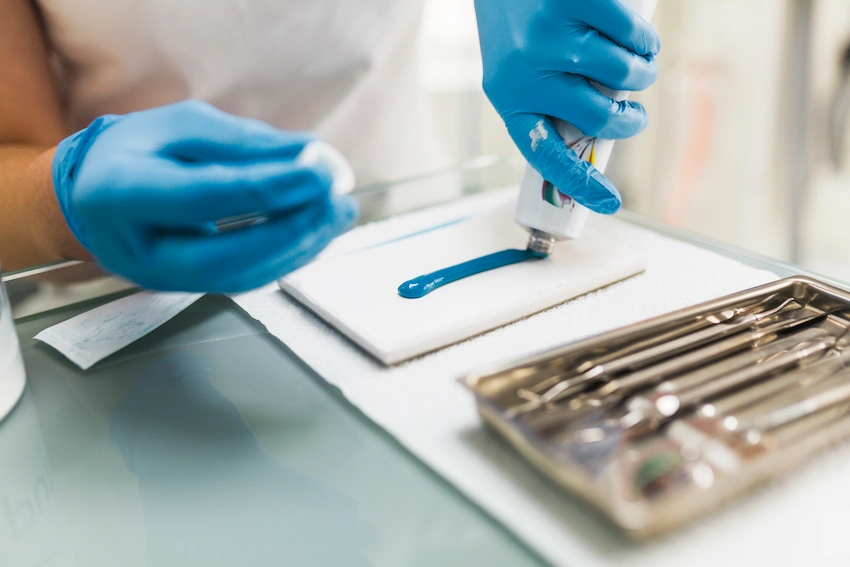
What is the real problem? Should you limit the time you stay underwater and watch the clock when you are having fun in the water?
One solution for individuals who would like to never be concerned about their teeth, regardless of where they are, is the dental implant. You need to understand that dental implant surgery is such a major one-time treatment; the dental prosthesis you wear will never be able to fall out of its place. Therefore, you can go to the beach or the pool and enjoy water sports safely. If you opt against the risk and inconvenience, then, for example, the choice of Turkey to receive dental care offers you a wide range of services, and you will be treated by world-class professionals who can install high-quality implants for you, and your teeth will forever be in an absolutely unassailable fortress.
Answers to Frequently Ask Questions
Is it quicker that adhesive dissolves in seawater?
Normally, it is the case. Since salinity is quite high in seawater, saliva in it would break down adhesive’s chemical bonds quite quickly as compared to a well-balanced and filtered pool water. So if you decide to swim in the sea, you are better off keeping your swim sessions short and carrying a tube of emergency adhesive with you to your beach bag.
Is there merit in the idea of using lots of adhesive before heading out to swim?
Don’t go there – it’s a common blunder. Adding layers of adhesive is the same as putting a squishy layer of the adhesive between teeth and gum, and that is the reason why the adhesive will not be able to seal the denture and gum surfaces well. So, we are telling you to go with only three to four small, bead-size adhesive dots.
What’s the remedy for a denture loosening up in the water?
Stay calm, close your mouth as soon as possible, and gently apply pressure to bite until a proper seal is restored. Then, proceed smoothly to the poolside. Opening the mouth wider or attempting to say something until one reaches dry land again should be left out.
Is snorkelling possible with denture adhesive?
We do not advocate such a kind of swimming activity. Snorkeling requires that the mouthpiece be bitten down very forcefully, and this is not only very uncomfortable but also it is possible to break the seal between the teeth and the denture if the adhesive has failed, and that situation can be life-threatening, as the denture becoming loose would be a potential source of aspiration, i.e., choking.
How can one get rid of the worry about one’s teeth in water forever?
This is really our key expertise – placing titanium implants right into the bone of the lower and upper jaws so that we can permanently keep your artificial teeth securely anchored. When you decide to go for that option, you will no longer have to use adhesive, you won’t feel embarrassed about it, and of course you will be a happy swimmer whether you are in your home pool or here in Turkey.
Academic References
- Al-Awadhi, S., & Al-Zaiem, F. (2018). The effect of environmental factors on the retention of complete dentures: A clinical review. Journal of Prosthodontic Research, 62(3), 289-294.
- Grasso, J. E. (2004). Denture adhesives: Changing attitudes. The Journal of the American Dental Association, 135(1), 81-86.
- Kulak-Özkan, Y., Kazazoğlu, E., & Arikan, A. (2012). Oral hygiene habits, denture cleanliness, presence of yeasts and stomatitis in elderly people. Journal of Oral Rehabilitation, 29(3), 300-304.
- Polyzois, G. L., & Lagouvardos, P. E. (2020). Physical properties and solubility of denture adhesives in aqueous environments. International Journal of Prosthodontics, 33(4), 412-419.
- Zhao, K., & Zhang, Q. (2019). Impact of saliva and water submersion onthe shearr bond strength of commercial denture adhesives. Clinical Oral Investigations, 23(8), 3345-3351.

