Although pacifiers are used by many parents as a comforting tool for their children, it is a fact that the practice of pacifying with its help has become widespread. A child feels a lot of peace of mind because the pacifier not only helps him/her to fall asleep but also to restore quietness in times when he/she is opposing the world. Yet the risk is hidden in the overuse that may result in dental health problems in the future that will directly be associated with the restructuring of the tooth sector of the infant.
In the event that the child’s teeth are close together in the front and have a space in the back, then you may be interested in one question: Can pacifier teeth self-correct with time? In most cases, the development of teeth that was at first pacifier related did improve after the habit was stopped, which is a great thing. Note, however, that not only the severity of the dental complications but also the moment of pacifier discontinuation are the deciding factors in the self-correction of the teeth without any professional intervention to bring them back into alignment.
How Pacifiers Affect Teeth
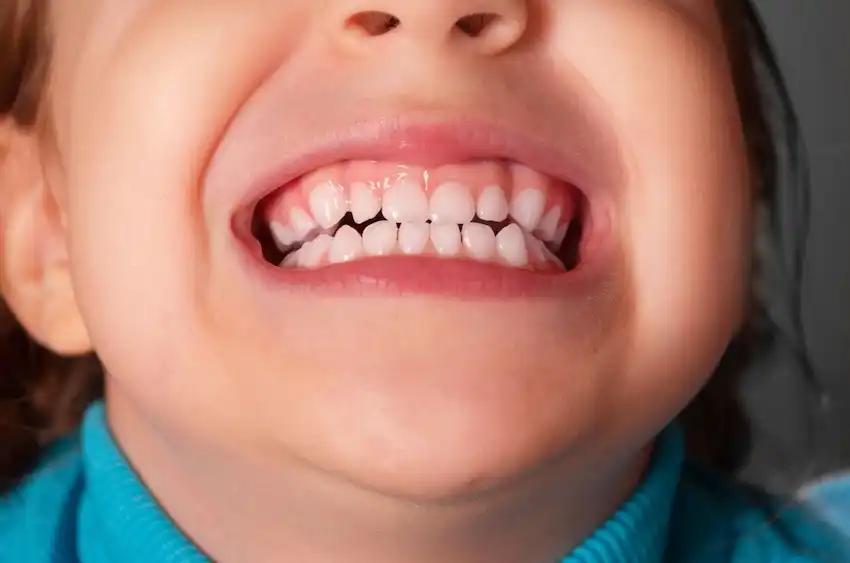
On the one hand, pacifiers are a very useful tool for parents of babies in the first period, but, on the other hand, they go hand in hand with some risks if their use is not properly controlled. The movement of sucking on a pacifier not only gives comfort to the infant but may also bring many different consequences if the act is performed too often and for a long time. In this part, we will go deep into how pacifiers influence the dental system of a child and why it is crucial to have everything under control concerning their utility.
The Role of Sucking and Pressure
Sucking on a pacifier is the sucking that is analogous to the habit of thumb-sucking, specifically in babies who are at the reflex stage. While oral pacification is relaxing more than annoying, it can bring about teeth misaligning. The moving of the child that elicits the sound of pacifier sucking can result in tooth decay, mainly if the practice goes on for a prolonged period.
Due to the sucking of the pacifier, the pulling action pulls the teeth and the gums away, which if the upper incisors are included, like in the above example, the results may be a gap, a prototype of the large-class, or the teeth may be in the wrong position.
Effect on Mouth Roof
It’s worth mentioning that the use of pacifier not only impacts the teeth but it also changes the palate (roof of the mouth) shape.
Continuous sucking can make the palate of the mouth become narrow, thus changing the distance between the teeth as they grow. A misaligned palate can further lead to an overcrowding of the teeth, which is the situation where the teeth are so tightly arranged that they lose their proper space to come out well.
Stage and Period that Pacifier Usage is Still Appropriate
It is necessary that parents be very aware of the time pacifier use is most desirable. The American Dental Association (ADA) wants parents to prevent the continuation of pacifier use in their children and even stop it before they reach the age of 2 so that they avoid the probable dental problems. The more extended period a child uses a pacifier, and in particular, after his/her permanent teeth are erupting, the higher the chances of him/her having permanent dental problems.
Conversely, assuming the child stops using the pacifier before the new teeth appear, the teeth may be naturally aligned as the child’s mouth grows and develops.
What Happens After Quitting of Pacifier with the Teeth?
The most crucial query still persists: Can pacifier teeth find their natural place once the pacifier has been abandoned?
Instant Intervention
There are some cases in which younger kids, more specifically children that are less than 2 years old, can get rid of their pacifier and await natural tooth repositioning. At that age, the mouth and jaw are not fully developed, and without the pressure from the pacifier, the teeth may move back to their original position. This is indeed a viable solution, especially in cases such as when there are minor open bites or a little misalignment in the upper teeth.
The hardware in a child’s mouth is still growing and changing a lot up to the age of 12. This means that the later the use of the pacifiers is intervened, the more possible it is that the teeth will arrange themselves. In case the use of pacifiers persists through the end of the early school, the misalignment will not only stabilize, but might even lengthen. Furthermore, the intervention of an orthodontist may certainly be needed to fix the problem.
2. A Slow Process of Getting Rid of the Pacifier
If your child has taken his/her pacifier as his/her best friend, then plunge into the ocean of weaning him/her from it by letting him/her use it less and less every next day. The step-down can help them make it an easier transition without feeling too bad. You may confine the moment when they are allowed to have a pacifier to sleep time only, then, gradually they will not use it at all.
3. Alternatives for Comforting
During the pacifier withdrawal period, give your child other sources of comfort to rely upon like a small soft blanket, a toy, or something else that is the child’s favorite. It will take their mind off the pacifier and they will eventually give it up.
4. Select a Suitable Pacifier
If you are still in possession of some, find the right pacifiers for your kid, just consider the age-appropriate models that are recommended for being gentle on the kid’s gums and teeth. Some pacifiers equally distribute pressure on the teeth, thereby lowering the risk of their misalignment.
5. Visit a Child Dentist
If some visible misalignments like teeth that stick out, or a broad opening between the jaws can be seen in your kid, then maybe contacting a child dentist is the best decision. Upon examining your child, a pediatric dentist can determine the extent of the problem and give you advice on whether orthodontic appliances are needed. He/she can also find ways to help your child quit using a pacifier and take over the task of monitoring your child’s dental growth.
Yes, if the pacifier habit is stopped early enough, the teeth may shift back to their proper alignment as the child’s mouth continues to grow. However, prolonged use may require orthodontic intervention.
It’s best to stop using a pacifier by age 2 to prevent any negative impact on dental health. The sooner you wean your child off the pacifier, the less likely dental issues will develop.
Prolonged pacifier use can lead to misaligned teeth, but if the habit is stopped early enough, most dental issues can be corrected naturally. In more severe cases, braces or other orthodontic treatment may be needed.
Gradually reduce pacifier use by limiting it to sleep times and offering comfort in other ways, such as a favorite blanket or toy. Pediatric dentists can also offer tips on how to break the habit gently.
Yes, alternatives such as teething rings, soft toys, or gentle rocking can offer comfort and help with calming your baby without affecting their dental health.