


Being born with teeth is a rare condition that affects only a small fraction of newborns. It is not uncommon for parents to be startled when their newborn enters this world showing the presence of natal teeth. However, it is important to understand that there is more to know about this weird phenomenon which includes the nature of natal teeth.
Its’ causes, and modes of treatment, as well as certain frequently asked questions concerning. Its’ characteristics and the management of complications. ‘Being born with teeth’ shall be used as part of the blog’s contents to sharpen readers’ understanding of the topic discussed.
What Does It Mean to Be Born With Teeth?

Babies born with teeth have them at birth. Usually, it is just the case of loose baby teeth. They are mostly found on the lower front gum side. It can look scary for some. Yet natal teeth are harmless as long as the baby gets care from a dentist. Sometimes these teeth cause issues like sore gums. But with attention, everything works out.
Some people confuse natal teeth with neonatal teeth. Neonatal teeth emerge in the first month after delivery. Both conditions are rare with only about 1 in 2000 or 3000 babies affected. By knowing about natal teeth, parents prevent feeding difficulty and soothe the sore gums. Understanding this clears their worries.
Causes of Being Born With Teeth
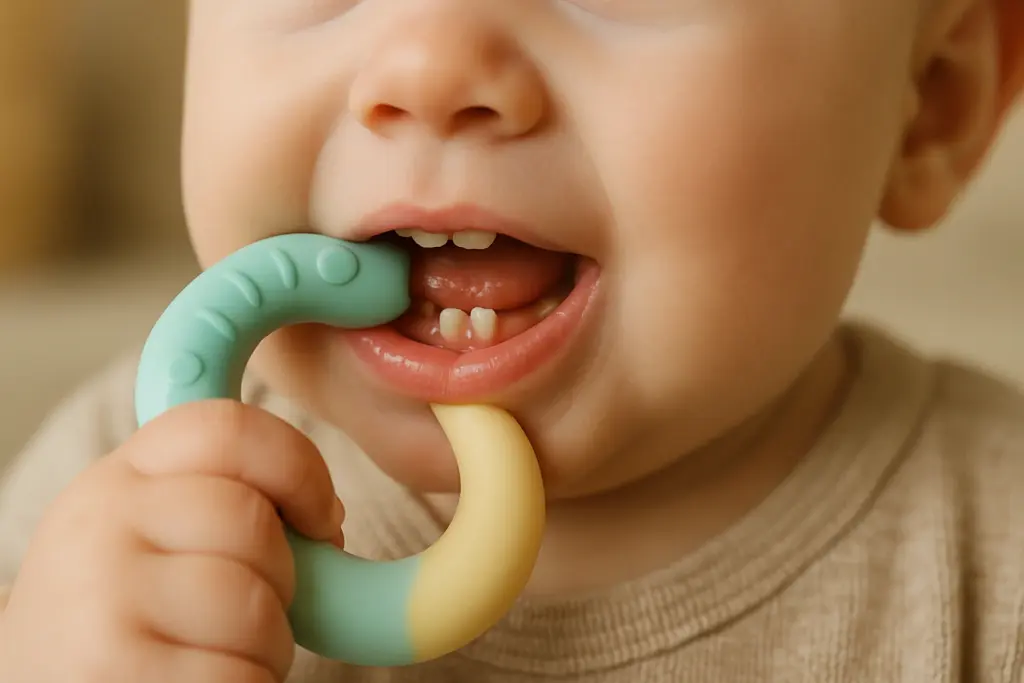
‘Why do some babies born with teeth ?’ Although the true causes of this dental oddity are still not completely unraveled. There are some factors that might play a role in it:
- Genetic Factors: If a family has a history of early tooth eruption then the chance of having a baby with a tooth is higher than in those families without any such history of the same. Thus, genetics may play a part in determining when an infant first sprouts their pearly whites.
- Developmental Conditions: Several uncommon syndromes and conditions such as odonto-onycho-dermal dysplasia-antley-bixler syndrome, or chandelier syndrome can cause premature tooth eruption among infants. Such conditions are exceptional; however, health specialists can assess whether any underlying issues are giving rise to natal teeth.
- Hormonal Influences: A limited number of studies suggest that maternal hormonal factors (particularly elevated estrogen levels) during pregnancy may lead to early tooth development in the fetus. This assertion is mostly based on a few cases rather than established evidence and needs more research for confirmation.
- Other Factors: Some experts also propose that other factors, including environment, nutrition, and general health status of the expectant mother and baby, could have an impact on natal teeth.
How to Care for Babies Born With Teeth?

For most of the parents blessed with the responsibility of bringing up babies that are born with teeth, there are various aspects that should be considered in taking care of the babies as well providing dental care that is usually appropriate to the children on a normal basis. Here, we provide you with tips that can help ensure that the baby and the mother are properly cared for:
- Regular Dental Checkups: It is advisable to schedule an appointment with a pediatric dentist who is an expert doctor for children’s teeth in order to determine if the teeth are properly positioned and firm and if they need refashioning, correction, or replacement.
- Feeding Adjustments: Based on the observation that some babies may experience pain when sucking from either the bottle or mother’s breast due to teeth that are growing from above or below. Making adjustments to feeding position and technique as well as providing adequate support will assist in reducing the discomfort experienced while feeding the child.
- Oral Hygiene: The correct cleaning of the first teeth is extremely significant since these teeth may be susceptible to rotting even though they are only one or two in number. Here, you should use a soft piece of cloth and water to gently wipe the teeth and the gums mechanism. This should be done every single day.
- Monitor for Risks: Occasionally, teeth and baby’s teeth can be found to be loose leading to a risk of choking. This happens frequently with babies in the age bracket of the range of years 0 to 2 years who suck their fingers but are sometimes found on teeth which are still loose. With the assistance of a dentist, one may decide to remove them simply as a preventive measure.
Treatment Options

born with teeth
- Tooth extraction: Any tooth that is extremely loosened or poses serious issues can be safely removed by a dentist who is well trained in advanced techniques that are reliable.
- Preventive care: Directions on the gentlest methods of cleaning and close monitoring of the child’s oral health are also outlined. Formation of the dentists, and regular check-ups can help to spot minor issues before they get bigger and are harder to deal with.
The above measures enable babies who are born with teeth to be able to thrive and not have to go through unnecessary complications in life. It is common for babies who have this condition.
FAQs About Being Born With Teeth
These are statistically rare, normally about 1 in 2,000 to 3,000 infants will come to the world already having teeth, which is termed as the birth with teeth phenomenon.
Natal teeth, on the other hand, is a condition where a baby is born with a tooth or several teeth that are already present in the mouth. Most times it’s not dangerous but a dentist might be required in order to stop the occurrence of discomfort or at the time of feeding.
Usually, a baby with teeth is a really shocking thing and once this happens, a pediatric dentist has to check the stability of the teeth and evaluate the risk of choking.
Natal teeth are uncommon, they happen with a frequency of 1 in 2000 to 3000 births. The majority of the instances are sporadic and do not have an association with any health issues.
Baby teeth syndrome is a term that relates to diseases that the child’s teeth have, for example, late eruption of teeth, oral malposition, and even rapid caries of primary teeth.
References:
American Academy of Pediatrics. (2021). Natal and neonatal teeth: What parents should know. Retrieved from https://www.aap.org
Colgate. (2022). Caring for your baby’s first teeth.
Mayo Clinic. (2022). Dental care for infants. Retrieved from https://www.mayoclinic.org
WebMD. (2021). Natal teeth and early tooth eruption. Retrieved fromhttps://www.webmd.com/oral-health

