


Bone grafting rebuilds lost jawbone to support implants and restore your smile.
Let us begin with a simple factual statement: A beautiful house will not endure for long if built on sinking sand.
Your teeth are also just like that. When you lose a tooth, the jawbone underneath that tooth also loses its job. In truth, there is no bone stimulation from chewing with a tooth root, so that piece of bone literally disappears in a process which we call resorption. This is the biggest cause of people coming to hear that they have no bone for a dental implant.
Actually, according to our experience at Lema Dental Clinic in Turkey, such a statement from the dentist is usually a misleading one. Most of the time, it can be treated. With the use of the most advanced bone grafting techniques, we help your body grow new bone and thereby provide a strong foundation for your dental restoration.
Bone Graft: Why You Need It? And How Is It Done Exactly?
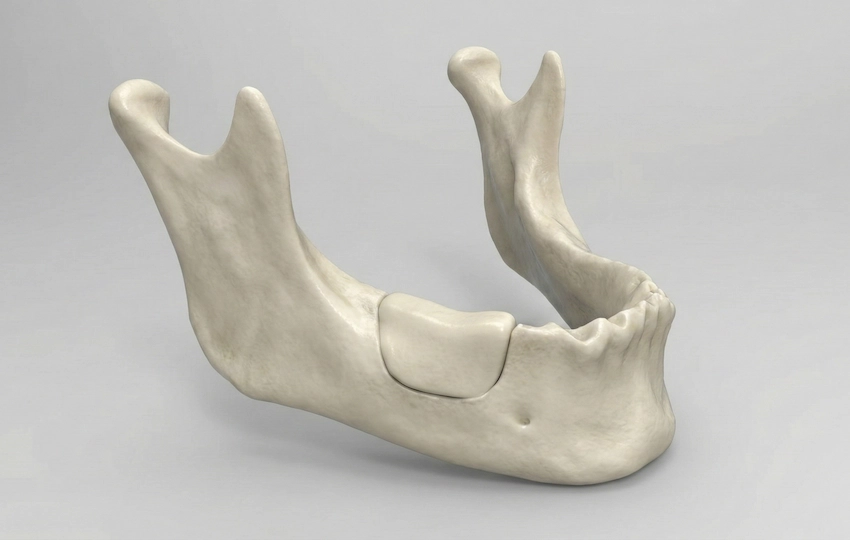
A bone graft is not just filling a space. It is more like building some kind of scaffold for a biological framework.
We insert the grafting material into a thin part of the patient’s jaw. In this way, we create a framework. Then, the body will do its job by sending the required cells to form and grow new natural bone over that framework. In a couple of months, the graft is naturally incorporated by the body and replaced with a healthy, dense jawbone.
What we see in the clinic from time to time is a very surprised reaction from patients. After having been told that they needed to get along with a removable denture permanently, they end up having a beautiful, secure dental implant, which we could only make possible by first rebuilding the jawbone.
Sinus Lift Procedure
When bone loss in the upper jaw occurs, the area close to the sinus of the patient becomes very small, and it might even be that the tooth is directly above the sinus membrane. Therefore, it is not feasible anymore to place a conventional dental implant as it could puncture the membrane.
We call such a procedure a sinus lift. The technique is highly meticulous and demands the use of a special kind of graft in a manner very similar to placing the implant. We have to carefully lift the sinus membrane, which, if you want, is as delicate as a piece of paper.
Our Clinical Plan of Action
Professor Doctor Coşkun Yıldız frequently says that precision and timing in the field of implantology cannot be exaggerated. If you ask yourself, you will find out that the only way to do things is not to try to speed up biological processes.
Together with our great team of Dentists, Polen Akkılıç, and others, we take it a step further and do an elaborate scan of the patient’s bones so that we will know which areas are in the best shape. We safely perform 3D volumetric tomography for that. There are so many variations in the types of patient needs that we have to tailor the choice of the best bone graft that fits a particular patient’s condition during the implant surgery. We also give patients high-strength adhesive to hold the temporary dentures in place while the graft heals. This glue acts as a double protection that allows temporary teeth to sit and move around while the graft tissue remains undisturbed and safely heals.
But what we mainly want our readers to learn about in this article is the nature of the graft materials themselves.
Types of Bone Grafting and Materials
You will probably be advised to go for bone grafting depending on several factors, and the following list shows some of the bone graft types together with their characteristics that can be a point of consultation for you.
| Bone Graft Type | Its Source | Recovery Period | Type of Bone Defects |
| Own Bone (Autograft) | From your own bones | About 3 to 6 months | A severe lack of bone |
| Donor Bone (Allograft) | Human tissue bank | Average 4 to 6 months | Regular implant preparations |
| Different Bone (Xenograft) | Animal source (Cow) | Average 6 to 9 months | Resorption after tooth extraction and sinus lifts |
| Synthetic Bone grafting material (Alloplast) | Materials of inorganic or non-living origin | Covers range from 4 to 9 months | Hollow bone repairs |
Frequently Asked Questions About a Bone Graft
How painful is a bone graft?
The procedure may sound intimidating, but I should say it doesn’t hurt. We use strong topical anesthesia for the patient. In case of anxiety, we have safe sedation options for our patients. You may feel some pressure or mild inflammation afterwards, but certainly there won’t be anything sharp or very uncomfortable about it. A normal inflammation medicine suffices without needing anything stronger.
How long before I can get my dental implant?
This differs according to how quickly you heal. It is generally a period anywhere between three and six months. We want to make sure that your new bone has reached such a level of density that it can hold a titanium implant securely. It is a known fact that the titanium screw is likely to fail if the supporting bone structure is soft. You can rest assured as far as your health is concerned at any cost, and there is no way around this; we cannot compromise the quality of care to save time.
Is there a chance that I will reject the graft?
In our case, the concern expressed by many patients is really a non-issue in our work,k as there is no similarity at all with an organ transplant. A human tissue donor’s material is not living anymore after being disinfected. It is a frame of mainly calcium elements which your body is not going to object to. The tissues will be integrated within your own bone tissue,ue which is also built up on those frames.
Do I absolutely need to go through a graft before getting an implant?
Hurrah! If that is what you were waiting for, the answer to this question is No. If you do a very quick replacement for a lost tooth, there may be no problems with that bone. However, in time,e as your replacement tooth gets loose and goes away, or if you have very serious periodontitis, your bone is going to shrink as well. Therefore, a graft ensures that you will never face another problem with regards to your dentures.
Why come to the Clinic in Turkey?
At Lema Dental Clinic in Turkey, we provide first-rate surgeryand thee best equipment all at once,o with the difference being in favor of us by providing it at a much lower price. You will be relaxed and at ease while your treatment is being done, all in a very gorgeous place. Your treatment will be hands-on and very professional.
Academic References
- Buser, D., Sennerby, L., & De Bruyn, H. (2017). Modern implant dentistry based on osseointegration: 50 years of progress, current trends and open questions. Periodontology 2000, 73(1), 7-21.
- Misch, C. E. (2014). Dental Implant Prosthetics (2nd ed.). Elsevier Mosby.
- Wang, H. L., & Boyapati, L. (2006). “PASS” principles for predictable bone regeneration. Implant Dentistry, 15(1), 8-17.
- Troedhan, A., Kurrek, A., & Wainwright, M. (2014). Biological principles of bone graft healing. Journal of Oral and Maxillofacial Surgery, 72(12), 2411-2420.
- Esposito, M., Grusovin, M. G., Felice, P., Karatzopoulos, G., Worthington, H. V., & Coulthard, P. (2009). The efficacy of horizontal and vertical bone augmentation procedures for dental implants – a Cochrane systematic review. European Journal of Oral Implantology, 2(3), 167-184.

