If you have lost several teeth, have broken teeth, or have no teeth at all and are looking for an efficient, effective means to replace your teeth, then you should consider the All-on-4 implant procedure provided at Lema Dental Clinic. All-on-4 dental implants are a patient-centered solution that utilizes the most advanced state-of-the-art dental science and techniques that restore not only the chewing ability but also the beautiful smile of the patient.
This guide is a plain and easy-to-understand guide to the All-on-4 dental implants. It delves deep into everything you need to know about this procedure, including the benefits, the procedure itself, costs, and answers to any questions you may have concerning the process of getting a new smile.
What Are All-on-4 Dental Implants?
All-on-4 dental implants are a unique and innovative dental procedure that offers a permanent and effective solution for tooth replacement for individuals who have lost several teeth or have partly decaying teeth. It involves the use of four implants placed in the jawbone to act as firm support for a full arch of artificial teeth. This procedure is designed to provide optimal retention and stability for prosthetic teeth, allowing patients to treat these implants as natural teeth.
The All-on-4 system is advantageous as it uses only four implants, fewer than traditional implant procedures, which can shorten surgical time and healing periods. This procedure is ideal for patients experiencing bone loss, as the implants are angled to allow placement in areas with adequate bone.
Benefits of Choosing All-on-4 Dental Implants
When compared to other tooth replacement options like traditional dentures, these non-removable, full-mouth dental implants offer numerous advantages. Here are the main benefits:
- Improved Oral Function: All-on-4 implants restore nearly the same oral functionalities as natural teeth, including full chewing function, allowing patients to enjoy a balanced diet without restrictions.
- Enhanced Aesthetics: In terms of appearance, full mouth dental implants resemble natural teeth so closely that they enhance your smile and boost self-confidence.
- Durability and Longevity: Unlike conventional dentures that may require replacement every few years, these durable implants can last for many years with proper care, becoming a permanent part of your body due to osseointegration.
- Bone Preservation: Dental implants help prevent jawbone resorption and recession after tooth loss, which is essential for maintaining facial structure.
- No Slippage: Unlike dentures, implants do not move or slip, offering superior stability and comfort.
- Minimal Healing Time and Quick Recovery: The procedure is minimally invasive, leading to a quicker recovery compared to other implant methods. Most patients can resume normal daily activities within a few days.
Candidates for Full Mouth Dental Implants
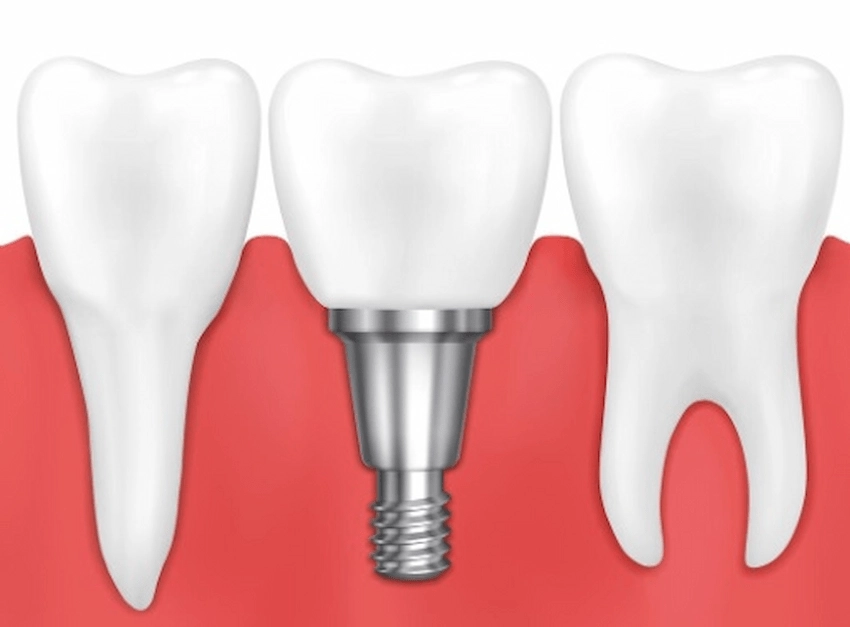
Full mouth dental implants are an exceptional remedy for individuals who have lost several or all of their natural teeth. Candidates should be in good overall health to ensure proper healing after surgery. Sufficient jawbone density is critical for successful implant placement. In cases of lower bone density, a dentist may perform bone grafting.
Candidates should be adults over eighteen, as this is when the jawbone completes its growth. Good dental hygiene is essential to maintain the implants for years to come. Non-smokers or those willing to quit are better candidates, as smoking can negatively affect the healing process.
Ultimately, a dentist will perform a final assessment to determine if you are a fit for full mouth dental implants. After the placement, a healing time of a few months is necessary to allow the implants and jawbone to bond successfully, ensuring the stability and durability of the restoration.
Recovery and Aftercare for Full Mouth Dental Implants
After undergoing full mouth dental implants surgery, the recovery phase is crucial for a positive outcome. You may experience some swelling and pain, but these symptoms can be managed with prescribed medication. It’s important to stick to the aftercare instructions from your dentist to ensure successful healing.
Practice rinsing your mouth after every meal with a salt solution recommended by your doctor. Refrain from consuming hard or sticky foods like nuts and candy, as these can exert pressure on the treated areas and potentially damage them. For the first few days, while your mouth is still sore, stick to soft foods such as yogurt, jelly, and smoothies to avoid discomfort.
Attend all scheduled check-ups so your dentist can monitor your healing progress. Brush your teeth gently twice a day with a soft-bristled toothbrush and clean between your teeth and gums.
By strictly adhering to these prescribed aftercare steps, you can ensure that the implants fuse correctly with the jawbone, creating a strong root system that will last for years.
Risks and Complications of Full Mouth Dental Implants
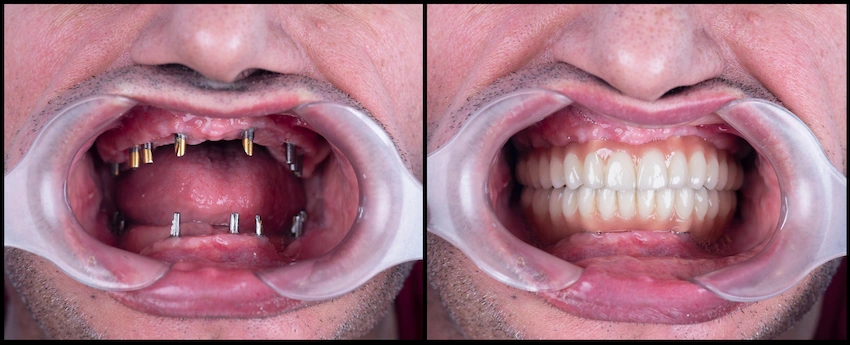
While the benefits of full mouth dental implants are significant, potential risks and complications should be carefully considered. Awareness of these aspects is crucial for making informed decisions about oral care.
Infection at the implant site is a possible complication, though rare. In extremely rare cases, implants may become loose or unusable if proper precautions are not taken. The cost of dental implantation is significant and irreversible, requiring an investment of both money and time.
Some individuals may develop a resistance to the dental implants. It’s important to discuss all potential risks with your surgeon to make informed decisions. Other complications can include sinus issues if implants are placed in the maxilla, or increased bleeding during or after the operation.
Frequently Asked Questions About Full Mouth Dental Implants
What are Full Mouth Dental Implants?
Full mouth dental implants are a solution for replacing missing teeth, using titanium posts inserted into the jawbone. These posts act as artificial roots to support prosthetic teeth, offering improved functionality and aesthetics.
What are the Benefits of Full Mouth Dental Implants?
The benefits include enhanced oral function, improved aesthetics, and increased self-confidence. They provide a stable, long-lasting alternative to dentures and help preserve the jawbone structure.
Who Is a Candidate for Full Mouth Dental Implants?
Candidates are individuals with missing teeth, sufficient jawbone density, and good overall oral health. A dentist will assess these factors to determine if implants are the right choice.
How Long Does the Full Mouth Dental Implant Procedure Take?
The procedure typically takes several months, including the time for osseointegration (where the implants fuse with the jawbone), usually ranging from 3 to 6 months.
Is the Full Mouth Dental Implant Procedure Painful?
The procedure is performed under local anesthesia or sedation, so patients do not experience pain during the surgery. Post-surgery discomfort is manageable with prescribed pain relievers.
How Long Do Full Mouth Dental Implants Last?
With proper care, full mouth dental implants can last for 15 years or more, making them a durable long-term solution compared to dentures.
Are Full Mouth Dental Implants Expensive?
The cost can range from $15,000 to $30,000 depending on factors like material, number of implants, and procedure complexity. However, their longevity makes them a worthwhile investment.
Are There Any Risks or Complications with Full Mouth Dental Implants?
While rare, complications may include infection, bleeding, or implant failure. It is essential to follow aftercare instructions and attend follow-up visits to minimize these risks.
How Do I Maintain My Full Mouth Dental Implants?
Maintaining your implants involves practicing good oral hygiene, including brushing, flossing, and regular dental check-ups. Avoiding hard or sticky foods and following your dentist’s advice ensures the longevity of your implants.