


Basal implants offer a solution for bone loss, but risks include infection and implant failure.
The Unspoken Side of Basal Implants: What Every Patient Should Consider
After substantial bone loss, the expression “teeth in 72 hours” is quite hard to believe and sounds almost like a miracle. Basal implants, or corticobasal implants, are often promoted as the ultimate fast track to be, no bone grafts, no waiting, just immediate results. Yet, at Lema Dental Clinic, we prefer to see through the reality to the facade. Although these implants can be employed for a particular niche, they are not “one, size, fits, all” solutions.
The process of choosing the right dental restoration is like choosing the foundation of a skyscraper; if you decide to go fast at the expense of the safety of the structure, the long, term cost can be disastrous. This is the truth we deal with at the clinic and the reason why Professor Doctor Cokun Yldz and our team usually take a more cautious, evidence-based approach towards these “instant” solutions.
Why the “Shortcut” Can Be Risky
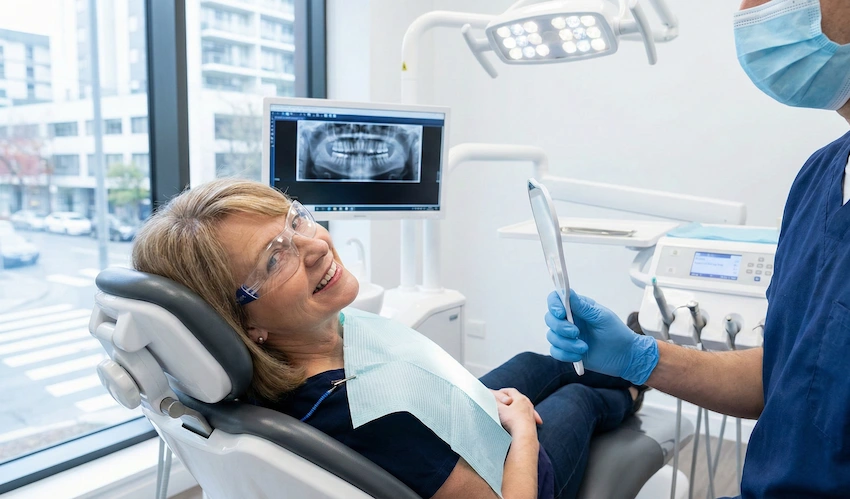
Basal implants do not operate the same way as traditional dental implants. Rather than going into the soft, spongy alveolar bone (the part of the jaw that usually holds your teeth), they fix themselves to the compact, “basal” cortical bone. The difference can be explained by the comparison of screwing into a granite countertop instead of a sturdy piece of oak. The screw will still hold, but if it breaks, the damage to the surrounding material will be much more serious.
1. The Challenge of “Monobloc” Designs
Most basal implants are “monobloc,” meaning the implant and the abutment (the part that holds the tooth) are a single piece of metal. In traditional systems used by Dentist Polen Akkılıç and her team, we use two-piece systems.
Why does this matter? With a one-piece implant, there is no “give.” If the angle isn’t perfect during surgery, it’s incredibly difficult to adjust the final look of your teeth. You might end up with a smile that feels “off” or looks unnatural.
2. The Nightmare of Removal
This is the reality most clinics won’t mention. Because basal implants are long, thin, and often “threaded” deep into the bone, removing them if they become infected is a traumatic surgical event. While a failed traditional implant is a setback, a failed basal implant can leave behind a significant bone defect that is difficult to repair.
3. Risk of Peri-Implantitis
The smooth surface of many basal implants is designed to resist bacteria, but the long, thin “neck” of the implant can still become a highway for infection if oral hygiene isn’t immaculate. Once an infection reaches the cortical bone, it can spread faster than it would in the more vascularized alveolar bone.
Basal vs. Traditional Implants: A Clinical Comparison
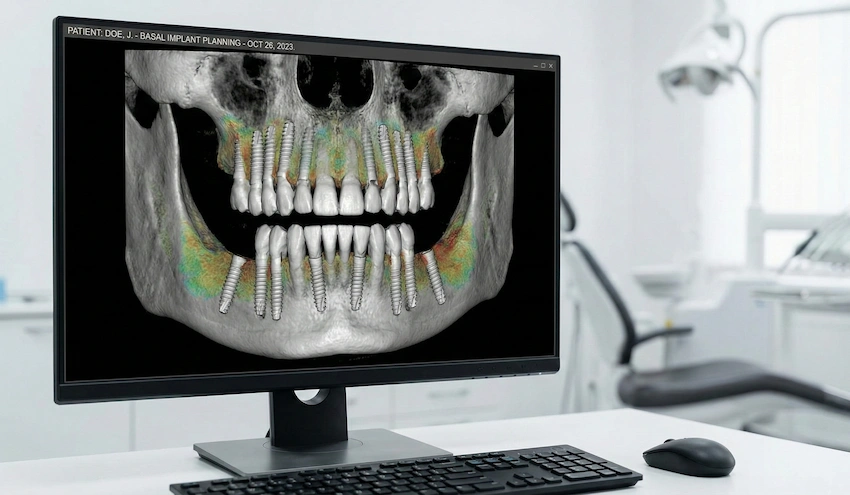
To help you understand the trade-offs, we’ve broken down the key differences we discuss with our patients here in Turkey.
| Feature | Basal Implants | Traditional (Two-Stage) Implants |
| Bone Density Required | Minimal (Anchored in Cortical Bone) | Moderate (May require grafting) |
| Healing Time | 3 – 5 Days | 3 – 6 Months |
| Aesthetic Flexibility | Limited (Single-piece design) | High (Customizable abutments) |
| Repairability | Very Difficult | Low to Moderate |
| Success Rate (Long-term) | Variable / Data is debated | Highly Documented (95-98%) |
The “Lema Dental Clinic Approach”: Safety Over Speed
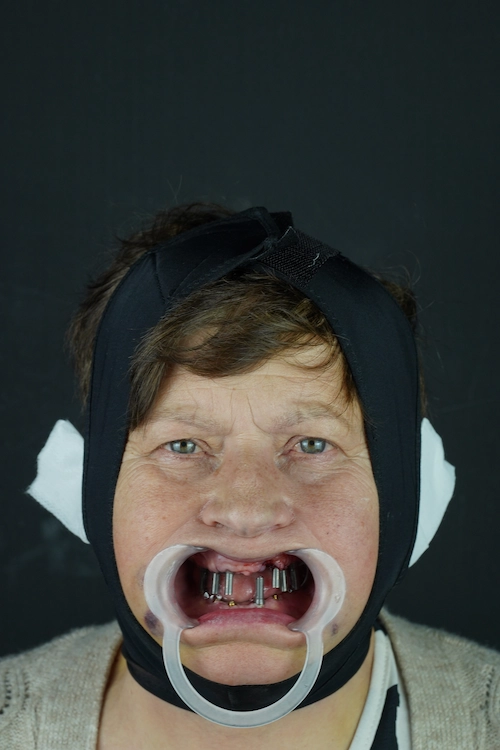
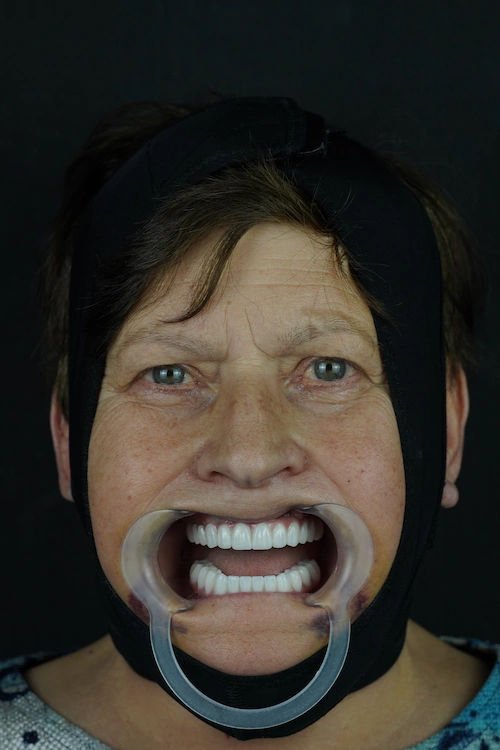
At Lema Dental Clinic, our priority isn’t just giving you a smile for the next year—it’s ensuring you have a healthy jaw for the next thirty. Professor Doctor Coşkun Yıldız often notes that while basal implants avoid the need for bone grafting, modern grafting techniques have become so predictable and painless that the “shortcut” of basal implants is rarely worth the long-term risk for most patients.
The question remains: Do you want your teeth fast, or do you want them for life? In our clinical experience, taking the extra few months to rebuild the “foundation” (the jawbone) leads to a much more natural, comfortable, and durable result.
Frequently Asked Questions (FAQ)
Actually, the surgery itself is similar, but because we are anchoring into the deeper, denser bone, the “pressure” felt during recovery can be different. However, the real pain comes if the implant fails. Because they are anchored so deeply, any complication is much more complex to manage than with a standard implant.
Some clinics promote basal implants for smokers because the cortical bone has a different blood supply. But let’s be honest: smoking increases the risk of failure for any foreign object in your body. At Lema, we prefer to stabilize your gum health first to ensure any investment you make in your smile actually lasts.
They are “immediately loaded,” meaning the bridge is attached almost right away. This is possible because the cortical bone is very hard and provides “mechanical” stability. But mechanical stability is not the same as biological integration (osseointegration). We prefer to let the bone and metal become “one” naturally.
This is the tough part. Because of their shape (often like an inverted ‘T’ or a long screw), removing a failed basal implant usually involves losing a significant portion of the surrounding bone. It makes getting a “replacement” implant much harder in the future.
The truth is that basal implantology requires a very specific, almost “niche” surgical training, and many leading surgeons—including our team at Lema—believe that the long-term data simply doesn’t compete with the gold standard of traditional implants. We choose the path that offers our patients the highest safety margin.
- Elani, H. W., et al. (2018). A systematic review of the survival and complication rates of basal implants. Journal of Oral Rehabilitation.
- Lazarov, A. (2019). Immediate loading of basal implants: A 5-year retrospective study. Annals of Maxillofacial Surgery.
- Misch, C. E. (2015). Dental Implant Prosthetics. Elsevier Health Sciences.
- Paun, S., & Nemtoi, A. (2021). Biomechanical considerations in basal implantology: A review of clinical challenges. International Journal of Implant Dentistry.
- Scortecci, G. (2019). Basal Implantology. Springer Nature.

