


Hypoallergenic gold teeth prevent irritation and offer a safe solution for metal allergies.
The majority of people fail to identify a metal allergy until it has already entered their body. You may get a rash from a watch or a ring, but a reaction inside your mouth is far more difficult to detect. At Lema Dental Clinic in Turkey, regular weekly visits are made by patients affected by the ongoing gum stab or odd metallic flavor. The truth is that dental crowns made traditionally are usually made from base metals like nickel or chrome. For a person with sensitivities, these substances are a never-ending source of irritation.
Professor Doctor Coşkun Yıldız, at times,s emphasizes to our staff that the body is an exceedingly truthful system. If it does not like a material, it will notify you. That is the reason for our support of pure or high-karat gold dental restorations. Gold is not only a luxurious item, but it is also one of the most biocompatible substances on earth.
Reasons Why Your Body Likes Gold
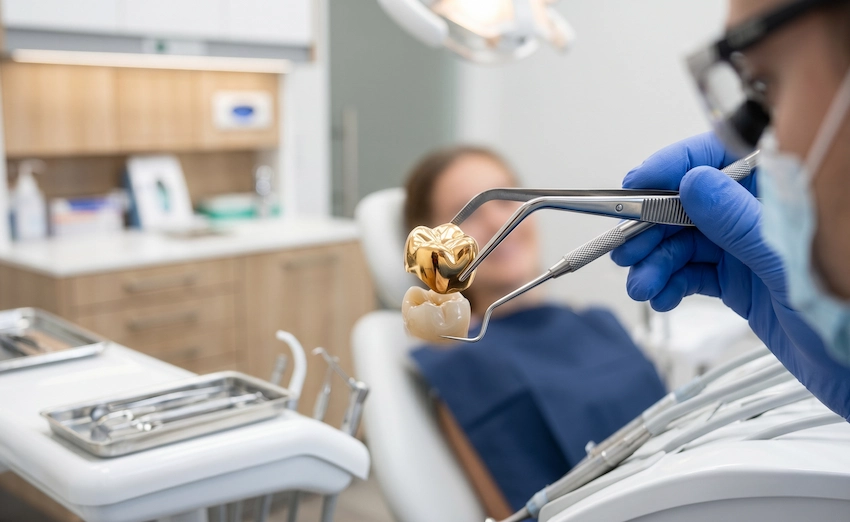
Imagine your immune system as a security guard. The base metals are like uninvited guests who keep pushing the alarm button. This situation will end up with gum inflammation, redness, and finally with the loss of bone. Gold is totally different. It is called bio-inert in medical language.
So, what do you get from that? It is that gold does not get tarnished. Also, it does not interact with your saliva or leach ions into your gums. A gold restoration is not just a tooth for Dentist Polen Akkılıç and her crew. It is a break for your immune system.
Advantages of Gold in Practice
Nonetheless, let us analyze the mechanics of your mouth a little bit more. Your teeth are the ones bearing the brunt, practically speaking. Each time you eat, the opposing teeth collide with tremendous force. The fact is that the materials that are too hard may even damage the natural teeth over time.
Gold is quite flexible. It imitates the natural erosion of human enamel. This is the way your occlusion gets protected, and your jaw remains harmonious. The big question is: are you willing to invest in it? If you are conscious of the value of durability and general health, then almost certainly you will say yes.
| Material | Allergy Risk | Gum Health | Durability | Best For |
| High-Karat Gold | Lowest | Excellent | 20+ Years | Metal Allergies & Longevity |
| Zirconium | Low | Very Good | 15+ Years | Front Teeth Aesthetics |
| Porcelain (PFM) | Moderate | Fair | 10–15 Years | Budget-Friendly Back Teeth |
Dental Procedure in Istanbul
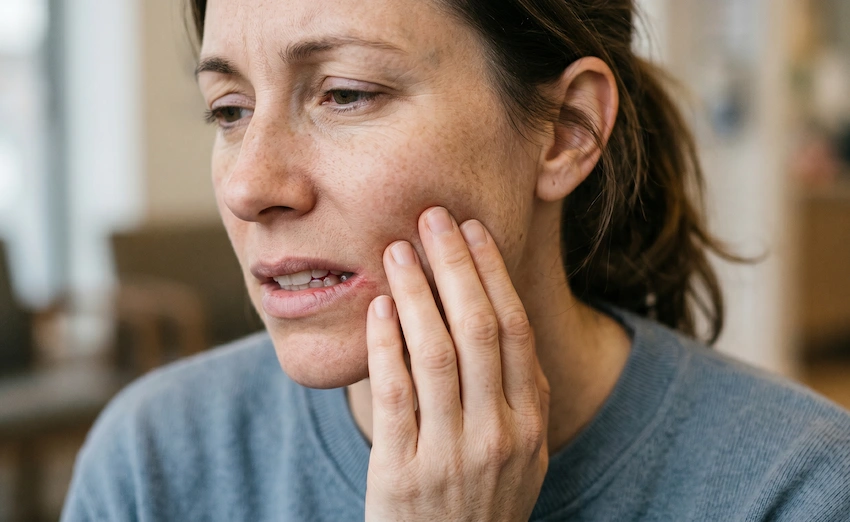
Opting for a dental visit to Turkey is a significant move. At Lema Dental Clinic, we strive to make the decision that you will be happiest about your health. We unite internationally recognized surgical skills with intimate knowledge of dental materials. Lab is ready to meet your biological needs at a high purity level, both for functional allergy repair and for designing a “Hollywood Smile”.
Frequently Asked Questions
“From our experience, a piece of metal tattooing on gum—basically a dark or purple line right at the junction of tooth and gum—is the clearest sign by far. Some other symptoms may include a burning sensation or a constant metallic taste.”
“We generally deal with very high karat gold alloys of between 18 and 22 carats. Apparently, 24-karat pure gold is absolutely unsuitable in a dental context because it’s too soft for chewing purposes. However, adding a tiny amount of other noble metals, such as platinum, not only makes the material hypoallergenic but also quite durable for regular use.
“It really depends on what kind of result you want. Quite a few patients enjoy the look of a gold molar or a very simple gold accent. But, if you intend to have a natural appearance, we can make use of gold for the main structure and cover it with very good quality ceramic.”
“Really, it is the other way around. Gold’s heat conductivity is very close to the way your natural teeth work. So, there is no way you can get the sharp ‘zap’ of sensitivity that one often associates with cheaper metal crowns.”
“Most often, the entire process can be wound up in about a week: 5-7 days. This period allows Dentist Polen Akkılıç and her team to ensure that the receiving of the appliance is flawless and that the bite is comfortable for you.”
- Anusavice, K. J., Shen, C., & Rawls, H. R. (2012). Phillips’ Science of Dental Materials. Elsevier Health Sciences.
- Givan, D. A. (2007). Precious metals in dentistry: A historical perspective. Journal of the Alabama Dental Association, 89(2), 22-26.
- Schmalz, G., & Garhammer, P. (2002). Biological interactions of dental cast alloys with oral tissues. Dental Materials, 18(5), 396-406.
- Wataha, J. C. (2002). Alloys for prosthodontics. Journal of Prosthetic Dentistry, 87(4), 351-363.
- Yoshii, E. (1997). Cytotoxicity of dental metal alloys: The role of cell responses to metal ions. Journal of Biomedical Materials Research, 38(4), 285-290.

