Gold teeth have been around for centuries, and now they are back in fashion and in modern dentistry. These days, people are opting for gold crowns and fillings because of a number of good reasons – it’s durability, biocompatibility, or just a statement of a bold personal style.
Gold teeth are exceptionally unyielding and immune to environmental factors, but they are not as strong candidates for most people’s dental makeovers. So, the Hollywood Smile is a good alternative.
Lema Dental Clinic, located in Istanbul, combines durability and beauty in the most appealing way. The clinic carries a variety of cosmetic dentistry services like veneers, zirconium crowns, and implants that are both safe and effective, as well as give the patient the required comfort to smile one day, not with one row but with the whole mouth. Whether you are for a time-proven gold crown or an impeccable white veneer, Lema Dental Clinic meshes medical excellence with aesthetic artistry.
Our intention in this article will be to explain all the properties and uses of gold as a dental material and to discuss its it is the most convenient material in terms of safety, longevity, and economy, compared to the progress natural-looking alternatives have reached today.
What Are Gold Teeth and Why Are They Used?
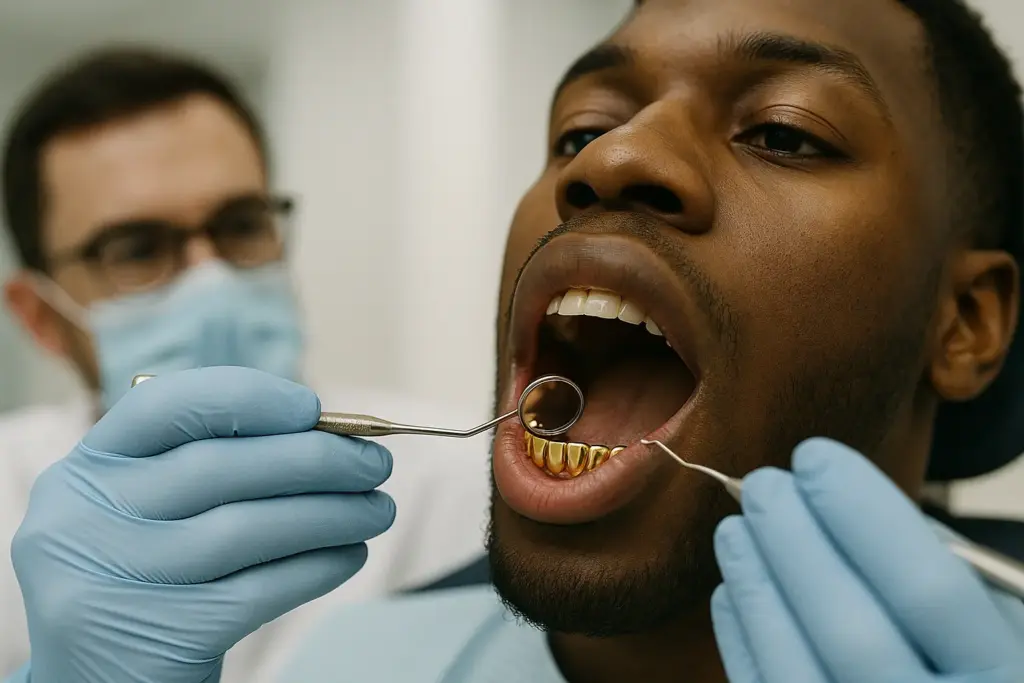
Gold teeth are dental restorations. They are the dental materials specifically designed to act as crowns, bridges, or fillings for different dental issues. They are made of the dental gold form, which is an alloy of different metals and platinum, silver, or copper, that possesses biocompatibility properties or both.
Dental specialists are well acquainted with the fact that those things are utilised to reintroduce to the patient when the tooth is in decay. They are made to provide necessary resistance against numerous elements of the mouth, e.g., saliva, and some nutrients present in food, while retaining the basic shape and requirements of a dental element. If they are made from pure gold, then they are practically inferior as they are quite pliable; solid gold is used in dental operations only.
In most cases, they are placed in the back teeth or molars. Nowadays, gold is still the most precious and the strongest choice for dental materials. It has a history of more than a century and is still gaining a high trust among dentists due to its nonreactive nature in the mouth. Patients rarely have allergies to it. Throughout various societies, gold teeth may carry the essence of social or fashion significance; hence, they rarely are observed to be unvalued by estheticians or dentists’ patients, money, tradition, or fashion symbols that local wearers of gold teeth can be.
Are Gold Teeth Safe for Your Mouth and Health?
Yes, it’s true—gold teeth are by far one of the safest treatments you can have unless handled by a professional in the industry. The dental gold used is a type of medical-grade alloy that has been thoroughly tested for both its safety and its biocompatibility with the human body. Being susceptible to allergies is a very rare scenario, and the chances for infection are also no more than those for other types of dental restorations.
As a matter of fact, the biocompatibility of gold is its biggest advantage, among others. It does not trigger any kind of oral discomfort, is not a corroding material, and does not release toxins. The choice of gold while compared to amalgam (also containing mercury), enables long-term dental use, as gold is undeniably superior in terms of safety and stability.
Typical Lifetime of Gold Teeth
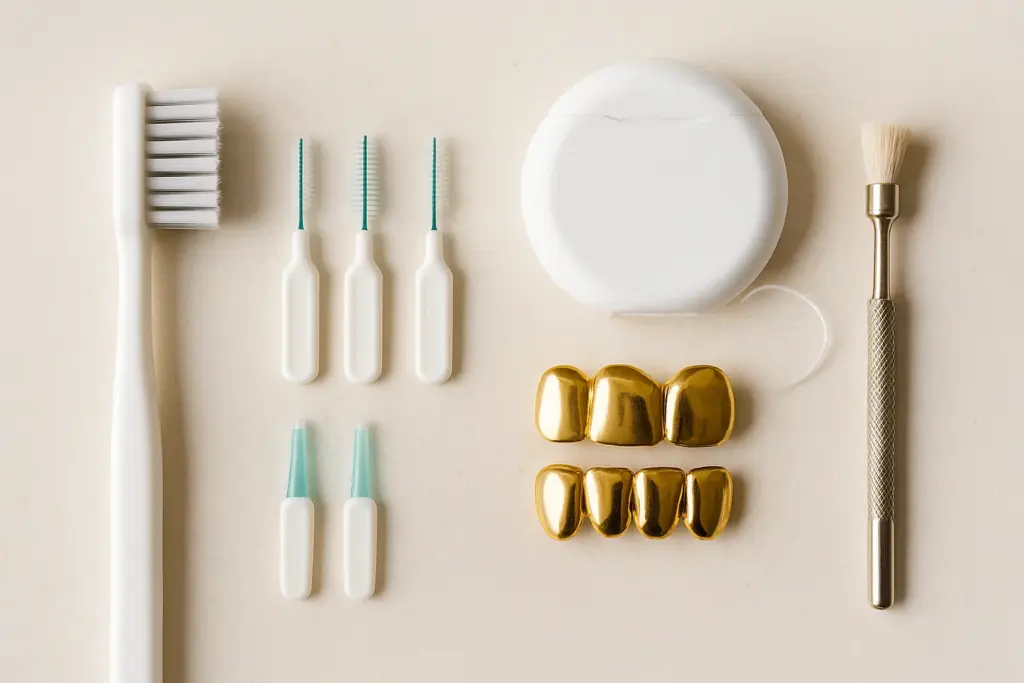
Gold restorations are kind of record setters in terms of longevity in the field of dental healing. When the restoration is properly looked after, the crown or filling made of gold can last for about 20 to 40 years, and maybe even longer. This is much longer than any other material, such as composite resin or porcelain, that the dentist normally replaces within 10-15 years.
The reason why gold has this long-lasting quality is that it is resistant to both corrosion and wear. Gold does not decompose when it is exposed to moisture, acid, or temperature changes. Also, it is impossible for the product to chip due to the fact that it is unable to dent.
Advantages and Disadvantages of Gold in Dentistry
Just like any other dental material, gold has good and bad sides. Here’s the breakdown:
Pros:
- It is exceptionally long-lasting – it can be used for decadesNonabrasive to other teeth, not easily worn out or cracked
- Nonabrasive to other teeth
- Not easily worn out or cracked
The cons of using gold are that it tarnishes over time and is rather costly, especially when compared with other dental materials. Moreover, gold is a highly conductive metal, but it’s also very malleable and tends to wear away more easily, whereas other materials are more resistant to deformation and wear.
Pros:
- Very safe and biocompatible
- Custom-fit and easy to polish
Cons:
- High cost compared to other materials
- Noticeable gold color (especially in front teeth)
- Requires skilled placement
- Some people prefer more natural-looking materials
If the matter of importance is the function, comfort, and the likelihood of the material to last, one could say that gold is a perfect fit for you.
Gold Crowns vs. Other Materials: Which Lasts Longer?
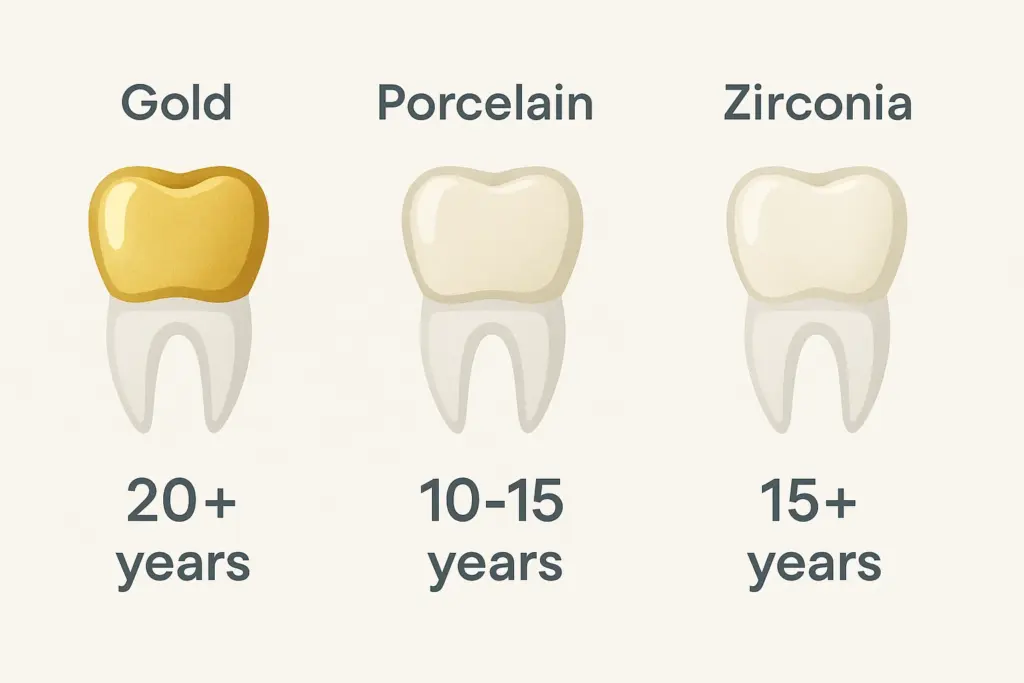
If priority is on durability, gold crowns outperform all other materials. Porcelain crowns are fragile and prone to fractures and chips, despite being very delicate and realistic. Zirconium crowns are of a similar strength to gold but are more refined, and they also sometimes act as the agent of wear and tear for the teeth they neighbor. Composite resin crowns are the most economical ones, but in return, they rapidly wear out and are susceptible to discoloration.
It’s not only that gold is more durable, but it also adjusts to the mouth over time. It fits the tooth perfectly and minimizes the probabilities of bacterial growth under the tooth, which is very essential, and this is probably the greatest rationale for the patients to get this long-life oral treatment… It indeed is a good option for patients who are cautious about the new shape of their teeth.
FAQ: Are Gold Teeth Safe and Long-Lasting?
No, gold teeth are generally very safe. Dental gold is biocompatible and rarely causes allergic reactions or side effects.
Gold restorations can last between 20 to 40 years or even longer with proper dental hygiene and regular check-ups.
It depends on your needs—gold lasts longer and is more durable, while porcelain looks more natural and blends with surrounding teeth.
Yes! Gold crowns and fillings function just like natural teeth. In fact, they’re great for people who chew hard foods or grind their teeth.
People love gold crowns for their strength, safety, and long lifespan. Some also enjoy the stylish or traditional look of gold in their smile.