


We’ve all been in such situations—out of the blue, a sharp, unrelenting pain will hit your tooth. It’s somewhat similar to the impact of a flash of lightning right through your mouth. You are not able to eat, nor drink, and all you want is to simply lie down and make the pain cease.
This is the “tooth nerve pain”, people, and it may be one of the most terrible and strongest pain that a person could feel. Still, what are the factors that lead this pain to happen, and how can it be stopped?
Here we are revealing to you the source of pain in your tooth and the available treatment options, and in addition, how Lema Dental Clinic in Istanbul can be the reason for your comfort and your smile restoration. 💙
🧠 What Causes Tooth Nerve Pain?
Usually, the source of tooth nerve pain is the pulp (the soft tissue that is inside your tooth) getting irritated, infected or inflamed. The things that lead to this condition can be varied. We’ll highlight the kind of things that cause pulp infection one by one.
1. 🦷 Tooth Decay (Cavities)
The most significant example of a cause for tooth nerve pain is tooth decay. When bacteria get into the enamel and fatten at the tooth by using it as their nourishment source, in that case creating a cavity becomes inevitable. The cavity will be getting deeper and deeper until it reaches the nerve.
- Pain in the early stage may be only with hot or cold, or sweet foods.
- Currently, advanced cavities may lead to the occurrence of sharp, constant pains.
2. 😬 Tooth Abscess

An abscessed tooth is a condition characterized by an infection at the tip of the tooth root. The development is such that bacteria invade the pulp, and the infection spreads to the bone. The infection leads to swelling and is accompanied by a throbbing pain that often goes together with a fever, bad breath, and the affected area getting bigger.
Lema Tip: If you notice an abscess, don’t wait—see your dentist immediately to prevent the infection from spreading to other parts of your body. 🩺
3. 🦷 Cracked or Chipped Teeth
A cracked or chipped tooth will expose the nerve inside, thus the individual will feel pain. Some of the ways this can occur are:
- Accidents
- Eating hard foods
- Grinding of teeth/bruxism
Even minor-miscracks can induce pain because the refer the sensitive inner layers of the tooth to contact directly.
Lema Tip: When you have a cracked tooth, the first thing you should do is to make sure that it is securely treated. Even minor cracks can gradually lead to the formation of infections or the damage of the nerve.
4. 🧴 Gum Disease
Periodontitis can be the underlying reason of the tooth nerve pain coming from the gum area as well. The inflamed and infected gums can pull back, exposing the sensitive tooth roots and giving rise to nerve pain. Besides that, the surrounding teeth can get affected as well, causing the area to be easily irritated with the spread of the infection.
5. 🦷 Tooth Sensitivity

Tooth sensitivity is a case when the individual experiences sharp pain, which is a common issue for many people. The reason for this is that enamel has been worn and the softer part of the tooth called dentin, which is closer to the nerve is revealed. It is frequent that this results in a sharp pain when the person:
- Drinks hot liquid ☕
- Eats cold food 🍦
- Consumes sweet food 🍬
Lema Tip: In case your tooth sensitivity will be persistent, you might find it useful to use a desensitizing toothpaste or get fluoride treatments from a professional in order to reinforce your enamel and make your teeth less prone to irritation.
6. 😷 Teeth Grinding (Bruxism)
Grinding teeth, particularly at night, not only erodes enamel but also can irritate the dental nerves. Eventually, grinding may cause teeth to break apart or become worn, thus resulting in nerve pain.
Lema Tip: If you are a bruxer, a night guard which fits you can protect your teeth from further damage and at the same time reduce the discomfort you experience.
🏥 What Are the Best Treatment Options for Tooth Nerve Pain?
Knowing what causes the pain, it would be very helpful to understand how to treat it. The best treatment in the case of tooth nerve pain is dependent mostly on the source of pain. Your alternatives are hereby clarified:
1. 🦷 Root Canal Therapy
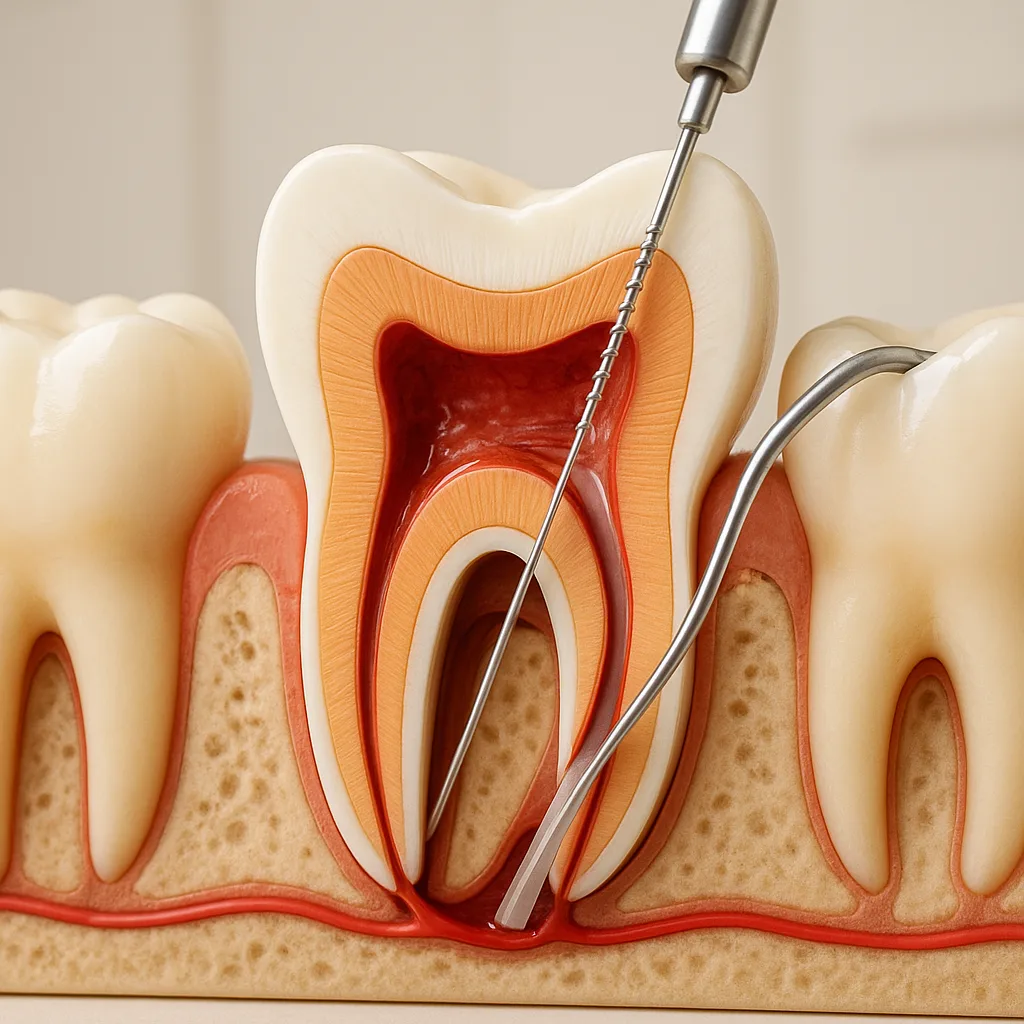
Root canal is usually the solution that is sought after when the tooth’s nerve is infected, or the damage is so severe that the only way to relieve the pain is to remove the nerve completely. In this surgery:
- The infected pulp (nerve) is removed
- The tooth’s interior is cleaned and left sealed
- To protect the tooth, a crown is placed
Lema Tip: While a root canal sounds like a daunting thing to go through, the contemporary techniques and anesthesia make the process very fast and painless. Most people feel the relief right after their session.
2. 🦷 Fillings or Crowns
Fillings or crowns are the solution for cavities or broken teeth that have not yet gone to the nerve. Your dentist will:
- Remove the decayed portion of the tooth
- Fill the gap with composite resin or insert a crown to restore the tooth’s function and aesthetics
In case of cracked or chipped teeth, a dental crown will fit your tooth nicely helping it to be sealed and made safe from damage to continue.
3. 🧴 Desensitizing Treatments
Desensitizing treatments might suffice for minor sensitivity. The treatments may:
- Close off exposed dentin
- Ease nerve sensitivity
Here at Lema Dental Clinic, we can use desensitizing gel or fluoride varnish to help your tooth when the pain-causing agents are sealed off.
4. 🦷 Antibiotics for Infections
When an infection is present, the dentist will likely prescribe antibiotics that are aimed at eliminating bacteria and thus reducing the pain. Then, antibiotics are associated with root canal therapy or tooth extraction to heal abscesses or deep infections.
5. 🦷 Pain Management
In case the pain is unbearable, and you have to wait for the treatment, then the dentist might advise taking some over-the-counter pain pills like ibuprofen or acetaminophen to lower the inflammation and the pain. Furthermore, a numbing gel for temporary pain control can be provided to you until the problem is fixed.
🏥 How Lema Dental Clinic Can Help
We are Lema Dental Clinic in Istanbul, and we are experts in tooth nerve pain diagnosis and treatment. This is how we are going to aid you:
✔️ Comprehensive Exam and Diagnosis
The beginning will be with the comprehensive exam and digital X-rays that will help us discover the exact reason for your toothache whether it is a cavity, a crack in the tooth, or gum disease.
✔️ Root Canal Therapy
In the case of your tooth infection, we allow the painless root canal treatment to rescue the tooth and your support is here with the help of modern tools and the last techniques by our team.
✔️ Fillings, Crowns, and Bonding
If you have a cavity or the tooth broke, we can fill it in your color or make a crown with ceramics that will not only strengthen the tooth but will give the tooth a similar appearance and function to that of a natural one.
✔️ Gum Disease Treatment
If the source of your pain is gum disease, we proceed with scaling, root planing, and gum grafting to bring back your gum health and stop the issue from spreading further.
✔️ Personalized Care Plans
We will determine the cause of your pain and then design a personalized plan of care to not only address your situation but also to keep your smile at its brightest.
💡 Final Thoughts: Don’t Wait—Get Relief Today
Tooth nerve pain can be very severe. The good thing though is that it can be treated. The fastest you decide to see the doctor, the fastest you will be free from the pain no matter if it is a root canal, a filling, or a desensitizing treatment that you need.
We at Lema Dental Clinic in Istanbul are committed to providing you with the best care in the shortest time to help you get relief and to bring back your smile. Don’t let tooth pain control your life—schedule a visit today and get back to enjoying your favorite foods without the pain! 😁
It’s usually caused by tooth decay, gum disease, or a cracked tooth that irritates the nerve.
Rarely. Most tooth nerve pain requires professional treatment, like a root canal, to fix the problem and relieve the pain.
No! Root canals are painless with modern anesthesia and techniques. You’ll feel relief right after the procedure.
It can last anywhere from a few hours to a few weeks, depending on the cause. If it doesn’t go away or gets worse, see a dentist immediately.
After a root canal, you can eat—but it’s best to avoid hard or sticky foods until the final crown is placed.

