


The best age is seven.
At Lema Dental Clinic in Istanbul, we are continuously hearing this myth regarding parenting and children’s orthodontic treatment. The idea is usually framed along these lines: “We will only see an orthodontist after all baby teeth have fallen out.”
Of course, at first glance, this kind of reasoning is understandable—after all, why would you fix something temporarily if it’s going to be replaced? However, this is exactly the kind of notion that can set the child up for more complicated, costly, and even surgical treatment options in the future. On the other hand, the truth is, that teenagers waiting for grown-up teeth might miss the most important biological period for skeletal correction.
So as a clinical partner in your children’s health, we stand unequivocally with the major global orthodontic associations on this matter: the best time for an orthodontic check-up is not at twelve or thirteen. It is at seven.
Why Age Seven? The Biological Window
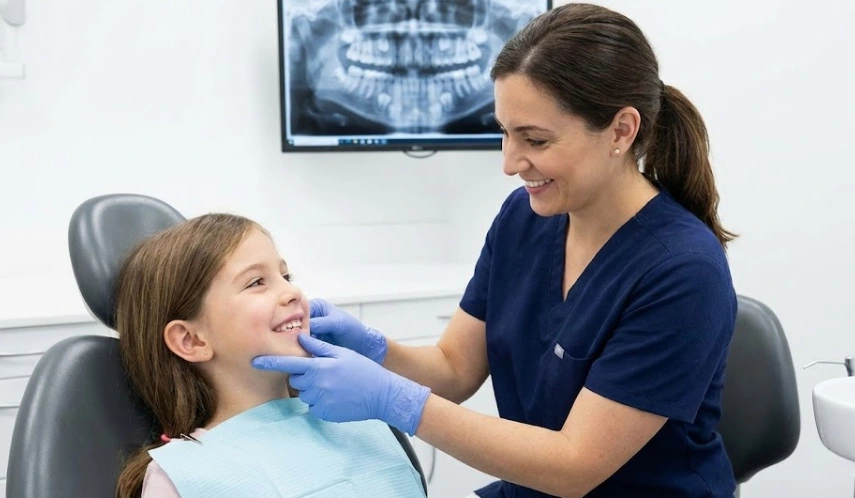
Mixed dentition or partly permanent teeth is a developmental phase that most children are in by the age of seven. They have their first permanent molars and incisors, which make a start of the adult bite besides the baby teeth that are still there.
Your child’s jawbone development can be compared to the foundation of a house, which is still being poured. At age seven, the concrete is wet; it is pliable and easily influenced. By age twelve or thirteen, that concrete has almost become hard.
Professor Doctor Coşkun Yıldız, a prominent figure in our clinic, always emphasizes that it is a hundred times easier to direct the growth of the bones to the right place than to try and reshape the jaw bones that have fully matured later in life. An early examination helps us to know if the foundation is wide enough and well-positioned so as to support the “house” of adult teeth which will soon be there.
The “Hidden” Signs We Look For
Parents are usually great at spotting obvious crowding or crooked front teeth. But let’s look closer at what a professional screening reveals. The most significant orthodontic issues at this age aren’t always visible when your child smiles for a school photo.
At Lema Dental Clinic in Turkey, our focus during these early exams is on skeletal relationships and functional habits. We are looking for:
- Crossbites: Where upper teeth fit inside lower teeth, which can cause the jaw to grow lopsided.
- Severe Overjets: “Buck teeth” that are prone to trauma during play.
- Habitual Issues: The lingering effects of thumb-sucking or tongue-thrusting that are actively warping the palate.
- Space Maintenance: Ensuring that if a baby tooth was lost too early, the space is held open for the adult tooth, preventing a domino effect of crowding.
The Lema Difference: Guidance, Not Necessarily Braces
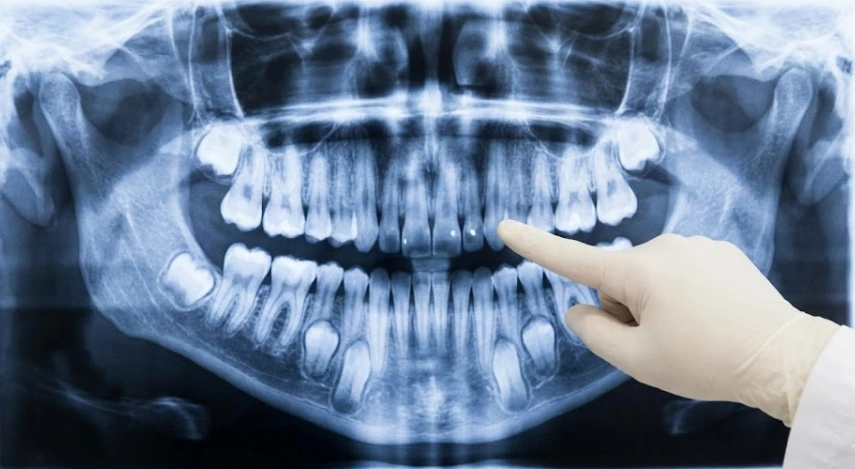
It is vital to understand this distinction: an orthodontic check-up at age seven does not usually mean braces at age seven.
Under the compassionate direction of Dentist Polen Akkılıç and her team, the vast majority of our young patients who come in for an early screening enter what we call an “observation phase.” We establish a baseline and monitor their growth every six to twelve months.
This is active surveillance. It costs nothing to look, but the value is immense. If we do spot a developing skeletal problem that needs immediate attention—what we call Phase I treatment—we can intervene with simple appliances (like palatal expanders) while the jaw is receptive. This often makes future treatment in the teenage years shorter, easier, and sometimes unnecessary altogether.
Here is a breakdown of why timing matters:
| Feature | Early Screening (Age 7-9) | Late Screening (Age 12+) |
| Jaw Capability | Bones are malleable; active growth can be guided. | Bones are maturing or hardened; skeletal change is difficult. |
| Treatment Focus | Skeletal correction (jaw width, bite alignment). | Mostly dental correction (straightening teeth). |
| Invasiveness | Often uses non-invasive expanders or retainers. | May require tooth extractions or jaw surgery for severe cases. |
| Future Impact | Can simplify or eliminate the need for braces later. | Usually requires full braces and longer treatment times. |
| Psychological | Addresses prominent teeth before bullying becomes an issue. | Treatment occurs during sensitive teenage years. |
Your Role as a Parent
A typical question among many is when is the right time to take a seven-year-old kid to an orthodontist? If you find that your kid has difficulty in chewing, mostly breathing through the mouth, jaw moving or making noises, or the alignment of their teeth is not proper then that time is the appropriate moment to have the appointment.
Don’t postpone it till the “cement sets.” Through advanced diagnostics that are locally and rightfully available in Turkey at Lema Dental Clinic, we can make sure that your child’s oral development stays on the right track.
Parental Guidance: Navigating Your Child’s Orthodontic Timeline
Yes, absolutely. The front teeth might look straight, but the back bite could be completely off, or the jaws might be growing at different rates. We are looking at the skeletal structure beneath the gums, not just the aesthetics of the few teeth that have erupted.
Not at all. In fact, our goal is the opposite. Most seven-year-olds don’t get braces. We usually place them on a ‘recall status’ to monitor growth. If they do need early intervention (Phase I), it typically lasts about 12 months, followed by a resting period before final braces years later.
Don’t panic. While age seven is ideal for catching certain growth issues, ten is better than twelve, and twelve is better than fourteen. Bring them in as soon as possible. We can still achieve fantastic results, though our treatment options might change slightly as the jaw matures.
Your general dentist is wonderful for hygiene and cavities, and they are often the first to spot an issue. However, an orthodontist has two to three years of additional, specialized training specifically in jaw growth and tooth movement. It is the difference between a family doctor and a cardiologist.
In our clinical experience at Lema, we combine high-volume expertise with leading-edge technology. Because we see complex cases from all over the world, our team, led by Professor Doctor Coşkun Yıldız, is exceptionally skilled at diagnosing subtle developmental issues early, utilizing treatments that are both effective and gentle for young children.
- American Association of Orthodontists (AAO). (2023). Your Child’s First Orthodontic Check-up. AAO Consumer Information.
- Bishara, S. E. (2001). Textbook of Orthodontics. W.B. Saunders Company. Focus on mixed dentition development.
- English, J. D., et al. (2021). Mosby’s Orthodontic Review. Elsevier Health Sciences. Section on timing of treatment and growth modification.
- Kesling, P. C. (2018). Dynamics of Orthodontics. GAC International. Insights on skeletal versus dental correction ages.
- Proffit, W. R., Fields, H. W., & Sarver, D. M. (2019). Contemporary Orthodontics (6th ed.). Elsevier. The definitive text on the biological basis of early orthodontic intervention.

