


Because untreated cavities can cause pain and damage permanent teeth.
Why Saving Baby Teeth Matters for Your Child’s Future?
Not Just Placeholders: The First Decade of Facial Growth
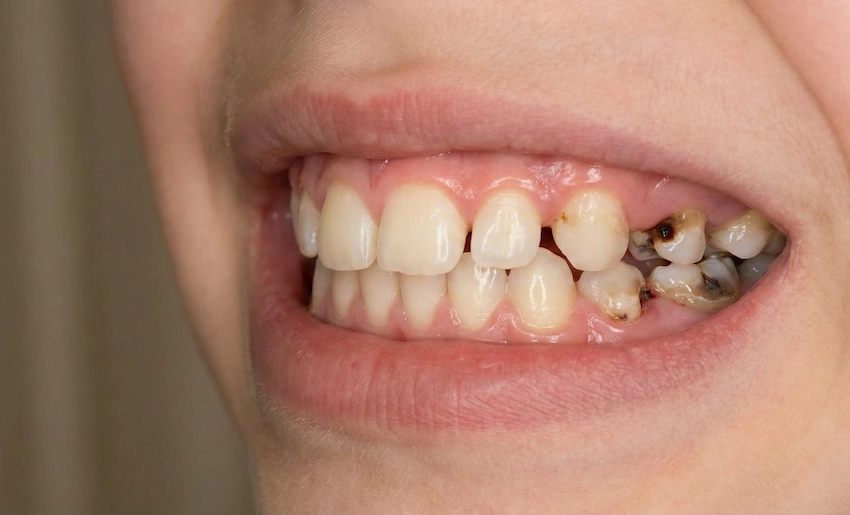
It is a well-known fact that baby’s teeth accompany you throughout your life, because of course without them, no adult teeth are possible. Every single one of our primary teeth is accommodated to the jawbone at the exact size of the space that it will have to hold. If a child loses, for example, a molar tooth too early as a result of tooth decay, that molar’s neighbouring teeth will remember that it is still their turn and will start to lean and move to the space.
At the beginning, let’s consider the primary teeth as natural retainers. Therefore, the permanent teeth underneath do not necessarily have to erupt in a fixed pattern. If one day, a permanent tooth decides to come out, it doesn’t find the space that it should have in the mouth. Hence, it causes crookedness, dental impaction, and then the patient will be obliged to undergo a long and complicated orthodontic treatment. Dr. Polen Akkılıç and her team invest a lot of effort in prevention because by maintaining the function of the ‘GPS’, the treatment costs are significantly reduced, and the patient is guaranteed a nice, healthy occlusion and aesthetics at the end of their treatment.
A Smarter Way to Understand Primary Teeth
We used to say that primary teeth are like the foundation of a house. Would you, just because you are going to update the second level in ten years, disregard a crack in the basement? An infection in the foundation if left untreated for some time the whole structure to suffer the consequences and eventually collapse.
Is There Science Behind the “Wait and See” Strategy?
According to a new study, a cavity is more like a battle between bacteria and yourself, where one side tries to win only to be stopped by the other and this can go on for quite some time. Nap or candy is probably one of the most well-known facts of a child’s growing up; still, some of you may not be aware that the enamel on the surface of primary teeth is very flimsy compared to that of adults. As a result, the decay is able to progress at a rapid rate. What appears to be a mere spot one day can within a short period show signs of the destruction of the dental pulp, i.e., the nerve.
The question remains: what happens if we ignore it?
- Abscess and Pain: When children suffer from pain, they refuse to accommodate their needs for eating and sleeping, and they also fail to concentrate at school.
- Damage to Permanent Buds: Root infections of baby teeth cause the defect or discoloration of enamel on the permanent tooth growing right underneath it.
- Systemic Health: Microorganisms from the mouth can get into the blood and thereby have an impact on the immune system of a child in general.
Comparing the Path: Treatment vs. Observation
| Feature | Early Treatment (Filling) | Delayed Treatment (Observation) |
| Procedure Complexity | Simple, fast, non-invasive. | Root canals (Pulpotomy) or Extraction. |
| Pain Level | Minimal to none. | High risk of acute toothache/infection. |
| Impact on Adult Teeth | Protects the “parking space.” | High risk of crowding and impaction. |
| Overall Cost | Low (Preventive). | High (Requires surgery/orthodontics). |
| Child’s Anxiety | Positive “easy” dental experience. | Potential dental trauma from emergency pain. |
The Lema Way: Tender Care in Istanbul
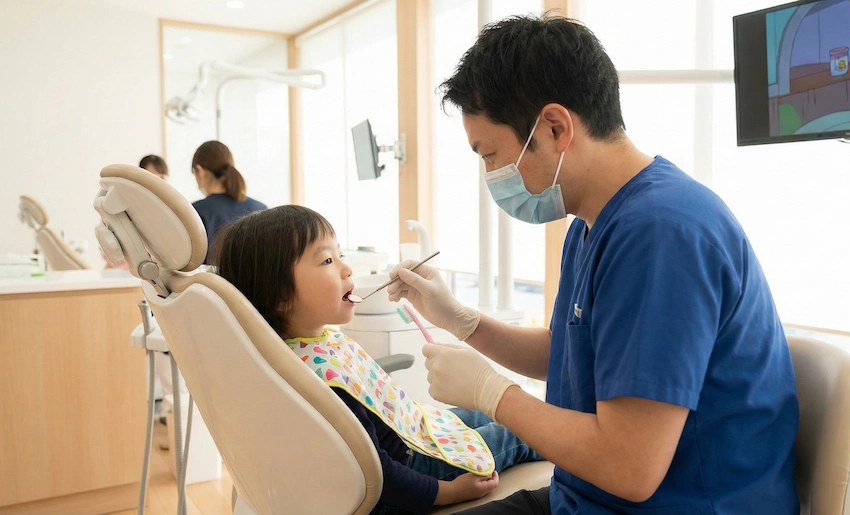
From our professional experience at Lema Dental Clinic, the mental side of pediatric dentistry is equally as important as the physical side. Dentist Polen Akkılıç and her team use the latest, less invasive methods to make the process of filling a cavity as relaxed as possible for the patients.
We don’t just “remove the decayed part and fill the cavity.” We also investigate the child’s diet, cleanliness, and the alignment of the jaws. By choosing to have your child’s dental work performed here in Turkey, you are not only getting the most advanced technology—like digital scanning and top quality biocompatible materials—that will make sure the baby teeth can serve their function properly until the day they naturally fall out.
Frequent Questions (FAQ)
A filling is a part of the baby tooth so it will come off with the tooth when “the tooth fairy” takes the tooth. It is the tooth that we treat and keep healthy with the filling for as long as it is there.
Extracting a tooth is definitely a choice that can be done, but we always make it our last resort. Oftentimes, when a tooth is pulled prematurely, a “space maintainer” needs to be placed—a metal device that keeps the gap open. If it is not a case of a medical condition of a child or a tooth being extremely decayed, it is pretty much more humane and comfortable for children to keep their normal tooth if we can just save it with a filling.
We at Lema Dental Clinic utilize digital X-rays that emit very low levels of radiation. They are necessary because most cavities in children are located between the teeth and a visual examination does not show that area. We want to put out a small spark before it can turn into a big fire, not after the entire building has burned down,” is the illustration that explains our approach to pediatric dental health.
With a “Tell-Show-Do” approach. We make use of every tool while explaining and demonstrating it in a light, non-scary manner. Professor Doctor Coşkun Yıldız along with our pediatric dental team are very good at turning our clinic into a “dental home” where children feel as if they are with friends rather than in a sterile hospital.
A filling repairs a cavity but it cannot change the conditions that caused it in the first place. Our commitment to you in Turkey includes the provision of a “prevention roadmap.” There, you will be instructed about proper use of fluoride, sealing techniques, diet, and other factors that will make sure this is the first and only filling your child ever gets.
- American Academy of Pediatric Dentistry. (2023). Guideline on Pediatric Restorative Dentistry. Reference Manual.
- Casamassimo, P. S., & Nowak, A. J. (2022). Pediatric Dentistry: Infancy through Adolescence (7th ed.). Elsevier.
- Jones, D. B., & Schlife, C. M. (2021). The importance of primary tooth preservation in craniofacial development. Journal of Clinical Pediatric Dentistry, 45(2), 88-95.
- Vadiakas, G. (2019). Case selection and treatment planning in pediatric restorative dentistry. International Journal of Paediatric Dentistry, 29(4), 412-421.
- Yıldız, C., & Akkılıç, P. (2024). Advanced Protocols in Restorative Pediatric Care: The Lema Perspective. Istanbul Dental Press.

