


Zinc is added to denture adhesive to improve hold, but overuse can cause health risks.
Every morning, millions of people open their eyes and use denture cream. It’s almost like brushing your teeth or having breakfast. You press the tube, you smear the gel, and then you trust your dentures will stay in place throughout the meal. Still, if you examine the label on your dental adhesive closely, you’ll find an astonishing component: zinc.
But why would a heavy metal be included in your daily denture cream?
The brief explanation is that zinc enhances the sticky power of the paste. The paste adheres to the plastic of the denture and clings firmly to the soft gums. Consider your jawbone as the foundation of a building. When you lose your natural teeth, that foundation, i.e., the bone, diminishes. Thus, your dentures loosen. By the time you finish chewing, the pressure induced on the jawbone will feel like a tiny quake. In that instance, you require a more robust “mortar” to maintain the house standing. That mortar here is zinc.
Truth be told, zinc is a great tool for a temporary solution. It forms a provisional barrier. It offers you a few hours of comfort.
Nevertheless, let’s dig deep…
Zinc Poisoning – An Invisible Danger
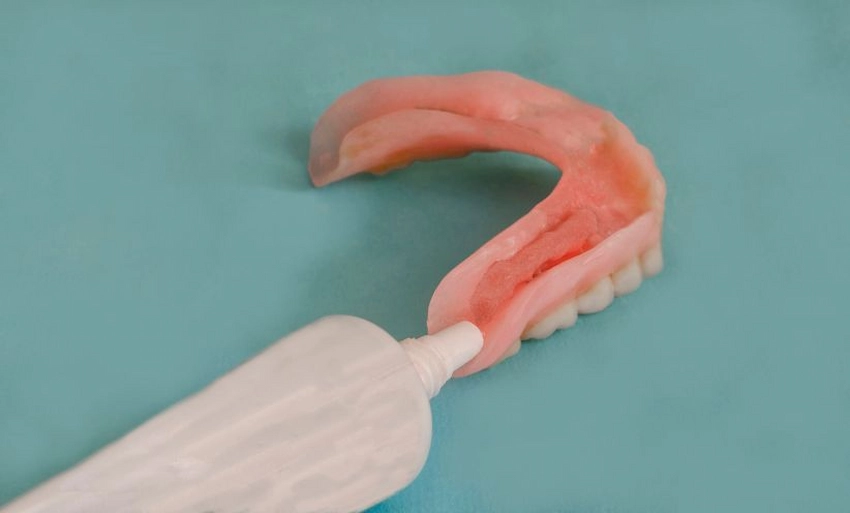
Over time, dentures become loose due to bone loss, which is a major reason for the misuse of adhesives. The volume of the small spot you usually use turns into a thick layer. Instead of weeks, a tube gets emptied within days. This is exactly where the risk begins.
Zinc overdose through ingestion throws your body’s mineral balance out of whack. Among the various minerals that it affects, copper is the one that it depletes from your body in the biggest amount. Subsequently, a harsh neurological disease called “denture cream neuropathy” is the outcome. Here is the list of symptoms:
- Numbness in hands and feet.
- Unusual sensations, like tingling.
- Sudden unsteadiness.
- Unexplained weakness in muscles.
If you ask me, the question that needs to be asked is, why put the nervous system at risk just for a meal?
Solutions That Last
What happens in reality is that the patients we see here at the clinic are tired beyond words. They are simply fed up with the stress that comes with toppling teeth on a daily basis. Not to mention that they find the taste of the glue for their teeth unbearable.
At Lema Dental Clinic, we are convinced from our experience that the teeth you have should be with you for life. They are part and parcel of your organism, not plastic objects that require gluing daily. According to Professor Doctor Coşkun Yıldız, what really makes the whole thing a tragedy is the bone loss. The presence of dentures leads to active destruction of the jawbone. As the bone shrinks further, more and more denture paste has to be used which is toxic in nature.
The sign of progress is, of course, a more wholesome and healthier mode. We make use of paramedical and maxillofacial dentistry. Here in Turkey, Dentist Polen Akkılıç along with her team delivers structural and permanent solutions to the patients. We employ All-on-4, All-on-6, and for severely bone loss cases, specialized Zygomatic implants. With these systems, we completely avoid the problem with the gums. We place the gorgeous, custom Zirconium bridges right onto the strong and stable bone.
Treatment Comparison: Adhesives vs. Implants
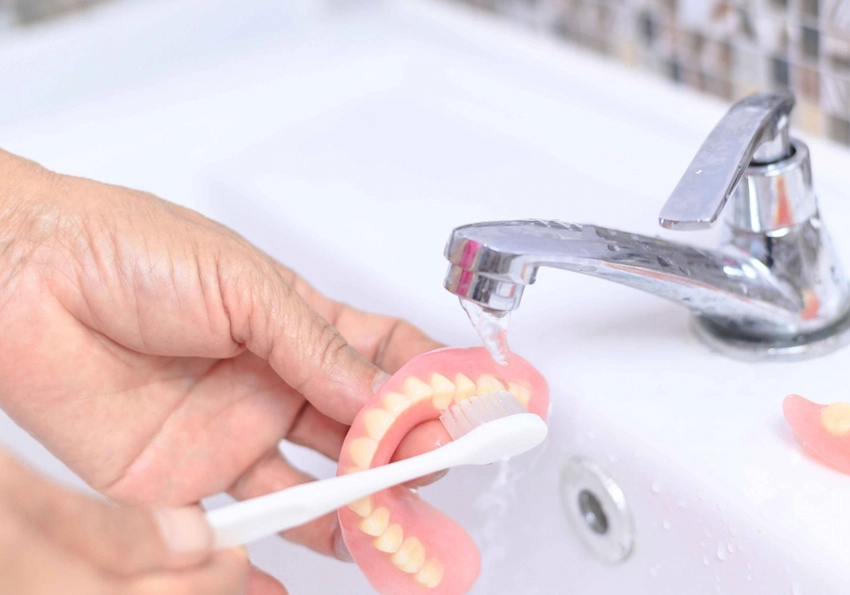
Here is a clear look at your options:
| Feature | Traditional Dentures (with Zinc Adhesive) | All-on-4 / All-on-6 Implants | Zygomatic Implants |
| Daily Care | You get all over yourself with sticky paste during application, removal and cleaning. | Brush and floss normally. | Brush and floss normally. |
| Chewing Power | Extremely poor (between 15% and 20% of natural strength). | Very close to natural (between 85% and 95%). | Very close to natural (between 85% and 95%). |
| Bone Health | Results in rapid jawbone shrinkage. | Saves and protects the jawbone. | Does not depend on the bone that has been lost. |
| Zinc Risk | High (with heavy usage every day). | None. | None. |
| Lifespan | You have to replace them every five to seven years. | Permanent by keeping proper hygiene. | Permanent by keeping proper hygiene. |
Frequently Asked Questions (FAQ)
Is it safe to swallow a little denture paste?
Yes, swallowing a smear of paste is harmless. Your body copes with small quantities of zinc very well. The problem ensues when dentures lose their fit and pastes are used too liberally. Eventually, the ingestion of zinc leads to high and dangerous levels of the heavy metal in the system.
How do I know if I have zinc poisoning?
Break it gently to your nerves. A finger or toe can get numb, arms will become weak or tingling sensation can occur. Immediately cease the use of the paste and go to a doctor to have a blood test done.
Can I buy zinc-free adhesives?
Yes. Several brands have discontinued zinc from their formulas because of the health dangers associated with the nervous systems. Yet, these new pastes do not stick nearly as well. You will be forced to spread them more often. The chemical hazard has disappeared, but the loose denture problem is still present.
What is the best permanent alternative?
Fixed implant bridges are the way to go. First, we implant the titanium rods into the jaw bone. Then, for patients who have significant bone loss, we use the cheekbone (Zygomatic implants). After that, a Zirconium bridge is secured to these titanium posts. No gums are covered, no paste is required.
Why do patients travel to Turkey for this treatment?
The Lema Dental Clinic is a leader in the deployment of world-class treatment modalities. We use only the very best materials. Our work is simply fast beyond belief. Residents of Istanbul get access to top-notch restorations at a fraction of the price of the same treatments in Europe or the US. What is more, we are clinical and warm in a genuine way with our patients.
Academic References
- Nations, S. P., Boyer, P. J., Love, L. A., Burritt, M. F., Butz, J. A., Wolfe, G. I., & Trivedi, J. R. (2008). Denture cream: an unusual source of excess zinc, leading to hypocupremia and neurologic disease. Neurology, 71(9), 639-643.
- Willis, M. S., Monaghan, S. A., Miller, M. L., Holmes, R. W., Throneburg, P. B., & McCormick, C. P. (2005). Zinc-induced copper deficiency: a report of three cases initially recognized on bone marrow examination. American Journal of Clinical Pathology, 124(2), 319-325.
- Hedera, P., Fink, J. K., & Bockenstedt, P. L. (2009). Polyneuropathy and myelopathy associated with copper deficiency. Archives of Neurology, 66(5), 580-583.
- Carlsson, G. E. (2014). Implant and root supported overdentures–a literature review and some data on bone loss in edentulous jaws. Journal of Advanced Prosthodontics, 6(4), 245-252.
- Branemark, P. I., Gröndahl, K., Worthington, P., & Zarb, G. (2001). The osseointegration book: from calvarium to calcaneus. Quintessence Publishing Company.

