


Custom mouthguards protect active kids’ teeth from sports injuries, falls, and sudden impact.
Imagine a bat hitting a ball with a loud crack. The heavy thud of someone falling on a basketball court. Sports through competition teach resilience and teambuilding among youth. However, they account for a very high percentage of pediatric maxillofacial trauma.
When a child receives a sudden impact to the chin, not only is the upside-down lip at risk, but the long-term oral health, including permanent teeth and jaw alignment, may be jeopardized.d
We at Lema Dental Clinic came across numerous young patients who had used insufficient protective gear bought from stores. However, if we analyze the biomechanics of these injuries closely, we will realize how efficient clinical prevention is.
Professor Doctor Coşkun Yıldız emphasizes the fact that a child’s jaw is a highly developing and changing organ. Therefore, it needs to be protected with a piece of gear that fits its precise anatomical structure and not a stiff plastic one, which will even hinder it.
How Impacts Work: Real Shock Absorption
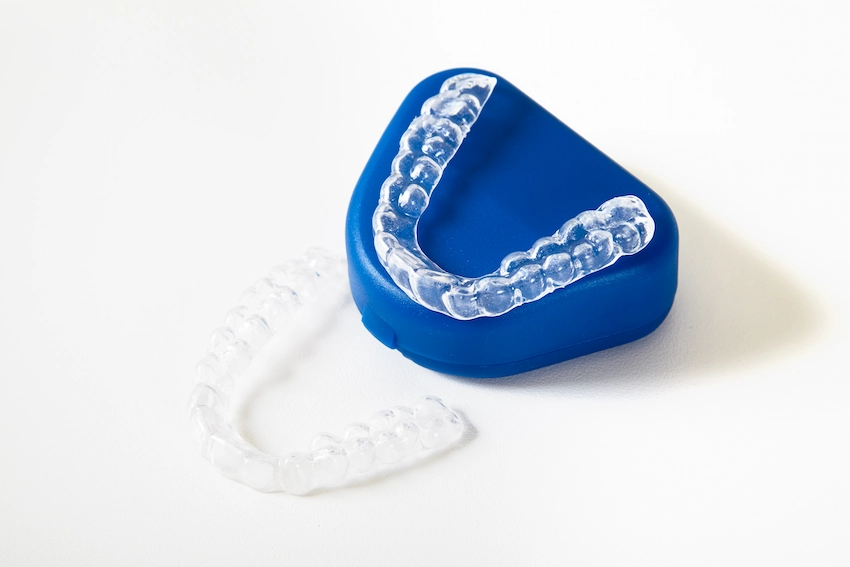
To truly understand why a clinical-grade mouthguard matters, picture your child’s upper jawbone (the maxilla) as the solid concrete foundation of a building. Their teeth are the fragile glass windows.
When a sudden, forceful blow strikes the mouth, intense kinetic energy rushes straight through that foundation. Without a high-quality buffer, those “glass windows” take the full shock of the impact and shatter.
The reality is, a custom-fabricated mouthguard acts exactly like an advanced sports car suspension. Instead of letting a single tooth absorb the trauma, the mouthguard instantly catches that kinetic force. It distributes the shock safely and evenly across the entire dental arch, protecting vulnerable tooth roots from devastating fractures.
Boil-and-Bite or Custom Made: The Medical Verdict
So, are boil-and-bite mouthguards purchased from a drugstore really enough for our children’s weekend games?
Medically speaking, they are not. Dentist Polen Akkılıç and her team in Turkey have been regularly analyzing the harm caused by these store-bought options on our international patients. To keep the bulky rubber in place, the child has to habitually bite down. This aggressive clenching severely injures the temporomandibular joint (TMJ) and causes fast muscle fatigue. To make things worse, the generic and bulky fit most of the time compromises the airways, thus limiting oxygen supply during intense activity.
Clinical arrangements in a team sport context are totally different. Here, we use high-quality materials and thermo-form the mouthguard tightly over a 3D model of your child’s mouth. It is so fitting that it will manage to act as your second skin.
Clinical Comparison of Athletic Mouthguards
| Clinical Metric | Over-the-Counter (Boil & Bite) | Custom-Fitted (Lema Dental Clinic) |
| Anatomical Fit | Poor; requires the patient to keep the jaw clenched to keep the guard in place. | Excellent; remains firmly in place due to precise dental contours. |
| Airway Patency | Problematic; a large bulky guard restricts natural breathing. | Great; thin design allows normal speech and increased oxygen intake. |
| Force Dispersion | Poor; patients can easily get through protective layers. | Good; exact clinical thickness maintained in vulnerable areas. |
| TMJ Strain | Really bad; forces the patient into an unnatural bite. | No risk; designed to fit naturally in the patient’s exact bite. |
| Clinical Value | Major risk of failure, which eventually leads to costly dental trauma. | Great value in prevention; directly contributes to long-term oral health. |
Creating for a Growing, Developing Smile
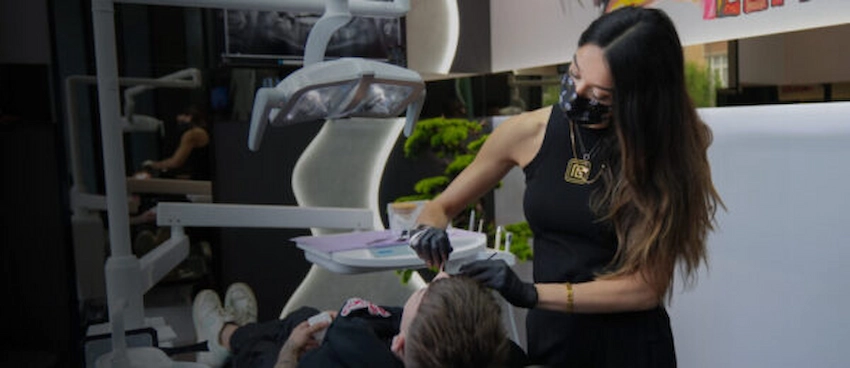
Children grow incredibly fast, and their smiles change right along with them. As baby teeth fall out and adult teeth erupt, parents understandably hesitate. Why invest in a custom dental appliance for a mouth that looks different every month?
Here is what we see in the clinic: modern digital dentistry solves this dilemma beautifully. At Lema Dental Clinic in Turkey, our advanced laboratory protocols specifically target mixed dentition—that tricky developmental phase when a child has both baby and adult teeth.
We do not just mold a static piece of plastic; we engineer a dynamic protective device.
How Our Digital Protocols Protect Growing Smiles:
- Strategic Relief Zones: We digitally design our athletic mouthguards with tiny internal pockets of extra space.
- Room to Erupt: These hidden zones give newly emerging adult teeth the exact room they need to grow safely without painful pressure.
- Season-Long Safety: This precise clinical engineering guarantees the mouthguard remains highly protective and deeply comfortable for the entire sports season.
Frequently Asked Questions
This varies quite a bit from person to person, based on how fast they grow and what their dental development is like. As far as we are concerned, the major evaluation should be conducted at least once every 18 months. Also, for patients, changing the mouthguard aid before going into a new high-contact sports season is the best way to make sure that the anatomical fit is still perfect and protective.
Yes, they do. Actually, we receive more patients who have suffered serious dental traumas from non-contact sports such as basketball and gymnastics. An injury to the mouth when playing basketball, such as being elbowed, is the main cause of permanent tooth fractures.
I think it’s very easy. After the game, just rinse the guard in cold water and then brush it gently with an ordinary soap that does not contain abrasives.
In addition, the device should never be exposed to boiling water or a hot car because, in such extreme temperatures, the thermo-formed fit will be distorted.
Yes, it is medically essential for them to do so. A hit to the mouth with braces can cause the metal brackets to be forced into the lips and cheeks. We produce special orthodontic mouthguards to protect the soft tissues, and at the same time, these guards provide enough space for teeth movement as per the orthodontic treatment plan.
Besides our digital fabrication with same week delivery, patients come to Lema Dental Clinic for full diagnostic monitoring. During the process of creating the mouthguard in Turkey, our team of specialists takes the opportunity to assess the overall functional harmony of your child’s jaw, bite, and airway. We share with you a level of holistic, preventive medical perspective that is beyond what a store-bought plastic mold can provide.
- American Academy of Pediatric Dentistry. (2022). Policy on Prevention of Sports-related Orofacial Injuries. The Reference Manual of Pediatric Dentistry, 44(6), 114-119.
- Newsome, P. R., Tran, D. C., & Cooke, M. S. (2001). The role of the mouthguard in the prevention of sports-related dental injuries: a review. International Journal of Paediatric Dentistry, 11(6), 396-404.
- Padilla, R. R., & Balikov, S. (1993). Sports dentistry: coming of age in the ’90s. Journal of the California Dental Association, 21(4), 27-37.
- Knapik, J. J., Marshall, S. W., Lee, R. B., Darakjy, S. S., Jones, S. B., Mitchener, T. A., & Jones, B. H. (2007). Mouthguards in sport activities: history, physical properties and injury prevention effectiveness. Sports Medicine, 37(2), 117-144.
- Tuna, E. B., & Ozel, E. (2014). Factors affecting sports-related dentofacial injuries and the importance of mouthguards. Sports Medicine, 44(6), 777-783.

