The trigeminal nerve is the hub of sensory pathways in the face. It works for facial sensations and motor activities such as chewing. Few people realize that every single tooth in their mouth is directly connected to this nerve network. This is why a problem like an abscessed tooth not only inflicts pain upon the tooth but can affect your whole face.
Every tooth has its separate nerve supply that divides itself from the trigeminal nerve. For example, when a tooth gets infected, with an abscessed tooth being the situation, the infection is in a position to irritate or inflame the nearby nerve endings. This will result in a sharp pain that can be very strong and expand toward the cheeks, jaw, temples, and even the eye area.
How Bad Dental Health Affects the Trigeminal Nerve?
A tooth with a pus-filled abscess, a dental issue, is often jocularly referred to as an abscessed tooth. This unpleasant mouth condition arises from the foul-smelling pus accumulating around a tooth’s root due to bacterial action.
By far, the most common cause of this dental infection (tooth decay) is left untreated and noticeable tooth decays. The probable route of infection starts from the tooth’s pulp, which is the innermost portion of the tooth with nerves and blood vessels, spreads to the things and in cases that don’t receive timely treatment, travel to the surrounding area, deceivingly known as the jaw bone.
For example, a tooth at the back of the mouth is positioned very closely to the trigeminal nerve, and if infected, it can irritate the roots of the trigeminal nerve and create serious problems of migraine and pain or any localized form of incident which usually comes from the common ailments that a normal human being can have.
Trigeminal Nerve Pain vs. Regular Toothache
Usually, a cavity might only cause a continuous, aching feeling. However, if the infection reaches the nerve tract, as it is the case of an abscessed tooth, it can start hurting very badly immediately. A typical description from people includes the following:
- An electric knife pain or an electric shock-like pain
- One side of a face can get intense and pulsating pain
- The discomfort flows from the face to the head, and it gets stronger with temperature changes.
The pain of this nature can be felt not only locally but also along any of the three main branches i.e. the ophthalmic (around the eyes), the maxillary (upper jaw), or the mandibular (lower jaw). This is why an abscessed tooth in the lower molar can cause jaw pain or it can seem like an earache as well.
What Happens When a Dental Root Infection Looks Like a Nerve Ailment?
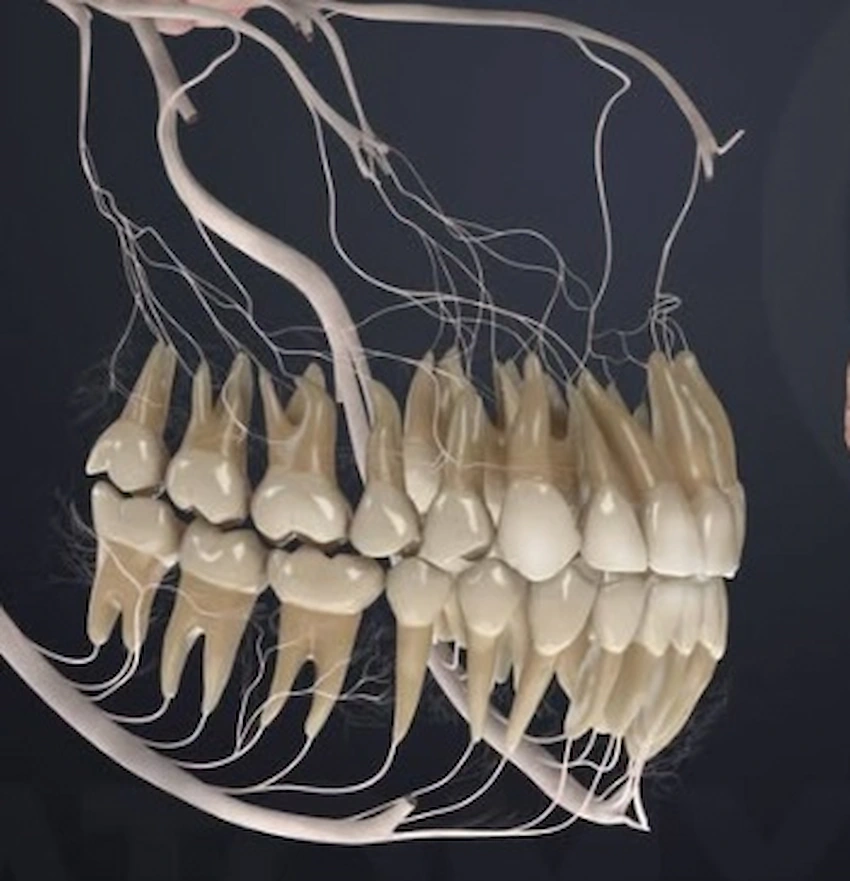
Dentists very often face a problem of root abscessed teeth mimicking neurologic diseases, particularly trigeminal neuralgia. Trigeminal neuralgia is a chronic pain syndrome that produces severe facial pain through the irritation of the trigeminal nerve. Since the symptoms of both conditions stem from the same nerve, a tooth root abscess can lead to similar manifestations, or even intensify pre-existing neuralgia.
It is common for dentists to have patients coming in with the idea they have sinus infections, ear infections, or migraines—only to find the real source is a tooth abscess. This is the reason why dentists may contact a neurologist in extreme cases of facial pain that are undiagnosed.
Symptoms That Reflect a Nerve Issue:
- Facial pain that is sudden and shooting
- Swelling close to the cheek or jaw area
- Sensitivity which appears to be affecting many teeth
- Facial numbness or tingling (in severe cases)
Can a Tooth Abscess Lead to Focal Nerve Damage in the Long Run?

Indeed, it rarely but sometimes can. Should a tooth abscess be ignored and not gotten rid of, the infection would spread past the dental area. If the bacteria that have formed abscesses penetrate the gap between the nerves, they will cause irreversible harm to both the directly affected and the surrounding tissues. Infections that are only a little away from the brain or the blood can easily become a case of emergency in medicine.
First and foremost, the most effective way of keeping the complications due to the nerve away is to deal with them at an earlier stage. Normally, dentists will incise the abscess, construct a root canal to remove the infected pulp, or pull out the tooth if it is beyond restoration. By doing so, not only do they relieve pressure on the trigeminal nerve, but they also prevent the infection from spreading.
Protecting the Trigeminal Nerve by Treating Abscessed Teeth Early
To guard your trigeminal nerve (as well as your general health) against the harmful effects of an abscessed tooth, do not fail to recognize your abscessed tooth’s symptoms. Pain that is spread through your face, sudden tooth sensitivity, or a visible swelling near a tooth should all be treated as symptoms of a serious condition.
Steps to be Taken in Order Not to Have Nerve Complications from an Abscessed Tooth:
- Visit a dentist as soon as you notice a toothache
- Don’t wait to treat cavities or gum infections
- Keep a clean mouth, so the risk of infections is low
- Don’t let facial pain pass without seeing a doctor immediately
An abscessed tooth is not just a dental problem, but it’s also a neurological issue. If you attack the infection early, not only do you save the tooth, but you also avoid unnecessary nerve stress that may affect your face.
FAQ: Trigeminal Nerve and Abscessed Tooth
Correct. An abscessed tooth is a main source of pain and swelling. The pus and inflammation occurring in an abscessed tooth create pressure on certain branches of the trigeminal nerve and provoke extremely severe facial pain that can spread to other sections of the face.
Many times it seems like acute, piercing pain that can move from the cheek to the jaw or to the area around the eye—usually confused with other facial pain conditions.
Although trigeminal neuralgia can be due to diverse reasons, dental abscess is a common trigger of similar symptoms in patients or aggravates existing nerve conditions.
Relieving the nerve pressure during the tooth infection treatment process (e.g. through drainage, root canal, or extraction) is the most common way to stop the pain.
Undoubtedly. The infection may not only hurt the tooth and jawbone, but it can also spread to the trigeminal nerve and then on to the critical areas such as the brain or the bloodstream.