


They help when bone or space is limited.
Mini Dental Implants: A Lifesaver for Bone Loss
At Lema Dental Clinic, many of our patients have been faced with the reality that their dream of a perfect smile has been compromised by only one thing: the word ineligible. Perhaps your doctor told you that your jawbone is too thin and you just can’t imagine the idea of a multi-stage bone graft. Isn’t it like a huge, unfamiliar mountain?
Actually, doing a permanent smile with the help of traditional implants is only one of the ways. We, the clinic in Istanbul, went through the experience of our patients who initially had the mini dental implants (MDIs) as the “backup plans” suddenly turning out to be the “miracle” for those who thought they were completely out of options.
The Story Didn’t End with a Smaller Screw
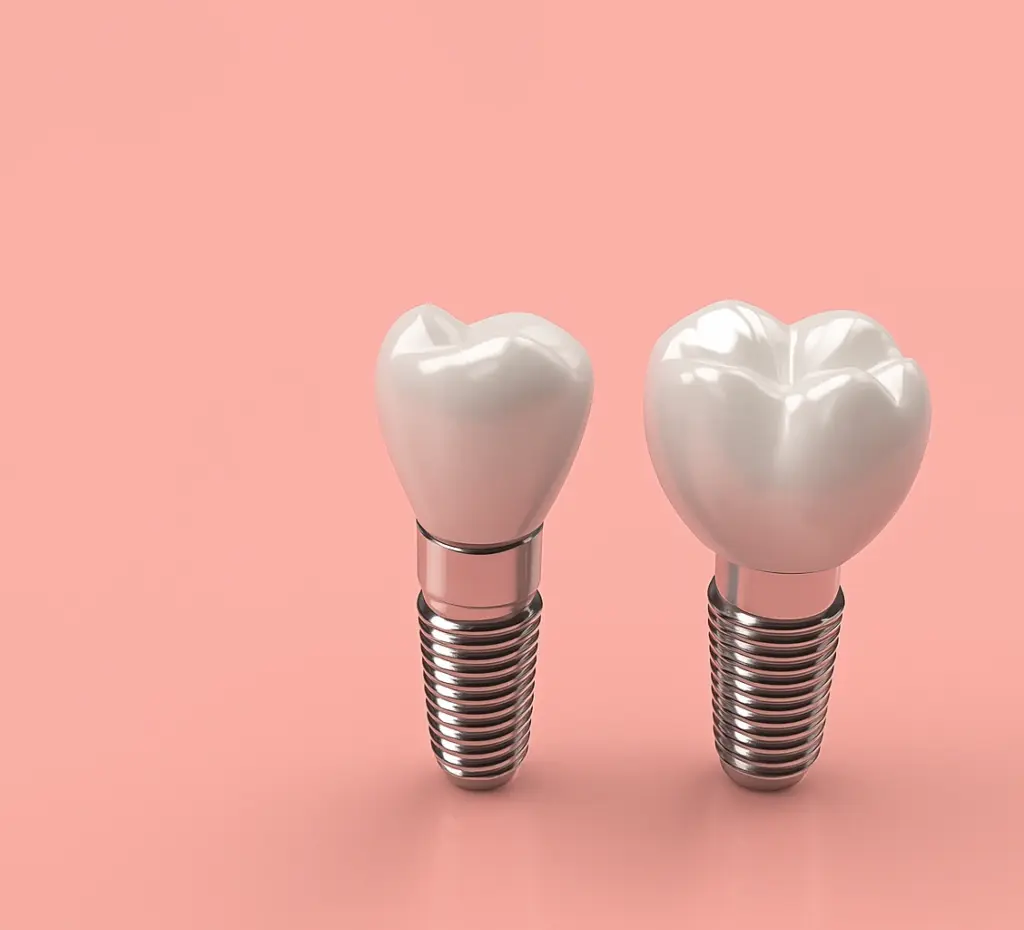
Often it is misunderstood that a mini dental implant is simply a smaller version of its traditional counterpart. Contrary to this, it is a totally different design. A standard implant is a two-piece system, and the diameter is about 3.4 to 6 mm. A mini-implant is a solid one-piece titanium screw usually less than 3 mm in width.
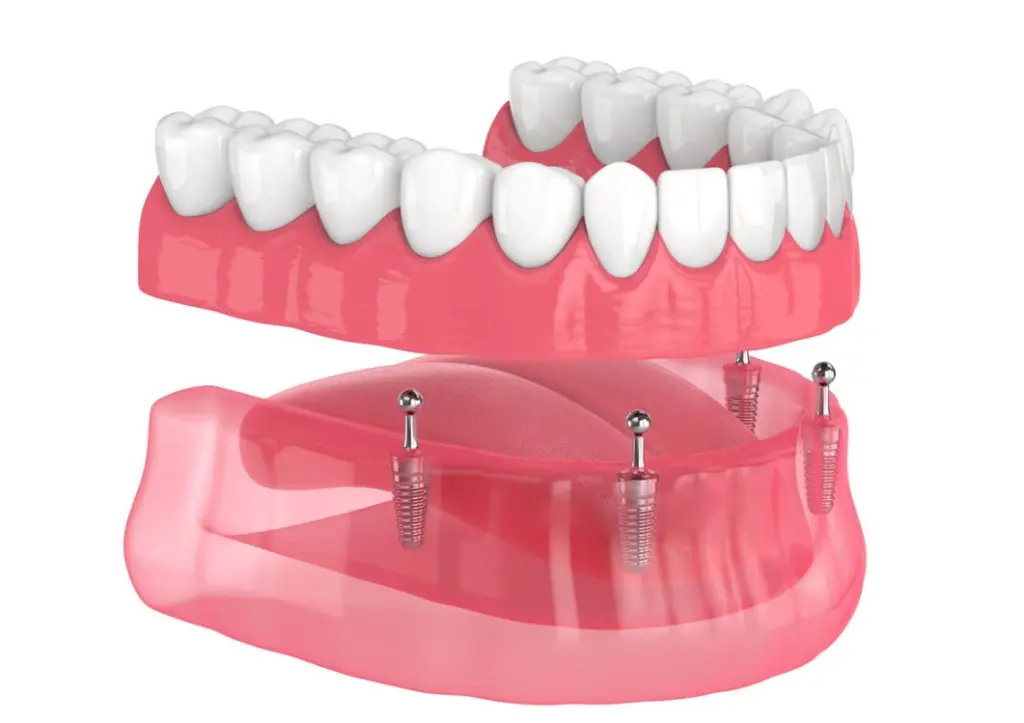
Professor Doctor Coşkun Yıldız emphasizes the fact that the brilliance is really inside the “ball,” which is at the top. This ball-shaped head works as a socket thus dentures snap in with great security and even a sense of satisfaction.
Imagine if your jawbone is a narrow garden path. A traditional implant would be the equivalent of trying to plant a large oak tree; you would need deep, wide soil. A mini implant is more like a sturdy fence post—it can be firmly fixed, even if the soil is thin and the space is tight.
When Does the “Mini” Become the Hero?
1. The “Thinning Foundation” (Severe Bone Atrophy)
When you lose teeth, the jawbone begins to resorb—it literally shrinks because it no longer has a root to “exercise” it. For patients who have worn dentures for decades, the bone may become paper-thin. In the past, this required extensive bone grafting, a process that can take six months to a year to heal.
Dentist Polen Akkılıç and her team frequently utilize mini implants here because they require significantly less bone density. For a patient who wants to avoid the trauma and timeline of a bone graft, these tiny anchors are a literal rescue mission.
2. The Battle of the Slipping Denture
We’ve all seen it: the person at the dinner table who is afraid to laugh or eat a steak because their lower denture might go rogue. Because lower dentures have less surface area to create “suction,” they are notoriously unstable.
The question remains: how do we fix this without a $20,000 “All-on-4” surgery? By placing four mini implants in the lower jaw, we can “snap” that existing denture into place. It’s a one-day transformation that restores the simple joy of eating an apple.
3. Anatomical Roadblocks
Sometimes, nature puts a “no entry” sign in the way of a surgeon. This might be a nerve canal that sits too high or a sinus cavity that has dropped too low. Professor Doctor Coşkun Yıldız often finds that a mini implant can navigate these tight anatomical corners where a standard implant simply wouldn’t fit without risking nerve damage.
Comparing the Two Paths
Here is a quick breakdown of how these options look when you are sitting in the chair at our clinic in Turkey.
| Feature | Standard Dental Implants | Mini Dental Implants (MDIs) |
| Diameter | 3.4 mm – 6.0 mm | 1.8 mm – 3.0 mm |
| Bone Required | High (often requires grafting) | Minimal |
| Healing Time | 3 to 6 months | Immediate (or very short) |
| Surgical Impact | Moderate (Sutures involved) | Minimally Invasive |
| Primary Use | Single teeth / Full bridges | Denture stabilization / Narrow gaps |
The Lema Dental Clinic Perspective
But let’s look closer at the “why” behind the choice. We don’t just choose mini implants because they are faster; we choose them when they are the right tool for your unique anatomy. In our clinic, the focus is always on the long-term integrity of the jaw.
Dentist Polen Akkılıç emphasizes that for elderly patients or those with certain medical conditions that make long surgeries risky, the “mini” route is often the safest. There are no incisions, no stitches, and the recovery is usually measured in hours, not weeks.
FAQ: Direct Answers from Our Experts
If cared for properly, they can last many years. However, because they are thinner, they handle “biting forces” differently. We typically use them for stabilizing dentures rather than as a single molar replacement where the pressure is highest.
Actually, it’s the opposite. Because we don’t need to cut the gum tissue to see the bone (a “flapless” procedure), most of our patients report only minor pressure. You can usually eat a light meal that same evening.
In many cases, yes! Dentist Polen Akkılıç and her team can often retrofit your existing denture with the “sockets” needed to snap onto the new mini implants.
Beyond the cost-effectiveness, the clinical volume we see at Lema Dental Clinic means our surgeons have handled thousands of these cases. Experience is the best guarantee of success when dealing with limited bone.
Usually, four is the magic number. This provides a stable “square” foundation that prevents the denture from tilting when you bite down.
- Bulard, R. A., & Vance, J. B. (2005). Multi-clinic evaluation of mini-diameter implants for long-term denture stabilization. Journal of Oral Implantology.
- Shatkin, T. E., et al. (2007). Mini dental implants: The restoration of the edentulous maxilla and mandible. Compendium of Continuing Education in Dentistry.
- Gleiznys, A., et al. (2012). New approach towards mini dental implants and their use in clinical practice. Stomatologija, Baltic Dental and Maxillofacial Journal.
- Griffitts, T. M., et al. (2005). Mini dental implants: An outcomes analysis. Journal of Oral and Maxillofacial Surgery.
- Todd, A. D. (2015). Mini Dental Implants: A Five-Year Retrospective Study. The Journal of Contemporary Dental Practice.

