


Drink soda after 7–10 days, or when your dentist says healing is safe.
This is a common concern. You would want something to keep you company after a root canal or a tooth extraction. The majority would often prefer a nice cold and refreshingly fizzy soda. But be careful before you take that first sip. Your new healing teeth will thank you later.
Over many years of dental surgical work in Turkey, we have seen that it is rarely poor oral hygiene that causes delays in healing, but rather the rapid reintroduction of hard and fibrous foods. You had an operation,n and now you are in a healing phase.
Diet changes will affect both the surgical site and your entire system. During the operation, an empty socket is created, and after surgery, the healing process begins with a blood clot, which forms first in the socket.
A Blood Clot as Your Body’s Bandage
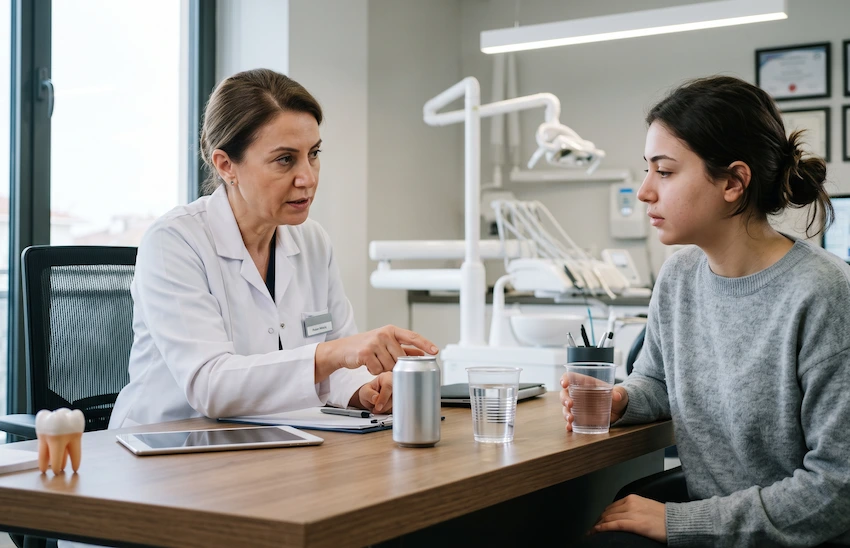
To comprehend this, you are going to have to imagine the way your mouth naturally works to heal itself. The first time a blood clot forms, it is at the tooth socket, and this is the way the tooth heals. Imagine this clot as a very solid maintenance hole cover that has been placed at the site to prevent anything or anyone from entering the hole, not even air or food, from getting in. This way, the hole will be a safe, clean environment where new tissue will start to sprout, eventually into your bone, which you can now have replaced by your bone and gum.
In fact, Prof. Dr. Coşkun Yıldız repeatedly mentions that this clot is very delicate during the first few days after surgery. You may imagine it as a little seed going into rich ground.
We know, then, what the effect of drinking soda is.
Carbonated drinks contain bubbles. When you are drinking a fizzy beverage, it’s that tiny explosion of bubbles that hits your tongue and is just delightful. But if there is no skin barrier covering up your wound, these tiny bubbles become like rough scrub brushes that could easily remove your protective covering, which would be a blood clot.
If you are not careful and that happens to you, you can get a condition called “dry socket”, i .e., the exposed bone, which then becomes very painful so that you would want to contact us at Lema Dental Clinic, Turkey for emergency intervention.
The Timeline: When is Soda Safe for me?
It is the healing process of your mouth that determines your dietary options, so you’d better adjust your choices if you want to prevent complications.
Still, when exactly should soda drinking be considered safe? Patients are advised to wait about 5 to 7 days. Even then, soda should be consumed very cautiously.
| Healing Stage | Safe Drink | Not allowed under any circumstances | Reason |
| Days 1–2 | Plain water, clear broth | Soda, hot coffee, alcohol, straws. | It is quite possible that the blood clot has just formed and, therefore, is very weak. |
| Days 3–4 | Cool tea, milk, apple juice. | Soda, lemon juice, hot drinks. | Gums are still sensitive to carbonation and strong acids. |
| Days 5–7 | Iced coffee, thick smoothies. | Drinking through a straw | Gums are closing over the bone. You are a lot safer at this point. |
| After Day 7 | Soda and/or sparkling water | Heavy straws (wait 14 days). | Wound is strong enough for light bubbles. |
The Sugar and Acid Problems
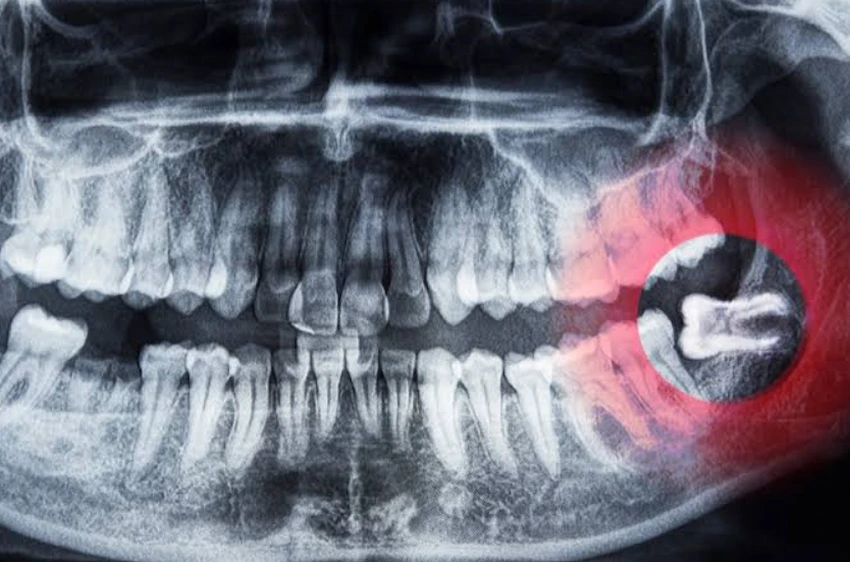
Let’s focus more on the soda itself. The only bubble-related danger is not the bubbles. Besides the bubbles, there are two factors: sugar and acidity, which also play roles.
Dentist Polen Akkılıç and her team stress the importance of informing patients about the dangers that sugar poses to their dental health. Sugar is what sustains tooth microbes. A freshly opened socket will be an inviting place for infection. The bad news is that, besides feeding bacteria, sugar and strong acids also increase their rate of reproduction. You could be a great host for bad germs and not even notice it.
So, when you come to your post-operative visit at the clinic on day 5 of the surgery, the best thing you can do after drinking soda is to swallow the last drop of the water bottle to dilute the acid and keep your mouth clean and bacteria-free.
Patient Question & Doctor Answer
Can I use a straw to drink soda at least 5 days after the day of the operation?
No, absolutely not. By day five, your teeth and jaw may have gotten accustomed to the level of bubbles. However, straws are still potentially damaging. In fact, suction through a straw is so strong that it could dislodge a blood clot from the jaw tissue. So, we recommend that you refrain from using any form of straw unless at least two weeks have passed.
What happens if I drank a small amount of soda two days post-op?
You need not worry at this point; even one sip of a soda is probably enough to spoil your blood clot. Just resume drinking water right after, and contact the dental office if your jaw throbs for a day or so.
Is diet soda safer to consume than a regular one?
No. It is the fizzy element that counts as the real culprit here. That is why diet sodas are no safer than regular ones, as they are also carbonated and acidic. Either way, it is necessary to wait at least 5 days.
Could the brown color of the cola dye my healing gum tissue?
Although a dark soda won’t be able to stain your healing gums, it can cover areas of minor bleeding. So if you are wondering if you are still bleeding, you should choose transparent beverages for the time being.
How will I know if the bubbly soda messed up my blood clot?
It will physically let you know. A dry socket is a very severe kind of pain and is felt deep into the affected area. It is often felt to radiate to either the ear or the temple. Usually it appears on the third day following the operation and the usual painkillers will not provide relief. The solution, in such a situation, will be to visit one of our dental practitioners to apply a special pain-relieving medication.
Academic References
- Bowe, D. C., Rogers, S., & Stassen, L. F. (2011). The management of dry socket/alveolar osteitis. Journal of the Irish Dental Association, 57(6), 305-310.
- Blum, I. R. (2002). Contemporary views on dry socket (alveolar osteitis): a clinical appraisal of standardization, aetiopathogenesis and management: a critical review. International Journal of Oral and Maxillofacial Surgery, 31(3), 309-317.
- Hupp, J. R., Ellis, E., & Tucker, M. R. (2013). Contemporary oral and maxillofacial surgery (6th ed.). Elsevier Mosby.
- Kolenbrander, P. E., Palmer, R. J., Periasamy, S., & Jakubovics, N. S. (2010). Oral multispecies biofilm development and the key role of cell–cell distance. Nature Reviews Microbiology, 8(7), 471-480.
- Nitzan, D. W. (1983). On the genesis of “dry socket”. Journal of Oral and Maxillofacial Surgery, 41(11), 706-710.

