


A stunning, glowing smile is a wish a lot of people have and cosmetic dentistry has several procedures to provide such a smile. The two dental treatments that have been talked about the most and are also the most effective in terms of results are veneers and lumineers. Both lumineers and veneers can do a great deal of the same as they can correct stains, small chips, and cracks, as well as misalignment or irregular shapes, yet, many people are unable to decide which one is the most suitable for them.
While both Lumineers and traditional veneers give you a brighter smile, they vary quite a lot in the materials used, the procedure, the level of invasiveness and duration, as well as the costs. Here is a comprehensive going-through of Lumineers vs. Veneers, designed to equip you with all the relevant data to arrive at a wise choice.
Are Veneers and Lumineers the Same?
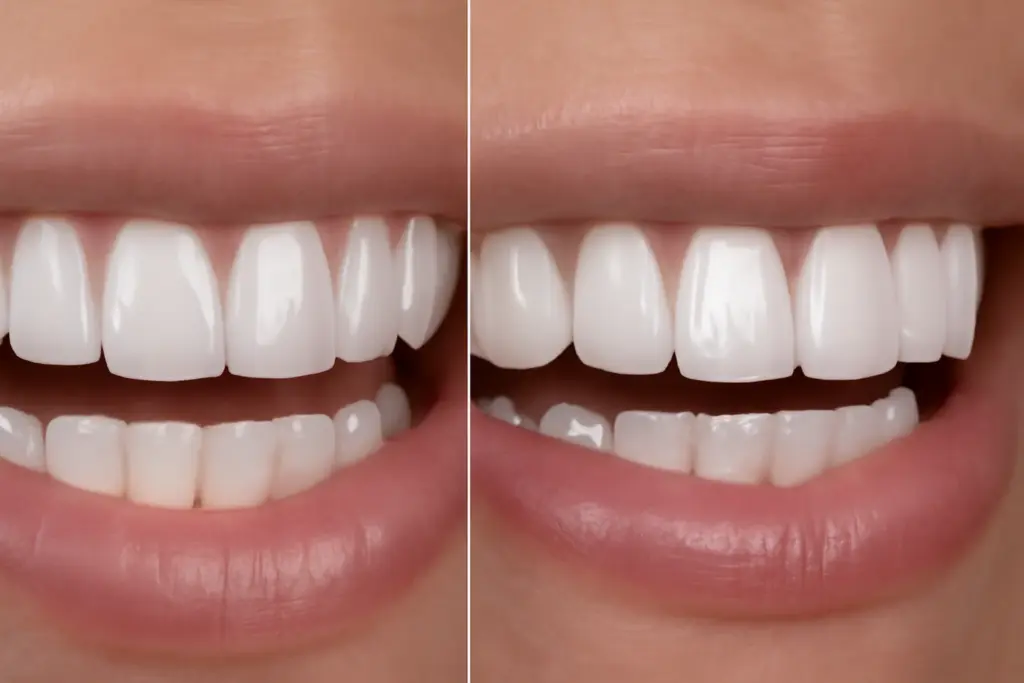
The short answer is no, although they both have a similar goal—to make your smile look better—and are made of different materials and have different application processes and overall results.
- Porcelain or composite resin is usually the material from which veneers are made, and they are thin, custom-made shells. They are attached to the front surface of the teeth and change the outer layer of the teeth to solve cosmetic problems such as the appearance of gaps, discoloration, or malposition. Typically, to get the veneers to fit right and look natural, a little bit of enamel is shaved off your teeth.
- Contrary to that, Lumineers only refers to one company of the super-thin porcelain veneers. Because they are so thin, the removal of the tooth enamel is either minimal or not required at all. They are most suitable for patients who want a less radical procedure for their aesthetic problem. Among the “no-prep” veneers is Lumineers because the only time it requires minimal preparation is when it is used.
Generally, a gorgeous smile is created with both these methods, however, they are different in items, your thickness, and the amount of preparation which makes them compatible with different requirements and likes.
What Are Lumineers?
Lumineers are a brand name that represents one of the multiple brands related to the minimally invasive model for dental veneers. Usually, the thickness of lumineers is about 0.2mm, which is the main reason for the difference from the traditional porcelain veneers in their thickness. To fabricate lumineers, Denville selects a high-quality porcelain named Cerinate, which is very close to the translucency and glossiness of natural teeth.
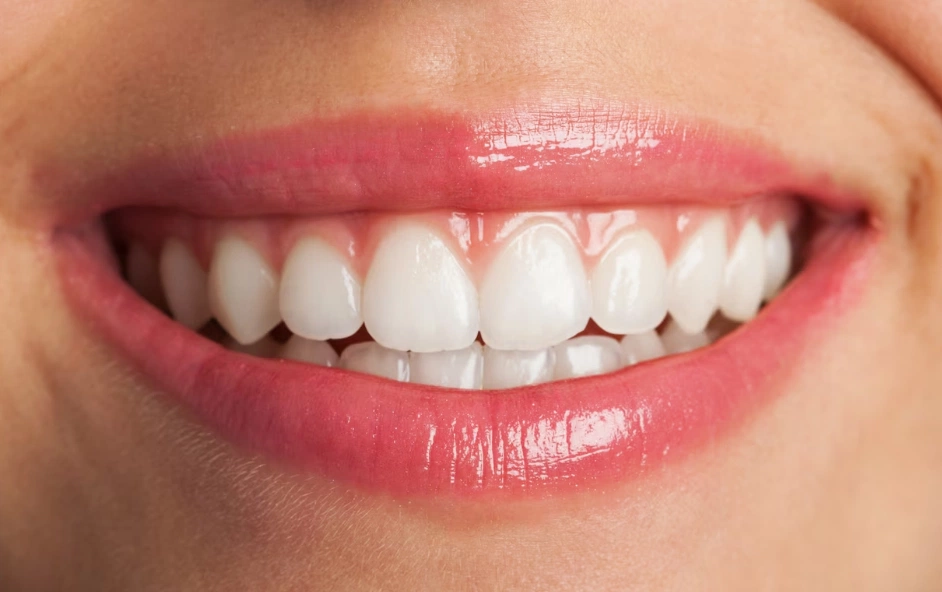
The method of bonding lumineers to the front of the teeth includes limited tooth preparation. In some cases, the process is not quite the removal of the enamel of the tooth, thereby qualifying it as a non-invasive treatment option, which is a big plus for patients. Lumineers are thin and are used by people who have almost healthy teeth and have minor aesthetic issues like slight discoloration, small gaps, or misalignment.
Moreover, Lumineers is a procedure that can be reversed; thus, the removal of minimal or even no enamel allows for the possibility of having them taken off if that is the case. The patients are given an opportunity to rethink their choice after the operation, i.e. if the outcome is not pleasing, they may want to have the operation reversed.
Nevertheless, if you have severe dental problems, Lumineers may not be the right option for you. For individuals with severely crooked teeth, large gaps, or discoloration of a high degree, traditional veneers can be a better alternative regarding the result.
What Are Dental Veneers?
Dental veneers are thin layers that are designed to be attached to the front surface of your teeth to make them look better. They may be made of either porcelain or composite resin. Out of the two, porcelain is more preferred, since it lasts longer, is more stain resistant and pretty much indistinguishable from the natural teeth in terms of appearance.
The traditional veneer application is much more complicated compared to the process of veneer placement. Usually, the dentist will remove a part of the enamel from the tooth’s surface so that the veneer fits and has a natural appearance. This is an irreversible stage as it alters the natural character of the tooth. Then a mold of the teeth is made, and the veneer is fabricated in a dental lab. This usually takes a week or two, and meanwhile, a temporary veneer is placed on the teeth. Once the permanent veneer is finished, it is fixed on the tooth with the help of dental cement.
Porcelain veneers made of extremely durable materials can last for years with the correct oral hygiene. In addition, they even have a possibility of being more versatile than Lumineers and thus, may be used for more significant dental problems like heavily stained teeth, large spaces, or crooked teeth. First of all, patients’ choice is porcelain veneers that are mostly used as a long-term solution due to their durability.
Lumineers vs Veneers: Pros and Cons
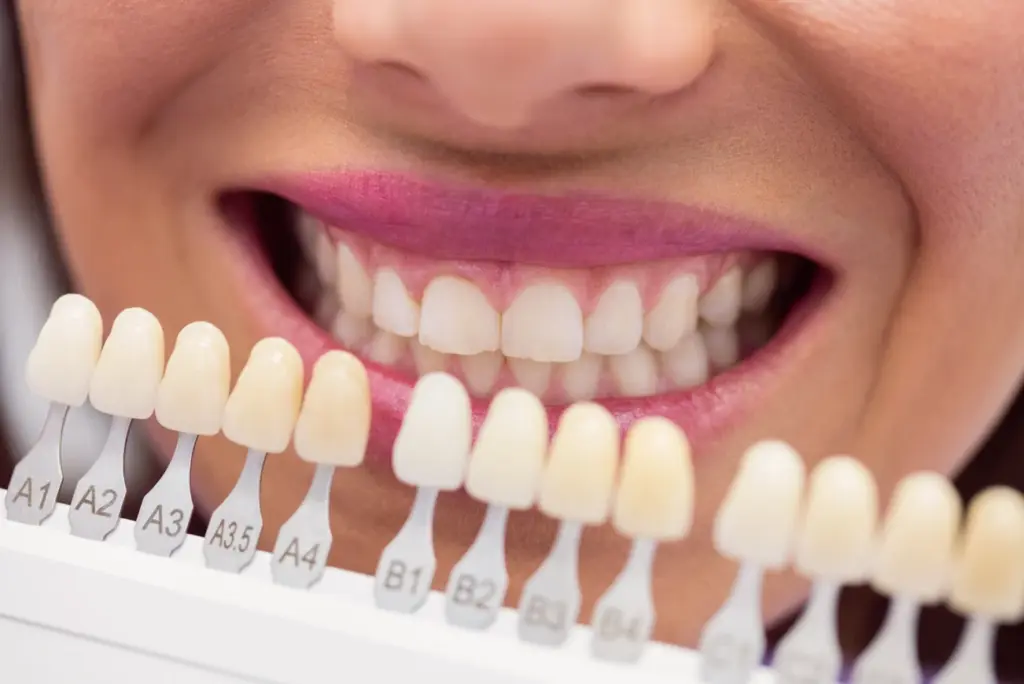
Based on the amount of cosmetic problems you have, your preferred level of invasiveness, and the amount you are willing to spend, the decision on whether to use Lumineers or regular veneers is better, is a set of factors that affect the choice. Here arethe pros and cons of both treatments given side by side for better comparison and understanding:
Lumineers Pros:
- Minimal Tooth Preparation: One of the main benefits of Lumineers is that they require little or no tooth preparation. Because they are very thin, no enamel, which is the protective layer for the tooth, is removed, thus the natural tooth structure is retained.
- Reversible: Since Lumineers are less invasive, they can be easily removed if necessary. Therefore, they are a reversible option that also allows patients to change their minds.
- Quick Application: The procedure of fitting Lumineers requires fewer visits and less time as compared to traditional veneers. Generally, the patient needs to go to the dentist only twice – for taking impressions and for the application.
- Natural Appearance: Lumineers also have a minimal and almost invisible joint between the veneer and the tooth as they use very transparent porcelain and thus in terms of brightness and color, they are almost indistinguishable from natural teeth. They look very natural and, hence, are the perfect choice for people who only want a minor aesthetic improvement of their teeth.
Lumineers Cons:
- Limited Effectiveness for Severe Issues: Lumineers are only capable of efficiently solving such problems that are of a minor nature. It is better to use veneers done by the classic method if you are having seriously crooked teeth, large gaps, or dark teeth as major dental issues.
- Thickness: Lumineers are thin but they are still thicker than some other veneers of a similar kind. Because of that, there can be a case where the extra thickness is visible, especially when the natural tooth has some kind of more noticeable defect.
- Durability: Although Lumineers are quite strong, they are not as solid as the thick porcelain veneers and can get worn out faster if they are not treated well.
Traditional Veneers Pros:
- Versatility: Regular veneers can fix a variety of aesthetic issues, even discolouration that is difficult to alleviate. Moreover, they also mend tiny cracks, chips and slightly misaligned teeth. This is a solution that provides broader possibilities for the alteration of your smile.
- Durability: Porcelain veneers are very durable and thus their life span can be 10-20 years if proper care is taken. They do not get worn very easily and are less prone to dent, discoloration, and the general assault of time in comparison with Lumineers.
- Customization: If shape, size, and color are taken into consideration, traditional veneers have a high degree of flexibility which means they can be made to perfectly match that of your natural teeth.
Traditional Veneers Cons:
- More Invasive: It is not a reversible procedure to get traditional veneers with the optimal fit most of the time work by removing a certain amount of the tooth enamel.
- More Expensive: The price of conventional veneers for committed laborious preparation, and the necessity for lab-made products, is a lot higher than for Lumineers.
- Extended Surgery: The operating time of Traditional veneer surgery is usually longer. In addition to the tooth preparation, the production of custom veneers in the laboratory takes time, and so several visits might be needed.
Are Lumineers Cheaper Than Veneers?
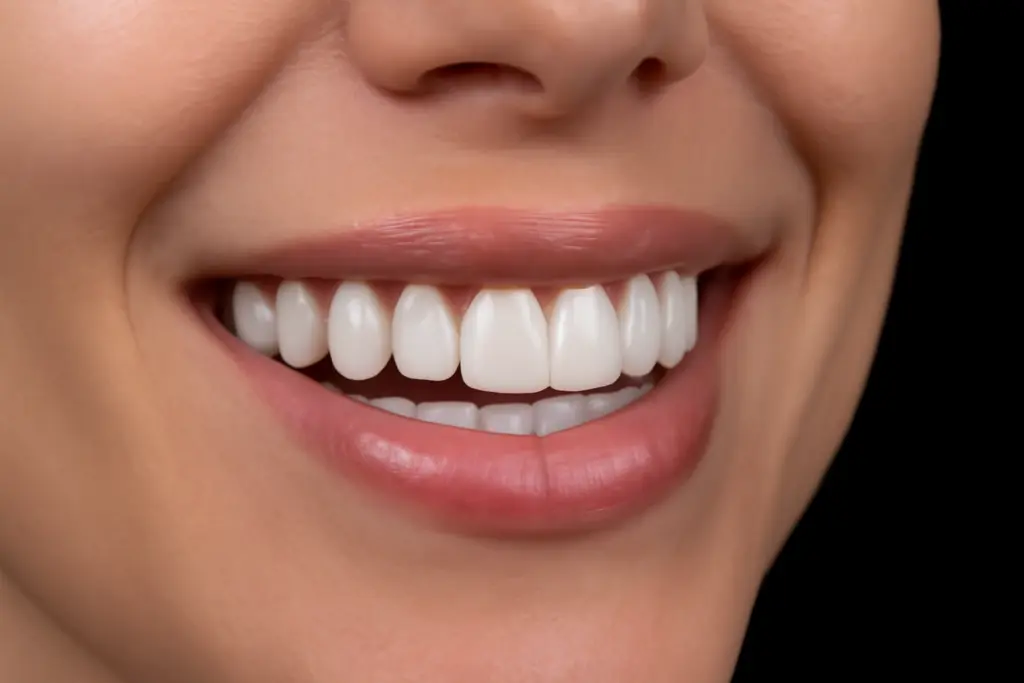
The cheaper option of the two is usually the Lumineers when compared to traditional porcelain veneers. The difference in cost is mainly because the procedure of Lumineers is less time-consuming and requires less preparation work.
However, if the patient is going for Lumineers as a more affordable upfront option, then he/she will still have to consider the long-term, where the value of traditional veneers may be higher since they are stronger and can handle more drastic cosmetic issues. The price will depend on your dental requirements, the kind of material used, and the dentist’s location.
Difference Between Lumineers and Composite Veneers
Lumineers as well as composite veneers differ from each other in numerous points, such as longevity, application process, and, of course, the restoration material:
- In the case of Lumineers, the product consists of a traditional porcelain known for its strength and translucency. Apart from that, they also happen to be very thin and do not allow much tooth preparation.
- Composite Veneers are made of resin, a material that is directly bonded to the tooth. Though composite veneers are comparatively cheaper, they have less resistance and over time, they may stain and break. Generally, composite veneers are used for minor modifications, and one application is sufficient for a dental visit.
Composite veneers are among the primary factors cited for the decline in the use of less durable materials that are visually unappealing and have a similar structure as porcelain veneers. Nevertheless, those patients with a small budget who still want an aesthetically pleasing short-term solution may continue to find composite veneers quite attractive.
The Difference Between Lumineers and Porcelain Veneers
Lumineers and porcelain veneers are both made of high-quality porcelain, but the main difference lies in their sizes and the extent of tooth preparation.
- Lumineers: Because they are extremely thin (around 0.2mm), the removal of enamel is almost always avoided. Consequently, the treatment with them results in a non-invasive and reversible procedure, which can only be employed for minor aesthetic alterations.
- Porcelain Veneers: The density of traditional porcelain is very similar to that of a natural tooth. In order to provide enough room for the patient’s tooth with the veneers, a certain amount of enamel will be removed. The procedure thus becomes irreversible, but for those with dental problems, it offers a more permanent solution of this kind.
First of all, deep aesthetic restorations involving traditional dental veneers can offer a wider range of treatment options and also address significant dental flaws, while minor aesthetic problems treated by Lumineers, which are a non-invasive and reversible technique, can only be solved.
Lumineers, Emax Veneers, and Zirconia – What Are the Differences?
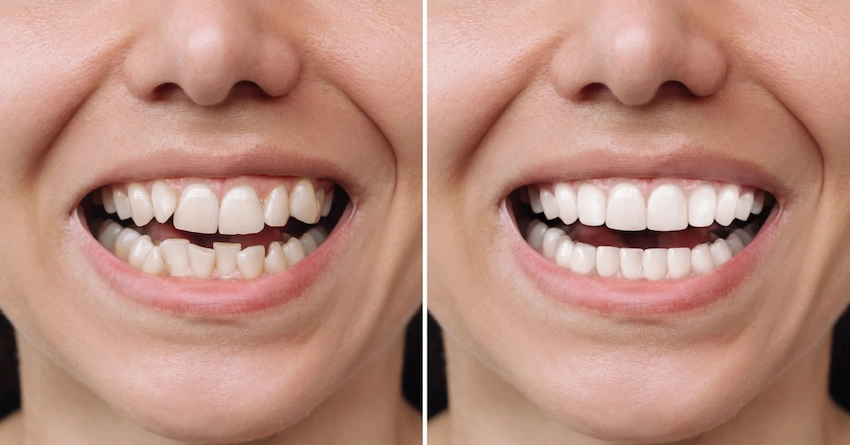
- Lumineers: The most outstanding features of Lumineers fabricated from Cerinate porcelain are their extreme thinness and application requiring minimal invasiveness. Such a product is appropriate for a slight change in color or small cracks in the teeth of your mouth.
- Emax Veneers: Emax veneers are made of lithium disilicate, which makes them not only durable but also gives them a very appealing aesthetic, and for this reason, they are mostly recommended for patients who want the most natural and hardest solution for their dental problems among all the dental restoration materials.
- Zirconia Veneers: Zirconium is a very tough material, renowned for its ability not only to resist fracture but also surface abrasion. Dental patients can get such strong implants as the zirconia ones for molars or those sort of teeth which are gripping strongly while chewing, so that they do not get worn out easily.
Veneers vs. Lumineers: Which Is the Better Choice for Your Smile?
One can make a choice between Lumineers and classical veneers after considering such aspects as the degree of one’s aesthetic concerns, the funds available and the preferred level of invasiveness.
- For Minor Cosmetic Issues: Imagine you want to fix the slight discoloration, small gaps, or minor misalignment of your teeth. In this case, Lumineers could be the suitable option as they involve very little tooth preparation, and the treatment time is very short.
- For Major Cosmetic Adjustments: What if you have severely stained teeth, are out of alignment, or gaps appear? Traditional porcelain veneers would most likely be the proper solution for you; they allow treating complex dental problems, offering such treatments a way to stabilize and heal them.
- For Long-Term Durability: Let’s say that you care a lot about how long the restoration is going to last; traditional porcelain veneers are mostly much more enduring, and they are less likely to experience wear and discoloration than Lumineers.
After all, it will be a question of your oral health condition, aesthetic interests, and inclinations.
At Lema Dental Clinic, We Choose the Best for You
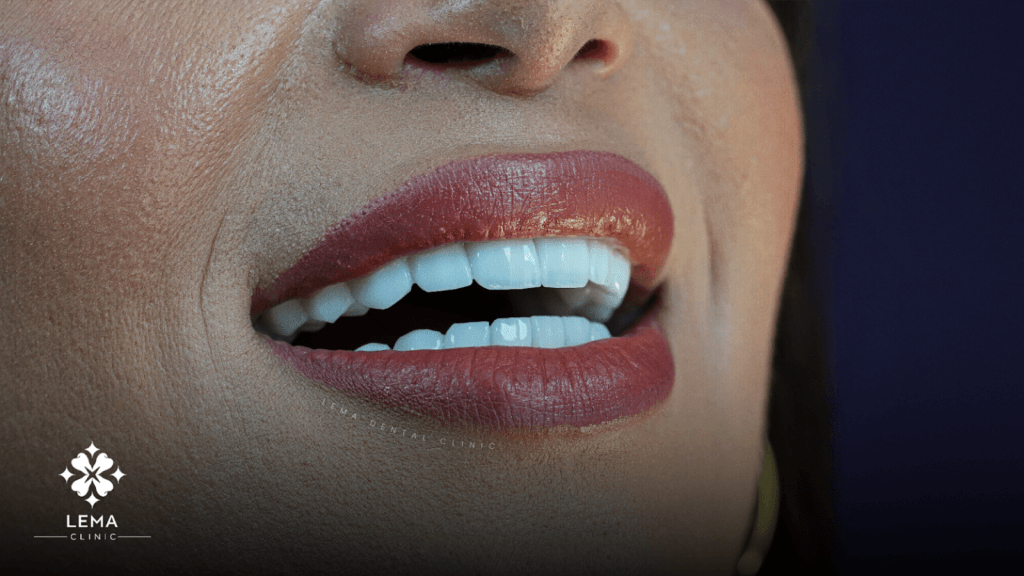
At Lema Dental Clinic, located in the heart of Istanbul, we aim to offer quality dental care that fits each patient’s personal needs. Our team is a complete package of different aesthetic and functional treatments that enable you to have a beautiful and healthy smile. Besides the newest technologies, the best materials, and a patient-centered approach, we deliver every treatment customized to reach the expected result.
Cosmetic dentistry is the case where, among others, Lema Dental Clinic excels with the result it obtains by advanced veneers and Lumineers treatments. On top of that, these two operations become the perfect match for those who set their sights on brightening their smiles by the removal of dental discoloration, fractures, and malposition.
Veneers at Lema Dental Clinic
Veneers are a method of beautifying your teeth that works remarkably well. Lema Dental Clinic provides porcelain veneers, which have a long life, resist stains, and look highly aesthetic. Veneers are essentially thin shells that are made to your measurements and are placed on the front side of the teeth when the goal is to change their color, give the desired shape, and align them.
Contrary to classical dental interventions that might involve major reduction of the tooth, porcelain veneers at Lema Dental Clinic are designed and made in such a way that they naturally fit the original your teeth and present a tailored solution that visually and palpably imitations your teeth. The team of talented professionals mixes up digital processes and uses high-quality porcelain to ensure that the transition between your veneers and natural smile is quite unnoticeable, resulting in a stunning, radiant look.
No matter if veneers are required to mend discolored teeth, bridge the opening, or straighten the slightly misalignment, Lema Dental Clinic will facilitate a customized approach that truly satisfies your aesthetic and functional ambitions.
Lumineers at Lema Dental Clinic
Lumineers are an innovative ultra-thin porcelain veneer product that is almost non-existent in tooth preparation. At Lema Dental Clinic, we recommend Lumineers to patients seeking an aesthetic, non-invasive improvement of their smiles with minimal alteration of their natural teeth.
Unlike traditional veneers, which call for the removal of a small amount of enamel, so that the veneers can be bonded, Lumineers are so thin that they can just be placed over the natural tooth. As a result, Lumineers are perfect for those who want a fast and efficient smile change without undergoing surgery.
Our technicians at Lema Dental Clinic match each Lumineer with your natural stain, size, and shape. They make sure that you have a perfect solitary and smooth, friendly fit, thus radiant and completely natural smile is achieved. This selection is appropriate for those with very minimal evidences that they want to hide like slight discoloration, tiny gaps, or very slight misalignments.
Both Lumineers and traditional veneers at Lema Dental Clinic have been made with the aim to provide great results over time thus not only will your smile look stunning but it will also be painless and healthy.
Why Choose Lema Dental Clinic for Veneers and Lumineers?
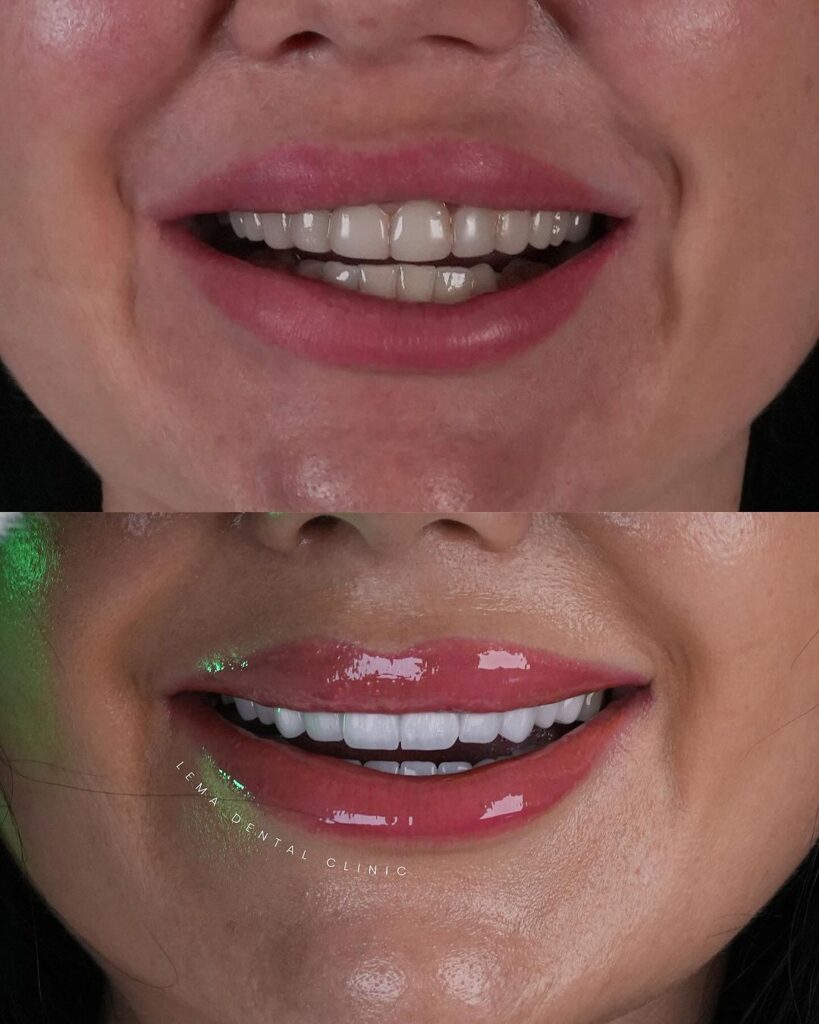
Lema Dental Clinic boasts of providing the highest standards of patient care coupled with a personalized approach for every patient. Here’s why our patients choose us for veneers and Lumineers treatments:
- Expertise and Experience: Highly skilled dental surgeons constitute our team which is trained in the field of cosmetic dentistry for years and has specialized in veneers and Lumineers. We make sure that the dental makeover you get is completely in harmony with your unique dental structure and won’t break the aesthetic desires you harbor.
- Top-Quality Materials: The porcelain and advanced materials that we use to fabricate veneers and Lumineers that simulate the appearance of the natural teeth of the patients are of the highest quality. The materials are not only durable but are also designed to be resistant to stains if maintained properly and can last for many years.
- Customized Treatment Plans: We at Lema Dental Clinic accept that smiles are not one-size-fits-all. We collaborate with you to develop a personalized treatment plan that is in agreements with your purposes, whether it be furthering your smile via Lumineers or dealing with more complicated cases via conservative veneers.
- State-of-the-Art Technology: Our adoption of frontier technology, like digital imaging and 3D planning software, allows us to produce veneers and Lumineers that are exact, correct, and of high decorative quality. A minimum of discomfort during the operation is assured together with a perfect fit is also achieved.
- Long-Term Care and Support: We do not only install your veneers or Lumineers and stop. At Lema Dental Clinic, we are always there for you providing continuous support and guidance to make sure your results last. Regular follow-up visits that allow us to check up on your smile’s health and looking good help us ensure that all is in the best condition.
Sources:
- Journal of Prosthetic Dentistry. (2020). Long-term Survival and Clinical Performance of Porcelain Veneers: A Systematic Review.
- Columbia University College of Dental Medicine. (n.d.). Lumineers: Overview and Benefits. Retrieved from https://www.dental.columbia.edu
- The British Dental Journal. (2020). Comparison Between Lumineers and Traditional Veneers: A Review of Clinical Outcomes. Retrieved fromhttps://www.nature.com/bdj
- American Academy of Cosmetic Dentistry (AACD). (n.d.). Veneers. Retrieved from https://www.aacd.com/veneers
FAQs About Veneers vs. Lumineers
The key difference between Lumineers and traditional veneers is the thickness and the amount of tooth preparation required. Lumineers are ultra-thin (around 0.2mm), often requiring little to no enamel removal, making them less invasive and reversible. In contrast, traditional veneers are thicker and usually require the removal of a small amount of tooth enamel to fit properly, making the procedure irreversible.
Traditional porcelain veneers are generally more durable than Lumineers. While Lumineers are strong, their thinness can make them more susceptible to damage from heavy wear or pressure over time. Porcelain veneers, being thicker, tend to be more durable and resistant to chips and cracks, offering longer-lasting results, especially for patients who grind their teeth or have more extensive cosmetic needs.
Lumineers can sometimes be placed over dental crowns, but the crown must be in good condition. If the crown is still secure and the underlying tooth structure is healthy, your dentist may be able to apply Lumineers over the crown. However, in many cases, the crown may need to be replaced or adjusted for the best result.
Lumineers are considered a reversible option, as they require minimal preparation and can be removed without causing significant changes to the underlying teeth. On the other hand, traditional veneers involve the removal of some enamel, making the procedure irreversible. Once traditional veneers are placed, they cannot be removed without replacing the natural tooth structure.
Lumineers are generally more affordable than traditional veneers. The lower cost is due to the fact that the procedure for Lumineers is less invasive and requires less preparation. Traditional veneers tend to be more expensive because they require more extensive tooth preparation, the creation of custom veneers in a lab, and multiple dental visits.
Both Lumineers and traditional veneers cannot be whitened using traditional teeth whitening methods. Porcelain veneers (including Lumineers) are stain-resistant, but once placed, their color remains fixed. If you wish to change the color of your veneers, you will need to have them replaced.

