


Avoid hot liquids, acidic sodas, and staining drinks.
On top of a nightly cleaning routine, maintaining dentures is a holistic thing that needs a conscious daily decision of eating and drinking. The materials used for dentures—mainly acrylic and certain polymers—don’t chemically or thermally behave the same way as the natural tooth enamel. Professor Doctor Coşkun Yıldız points out that most patients of Lema Dental Clinic don’t realize that their drinks could warp or cause “micro-cracks” in their prostheses. Being aware of these limits when in the treatment phase in Turkey will probably help the patients to keep their dental restoration in good shape.
1. High-Temperature Liquids(Thermal Warping)
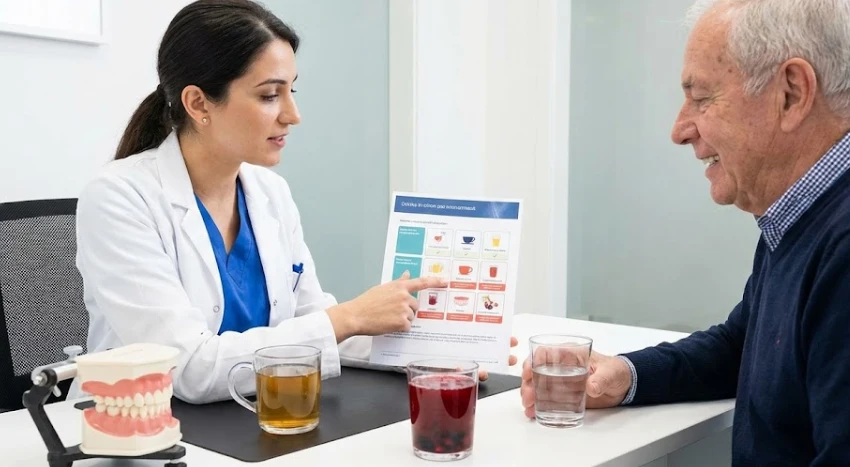
The heat is the biggest enemy of dentures. They are made to perfection to sit your gum shapes exactly.
- Boiling Tea or Coffee: Acrylic is a thermoplastic material. If the temperature is way too high the polymer can become soft and change shape, thus the fit gets loose.
- What happens: Painful gums, problems with pronunciation, and having to get a “reline” from Turkey sooner than expected are only some of the problems which a small twist could bring.
- How to Tread: Make sure that your drink is at “normal” temperature before you take a first sip.
2. Heavily Pigmented Beverages (Staining)
Acrylic is far more absorbing than the natural enamel. So, the colors get deeply fixed in your denture causing very difficult discoloration.
- Coffee and Black Teas: They are rich in tannins, which get into the tiny openings on the surface of a denture.
- Red Wine and Dark Juices: Juice made from cranberries and grapes can last forever in the permanent tint of the prosthetic teeth and the “gum-colored” base.
- Method: If you do happen to consume these, Dentist Polen Akkılıç and her team advise rinsing your mouth with water as soon as possible to avoid too much pigment penetration.
3. Carbonated and Highly Acidic Drinks
The biochemical ingredients of fizzy drinks and lemon-based juices are harmful to both the denture and the tissues underneath.
- Losing Shine: The acids present in sodas can strip the dentures’ surface of their high gloss bit by bit, making them unattractive and more prone to staining in the future.
- Fungal Factors: Sweetened beverages can leave a glucose residue under the denture plate. This is a favorable condition for Candida albicans, a fungus that causes denture stomatitis (thrush).
4. Alcohol and Dry Mouth (Xerostomia)
Alcohol acts as a dehydrator. For a denture to stay in place, thanks to suction the presence of a good layer of saliva is a must. “Alcohol laden drinks can cause dryness of the oral mucosa. The lack of sufficient saliva means that the friction between the denture and the gums goes up, thus ulcer formations and stabbing pain occur plus the loss of the denture’s stability,” Professor Doctor Coşkun Yıldız is clarifying.
Beverage Risk Assessment for Denture Wearers
| Beverage Type | Risk Level | Primary Impact | Recommended Action |
| Hot Coffee/Tea | High | Thermal Warping | Let it cool to lukewarm |
| Red Wine | Moderate | Deep Staining | Rinse with water after |
| Diet Soda | Moderate | Acidic Erosion | Use a straw (to bypass plate) |
| Hard Liquor | High | Xerostomia (Dry Mouth) | Hydrate with water |
| Iced Water | Zero | Refreshment | Safe to consume |
FAQ: Protecting Your Prosthetic in Turkey
Yes. Using a straw can help direct acidic or staining liquids past the front of the denture, reducing contact time with the material. However, this does not eliminate the risk of sugar-rich liquids getting trapped underneath the plate.
If the soup was near boiling, it may have caused a minor thermoplastic reaction. At Lema Dental Clinic, we suggest having the fit checked via 3D imaging if you feel a sudden change in stability after a thermal event in Turkey.
While better than sugary sodas, sparkling water is still slightly acidic. It is generally safe, but Dentist Polen Akkılıç and her team recommend balancing it with plain, still water to maintain a neutral pH in the mouth.
Over time, extremely high-proof alcohol can interact with certain non-precious metal alloys, potentially accelerating corrosion. Choosing high-quality, biocompatible metals in Turkey minimizes this risk, but moderation is always advised.
- Zarb, G. A., & Hobkirk, J. (2012). Prosthodontic Treatment for Edentulous Patients. Elsevier Health Sciences.
- Felton, D., et al. (2011). Evidence-Based Guidelines for the Care and Maintenance of Complete Dentures. Journal of Prosthodontics.
- Shay, K. (2000). Denture Hygiene: A Review and Update. The Journal of Contemporary Dental Practice.

