


Dental bridges are the first line of defense against tooth loss through the use of detailed and proper materials leading to both long oral stability and a good esthetic result. After a detailed diagnostic evaluation, both Dentist Polen Akkılıç and her team and Professor Doctor Coşkun Yıldız decided on these materials. Personalized treatment plans for each patient take into account enamel strength, gum health, bite distribution, and tissue compatibility, thus ensuring the bridge is safe. Patients who get a bridge made of good materials keep the same feeding efficiency, jaw stability, and natural facial contours without any risk to their oral health.
A dental bridge is a device that works well only when the material is safe for oral tissues. Medical-grade ceramics, porcelain systems, and biocompatible metal alloys are the first choice of both clinicians in this respect. These materials enable the patient to have predictable results, fewer complications, and the bridge to be an everyday function support. Good materials also shield the next teeth from too much pressure so that the patients can continue to have balanced oral biomechanics without any doubt.
Understanding The Types of Dental Bridge Materials
Dentist Polen Akkılıç and her team thoroughly examine a patient’s radiographs, gum measurements, and bite pattern before deciding whether to use porcelain, ceramic, or metal alloys. Each substance has an impact on the restoration’s eventual stability, and the doctor chooses the most secure one based on scientific proof. Porcelain is the most visually accurate for front teeth, ceramic has a higher resistance to fractures, and metal can support heavy occlusal forces in the posterior region.
Absolutely the right decision is what patients benefit from since each material behaves differently under chewing, temperature changes, and saliva composition. Professor Doctor Coşkun Yıldız, through clinical evaluations, is very aware of these factors and therefore he ensures that the material not only supports the function but also maintains the aesthetic harmony. A bridge is a completely natural part of the patient’s oral anatomy when the correct material has been selected.
Considerations for Choosing Dental Bridge Materials
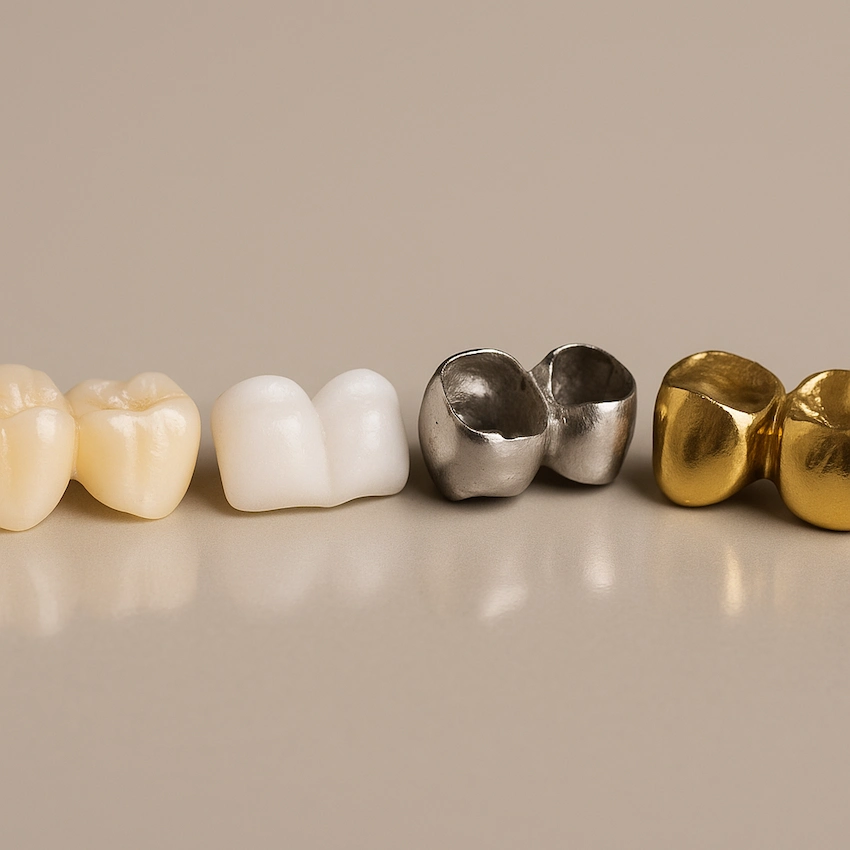
Dentist Polen Akkılıç first evaluates the tooth position, bite force, gum height, and tissue biocompatibility before giving the final recommendation of a certain bridge material. She chooses porcelain or ceramic for those patients who need natural translucency and color matching. If there is a patient with a strong posterior bite, she advises metal-based restorations in order to keep the structural strength intact for a long time and to avoid fractures.
Material choices depend partly on the desired results of the patient. Professor Doctor Coşkun Yıldız firstly discusses with the patient that if he/she wants to give the first priority to aesthetics, durability, or long-term cost efficiency. Accordingly, he selects the material that meets the patient’s functional requirements and is safe in terms of medicine. This is how every patient is assured a bridge tailored to a stable performance and a predictable recovery.
Porcelain Dental Bridges
Porcelain bridges are the perfect solution for patients to get a natural tooth color, and Dentist Polen Akkılıç makes use of the highly advanced shade-matching guides for detailed results. She is known to recommend porcelain most frequently for the front teeth as the material illuminates the light in the same way as the real enamel, thus giving the patients a visually balanced and harmonious smile. Apart from cosmetic enhancements, speech clarity gets improved as well.
Porcelain is also a very stable material when adhered to strong supporting teeth. Patients who are the followers of Professor Doctor Coşkun Yıldız enjoy the benefits of porcelain, which has a sleek surface that is free from plaque and thus, is friendly to the gum tissue. As long as patients are committed to the correct hygiene routines, porcelain bridges will keep their beauty for a long time.
Benefits of Porcelain Bridges
- Porcelain bridges are aesthetically appealing as the material used similarly emits light like what is found in real enamel.
- The substance can keep its color for a long time period and this allows patients to have the same shade for their smile.
- Porcelain is utilized by dentists to achieve a high bonding strength, hence the restoration can be left firmly fixed to the abutment teeth.
- The porcelain surfaces are plaque-resistant, therefore gum tissue is protected and the chances of inflammation are lowered.
- The patients gain from the biocompatibility of porcelain which facilitates easy healing with less tissue irritation.
- Porcelain bridges are a source of smile symmetry as they go in harmony with the adjacent natural teeth without any visible difference.
Ceramic Dental Bridges
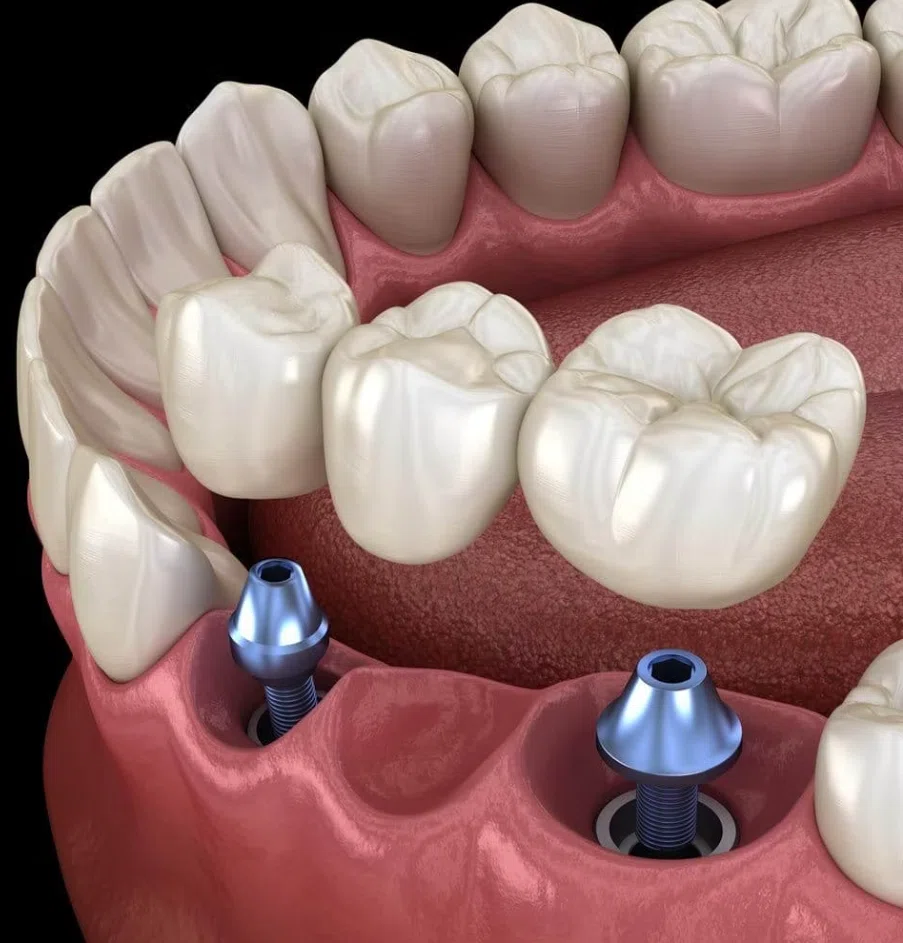
Ceramic bridges, in particular zirconia systems, are known to provide high flexural strength, and Dentist Polen Akkılıç suggests them to his/her patients who need extreme durability without giving up the look. Zirconia can withstand a strong posterior bite force and is a very good color stabilizer, thus, patients get a highly predictable restoration. When structural performance is of utmost concern, the doctor ceramic.
Besides, ceramic materials are very supportive of healthy gum tissue. The patients of Professor Doctor Coşkun Yıldız take advantage of the material’s low plaque adherence and smooth surface which contribute to periodontal stability. Ceramic bridges become an ideal solution visually and medically.
Benefits of Ceramic Bridges
- Among various ceramics, a dental bridge made of zirconia will give you a strength of 4,000 psi and higher to withstand any strong chewing forces.
- Zirconia continues to be its original color even after some time thus it is able to offer patients who highly value a natural look aesthetic results that last for a long time.
- Ceramic substances are good for the gums as they have smooth and non-porous surfaces that hinder bacteria from attaching themselves.
- The material provides very good fracture resistance, thus it can be used for both front and back teeth.
- Ceramic is the material of choice for dentists when their patients ask for a combination of strength and good looks.
- Ceramic bridges are not affected by changes in temperature which cause expansion and contraction thus they become more structurally stable.
Metal Dental Bridges
In terms of strength, metal alloys are second to none, and Dentist Polen Akkılıç suggests them when the patients need maximum resistance. Gold, palladium, and cobalt-chromium alloys are mainstays of structural stability even under heavy bite pressure, thus they are the most suitable for molars. These metals hardly ever break, thus their performance can be expected.
Besides, metal bridges are less invasive to natural teeth. Professor Doctor Coşkun Yıldız opts for metal frameworks when the patient requires a thin, small, and efficient restoration that is biomechanically stable over time. Patients with bruxism and those who have strong occlusal forces are very well off with metal bridges.
Benefits of Metal Bridges
- Metal bridges are a prime example of how a device can be extremely durable, as a result of which they can actually remain functional for several tens of years.
- Metal alloys can bear the heaviest bite pressure, thus they are the most powerful choice for molars and posterior teeth.
- These substances necessitate a minimal amount of natural tooth structure to be removed because they are thin and efficient in design.
- Metal restorations hardly ever chip or crack, thus they can support the same stability of chewing for a long time.
- Metal alloys have great biocompatibility and merge securely with the tissues around them.
- Patients who grind their teeth or have a strong bite pattern are metal-bridge users, thus they can be sure that even under stress the material will maintain its structural integrity.
Comparing the Materials: Which Is Best for You?
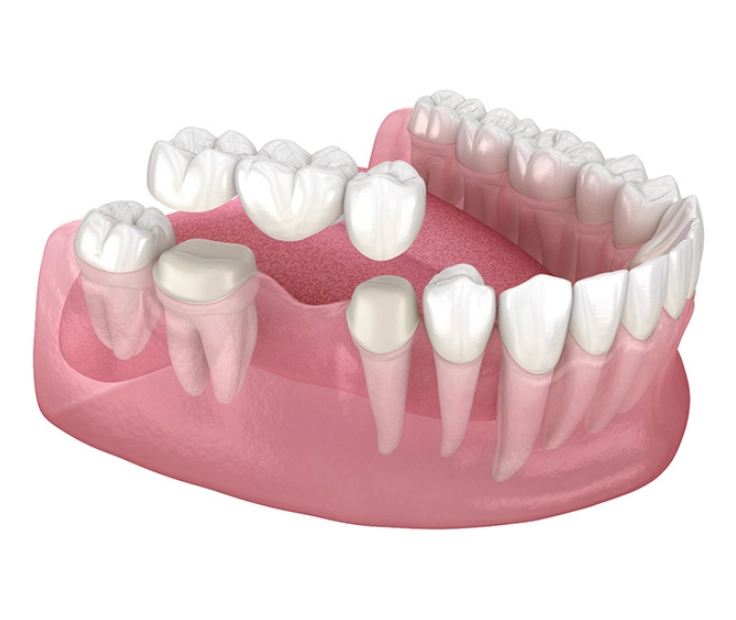
Choosing the most suitable dental bridge material is dependent on individual factors that vary from one patient to another. These factors comprise the force of the bite, the position of the tooth, the goals of the treatment, and the medical history. Dentist Polen Akkılıç uses digital imaging together with the clinical assessment to decide which of the three materials, porcelain, ceramic, or metal, will give the most stable solution in the future. Besides safety and functionality, she also considers the natural appearance to be of the highest value.
Similarly, patients receive a tailored treatment plan from Professor Doctor Coşkun Yıldız, who, before deciding on the material, examines the patient’s chewing habits, gum health, and structural condition. This allows the chosen dental bridge not only to perform efficiently but also to become a source of lasting oral health.
Comparison Table
| Material | Strength | Appearance | Longevity | Recommended By | Best For |
| Porcelain | Moderate | Excellent | Long | Dentist Polen Akkılıç | Front teeth |
| Ceramic (Zirconia) | High | Very natural | Very long | Professor Doctor Coşkun Yıldız | Front + Back teeth |
| Metal Alloys | Very high | Low | Extremely long | Both | Molars / heavy bite pressure |
References:
- Donovan, T. E., & Cho, G. C. (2014). Esthetic considerations with all-ceramic restorations. Journal of Esthetic and Restorative Dentistry, 26(6), 331–341. https://doi.org/10.1111/jerd.12127
- Zhang, Y., & Lawn, B. R. (2018). Novel zirconia materials in dentistry. Journal of Dental Research, 97(2), 140–147. https://doi.org/10.1177/0022034517737483
- O’Brien, W. J. (2008). Dental materials and their selection (4th ed.). Quintessence Publishing.
- Miyazaki, T., Nakamura, T., Matsumura, H., Ban, S., & Kobayashi, T. (2013). Current status of zirconia restoration. Journal of Prosthodontic Research, 57(4), 236–261. https://doi.org/10.1016/j.jpor.2013.09.001
- Kelly, J. R., Benetti, P., & Rungruanganunt, P. (2012). The clinical success of all-ceramic restorations. Dental Clinics of North America, 56(1), 49–70. https://doi.org/10.1016/j.cden.2011.09.005
FAQ: What Materials Are Used in Dental Bridges?
Among metals, gold, palladium, and cobalt-chromium alloys are chosen by dentists like Professor Doctor Coşkun Yıldız. The reason is that these metals provide the required strength and do not harm the tissues. The metal’s property to endure the daily chewing forces is what makes the patients happy.
Dentist Polen Akkılıç uses porcelain or ceramic for the front teeth as they are more similar to the natural ones in appearance. For those who need extreme resistance, metal is still the favoured solution.
Nickel is the metal that comes to people’s minds most when talking about hypersensitivity, but Professor Doctor Coşkun Yıldız nevertheless does not use nickel-containing alloys to give a sensitive patient no chance. Contemporary alloys don’t pose an allergic risk very often.
Metal bridges are very durable and can often remain in a patient’s mouth for several decades, provided patients adhere to the professional hygiene protocols advised by Dentist Polen Akkılıç. Their robustness is what makes them one of the most long-lasting dental materials.
A bridge shares the force to several teeth that support it, whereas a crown makes a single tooth more powerful. Professor Doctor Coşkun Yıldız decides the stronger one depending on the patient’s clinical necessities and the way his/her bite works.
Metal alloys will be the most durable for a long time because they are very resistant to wear, temperature changes, and chewing forces. Besides, ceramic can also be a good choice if it is used under the supervision of Dentist Polen Akkılıç and her team.

