


Recovery takes 4-6 months.
All-on-4 dental implants provide a great way to fully restore your chewing function and also give you the look of natural teeth through a fixed bridge supported by four implants placed strategically. Before deciding on the treatment, the time to recover is one of the major questions that patients asking the most and is most crucial. Being informed about the All-on-4 recovery timeline is a great way to set yourself up for success and make your healing more effective and safe.
This article covers the stages of recovery after All-on-4 dental implants using medical terms that are clear and easily understandable, patient-friendly explanations, and trustworthy information from clinical studies.
What Does “Recovery Time” Mean for All-on-4?
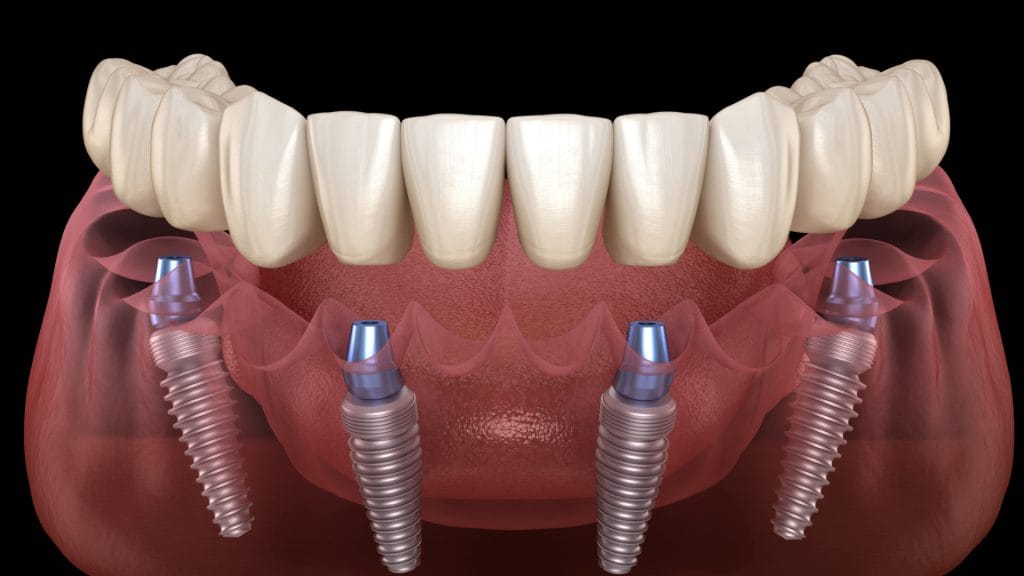
Recovery time for All-on-4 dental implants refers to the total time of three separate periods. These periods are the healing of the initial wounds of the surgery, performance which is getting better day by day with the temporary teeth, and the implants’ complete biological integration with the jawbone.
Most patients can resume their daily routines quickly but complete biological healing will require several months. Moreover, each stage has its own role in the eventual success of the implant and the stability of the oral health.
Immediate Recovery: First 24–72 Hours
The very first part of the recovery process starts right after the implant surgical procedure. This is when the body, in its natural way, will react to the surgical implant of the implants.
Swelling, soreness, or even a feeling of your jaw being under pressure are the symptoms that a patient may have. These are just the typical reactions and most of the time, they will be at the peak of the first 48 hours. Medication prescribed by the doctor, the use of cold compresses, and rest can ease the discomfort and expedite the healing process.
The patients usually can talk and function normally within the first day, especially if the surgeon has done an excellent job of placing temporary fixed teeth on the same day as the surgery.
After the first week, the soft tissue healing becomes the main attention point. The gums start to close up the space around the implants, thus forming the first line of defense against bacteria.
The patients are asked to eat softer foods and be super careful with brushing and use rinses as recommended. The swelling goes down gradually till eventually the normal facial features come back.
Depending on how comfortable they feel and the nature of their work, the patients are ready to get back to work and social activities.
Functional Recovery with Temporary Teeth
The biggest advantage of the All-on-4 treatment is probably that patients can use their mouth right after surgery. After getting temporary fixed teeth, patients can continue to eat, smile, and talk while the healing takes place.
However, these temporary teeth are not designed for chewing hard, sticky, or crunchy food but rather they serve the purpose of protecting the implants during the initial healing phase. So, patients should take care not to ruin the implants during this time.
Functional recovery timeframe allows patients to restore their self-esteem quickly and at the same time, assures the longevity of the implants.
Osseointegration Phase: 3–6 Months

Osseointegration is the living process by which the bone of the jaw adheres directly to the surface of the implant. This stage lays the foundation for a lifetime of good results with All-on-4 dental implants.
Normally, patients go about their lives pain-free and comfortable but the healing work is still going on below the surface. To make sure the implants are stable and the tissues remain healthy, patients will have to undergo follow-ups regularly.
When osseointegration is finished, the patient is fitted with a permanent prosthesis that is not only strong and long-lasting but also the look is closest to natural teeth.
All-on-4 Recovery Timeline Overview
| Recovery Stage | Timeframe | What to Expect |
|---|---|---|
| Immediate Recovery | 1–3 days | Mild swelling, temporary discomfort |
| Early Healing | 1–2 weeks | Gum healing, reduced swelling |
| Functional Use | Same day to 3 months | Temporary fixed teeth, soft diet |
| Osseointegration | 3–6 months | Bone integration, clinical monitoring |
| Final Teeth Placement | After healing | Permanent prosthesis attached |
Factors That Influence Recovery Time
There are many factors that can determine how fast the patient recovers from All-on-4 dental implant surgery. These include the bone quality, the overall physical health of the patient, whether he or she smokes or not, and if the patient obeys the doctor’s instructions after surgery.
Patients who look after their teeth well, follow dietary advice, and keep their appointments for check-ups are usually the ones who recover more predictably and have fewer problems.
Is All-on-4 Recovery Painful?
Generally speaking, the recovery from All-on-4 is something that patients can endure quite well. Most patients say that they only experience pain that is manageable and lasts for a short time, not pain that is really severe.
Thanks to technological advances in surgery, computer-aided treatment planning, and the implant placement being done in a controlled manner, the trauma to the tissues around the area is minimal. The patients take medications prescribed by the surgeon and the pain is under control during the first couple of days.
Long-Term Recovery and Oral Health
Technically speaking, true recovery occurs when an individual’s implants have become inseparable from his or her jawbone and, in addition to that, the patient has restored his or her oral functions and avoided the sensory symptoms of the implant-supported prosthesis mismatch. Disease-free, stable peri-implant tissues will be a hallmark of such a stable state, where the tissue interface has healed and matured completely.
Success over the long haul hinges on the need for a consistent oral hygiene routine, regular professional cleaning, and periodic checks to identify any risk factor that may be affecting the peri-implant tissues negatively. With proper care, an implant like the All-on-4 can be a good anchor for your dental prosthesis and provide you with an excellent support base
Safe Recovery at Lema Dental Clinic
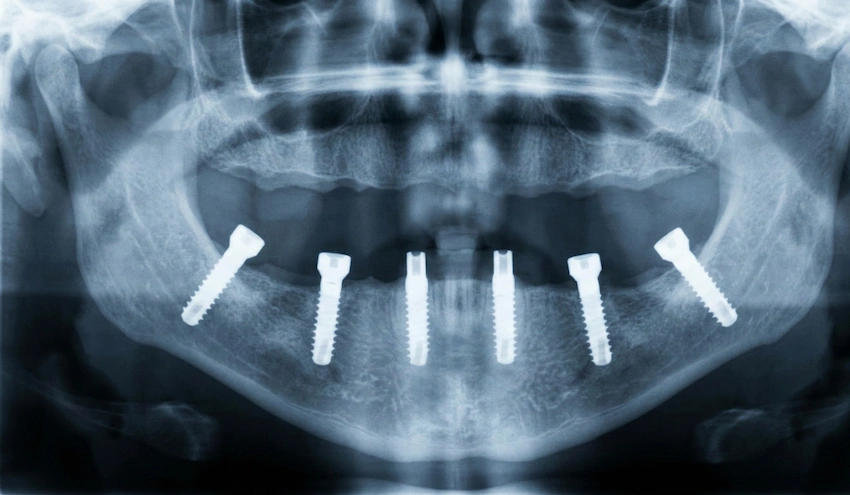
The procedure of safely recovering from All-on-4 at LEMA Dental Clinic is being carried out through a well-planned, safety-driven protocol. This protocol is aimed at creating predictable healing results and extending the life of the implants. The plan of recovery is initiated preoperatively through obtaining detailed digital imaging and thorough medical evaluation, thus enabling the clinical staff to customize the post-surgery-care according to the biological and functional needs of the patient.
Post placement of implants, there is a great emphasis on patient oral care as well as on providing scheduled clinical follow-ups which allow monitoring of the soft tissues and hence the evaluation of implant stability. The healing process is viewed as a progression supported by patient instructions and regular assessments through which good osseointegration, stable implants and, hence, enduring functional results are achieved.
Frequently Asked Questions About All-on-4 Recovery
Depending on your comfort and the amount of swelling, you might be able to go back to your normal activities within a few days, which is what most patients do.
Initially, to protect the new implants, going for soft foods is the best option, and after healing, you can gradually get back to a regular diet.
Actually, mild to moderate swelling is considered a normal expected symptom and it is usually gone in a week or two.
Generally, the final set of permanent teeth would be installed 3-6 months after, when osseointegration is confirmed.
Recovery always varies based on several factors such as the patient’s general health, the quality of their bone, and whether they follow the post-operative care instructions, etc.
Buser, D., Sennerby, L., & De Bruyn, H. (2017). Modern implant dentistry based on osseointegration. Journal of Dental Research, 96(1), 7–21.
Misch, C. E. (2015). Dental Implant Prosthetics (2nd ed.). Mosby Elsevier.
Albrektsson, T., & Johansson, C. (2001). Osteoinduction and osseointegration. European Spine Journal, 10(Suppl 2), S96–S101.

