


The easiest way is warm water, gentle rinsing, and a soft brush.
Let’s be real. No one likes to scrape sticky residue off their gums after a long day, right? Denture adhesives are really hard stuff. They are designed to withstand saliva, chewing, and talking. Washing them off often seems like trying to wash off tree sap with cold water.
What we regularly see in our dental practice is patients showing up with red, sore gums. And the reason is? They overdo the scrubbing. Consider your delicate gum tissue to be like wet silk. What would happen if you take a hard-bristled brush and hit that tissue? Yes, you will get micro-tears, severe inflammation, and even infections.
You can clean your mouth.
3 Easy Steps to Gently Remove Denture Adhesive
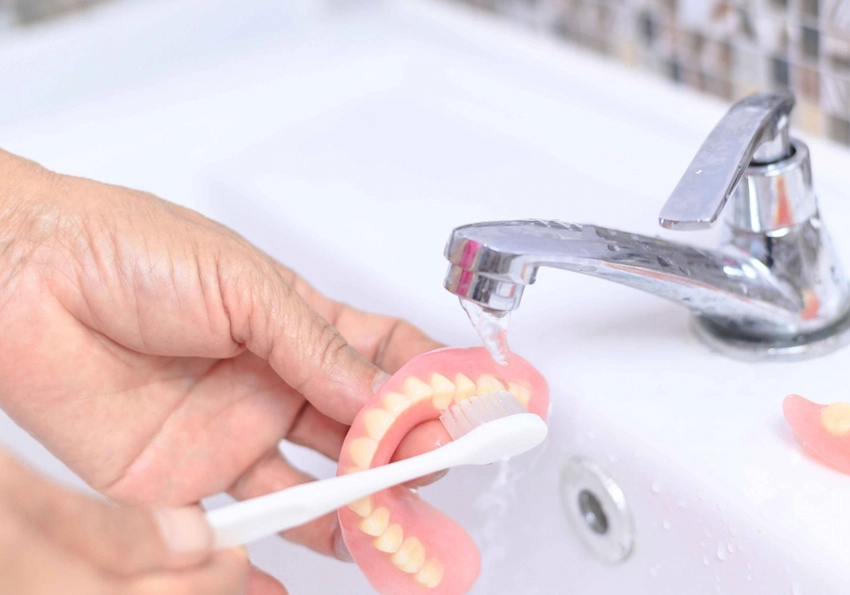
In our opinion, based on the cases we treated at Lema Dental Clinic, you really don’t have to use harshness.
- Warm Water Rinse: Start with warm water don’t make it hot. A mild salt solution or simply warm water should be swished in your mouth for anywhere between 3andto 60 seconds. The warm temperature weakens the adhesive bonds. The chemical bonding gets ruptured in no time.
- Soft-Bristle Sweep: Pick up a super soft toothbrush. Make sure it is a different one than the one you use to brush your dentures. Lightly and gently, massage your gums with tiny circular motions.
- Medical Gauze Trick: There may be a few spots of glue left behind. Do not use your fingernails to extract. So, get a clean, damp piece of medical gauze wound around your finger. Carefully wipe the roof of your mouth. The rough side of the gauze easily grabs the paste without damaging the skin.
Besides Adhesive: Why Do You Need So Much?
Actually, layering heaps of adhesive just for a meal is a signal. You are losing the war against your very own body.
Professor Doctor Coşkun Yıldız points out one very important aspect of tooth loss very often. The jawbone quickly shrinks if there are no natural tooth roots. It is exactly like a house built on a sinking foundation. You cannot fix the underlying broken structure with glue only. Along with continuing bone loss, the denture gets looser. You keep needing more glue. Your annoyance increases.
However, let’s analyze this. Dentistry nowadays offers incredible alternatives to the removable plastic plates. Dentist Polen Akkılıç and her clinical team are the ones who help patients to avoid using adhesive every day. Here in Turkey, we are able to offer different ways of fixing permanent teeth. The All-on-4 or Zygomatic implants, for example, serve as new and artificial roots. They also stimulate the bone and secure a beautiful Zirconium bridge productively. In the case of the fixed teeth, the bridge remains in the mouth permanently.
Dentures vs. Permanent Implant Solutions
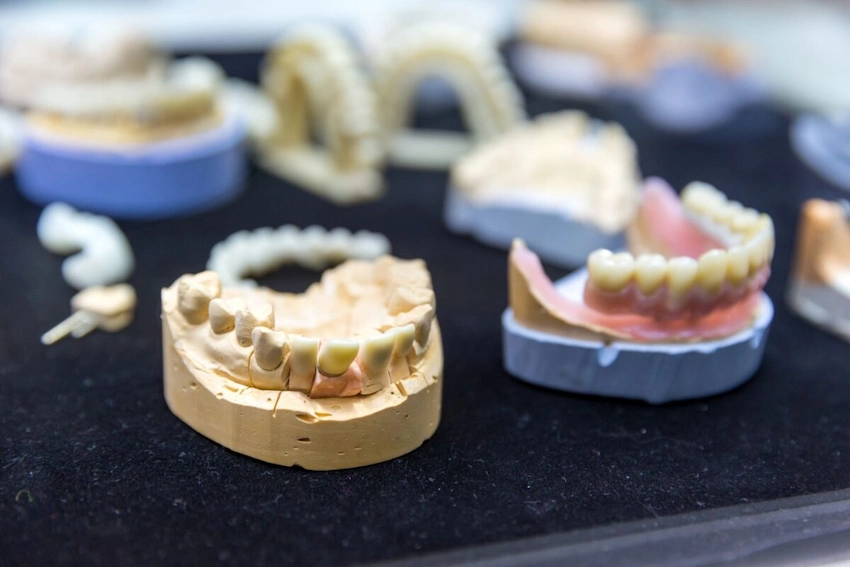
| Feature | Traditional Removable Dentures | Fixed Implant Bridges (All-on-4/6) |
| Adhesive Needed? | Yes, daily application is a must. | No. The implants are permanently screwed in place. |
| Bite Strength | Only 20% to 30% of that of natural teeth. | Almost 100% of natural teeth. |
| Bone Health | Accelerates the shrinking of the jawbone. | Protects and stimulates the jawbone. |
| Daily Care | You need to soak them nightly and scrape your gums. | Normal brushing and flossing. |
FAQs
Why does the glue stick so well to the roof of my mouth?
Adhesives require moisture to adhere. The roof of your mouth, which is the hard palate,e provides an immense, wet surface for the glue to adhere to. When you attempt to remove it, you are up against a strong, water-activated seal. Warm water is a great weapon in breaking that seal.
Can I just leave the adhesive on overnight?
Not at all. If you leave the adhesive on your gums overnight, you will only keep the harmful bacteria inside. Besides, it will become a great place for fungus growth that leads to denture stomatitis. Have a clean mouth and no adhesive before sleeping, so that your gums get to breathe.
Is it safe to use paper towels to wipe my gums?
Please avoid using paper towels. Paper towels are very coarse and will act like sandpaper on your mouth tissue, which is moist and very sensitive. Besides, they will give you small fibers which will be a source of irritation to your gums. It is always best to use damp medical gauze or a soft washcloth.
What happens if I swallow some of the denture glue?
In most cases, swallowing tiny pieces of glue won’t do any harm. It will simply pass through your digestive tract without you even noticing it. But if you eat large chunks of zinc-based adhesives over a long time, it could be dangerous and lead to nerve injuries. That’s why it’s really important to always use the least amount of glue possible.
How do I know if I am ready for permanent implants?
The question that you need to ask yourself is: Is your denture the one that has control over your life? Do you cover your smile? Do you avoid your favorite foods? If you feel sore spots and you also have bone loss, then the time for a change is now. Switching to a fixed implant system has a big impact on patients. After the restorative procedure, patients leave the clinic with teeth that are very much like the real thing in terms of appearance, feel, and chewing.
Academic References
- Carlsson, G. E. (2014). Responses of jawbone to amputations and bone resorption. Journal of Prosthetic Dentistry, 112(3), 543-548.
- Felton, D., Cooper, L., Duqum, I., Minsley, G., Guckes, A., Hage, S., … & Sweitzer, B. (2011). Evidence-based guidelines for the care and maintenance of complete dentures: A publication of the American College of Prosthodontists. Journal of Prosthodontics, 20(s1), S1-S12.
- Polyzois, G. L., & de Baat, C. (2014). Attitudes and practices of dentists toward denture adhesives: A descriptive study. International Journal of Prosthodontics, 27(1), 54-56.
- Zhao, K., Li, Z., & Chen, Y. (2017). Clinical outcomes of All-on-4 implant-supported fixed prostheses: A systematic review. International Journal of Oral & Maxillofacial Implants, 32(3), 642-650.
- Zarb, G. A., Hobkirk, J., Eckert, S., & Jacob, R. (2013). Prosthodontic treatment for edentulous patients: Complete dentures and implant-supported prostheses (13th ed.). Elsevier Health Sciences.

