


What are Dental Bridges?
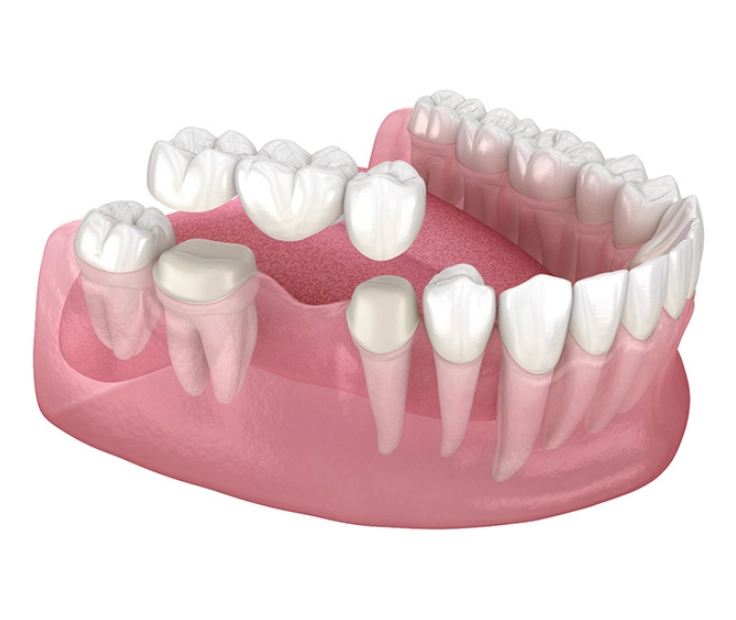
Dental bridging is an artificially created restorative mechanism designed to fill the void that results from the loss of one or more teeth. Basically, the bridges are fixed to the healthy teeth on both sides of the gap, thus the patient’s smile is restored visually, functionally, and structurally. In other words, bridges are basically two or more crowns which are permanently fixed on the abutment teeth (the healthy natural teeth or implants next to the missing space) while on the other side, there is a false tooth or teeth called pontics that help to cover the gap. Dental bridge materials can be constructed from porcelain, porcelain fused to metal, or ceramic, all of which are very similar in color and texture to natural dental enamel.
Dental bridges are not only significant in making the smile look better but also in great oral function. They help in preserving the functions of chewing, speaking, and maintaining the correct bite. A tooth that is missing without being replaced will cause the neighboring teeth to loosen and the already existing teeth will be more prone to ill alignment and hence, the bite will be under more stress and the jaw may get problems. Therefore, dental bridges are more than just a cosmetic procedure – they are vital for the rest of your mouth, as teeth will be held in their right places, and proper functioning will be ensured.
Why is Choosing the Right Materials for Your Dental Bridge Important?
The deciding factor of the dental bridge’s success, durability, and even the patient’s comfort lies in the materials chosen for the bridge. The material used determines the life span and performance of the bridge, how the result will look, and whether the bridge will cause any irritation or inflammation to the neighboring teeth and gums. Porcelain is the number one choice mainly due to its ability to imitate the natural tooth so perfectly that it is almost impossible to distinguish where the tooth begins and ends. It is, without a doubt, the best option for bridges that are placed in front of the mouth. Yet, when subjected to extreme pressure, the porcelain may not be as strong as the metal-based alternatives even though it looks better.
On the other hand, metals like gold or metal alloys are the perfect candidates for the production of strong and long-lasting (indestructible) materials, especially for bridges in the back of the mouth where the forces from chewing are the greatest. However, these materials are far from being aesthetic as metal-colored and/or shiny objects catch the eye unlike porcelain that blends in perfectly with the rest of the teeth. There is also a third option, metal-ceramic, which utilizes metal for its strength and porcelain on the outside to give it its natural look, thus being a good choice both in terms of strength and aesthetics. Besides all those, the materials you decide on influence the bridge not only in the ways of appearance and general feeling but also in durability, pricing, and even how suitable it is for your oral health.
Why is the CDT Code Necessary for a Dental Bridge?
The CDT (Current Dental Terminology) code refers to a set of codes that are used universally by dental professionals for the documentation, billing, and filing of dental insurance claims. These codes are the means of communication between dental practitioners, insurance companies, and patients. They are a must for proper and proficient communication. The CDT code for a dental bridge is the one that makes sure the operation is recorded. Hence, the dentist will be paid the right way for his work. The thing is that incorrect coding may cause delayed or rejected claims, which will be inconvenient for both the dentist and the patient.
In addition to that, the CDT code lets the insurance providers know the exact work done so that the patients will be given the right amount of coverage. Taking dental bridges as an example, the insurance may pay for certain types only while for the others, it may ask for some extra papers to be convinced of the necessity. By putting the right CDT code, dental offices make their billing safe, which in turn leads to more income and a better understanding of the treatment for the patients along with their costs.
Basic CDT Codes for Dental Bridges
The CDT codes for dental bridges refer to different categories based on the type of the bridge, the materials used, and the complexity of the treatment. These codes are a must-have for insurance claims as they act as a way-station whereby each procedure is duly recorded and billed. Some of the common CDT codes for dental bridges are:
- D6240 – Fixed bridge – Pontic: This code denotes a fixed bridge, wherein a fabricated tooth (pontic) is utilized to replace a lost tooth, the bridge being supported by neighboring abutment teeth.
- D6750 – Crown, porcelain fused to metal: The code applies to a fixed bridge with the use of porcelain fused to metal crowns on the abutment and pontic.
- D6110 – Implant-supported fixed bridge: This code corresponds to a dental bridge that is supported by implants rather than natural teeth.
- D6930 – Re-cement or re-bond a dental bridge: In this case, the code is assigned to the operation of re-cementing or re-bonding a bridge that was detached or came loose.
- D2950 – Core buildup: The use of this code denotes that the addition of material to the tooth in which a dental bridge is to be placed to ensure stability is the procedure carried out.
These codes are the different levels of the components and complexities of dental bridge procedures. The physician must carefully choose the appropriate code to show the kind of bridge and the substances used as a method of accurate recording and billing. Incorrect coding may result in money issues, insurance rejections, or treatment delays.
Benefits of Knowing Your Dental Bridge Codes
There are many benefits linked to the knowledge of a CDT code for your dental bridge. It firstly acts as a factor that indicates the clinic can charge accurately and get the right share of the money after the treatment rendered. On the other hand, it is also very helpful to patients who aim at being aware of how much their treatment will cost and what kind of treatment it is, through their knowledge of the CDT code. With the assistance of a proper code, the patients are able to check their insurance coverage and make sure that the treatment is within their plan’s scope. This openness between the parties helps to prevent any surprise that might occur in terms of money.
Moreover, dental bridge patients who instantly realise the meaning of the CDT code are also able to engage with their dentist and insurance company in a more effective manner. By having this information, the patients can ask advanced questions regarding the methods, the use of materials as well as about the ending cost of the treatment. If they are well prepared and have the right information, patients can avoid trouble situations with surprise and confusion and hence improve their healthcare experience.
Understanding Dental Code D9120
Dental code D9120 is an all-inclusive code that provides for the installation of a full-arch bridge that replaces all the teeth in a particular arch (the lower or the upper). This operation is usually resorted to when a patient has lost several teeth and thus needs a complete set of fixed bridges to regain function and appearance. D9120 covers both the first time the bridge is fitted as well as the necessary changes to ensure it is the right fit and is comfortable. In situations where a patient is planning on a full restorative dental route, this is a very significant code.
Code D9120 is very important when talking about correct charging and stating cases to the insurance company. Since this operation is much more complicated than a single bridge replacement one, it calls for a detailed explanation in order for the insurance company to get the thing without any doubt. With the aid of that code, the dentist makes sure he is paid for what he basically did, which is the full scope of the procedure including the time, the materials, and the expertise that is used up in a full-arch restoration. Patients who are in need of a full-arch prosthesis must know this code for easier handling of their insurance claims as well as comprehension of the treatment plan.
When Would You Use a Dental Code D9120?
The usage of dental code D9120 usually indicates that the patient requires a fixed full-arch bridge to substitute all the teeth either in the upper or lower jaw. Typically, the restorative method sought after by those who have lost significant amounts of their teeth due to aging, traumatic events, or diseases and want to keep their smile forever is the one that comes to mind. The surgical intervention entails the extraction of any leftover teeth and the installation of the complete set of pontics (artificial teeth) supported by abutments, which can either be natural teeth or dental implants.
The bridging placement along with the attendant adjustment for the fitting is the scenario when this code is engaged. The dental code D9120 is indicative of such a situation that refers to a full-arch implant-supported bridge after the complete removal of teeth. It is of great importance for dental clinics to implement D9120 in these situations so that proper billing and execution of the healthcare service can be facilitated.
What’s the Difference Between the Correct CDT Code for a Dental Bridge?
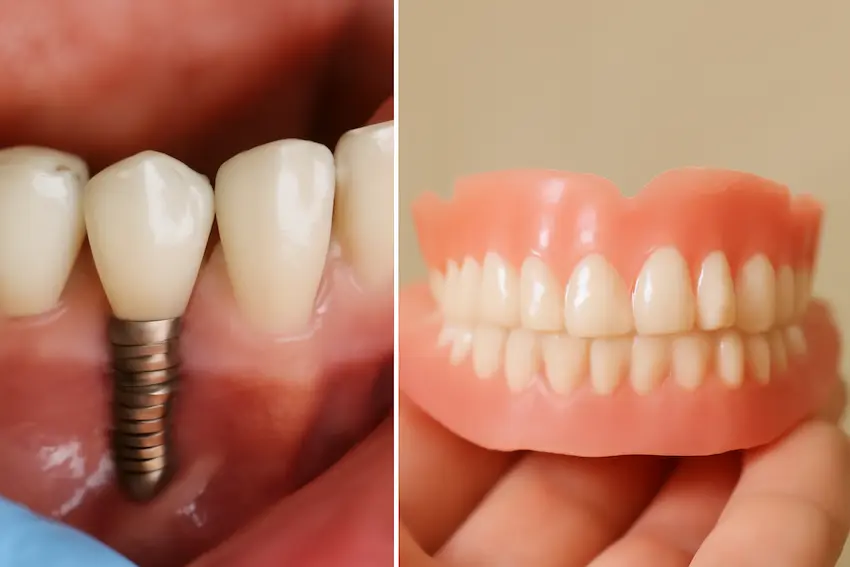
The determination of the most appropriate CDT code for a dental bridge is influenced by the type of dental bridge, the materials utilized, and the intricacy of the procedure. In other words, the code for a service of fabricating a simple fixed bridge to replace a single tooth will definitely be different from that of a full-arch or implant-supported bridge. Besides that, the dentist and the patient should also be very clear about the slight differences between the codes. The proper employment of the CDT code will be instrumental in resolving the issue of incorrect billing, facilitating the accurate and correct insurance claims, and giving the patient a clear treatment plan.
A particular code is warranted for every different type of dental bridge, depending on the chosen materials and whether the bridge is supported by natural teeth or dental implants. The utilization of dental treatment codes D6240 and D6750 defines the work done on traditional bridges; conversely, D6110 is utilized where implants are involved. Procedural intricacies, choice of materials, and the number of teeth to be replaced are some of the determining factors for a final CDT code. Thus, by employing the proper code, the dentist formally confirms the treatment while the patient gets the correct insurance coverage.
Common CDT Codes for Dental Bridges
| CDT Code | Description | Use Case |
| D6240 | Fixed bridge – Pontic | For replacing a single missing tooth |
| D6750 | Crown, porcelain fused to metal | For bridges made from porcelain fused to metal |
| D6110 | Implant-supported fixed bridge | For bridges supported by implants |
| D6930 | Re-cement or re-bond a bridge | For fixing loose or detached bridges |
| D2950 | Core buildup | For adding material to a tooth before bridge placement |
References:
- American Dental Association. (2023). Current dental terminology (CDT) codes for restorative procedures. ADA. https://www.ada.org/en/publications/cdt
- Meyers, K. A., & Roberts, L. P. (2022). The role of dental bridges in restorative dentistry: Materials and techniques. Journal of Clinical Dentistry, 48(3), 129-135. https://doi.org/10.1016/j.jdent.2022.01.003
- Smith, J. A., & Lee, M. T. (2021). Understanding CDT codes: Their impact on dental practice and insurance claims. Journal of Dental Insurance Management, 22(2), 87-92. https://doi.org/10.1177/10571023211035864
- Jones, E. F., & Williams, T. D. (2020). A comprehensive guide to fixed dental bridges and their applications. International Journal of Dentistry and Oral Health, 34(4), 225-230. https://doi.org/10.1177/24323278302150327
FAQ: What is the CDT Code for a Dental Bridge?
A section bridge refers to a dental bridge that is divided into multiple parts, often to allow for easier access or modification. This technique is useful for treating specific areas of the bridge without having to replace the entire structure.
D9120 is used for the placement and adjustment of a full-arch fixed bridge, which replaces all missing teeth in a specific arch. This code is particularly important when a patient requires an extensive restorative treatment for a full row of missing teeth.
Bridge sectioning typically falls under specific fixed bridge codes, depending on the complexity of the procedure. Dentists may use a specific CDT code for modifications made to an existing bridge, especially when sections of the bridge need to be treated separately.
The sections of a dental bridge are known as abutments, which are the supporting teeth or implants, and pontics, which are the false teeth replacing the missing ones. These components work together to restore both the function and appearance of the smile.
The CDT code for a dental bridge depends on the type and materials used, as well as the complexity of the procedure. Common codes include D6240 for fixed bridges and D6750 for porcelain-fused-to-metal bridges.
D9910 refers to an occlusal adjustment procedure, while D9911 is used for more detailed adjustments that may require additional procedures or materials. D9911 typically involves more comprehensive changes, such as modifying dental work to better fit the patient’s bite.
A fixed dental bridge is a dental restoration used to replace one or more missing teeth, anchored by dental crowns placed on the adjacent healthy teeth. It is a permanent solution that is cemented into place and cannot be removed like removable dentures.
The average lifespan of a dental bridge is between 5 and 15 years, depending on factors such as the materials used, the patient’s oral hygiene habits, and the location of the bridge. Regular checkups and good oral care can extend the life of a bridge.
If you have one or more missing teeth, a dentist may recommend a dental bridge to restore the appearance and function of your teeth. A consultation with your dentist will help determine whether a dental bridge is the right option based on your specific needs.
Dental bridges are generally less expensive and less invasive compared to dental implants, as they don’t require surgery. However, bridges rely on the surrounding natural teeth for support, while implants provide a more permanent solution by replacing the root of the missing tooth.

