


The 7-4 Rule is an important guide that helps a pediatric dentist to give the right kind of care to kids when they are in the crucial period of their development. It is a regulation that keeps emphasis on the initial dental visit being no later than the age of 4 and a full dental examination no later than the age of 7. This timing is so essential because at the time, it is all about the key dental milestones like the eruption of permanent teeth which usually takes place at around the age of 7.
The Rule is instrumental in significantly reducing the chances of waiting for a long time to see children’s dental problems in such a way that early intervention may facilitate the prompt detection of cavities, orthodontic problems, and jaw issues. The Rule, thus, helps parents in the management of their child’s dental health as they anticipate the problems taking care of them beforehand rather than seeing them become more severe and complicated.
At Lema Dental Clinic, Dr. Polen Akkılıç and her team are very much committed to the 7-4 Rule. They demonstrate their understanding of the importance of timely dental visits for kids by actually accomplishing them. By booking these very important appointments, parents are extending to their children the right to live with good oral hygiene which is the main preventive measure against other oral health problems that could be a hazard to the children’s general health. The situation, thus, will end up with healthier teeth, less need for orthodontics, and children’s good self-esteem as they mature.
This preventive dental approach is the identity of Lema Dental Clinic whose staff understand that each child’s dental health demands close attention, care and follow-up for it to be well-managed.
What Is the Rule of 7 in Children’s Dentistry?
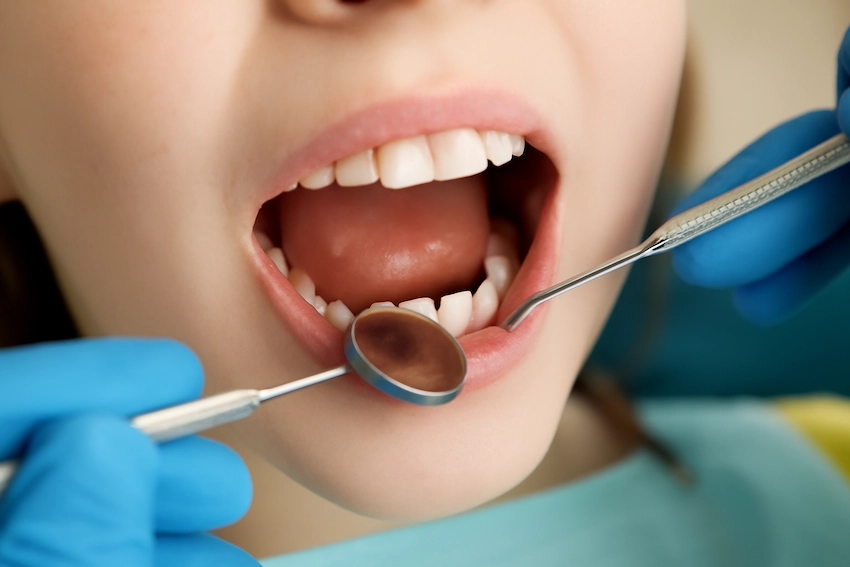
Children’s dentistry implements the Rule of 7 for hygienic habits, which emphasizes the need for organizing a dental visit not later than when a child is seven years old. This milestone is meaningful because it is the period when kids are going to lose their milk teeth, and permanent teeth will grow, therefore, making it an essential point for dental check-ups.
Seeing a dentist at 7 years old means an early orthodontic consultation as children’s dental formations are still in the process of development. Pediatric dentists get to see and monitor the progress of teeth and jaw alignment through this visit. Without exception, dental practitioners can uncover problems of early-stage dental crowding or malocclusion, dental caries, and even oral developmental irregularities. Once these issues are identified, it is possible to take corrective measures such as braces or space maintainers if the problems of crowded teeth or a small space in the dental arch occur thereby securing lives free of dental and periodontal problems later on.
It is also a rewarding first examination for mothers and fathers since they will learn beforehand about the potential hazards and concerns of their child’s dental health. The dentist will most likely give guidance on how to follow good dental hygiene, the benefits of fluoride application, and diet as a main factor of tooth health. Routine dental check-ups, after the age of 7, are a preventive measure against dental problems such as misalignment, cavities, or gum disease that can be solved quickly if detected early. By following the Rule of 7, you give your child the power to keep their oral health for a lifetime and thus help them avoid surgical and complicated dental interventions in the future.
Why Age 7 Is a Critical Milestone?
The age of 7 is very often referred to as the age when the dental development of a child makes a significant change. At this point, a set of permanent teeth is the one that is going to be the first to show, thus, it is the beginning of the change from primary to permanent teeth. This makes it a great time to check the dental health of the newly emerging teeth and to make sure that they are not coming in the wrong way. If there is any indication of misalignment, overcrowding or early cavities, the treatment at the very beginning stage can be a solution to the prevention of dental problems in a deeper sense later on. Identification of dental care problems at this stage makes the treatment easier and less invasive which gives the child a chance to skip the nature of more extensive procedures in the future.
Besides the physical change of teeth at the age of 7, this period is also the time when children start developing oral hygiene habits that will last them a lifetime. The dentist’s visit at this point provides a great opportunity for the dentist to instruct the child and his/her parents. The instruction includes the importance of brushing and flossing regularly as well as feeding the teeth through a healthy diet. Dentist Polen Akkılıç and her team at Lema Dental Clinic are of the opinion that the earlier dental care children get, the healthier and the most beautiful smile they will have in their lives. This important visit can be the first step towards a future without dental problems such as cavities and gum diseases that children can grow up with optimal dental health.
Benefits of Following the Rule of 7
- Early Detection of Dental Issues
By adhering to the Rule of 7, any dental issues like cavities, misalignment, or early signs of gum disease can be detected at a very early stage. This, in turn, saves a lot of money as early detection is a less costly treatment option than those that are more invasive and expensive.
- Prevention of Future Complications
The 7-4 Rule allows parents to locate dental issues in their children that can become later complications, such as crowded teeth or wrong bites, thus, preventing these problems from getting deeper. As a result, the chance of calling the orthodontist in the future to get braces or hearing about other complex orthodontic treatments can be avoided.
- Healthier Permanent Teeth
The Rule of 7 is a good helper in making sure that children’s permanent teeth will be coming in both neat and healthy. With early intervention at age 7, dentists will be able to keep an eye on the development of permanent teeth and skip both misalignment and decay.
- Good Oral Hygiene Practices
Oral check-ups regularly and early on, that is, around 4 years of age, open up the avenue for the pediatric dentist to teach kids the importance of and how to maintain good dental hygiene. When children receive dental hygiene education in the early stages it is more likely that they will continue the same dental practice throughout their lives.
- Long-term Cost Savings
By taking proper care of their children’s teeth and acting on small problems fast, parents will save a considerable amount of money in the course of time. Usually, a dental issue, if handled at the very beginning, will be a less expensive and less painful situation than the case that would need a heavy treatment later on.
- Less Dental Anxiety
Children who have been regularly brought to the dentist at an early age, usually get used to it, and hence, if anxiety about dental visits existed, it will gradually disappear. A good doctor-child rapport in the pediatric dental office not only reduces anxiety but also makes the child more comfortable with the dental care process.
- Confidence in Your Child’s Dental Health
Parents who follow the 7-4 Rule can monitor their kids’ dental health closely and still be at ease with it. As a result, through early intervention, parents will certainly dental development of their child isnormal.
What If My Child Needs Care Before Age 7?
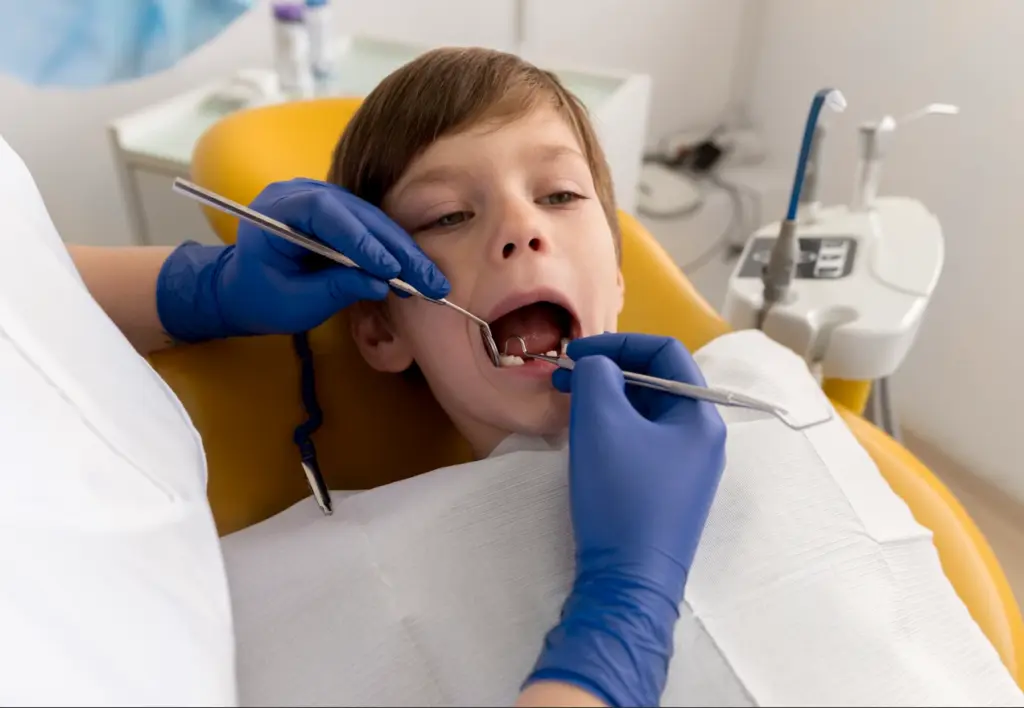
The 7-4 Rule is an excellent method of ensuring that dental visits are properly spaced out; however, there might be a situation where you need to take your child to the dentist before they are 7 years old. Therefore, if your child is the first one to show the signs of tooth decay, teeth are not aligned, or your child is hurting, it is definitely a must to visit a pediatric dentist as soon as possible. Moreover, problematic thumb-sucking or the continuous use of a pacifier can eventually lead to oral issues that require treatment even before 7 years age of. In such cases, Dentist Polen Akkılıç and her team will evaluate the individual needs of your child and give the treatments your child requires to be able to prevent the development of dental complications later on.
If dental problems are dealt with promptly before the age of 7, it will help the kids avoid serious problems like crooked teeth, bite issues, and tooth decay that may result in complex treatments in the future. The pediatric dental team at Lema Dental Clinic is your go-to for any oral health issues that your child might have. Early intervention by parents will guarantee their kids a healthy dental foundation which will be the key to their success when they grow older.
What is the 7–4 Rule in Pediatric Dentistry?
- First Visit at Age 4
The 7-4 Rule emphasizes that children should not be without their first major dental check-up till they are 4 years old at the most. A dental visit is a chance for the dentist to look at the child’s primary (baby) teeth visually and make sure that these are healthy, straight, and without any kind of dental issue.
- Second Evaluation at Age 7
The 7-4 Rule points out that a complete dental examination should be made no later than the age of 7. At this time, children gradually shed their baby teeth, which are substituted by permanent teeth. The doctor can thus see first-hand the correct eruption and alignment of children’s teeth, as well as their oral development in general.
- Key Focus on Tooth Development
As part of the doctor’s visit, the doctor will visually inspect the growth of the child’s permanent teeth that are emerging from the gums very closely. Such an inspection helps identify the dental issues like overcrowding, spaces or an incorrect bite that may have to be treated with the help of a dental brace or in some other way.
- Proactive Approach to Preventing Dental Problems
By practicing the 7-4 Rule, dentists are in a position to solve problems like the presence of cavities or tooth malposition that may result from the gradual oral health deterioration of their patients and without further progression. Early intervention helps lower to likewise of cases in later complex dental work a great deal.
- Oral Hygiene Education
The 7-4 Rule is equal in its importance as regards oral hygiene education, allowing the pediatric dentists to give more space for this. Pediatric dentists also utilize these first visits to equip children and their caretakers with knowledge related to effective brushing, flossing, and in particular, diet’s role in tooth health.
- Timing for Orthodontic Interventions
Following the 7-4 Rule helps one know when it’s the right time to start orthodontic interventions. A thorough examination by a pediatric dentist done no later than seven years of age may provide evidence on the first signs of the dental needs for later orthodontic treatment, thus facilitating their early intervention, if appliances such as braces or space maintainers will be used.
- Building a Lifelong Dental Care Routine
Early visits, as per the 7-4 Rule, contribute to the habit of regular dental care from a young age. Such a dental care routine started in childhood, goes a long way in children’s oral health becoming a good practice all through their life span.
Why is the 7–4 Rule Important for Parents?
The 7-4 Rule is significant to parents, as it imparts an understandable structure of when to place appointments for dental check-ups and what to anticipate through their child’s dental growth. Adhering to this standard, parents can take the initiative to watch their child’s dental health, thus making sure the problems of tooth decay, the wrong position of teeth, or bite troubles that are caused by their child’s growth are fixed at the root and prevented from getting bigger. Besides, at these important turning points, parents are provided with a lot of informative advice on how to take care of their children’s oral hygiene through regular visits with a pediatric dentist. Pediatric dentists like those at Lema Dental Clinic, on the other hand, provide parents with knowledge on the necessary steps in oral hygiene, the prevention of bad habits, and the support of the natural growth of their child’s teeth.
Following the Rule of 7, parents are one step ahead and thus, they become partners in the management of their kids’ oral health which results in happy and healthy smiles for many years to come. Besides setting a solid foundation for oral health, the early dental visits also create a relationship between the child and the dentist, which in turn helps to eliminate fear or anxiety of the dental office as the child grows. With the expertise and experience of Dr. Polen Akkılıç and her team, parents are provided with a sense of security that their kids’ dental needs are well taken care of thus, the achievement of their child’s dental development goals becomes possible.
What If My Child Does Not Follow the 7–4 Rule?

In case your kid has not had a dental check-up before the age of 7, you definitely should make a dental appointment as soon as possible. The first dental visits, which are part of the 7-4 Rule and are missed, can lead to undetected dental issues that may deepen without being noticed. Still, it is never too late to start good dental care, even if the rule has been missed. At Lema Dental Clinic, Dr. Polen Akkılıç and her team are experienced and equipped to assess and resolve dental problems in children, regardless of their age. If your child is 7 or older, a thorough dental examination can be a great way to uncover any dental concerns, if any, and get a treatment plan made that perfectly fits your child’s needs.
It is very important to dental problems that you immediately take care of them, no matter what age they are. If you wait too long, that can result in complicated, expensive procedures later on. A pediatric dentist can help to perform all the necessary care and at the same time, be a guide in the child’s dental development in a healthy way.
When Should My Child See a Pediatric Dentist?
The American Academy of Pediatric Dentistry advises that a child should be taken to a pediatric dentist not later than the first birthday or within six months after the eruption of the first tooth. Visits should be regular thereafter to keep track of the health of both primary and permanent teeth. The main idea of starting early is to have any oral health issues that are on their way to becoming more serious conditions already addressed. At Lema Dental Clinic, the pediatric dentistry department headed by Dentist Polen Akkılıç is energetic in providing early and thorough continuing dental care to ensure every child gets a healthy, beautiful smile that lasts for a lifetime.
After the initial dental visit, regular check-ups help monitor your child’s growth, spot potential problems early, and make sure that good habits are established. By adhering to the advice of dental professionals, parents will be able to help their children keep up great oral health and thus, the need for painful treatments will be ruled out in the future.
Recommended Dental Milestones for Children
| Age | Milestone | Recommended Action |
| 1 | First Tooth | First dental visit |
| 4 | First permanent teeth | First major check-up |
| 7 | Permanent teeth eruption | Comprehensive dental evaluation |
References:
- American Academy of Pediatric Dentistry. (2020). Guideline on periodicity of examination, preventive dental services, and oral treatment for children. Pediatric Dentistry, 42(6), 45-60. https://doi.org/10.1016/j.peddent.2020.01.005
- Warren, J. J., & Weber-Gasparoni, K. (2018). The role of early dental visits in pediatric oral health. Journal of Pediatric Dentistry, 26(3), 112-119. https://doi.org/10.1016/j.jpeddent.2018.02.002
- Vann, W. F., & Pahel, B. T. (2016). Guidelines for early dental care in children. The Journal of the American Dental Association, 147(6), 391-397. https://doi.org/10.1016/j.adaj.2016.01.002
- American Dental Association. (2020). Oral health care for children: Guidelines and recommendations. Journal of Dental Research, 99(1), 58-65. https://doi.org/10.1177/0022034520902421
- Tinanoff, N., & Palmer, C. A. (2019). Early childhood caries: A review of causes, treatment, and prevention strategies. The Journal of the American Dental Association, 150(3), 162-170. https://doi.org/10.1016/j.adaj.2018.12.001
FAQ: What is the 7-4 Rule and Its Importance in Pediatric Dentistry?
The 7-4 Rule is a guideline that suggests kids ought to see a dentist for the very first time not later than the age of 4 and get a complete examination by the age of 7. Such appointments serve as a protection against dental problems of the future and are a means to ensure dental health in the long run.
The human dentition starts the transition at age 7, whereby the milk teeth are shed, and permanent teeth grow. The first visit is very important in identifying and preventing the occurrence of any dental problems that can later become the source of the child’s dental health problems.
If the 7-4 Rule is overlooked, it is essential to make arrangements for a dental check-up at the earliest possible time. The first treatment can, therefore, be very effective in resolving the problems.
It is suggested that every six months, your young one should have a routine check-up at the dentist after the age of 7. The dentist through such visits will be able to keep an eye on dental growth and, if necessary, he will intervene promptly.
Yes, early dental visits following the 7-4 Rule facilitate locating cavities and other problems at an early stage. If these issues are put up with only a little while, the dental damage will be avoided, and the teeth will stay healthier.
If a child of yours exhibits symptoms of dental problems, for instance, tooth pain or misalignment, then do not hesitate to make a call to a pediatric dentist to set up a consultation. Going to the doctor right away and getting the treatment that you need will be less time-consuming and money-consuming later on when there won’t be so many problems.
Your kid must start brushing his/her teeth at the time when their first tooth can be seen. Brushing properly from the very first time will be one of the healthiest habits that your little one will have all his/her life – oral hygiene is part of it.

