


Predicting longevity through the 50-40-30 success matrix.
In modern restorative dentistry, the success of a procedure is never the result of a single variable. Instead, it is governed by a cumulative ratio known as the 50-40-30 Rule. This framework is utilized at Lema Dental Clinic to evaluate the predictability of complex cases, such as All-on-4 or full mouth rehabilitations. Professor Doctor Coşkun Yıldız explains that for a restoration to remain functional for decades, these three pillars must be meticulously balanced during the treatment journey in Turkey.
50%: The Biological and Anatomical Foundation
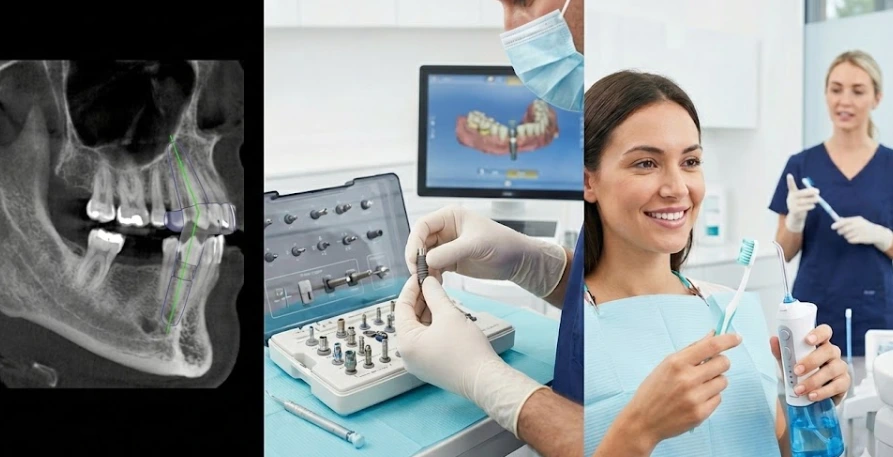
The largest portion of the success equation—50%—is determined by the host environment and systemic health. Even the most expensive implant system will fail if the underlying biological conditions are unfavorable.
- Bone Density and Quality: Success in this case is greatly determined by the alveolar architecture. In fact, if the patient’s bone is atrophied, then it becomes necessary to do bone grafting along with other secondary procedures to allow for primary stability.
- Systemic Factors: Conditions such as controlled diabetes or smoking habits directly influence the angiogenesis required for osseointegration.
- Diagnostic Precision: At Lema Dental Clinic, we utilize high-resolution CBCT scans to ensure that the 50% foundation is robust before the first incision is made in Turkey.
40%: Surgical and Prosthetic Execution
The second pillar—40%—rests on the technical expertise of the clinical team. This is where the surgeon’s skill and the quality of the materials become decisive factors.
- Implant Positioning: Professor Doctor Coşkun Yıldız emphasizes that the 3D orientation, angulation, and torque values of the implant must be flawless to prevent biomechanical overload.
- Prosthetic Design: The “emergence profile” of the crown or bridge must allow for proper cleaning. At Lema Dental Clinic, we focus on creating restorations that are not only aesthetic but also “hygienically accessible.”
- Material Integrity: Using biocompatible materials like Grade 5 Titanium or Monolithic Zirconia in Turkey ensures that the prosthetic response remains stable under occlusal loading.
30%: Patient Compliance and Maintenance
The final 30%—which brings the total effort to 120%—is the responsibility of the patient. In dentistry, we say that the clinic provides the solution, but the patient provides the longevity.
- Periodontal Vigilance: Patients must maintain a strict oral hygiene regimen to prevent peri-implant mucositis.
- Periodic Recalibration: Regular checkups at Lema Dental Clinic allow for minor occlusal adjustments, as natural teeth shift over time while implants remain stationary.
- Lifestyle Adjustments: Following the post-operative protocols established in Turkey is essential for the long-term protection of the 40% surgical effort.
The 50-40-30 Success Matrix Summary
| Component | Responsibility | Clinical Focus | Impact on Longevity |
| 50% Foundation | Biological/Clinic | Bone Density & Systemic Health | Critical (Primary) |
| 40% Execution | Surgeon/Lab | Angulation & Material Quality | High (Functional) |
| 30% Maintenance | Patient/Hygienist | Biofilm Control & Follow-ups | High (Long-term) |
FAQ: Professional Insight into the 50-40-30 Rule
In clinical pedagogy, Professor Doctor Coşkun Yıldız explains that to achieve “perfection,” we must over-deliver in every category. It signifies that the combined effort of the clinic and the patient must exceed standard expectations for a permanent result.
If bone density is insufficient, Dentist Polen Akkılıç and her team will focus on reconstructive surgery first. In Turkey, we do not proceed with implants until the biological foundation reaches the necessary threshold for safety.
Yes. Even with a 50% perfect foundation and 40% perfect surgery, neglecting the 30% maintenance (hygiene) can lead to peri-implantitis and total implant loss.
We utilize digital surgical guides and CAD/CAM technology in Turkey. This eliminates human error in implant placement and ensures the prosthetic fit is accurate to the micron.
The ratios may shift slightly (e.g., more emphasis on aesthetic design), but the principle remains: Success is a partnership between biology, technical skill, and patient care.
- Misch, C. E. (2007). Contemporary Implant Dentistry. Elsevier Health Sciences.
- Tarnow, D. P., & Chu, S. J. (2020). The Single-Tooth Implant: A Step-by-Step Guide to Clinical Excellence.
- Buser, D., et al. (2017). Long-term Stability of Contour Augmentation with Early Implant Placement. Journal of Dental Research.

