


What is the Meaning of Dental Code D7240?
Dental Code D7240 is a single code in the Dental Elements system that records and bills health care providers for the surgical extraction of impacted teeth. An impacted tooth is a tooth that has not properly come out of the gums because of alignment or space problems. These types of teeth are generally not accessible with regular extraction methods; thus surgical methods are needed to remove these teeth. According to Dentist Polen Akkılıç and her team, impacted teeth usually mean a more aggressive operation that requires cutting away gum or bone to reveal the tooth for extraction. The code D7240 is used to provide insurance companies with an accurate record of the complex surgical removal procedure for billing purposes.
The operation may also require mapping out the plan along with some diagnostic imaging such as X-ray to find the correct location of the impacted tooth. Professor Doctor Coşkun Yıldız points out that it is very important to use the right documentation with D7240 both for patient safety and to be able to get the correct reimbursement from the insurer. If surgeons or dentists carry out this operation, they have to fulfill the requirements of the D7240 code by the administration of anesthesia, surgical access, and post-operative care along with other necessary steps in the surgical process.
When to Use D7240 Dental Code?
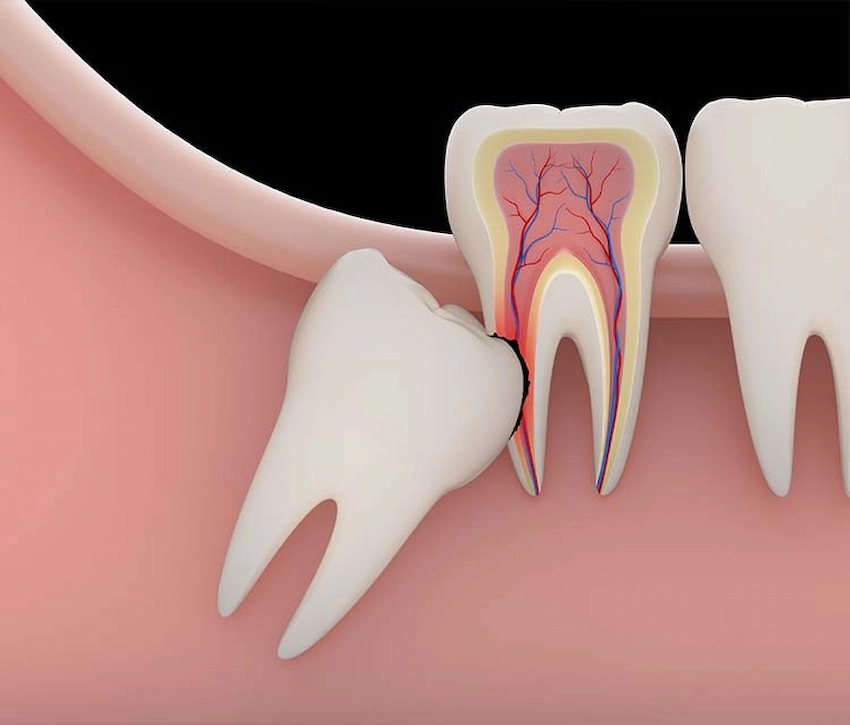
The D7240 code is assigned where an impaction on the tooth is so severe that the tooth is buried either under the gumline or inside the bone and thus cannot come out naturally. This code refers to cases when the tooth has to be surgically removed by operating, such as slicing the gum tissue or removing bone to reach the tooth. Dentist Polen Akkılıç and her team would employ this code for those teeth that can not be extracted by means of a simple procedure because of their location or depth. As an illustration, a wisdom tooth that is covered not only by the bone but also the neighbouring teeth most probably will need the D7240 code for billing purposes as this kind of case requires a more operative method.
Professor Doctor Coşkun Yıldız may record the operation carried out on Mr. John Doe’s impacted wisdom teeth using the D7240 code. The operation can include sewing the gum, cutting bone if needed, and extracting the tooth with great care while at the same time separating the surrounding structures. Dental professionals use the D7240 code as a tool that helps them go through the procedure recognizing and billing it correctly; besides this, they are also able to measure the time and resources needed for the surgery.
How Dental Practices Use D7240?
- Documentation and Billing: D7240 serves as the tool for the accurate recording and billing of the surgical removal of an impacted tooth. A dental office uses this code to indicate that the tooth is so deeply impacted that it cannot be simply taken out.
- Insurance Reimbursement: Dental practices, by the use of D7240, grant themselves the right to get paid properly for the process of the surgical extraction which is a procedure that is more time-consuming, resource-intensive and requires specialized tools than a standard one.
- Procedure Planning: The employment of D7240 indicates that surgery is necessary to resolve the issue, which may involve anesthesia, bone removal, and cutting of the gum. This code points out the extent of the operation and helps the medical team to plan and work it through.
- Specialized Care: D7240 is generally the work of an oral surgeon or a specialist with advanced surgical skills. This code is a guarantee that those with the highest skills in complex extractions will be remunerated for their expertise.
- Patient Records: The use of D7240 contributes to the accuracy of patient records, elaborating on the exact nature of the extraction and the surgical steps, if any. It is very important for follow-up care and in situations where there might be complications.
Advantages and Disadvantages of Using Dental Code D7240
Advantages:
- Accurate Reimbursement: When dentistry uses D7240, it allows them to get paid accordingly for the extra work and materials that are part of the surgical extraction. The dental office can receive the proper amount of money for the time, instruments, and skills through this code.
- Insurance and Compliance: With D7240, dental offices comply with insurance conditions and thereby are able to submit accurate claims that are less likely to be rejected or produce discrepancies. It facilitates a clear billing process for the extraction of an impacted tooth.
- Clinical Clarity: If the dental professionals use D7240, it will help them show the exact nature of the operation and thus communication of the provided treatment will be more efficient and correct procedures will be ensured.
- Comprehensive Record-Keeping: D7240 records localizes surgical procedures in patient records, which is a great help for the next visits, follow-ups, and even proper monitoring of any after-effects or complications.
Disadvantages:
- Higher Costs for Patients: Generally, the price of a surgical intervention rises, so patients will have to pay more. Besides, they can also bring additional costs regarding anesthesia, sedation, and aftercare.
- Longer Recovery Time: A period of healing after a D7240 operation is longer than usual and may be accompanied by discomfort, swelling, and the necessity of multiple follow-ups; thus some patients will refuse the surgery because of these reasons.
- Increased Complexity: D7240 is a complex and challenging step that requires more surgical skills than routine extraction. That means the dental team will probably have to improve their skills, and oral surgeons may be consulted.
- Post-Operative Risks: Surgically removing a tooth carries more risks than a straightforward extraction. Among the dangers are infection, nerve injury, or heavy bleeding which have to be controlled, and the patient must adhere to more demanding post-operative care instructions.
Cautions Related to Dental Code D7240
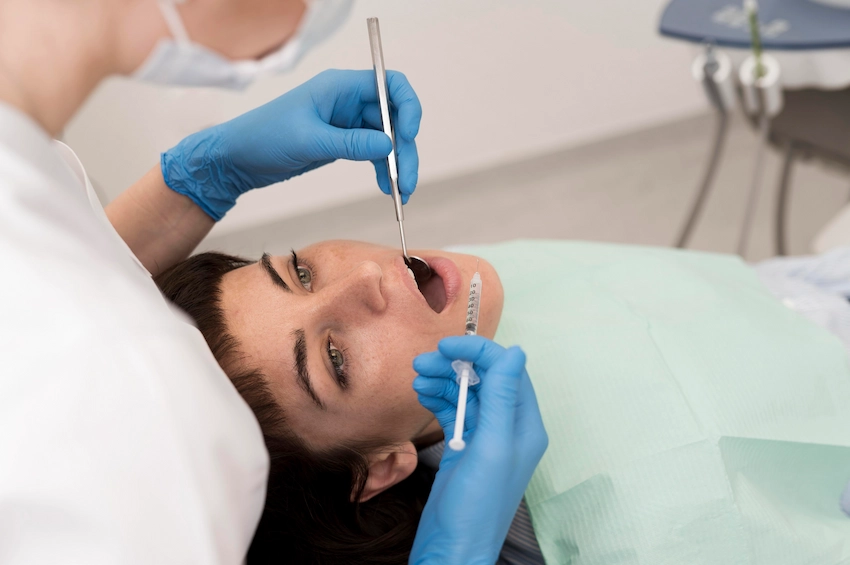
In case of complicated extractions that necessitate the use of D7240, Dentist Polen Akkılıç and her team caution that dental professionals should not take it lightly that a single probe suffices and must be very certain that they are using this code correctly. The importance lies in the fact that it not only tightly but also severely impacts the tooth, which has to be extracted; otherwise, the doctor should not use this code. So hard is the impaction to be broken that it is physically impossible to carry out the operation with a simple tool. Hence, using the D7240 code for a tooth that is not deeply impacted may cause you to make billing mistakes and simultaneously get into trouble with the insurance companies. Clinicians in dental offices ought to be very careful with their findings and write every single detail down including the records of any radiographs that support the operation if they want to be allowed to use D7240.
Also, Professor Doctor Coşkun Yıldız points out that the surgical aspect of D7240 implies that risks like infection, nerve damage, and prolonged bleeding are always there. Accurate work during the operation and very good post-operative care will help lower the risk. Patient communication about these potential difficulties as well as the measures taken to avoid them is very important before D7240.
D7240 Procedures: What Are the Limitations?
By using D7240 as a code, you are referring to dental surgical removal of impacted teeth, but the benefits of this code are not unlimited. Knowing the fact that the code is meant for the surgical removal only of an impacted tooth and not for the other parts such as bone grafting, implant, or periodontal treatments is dramatically important. Separate codes are to be used in documenting those services where additional procedures are performed simultaneously with the extraction. Professor Doctor Coşkun Yıldız thinks that these restrictions require that the billing process be done with great care in order to keep the treatment fully funded.
Besides, Dentist Polen Akkılıç and her team state that D7240 is not a provision that always includes anesthesia in the case. There are instances when a separate anesthesia code will be required for billing, especially if general anesthesia is employed. Various insurance companies might have different regulations about including anesthesia charges in the total bill; that’s why dental offices should confirm with each insurer prior to billing.
Comparison of Extraction Codes
| Code | Description | Complexity | Anesthesia Required | Bone Removal |
| D7230 | Removal of impacted tooth (non-surgical) | Low | Local anesthesia | No |
| D7240 | Surgical removal of an impacted tooth with tissue removal | High | Local or general anesthesia | Yes |
| D7250 | Removal of the tooth with bone removal | High | Local anesthesia | Yes |
Example Case for D7240
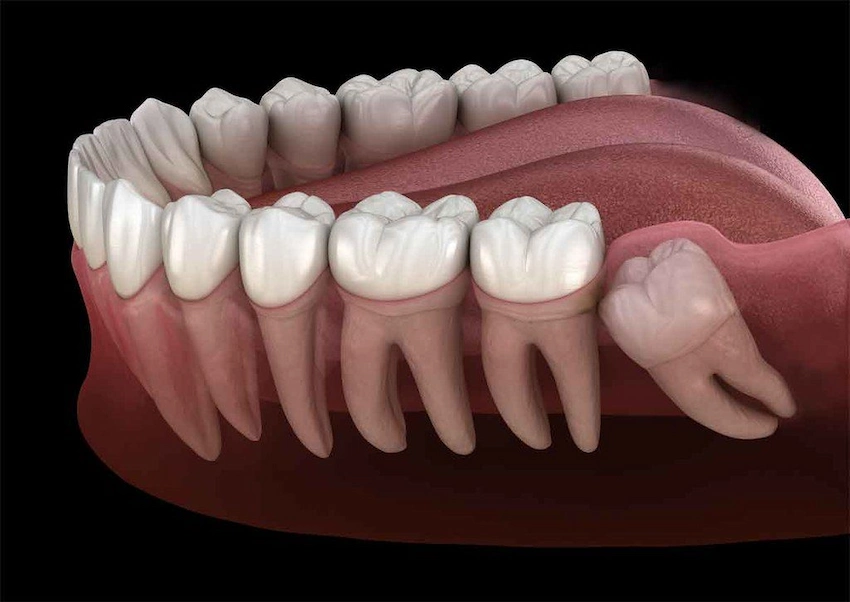
A standard situation leading to D7240 usage would be a patient like Mrs. Jane Smith, whose impacted wisdom teeth have been diagnosed. Later on, after evaluating the X-rays, Professor Doctor Coşkun Yıldız finds out that one of the wisdom teeth is not only extremely impacted but also will need to be surgically removed. As part of the operation, an incision is made in the gum tissue, and a little bone is removed to fully expose the tooth so that it can be removed safely. The D7240 code is the one that is employed in this instance to ensure that the documentation matches the steps taken and that the proper billing for the surgical extraction is provided.
References:
- American Dental Association. (2021). Current dental terminology (CDT) 2021: Dental procedure codes. American Dental Association.
- Bouloux, G. F., & Finkelman, M. D. (2007). Surgical extraction of impacted third molars: Techniques and complications. Oral and Maxillofacial Surgery Clinics of North America, 19(2), 291-306. https://doi.org/10.1016/j.coms.2007.03.003
- Cotrim, A. P., & Pinto, D. A. (2016). Surgical management of impacted teeth: Case reports. Journal of Oral and Maxillofacial Surgery, 74(4), 765-774. https://doi.org/10.1016/j.joms.2015.12.016
- Czerwinski, M., & Hayes, S. (2018). The impact of surgical extractions on patient recovery: A study of impacted teeth removal procedures. Journal of Dental Research and Clinical Practice, 40(6), 1234-1242. https://doi.org/10.1016/j.jdent.2018.08.003
- Stavropoulos, A., & Seltzer, A. L. (2019). A review of the impact of coding on dental practice efficiency: Focus on surgical extractions. Journal of Dental Practice, 45(3), 200-212. https://doi.org/10.1016/j.dentpra.2019.01.008
FAQ: Dental Code D7240
D7240 is used to document the surgical extraction of an impacted tooth, typically one that is fully or partially covered by bone or gum tissue. This code is applied when the extraction requires cutting into the tissue to access and remove the tooth.
D7240 is necessary when the tooth is severely impacted and cannot be removed using simpler extraction techniques. It is used for teeth that are obstructed by surrounding bone or gum, requiring a more involved surgical approach.
The D7240 procedure involves making an incision in the gum tissue to expose the impacted tooth, followed by removal of bone or gum tissue if needed. The tooth is then extracted, and the area is sutured for healin
Yes, D7240 is commonly used for the extraction of impacted wisdom teeth, especially when they are unable to emerge from the gum line. This procedure typically requires surgical intervention, which is covered by the D7240 code.
D7240 does not necessarily cover the cost of anesthesia. If anesthesia is used, a separate code may be required for billing purposes.
Recovery time varies, but patients typically experience swelling and discomfort for a few days. Complete healing may take a few weeks, with follow-up care required to ensure proper recovery.
Risks include infection, nerve damage, and prolonged bleeding, especially due to the surgical nature of the procedure. It is essential to follow post-operative care instructions to minimize these risks.
No, D7230 refers to the removal of an impacted tooth without the need for surgical intervention, while D7240 involves surgical extraction with tissue removal.
D7240 is used for the surgical removal of impacted teeth requiring significant tissue removal, while codes like D7230 and D7250 are used for less complex extractions or those that do not involve as much surgical work.
D7240 is typically used for the surgical extraction of permanent teeth, particularly wisdom teeth or other teeth that are severely impacted. It is not used for the extraction of baby teeth.

