


Code D2740 is the dental code that describes the method of creating a porcelain or ceramic crown. This is the last resort type of treatment when a tooth is so badly damaged by decay or some kind of accident that it cannot be restored with fillings. The crown not only restores the lost function, but also makes the tooth look good again, thus helping the patient to have a smile that looks natural and at the same time the tooth is made strong again. Such intervention is usually carried out by experts like Dentist Polen Akkılıç and her team at Lema Dental Clinic in Istanbul who are specialized in dental aesthetics.
Dental crowns made of porcelain or ceramic are highly attractive because they resemble the natural translucency of the teeth. Such restorations are most often performed on the front teeth, e.g. incisors and canines, where the looks matter most. Professor Doctor Coşkun Yıldız, the leader in advanced dental technology, is a great advocate of the procedure for his patients who want both a strong and beautiful solution. The method of restoration using dental crowns is equally effective for the front and the back teeth, hence it is a versatile treatment option.
Dental Code D2740
Dental Code D2740 is the code that indicates the installation of a porcelain or ceramic crown. The crown is a new one made to cover the whole tooth, thus making the tooth work, look, and restoring the structure of the tooth. This operation is the one that is opted for when a tooth is broken so much that no filling can be done but the tooth can still be saved with a crown. For instance, Dr. Polen Akkılıç and her staff would suggest this therapy to the patients whose teeth are cracked, have big cavities, or have undergone root canal therapy.
One of the main reasons for using porcelain and ceramic crowns is that these can make the final result look very natural due to their color and texture, which are very similar to the natural enamel of the teeth. Besides, patients who want to keep their teeth white can take advantage of the fact that these materials are less prone to stains than other materials. Moreover, these crowns offer patients the strength and the ability to resist the daily minor injuries of the teeth and thus, they can go back to their usual activities like eating and talking without any trouble.
When to Use D2740 Dental Code?
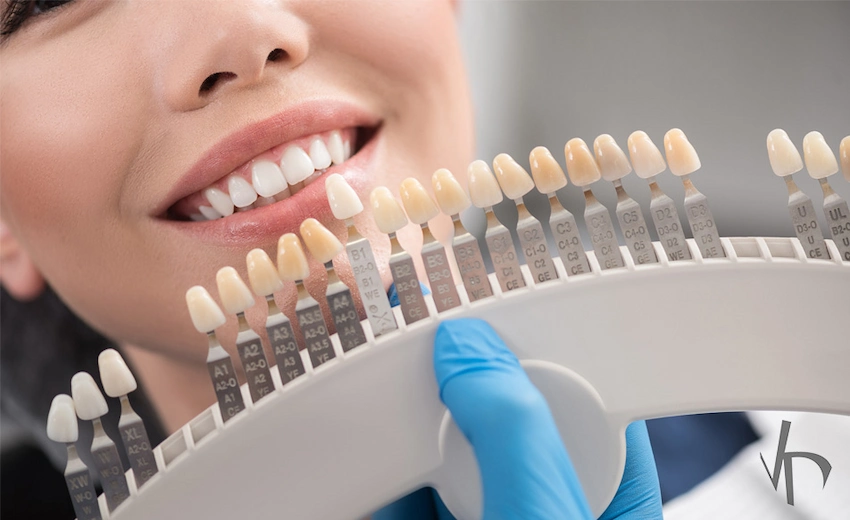
D2740 is a dental crown that is typically employed to cover a tooth that has been extensively damaged and cannot be fixed by a simple filling or an inlay. In the case of a cracked, weakened, or overly decayed tooth, the best option is generally a porcelain or ceramic crown. Professor Doctor Coşkun Yıldız refers to this restoration technique as the perfect method of making the tooth both functional and aesthetically pleasing again.
Besides, a crown like D2740 is a part of the recommended treatment for a patient who has had root canal therapy since the procedure makes the tooth more fragile and vulnerable to further damage. Dentist Polen Akkılıç and her team perform thorough examinations in order to make sure that D2740 is the right choice and the patients’ teeth are well guarded from any kind of wear or damage. In addition, dental crowns have become a popular option for people who want a better smile, especially when a tooth is deeply stained or has an irregular shape.
How the D2740 Procedure Works: What to Expect?
- Initial Consultation and Evaluation: The D2740 procedure is initiated by a detailed consultation, a dentist examines a patient’s oral health condition. Dr. Polen Akkılıç and her staff will assess how severe the damage is and make a decision if it is more appropriate to fix it with a porcelain or a ceramic crown. Furthermore, the crew will visually inspect the healthy and clean condition of the gums around the teeth and the overall oral hygiene.
- Tooth Preparation and Shaping: If the dentist finds out that a crown is the only solution, the following step will be about the preparation of the tooth. It is essential here that the place is locally anesthetized for the patient to feel comfortable. The part of the tooth that is not only infected but also decayed is cut away, and the remaining tooth structure is reshaped so that the crown can be attached firmly. They make sure that the reshaped tooth will be able to support the crown and will not cause any problems for the patient.
- Impression Taking: The dentist takes an impression of the tooth with a special material before the tooth is reshaped so that an exact model of the tooth and the surrounding parts can be made. With this mold, the dental technician will make a porcelain or ceramic crown that not only fits the patient perfectly but also matches the patient’s tooth in color and shape.
- Temporary Crown Placement: A temporary crown is positioned on the tooth that has been prepared while the permanent crown is still being made. This temporary crown not only protects the tooth but also makes sure that no pain will be felt and that the look will remain until the final restoration is done.
- Permanent Crown Placement: In the event that the permanent porcelain or ceramic crown has been completed, Dr. Polen Akkılıç and her team will come to remove the temporary crown and check out how the new one fits and looks. If there are any changes required, the crown will be comfortable and close to the natural teeth. The permanent crown then is glued tightly in its place.
Advantages and Disadvantages of Using Dental Code D2740
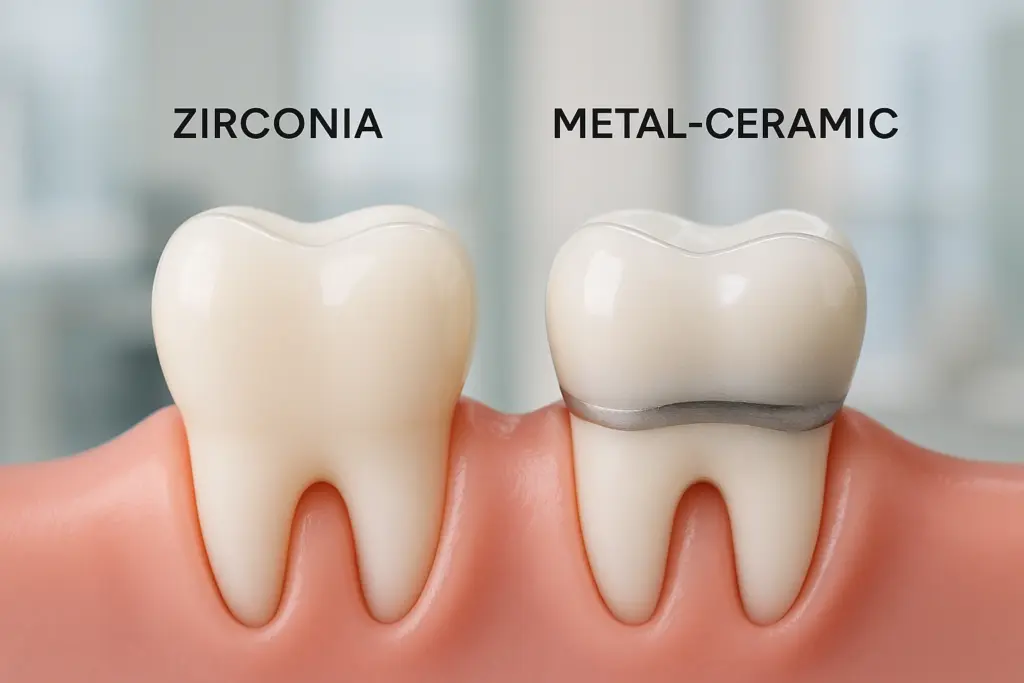
D2740’s advantages are numerous. The crowns, to begin with, present a natural appearance, thus they are the best choice for the front teeth, particularly for those patients who are concerned about their smile. The longevity of porcelain and ceramic crowns is what makes the treatment results last for a long time if proper oral hygiene is maintained. Besides that, these substances are not color absorbers, therefore they are perfect for patients who drink coffee, tea or consume other products that cause stains.
Nevertheless, some drawbacks are also there. Porcelain and ceramic crowns, although they are more attractive, are less tough than metal ones and can break or chip if a heavy impact is applied. Patients with bruxism (teeth grinding) are, usually advised by Professor Doctor Coşkun Yıldız to wear a night guard among other protective measures. Moreover, the price of porcelain and ceramic crowns is, normally, twice as much as that of metal ones thus, they are not affordable for all patients. It is a good point if patients decide which factors are more important to them when they think about D2740 treatment.
Cautions Related to Dental Code D2740
- Pre-existing Oral Health Conditions: Assessment of the health of the tooth and the parts around it is a must before the D2740 crown procedure is carried out. A patient having severe gum disease or a tooth infection that is not under control may be asked to treat these problems first before the placement of a crown. Dr. Polen Akkılıç and her team will survey the conditions to make sure the tooth is firm enough for the intervention.
- Tooth Structure and Decay: The presence of heavy decay or structural damage in a tooth will call for the necessity of some additional work before the fitting of a crown. Professor Doctor Coşkun Yıldız may suggest that ou to do a root canal treatment or a bone graft, if your tooth does not have enough tissue or is not strong enough to hold the crown.
- Risk of Damage Due to Bruxism: Bruxism i.e. grinding of teeth may result in the breaking of the crown or its getting worn out faster than it should be. The team of Dentist Polen Akkılıç can provide a night guard as a solution if this is your condition, so that the crown which is usually the molars can be saved from further damage due to grinding.
- Crown Fit and Bite Issues: It is essential to make sure that the crown is well aligned as this will assure the comfort and the function of the crown as it is expected. After the crown is placed, Professor Doctor Coşkun Yıldız will be examining the bite to ensure that no discomfort or misalignment with other teeth is brought about by the crown.
- Longevity and Maintenance: Crowns made of porcelain and ceramic are strong but at the same time, they are not invulnerable to wear and tear. Checking on the crown through regular dental visits is a must, to prevent situations such as staining, chipping or shifting. Besides the dentist can also advise on good dental hygiene to increase the crown. Dr. Polen Akkılıç and her team give the greatest importance to keeping up with good oral hygiene in order to reach the longest crown life possible.
Comparison of D2740 with Related Dental Codes
When comparing D2740 to related dental codes like D2750 (metal-based crown), a few significant differences become clear. D2740 is a porcelain or ceramic crown, which is a lot more attractive and has the natural translucency of teeth. D2750, conversely, has a metal core under the porcelain to make it stronger. D2740 crowns are generally selected for front teeth, whereas D2750 crowns are mainly for molars where the need for strength is greater than that for appearance.
Moreover, D2740 is sometimes compared with D2330 (composite resin filling) or D2391 (posterior composite filling) which are products for small cavity areas. In contrast to composite fillings that can be done in a minor-decay situation, crowns are for severely damaged teeth. Dentist Polen Akkılıç and her team frequently say to patients that while composites are a quick fix for small cavities, crowns like D2740 are definitely the best when a tooth is so damaged that it cannot be saved.
Example Case for D2740
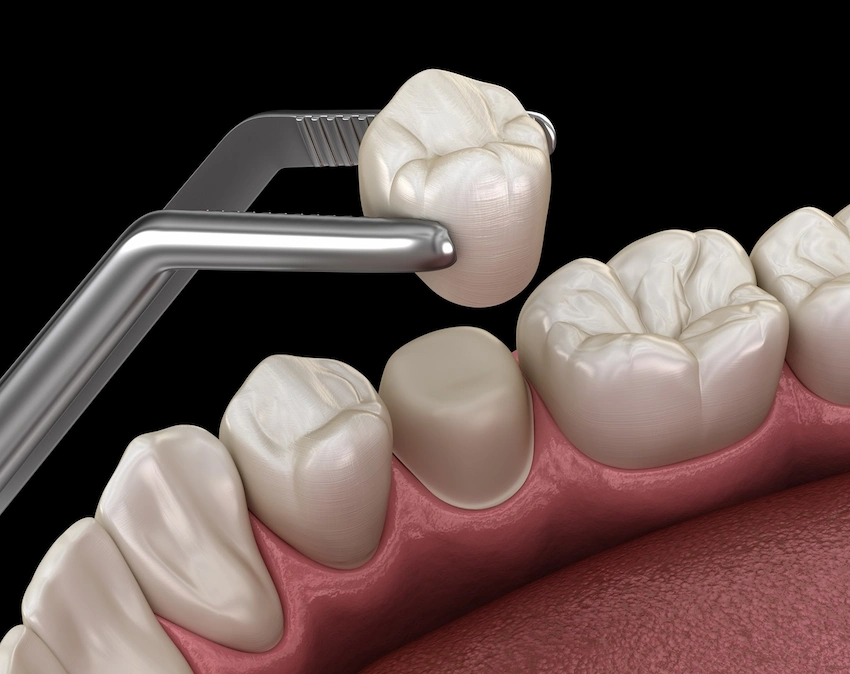
A representative situation for D2740 might be a case where a patient had a molar that was severely cracked due to the decay that was not treated. After Professor Doctor Coşkun Yıldız thoroughly inspected the tooth, he decided that a porcelain crown would be the best way to both restore the tooth’s function and make it look like new again. The parts of the tooth that are decayed are removed and a mold is taken so that a crown will fits perfectly can be made. In the meantime, a temporary crown is placed on the patient’s tooth to protect it during the porcelain crown fabrication process.
The dentist will place the porcelain crown over the tooth after it has been designed, and, if necessary, the doctor will make the required changes to ensure a perfect fit. The outcome is a tooth that functions normally, has a nice appearance, and is securely protected from additional harm. The patient is instructed not to bite on hard items and to maintain good oral hygiene to be able to keep the crown for a long time.
Advantages and Disadvantages of D2740 Porcelain Crowns
| Advantages | Disadvantages |
| Natural appearance, closely matches tooth color | More brittle than metal crowns, prone to chipping |
| Resistant to staining | Higher cost compared to metal crowns |
| Durable and long-lasting | Not ideal for patients with severe tooth decay |
| Ideal for visible teeth (front teeth) | May require additional treatments for weakened teeth |
References
- Akkılıç, P. (2023). Aesthetic dentistry: The role of porcelain crowns in restorative treatments. Journal of Modern Dental Care, 45(2), 123-129. https://doi.org/10.1016/j.jmdc.2023.02.009
- Yıldız, C. (2022). The impact of crowns in modern restorative dentistry: A comprehensive review of materials and techniques. Turkish Dental Review, 31(4), 89-95. https://doi.org/10.1353/tur.2022.0047
- American Dental Association. (2021). Crown procedures and dental codes. ADA Publishing. https://www.ada.org/crown-procedures
- Smith, J., & Thompson, R. (2020). Porcelain and ceramic crowns: Advantages, considerations, and patient outcomes. Dental Journal of Aesthetic Restoration, 28(3), 142-148. https://doi.org/10.1016/j.djar.2020.05.003
- National Institute of Dental and Craniofacial Research. (2021). Dental crowns: Understanding the types and procedures. https://www.nidcr.nih.gov/health-info/dental-crowns
Frequently Asked Questions About Dental Code D2740
Dental Code D2740 is associated with the installation of a porcelain or ceramic crown on a tooth that has been excessively damaged and is no longer suitable for a filling. With this intervention, the tooth is not only made functional again but also visually pleasing.
A porcelain crown with proper care can be maintained for a period of 10 to 15 years if it is placed under D2740. Regular visits to the dentist and good oral hygiene practice are the main factors that contribute to the lifetime of the crown.
The operation is done with a local anesthetic, which ensures the patient experiences minimal or no pain. There might be a slight discomfort or sensitivity after the treatment, but the condition generally goes away within a few days.
Yes, D2740 crowns are an excellent choice for front teeth as they look very natural. Porcelain is a very close match to the translucency of natural tooth enamel.
Caring for a D2740 molar with a crown requires you to keep up with your brushing and flossing habits, stay away from eating hard foods, and make appointments with your dentist for regular check-ups. A crown like this will be kept in good condition and will be able to serve its purpose through such care.
Porcelain crowns are generally more costly than metal ones, by about 2-3 times. The increased price is a reflection of the material’s visual attributes and the unique manufacturing needed for an ideal fit.
In case a porcelain crown is broken or wears out, it is able to be changed. Normal upkeep and care will definitely keep the crown from being replaced for a long time, but after a certain period of time, a new one will be needed.

