


Are there any white, hard spots on your teeth that brushing does not remove? These can be calcifications on teeth that can be a dental health problem if allowed to develop. But what exactly is dental calcification, and is it the same as tartar? Is it harmful? Most importantly, how can you treat or even prevent it?
This complete guide will help you understand what tooth calcification is and how to treat it.
What Is Tooth Calcification?
Tooth calcification is when the deposition or accumulation of calcium salts beyond normal levels occurs on or into the tooth structure. The main ways it can be caused are:
- External calcification: Known as dental calculus or tartar as well, it is the result of a non-living community of bacteria that has chemically bonded to the minerals of saliva on the tooth surface.
- Internal calcification: The majority of cases of internal calcification are pulp calcification due to trauma or caries, and therefore, the process of the pulp being progressively replaced by dentin is called pulp canal obliteration or dentin calcification.
The presence of calcium is the only similarity between them; otherwise, they are different in terms of origin, severity, and treatment.
What Causes Calcification on Teeth?
The main causes of tooth calcification are the ones listed below.
- Bad oral hygiene: When plaque is not removed, calcareous deposits are formed.
- Too many minerals in the saliva: The condition may contribute to the formation of tartar in large amounts.
- Oral injury: The pulp may shrink and get filled with calcium over time.
- Aging: One of the factors leading to internal calcifications is natural aging.
- Heredity: The people who have the most deposits of calcium on teeth are probably the ones affected by the teeth on a genetic basis.
- Chronic inflammation or decay: If the inflammation becomes chronic, then calcification will be the only way for the body to solve the matter.
Signs You May Have Tooth Calcification
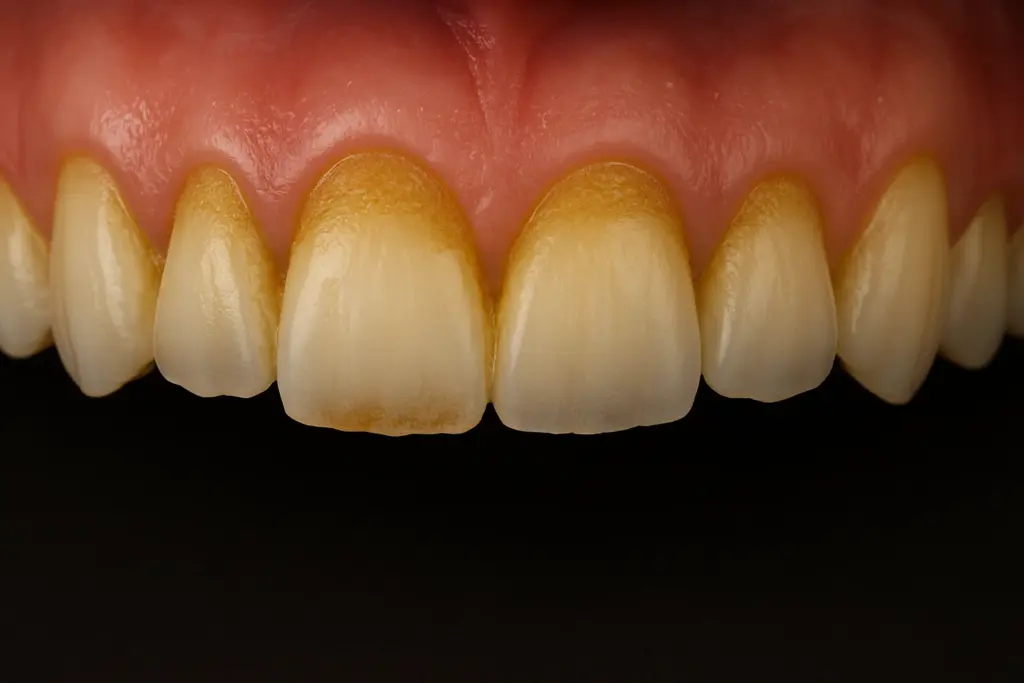
The symptoms can be different in various forms of the disease:
For External (Surface) Calcification:
- Hard, yellow or white deposits near the gumline
- The teeth may have a rough texture due to the deposits on them.
- The mouth may have bad breath or produce a bad taste
- Gum irritation or recession
For Internal Calcification:
- Tooth discoloration (often yellow or grey)
- Reduced tooth sensitivity.
- Problems encountered in root canal surgery (if it happens)
Is Tooth Calcification Dangerous?
Mild calcification is not always a reason to worry. However, it is still capable of a number of serious problems if left unattended:
- Gum disease: Tartar buildup irritates the gums and can lead to gingivitis or periodontitis.
- Tooth decay: The hard deposits provide the bacteria with a shelter and raise the possibility of the formation of cavities.
- The treatment of dental issues becomes complicated: The presence of internal calcification may render the root canal process unfeasible or may only be carried out with the assistance of special devices.
How to Treat Calcification on Teeth
1. Professional Dental Cleaning (Scaling)
Surface calcification treatment is usually professional scaling and polishing. Dentists, with the use of ultrasonic instruments or manual scalers, remove the deposits that have been solidified both above and below the gumline.
💡 This is the most efficient and safe method to eliminate tartar that is not accessible by brushing.
2. Root Planing (Deep Cleaning)
In a situation where tartar has caused gum inflammation, a deep cleaning will be necessary to smooth the tooth roots and allow the gums to heal correctly.
3. Root Canal Treatment
The only solution for internal calcification of the pulp, infected or affected, is a root canal. Nevertheless, if the canal is completely calcified, advanced endodontic procedures like CBCT scanning or microscopic surgery might be needed.
4. Teeth Whitening or Veneers
Typically, the discoloration of internal calcification is not reversible by bleaching. Hence, dental veneers or cosmetic crowns can give back a brilliant and more uniform smile.
5. Regular Maintenance and Follow-Up
Calcification can come back even after treatment. Besides this, strong oral hygiene habits and regular dental check-ups every six months are the main prevention methods.
How to Prevent Calcification on Teeth
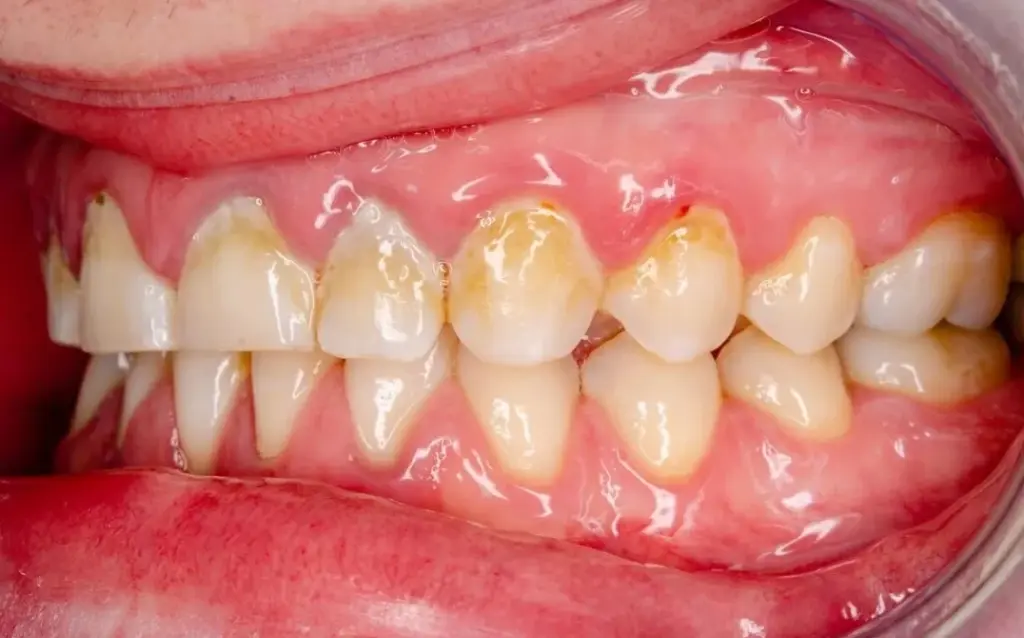
Here are the main tips that will keep calcium from building up:
- Brush with fluoride toothpaste twice a day
- For better removal of plaque, use an electric toothbrush
- Floss every day to ensure the spaces between teeth are cleaned
- Use a tartar control or antibacterial mouthwash.
- Prevent smoking and the consumption of sugary foods.
- Have your teeth professionally cleaned and checked regularly.
Cosmetic Dental Treatments for Calcified Teeth at Lema Dental Clinic
At Lema Dental Clinic in Istanbul, we are proficient in both medical and aesthetic methods for the treatment of calcified and discolored teeth. The great news is that with our skillful team, we offer you a solution for:
- Deep cleaning and polishing of teeth
- Root canal treatment without pain aided by digital imaging
- Dental veneers and Hollywood Smile procedures
- Digitally designed smile for comprehensive smile transformations
Lema Dental Clinic, with cutting-edge technology and international standard dental specialists does not only solves your dental problem but also gives you back your smile that makes you confident.
Final Thoughts
Tooth calcification is a mere cosmetic issue; however, it could be an indication of other dental problems. If it is a tartar that has bonded with the surface of the tooth or a deposit of minerals inside the tooth, the prognosis and treatment in the early stages are important. Through proper treatment, you can get rid of calcification, stop new deposits from forming and have a beautiful and healthy smile.
At Lema Dental Clinic in Istanbul, not only provide the treatment of calcification but also rebuild the patients’ confidence. The professional dentist, state-of-the-art imaging technology, and individualized care enable us to provide you with efficient solutions that involve both the problem and the appearance of the calcified teeth through hygienic cleaning, endodontic therapy, and aesthetic veneers. The smile that you have been longing for will be on its way now.
FAQ: Calcification on Teeth
No, once plaque hardens into calculus, it cannot be removed with brushing alone and needs professional cleaning.
Surface calcification is essentially tartar, but internal calcification happens inside the tooth and is unrelated to plaque.
Surface stains might improve, but internal discoloration often requires veneers or cosmetic dental treatments.
Usually not in early stages, but it can lead to discomfort if it causes gum disease or interferes with root canal treatment.
Most dentists recommend scaling every 6 months, or more frequently if you’re prone to tartar buildup.

