


An overdenture is a removable denture supported by implants for better stability at a lower cost.
An overdenture is a type of removable dental prosthesis that is held in place or supported either by dental implants or, in certain cases, by the remaining natural teeth. Compared to the regular removable denture, it provides enhanced stability but requires fewer implants than many of the fixed full-arch implant solutions.
As such, overdentures can become a more affordable option for those patients who are looking for better retention without getting a full-implant restoration.
Actually, some studies have shown that an implant overdenture can lead to more comfort, a better bite, and overall, higher patient satisfaction than regular complete dentures.
Lema Dental Clinic’s Dentist Polen Akkılıç and Prof. Dr. Coşkun Yıldız could evaluate such factors as bone quality and condition of soft gums, bite, and treatment goals before recommending an overdenture or a fixed implant solution.
What Is The Role Of Dental Implants?

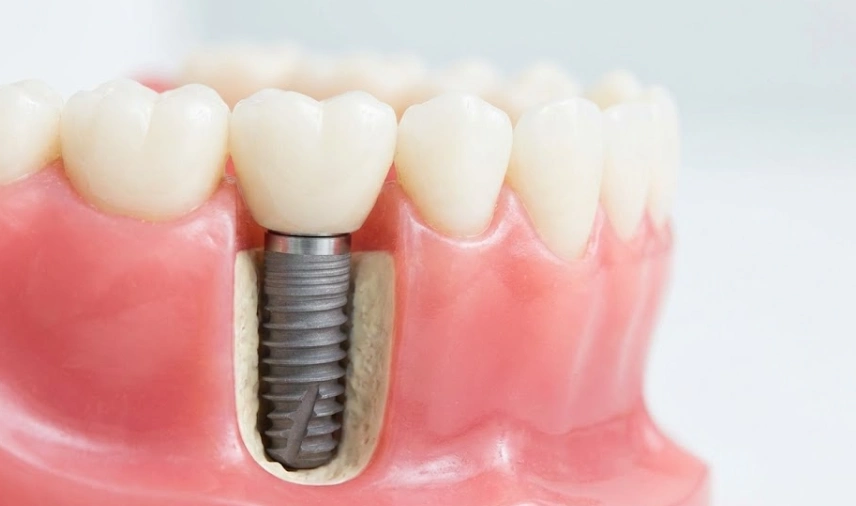
You can get dental implants in the shape of mini posts, which are surgically embedded within the bone of the jaw, to replace the roots of missing teeth. With the help of implants, you can get dental crowns, tooth bridges, fixed all-on-a-row implants, or even removable overdentures.
The healing and integration of the implant with the surrounding bone takes time.
This is referred to as the osseointegration process.
Factors like treatment planning, jaw anatomy, type of restoration, and condition of the bone will together determine the number of implants needed.
Main Advantage
The reason behind the popularity of dental implants is their ability to give strong foundation support for replacement teeth. As for the treatment plan, it is possible to enhance overall stability, chewing capability, and comfort as far as dental implants go.
Main advantages of dental implants are:
- Supporting denture teeth securely on a fixed or removable prosthesis;
- Restoring the chewing ability;
- Limited jawbone resorption;
- Giving a more secure biting sensation;
- Allowing fixed or removable restorations;
- Improving ability to speak and eat without fear;
Still, one major downside of such implants is that they require surgery, a recovery period, and long-term dental care.
So, What Do Overdentures Actually Mean?
An overdenture is basically a removable denture, but the difference here is that the denture has some parts that are connected to dental implants by means of special attachment components.
Besides their role in keeping the denture in the right position, the attachments also assist with the retention of the denture. The removal option to allow the user to clean the denture as desired is also retained at the same time.
For the lower jaw, the dentures that are overdentures are usually supported by a smaller number of implants, and the studies done have indicated that two-implant mandibular overdentures are among the better options that provide a stable bite, as well as more patient satisfaction than the conventional removable dentures.
Depending on the system selected, such as locator-style attachments, bars, and various other retention systems, the level of upkeep for the prosthesis involved could greatly vary.
Overdentures Advantages Explained
The major benefit that the patient gets with an overdenture is that he or she has the option of removal and still getting the denture quite secure to the bones of the jaw.
Compared with a conventionally supported, free-moving denture, a dental implant-supported overdenture gives the user more confidence. Even so, at the same time it uses fewer implants than most fixed full-arch restorations.
An assessment of the literature, which included removable implant overdentures and completely fixed, full-arch restorations, found that survival of the implants was about the same for each of the methods. But there are some benefits of the use of overdentures, such as the possibility that they might also be more economical. However, the replacement and repair of the attachments used over a long time could be a higher need and expense for the user.
Main Differences Between Implants and Overdentures
Remember that besides being supported by the mouth, implant-supported overdentures also require the use of dental implants. A real comparison is usually made between the implant-supported overdenture and the fixed implant-supported restoration.
| Feature | Implant Overdenture | Fixed Full-Arch Implant Restoration |
| Removable by patient | Yes | No |
| Implant support | Uses implants for retention and stability | Supported entirely by implants |
| Number of implants | Often fewer | Often more |
| Cleaning | Removed for daily cleaning | Cleaned while fixed in the mouth |
| Initial cost | Usually lower | Typically higher |
| Stability | High compared with conventional dentures | Very high |
| Maintenance | Attachments may need replacement or adjustment | Prosthetic maintenance may still be needed |
| Best for | Patients who want both stability and removability | Patients who prefer a fixed solution |
Who is a good candidate for each?
An overdenture may be suitable for patients who have lost all or most of their teeth and want the advantages of overdentures but with greater stability than conventional dentures.
It can also be useful in a situation where the patient still would prefer a removable solution to a fixed solution. Or the bone available could just be a simpler plan more suitable for implants.
A fixed full-arch restoration may be the better solution if the patient refuses a daily oral hygiene routine involving disassembling and cleaning the teeth or if his/her bone condition, health of the oral cavity, and other anatomical factors are conducive to that possibility.
At Lema Dental Clinic, Dentist Polen Akkılıç and Prof. Dr. Coşkun Yıldız can analyse the patient’s X-rays and 3D images to decide the number of implants needed and select the best prosthetic design.
The Recovery and Care Process
The surgical recovery period is about the same as that of other implant procedures. You could experience a little swelling and sensitivity following your implant surgery, but most of the time these resolve quite quickly.
Depending on the treatment protocol, the final overdenture will only be attached to the implants when the implants are fully integrated with the jawbone.
It is important to clean your teeth and mouth thoroughly every day. As advised by your dentist or specialist, st a removable overdenture can be cleaned separately,y but the gums, implant supports, and the region around them should also be kept as clean as possible.
In a way, maintenance is a part of the overdenture treatment. Components of the attachments that retain the prosthesis might get worn over time and might need an alteration or a new one altogether. The literature, in fact, indicates that more frequently than not,e maintenance is done at the level of the systems that hold the overdenture together.
Seeing your dentist in a regular way will help spot problems in advance,e such as those arising from wear of the attachment or inflammation , etc.
FAQ
Are overdentures better than implants?
Actually, overdentures are anchored by implants, so they are not direct substitutes. If you compare a fixed implant prosthesis with an overdenture, the latter might be easier to remove, cleaner, and also require fewer implants.
What are the disadvantages of having an overdenture?
You have to take off your overdentures to clean them. Also, their connectors might wear out and will probably eventually need repairs of their own, relining, or even replacement.
What kinds of overdentures are there?
There are two kinds: implants or remaining teeth-supported overdentures. Depending on therapeutic approach, implant-supported overdentures might be either attached to fixtures by individual mechanisms or by a bar system.
What’s the difference between a conventional denture and an implant overdenture?
A conventional denture sits on the gums, while an implant overdenture is connected to implants, which give better retention and stability in most cases.
How long does an overdenture last?
Besides that, lifespan varies depending on the material of the denture, condition of implants, occlusion, oral hygiene, and periodic check-ups.
References
- PubMed – Quality of Life and Satisfaction: Complete Dentures vs. Implant Overdentures
Systematic review and meta-analysis showing improved satisfaction, comfort, stability, and function with implant overdentures. - PubMed – Efficacy of Mandibular Two-Implant Overdentures
Meta-analysis evaluating patient satisfaction and oral health-related quality of life. - PubMed – Fixed vs. Removable Complete-Arch Implant Prostheses
Review comparing survival, maintenance, patient satisfaction, function, and cost-effectiveness. - PubMed – Prosthetic Maintenance Requirements for Implant-Supported Overdentures
Systematic review covering attachment wear and long-term maintenance. - PubMed – Economic Evaluation of Implant-Supported Overdentures
Systematic review evaluating the cost-effectiveness of overdenture treatment.

