


An aphthous ulcer is a small painful mouth sore that usually heals on its own within 1–2 weeks.
Ever experienced the pain of a mouth blister while having your meal? A small, burning area on your inner lips is quite typical. This area is a canker sore, otherwise known as an aphthous ulcer.
The sight may have seemed like a deep and vast hollow, but actually, it is just a very shallow sore on your soft mouth tissue. According to our clinical records, Lema Dental Clinic in Turkey sees so many such cases regularly. In fact, we mostly encounter this problem when people get stressed due to extensive travel.
What is an Aphthous Ulcer? Just a Scientific Explanation
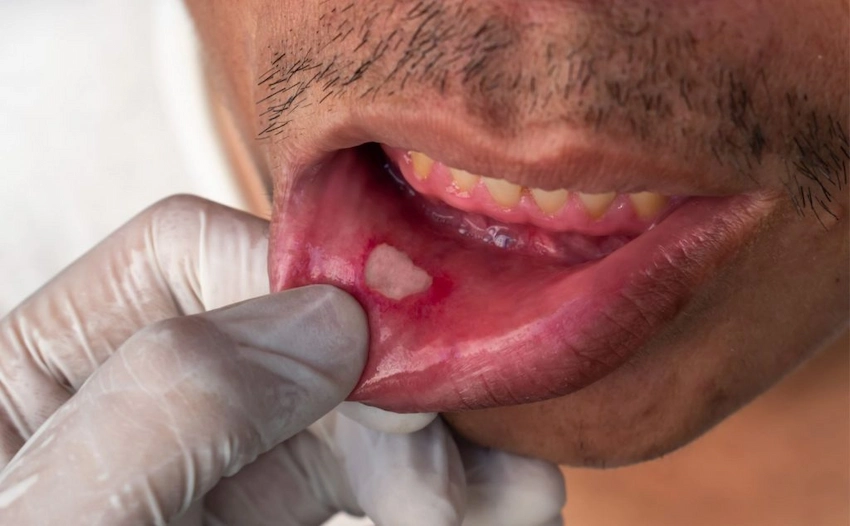
Imagine the soft layers inside your mouth being the delicate skin of an eggshell. It acts as a cover to the rest. An aphthous ulcer is just that little tear in the covering layer. The skin gets rubbed away,y and the sensitive nerves get exposed completely to the air, food, and liquid.
The Professor Doctor Coşkun Yıldız always says that even if the sores are painful, they are quite safe. There is absolutely no harm to one’s long-term health from a canker sore. There is no way for you to pass it on to someone else either. The sores often look like small, round white or yellow circles. A red swelling ring usually encircles them.
How is a Canker Sore Naturally Healed? Your Body in Action
What your body does to heal this painful spot is still a mystery to you. Your mouth gets more than enough blood from rich blood vessels. Besides that, the saliva from your mouth is a special healing agent on top of everything. For this reason, it’s the reason the mouth heals much faster than the skin of the arm.
In the clinic, when we follow the healing process,s it goes about this:
| Healing Phase | Patient Experience |
| 1. The Break | The pain is very high, and every time you eat, you get stung. |
| 2. Formation of a White Coating | The pain becomes a mild ache. |
| 3. Re-Epithelialization – Formation of the New Skin | Feeling only a light touch of discomfort, and you know it is healing. |
| 4. The Healed Stage or Period | Your mouth returns to full normality. No pain, no marks. |
Most Often Causes to Be on the Watch For
Patient education is a huge part of the services offered by Dentist Polen Akkılıç and her team. Most ulcers require a trigger to happen that is quite common.
- Involuntary damage: e.g., biting of the cheek or vigorous brushing of teeth.
- Stress and fatigue: high stress levels can diminish one’s immune system defense, thereby making one’s mouth defenseless.
- Vitamin Deficiency: Lack of vitamin B12, iron, and folate may lead to the breakdown of the mouth tissues.
- Consumption of Acids: Tomatoes, lemons, and spicy foods are known for irritating the soft skin lining the mouth easily.
Faster Healing at Lema Dental Clinic
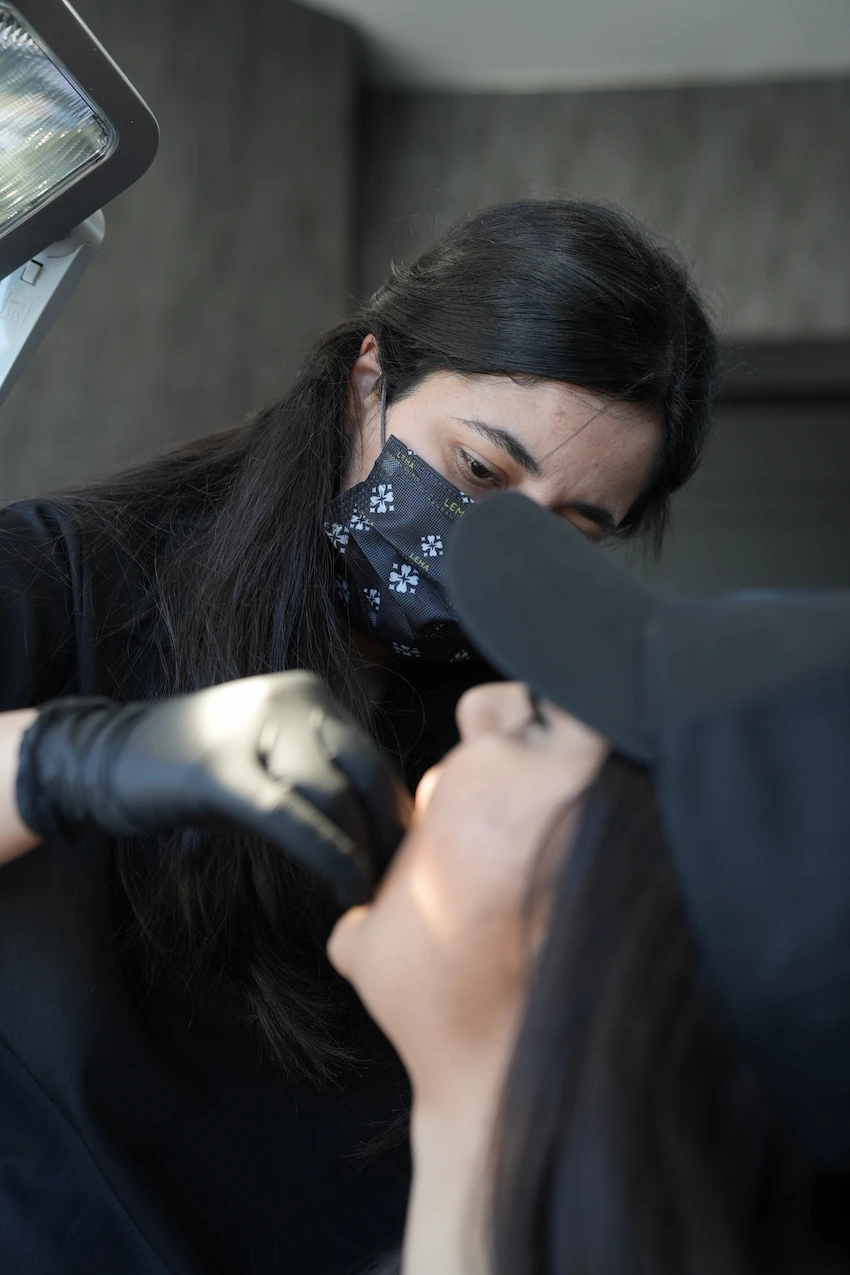
In case of a smaller ulcer, two weeks is usually a very short time for it to heal naturally with no external factors involved. However, there’s no need for one to stay in agony and endure such discomfort. We are totally against your patients having to endure pain, and that is why our main objective is total freedom from pain for tourists coming to Turkey for dental issues.
When our patients complain about having a very bad mouth ulcer, we go ahead and skip all the home remedies. Instead, we opt for using a specially produced oral tissue adhesive. This medical paste behaves similarly to a bandage but is waterproof and tough. It protects the area so it is not washed or eaten while covering it. It stops irritation and promotes healing. With the deeper ulcers, we use soft laser treatment from the dental clinic side, which is totallyharmlesss, and can cut the thealing timeby half.
Top 5 FAQs on the Subject
Doctor, is this a cold sore?
Not at all. Cold sores are caused by the virus, and they show mostly on the lips. Canker sores, on the other hand, are found inside the mouth and are non-viral; thus they are not contagious in any way.
Will washing the area with raw salt get me healed faster?
On the contrary, raw salt is something to avoid. You could use it through gentle saltwater gargling if needed, but it is a very good idea to put salt directly on a sore, as the result would be similar to pouring concentrated acid over a cut in the skin, which is not only extremely painful but also very damaging.
Is my toothpaste the cause of these ulcers?
Yes, it is a fact that regular toothpaste can trigger these. Many ordinary toothpastes contain strong foaming detergents to produce bubbles. These foaming agents may be responsible for stripping the protective layer in the mouth. We recommend that you use one of those toothpastes that have no soaps and are very gentle.
When is it reasonable to see concern in such sores?
The vast majority of people with the lesions will be perfectly recovered from their sores in a period of about 10 to 14 days. That is why a period of more than 3 weeks without any symptoms would warrant seeing the dentist. In fact, one needs to also be alarmed when the sores do not hurt at all.
I have a special occasion where I can’t bear the agony, doctor. Is there a remedy that acts swiftly?
Indeed. We can provide you either our highly effective tissue adhesive, which is a fast solution and lasts for quite a few days, or our soft dental laser treatment, which is absolutely harmless, besides being very quick and painless – about 3 minutes, and the pain is gone.
Academic References
- Akintoye, S. O., & Greenberg, M. S. (2014). Recurrent aphthous stomatitis. Dental Clinics of North America, 58(2), 281–297.
- Belenguer-Guallar, I., Jiménez-Soriano, Y., & Claramunt-Lozano, A. (2014). Treatment of recurrent aphthous stomatitis. A literature review. Journal of Clinical and Experimental Dentistry, 6(2), e168–e174.
- Cui, R. Z., Bruce, A. J., & Rogers, R. S. (2016). Recurrent aphthous stomatitis. Clinics in Dermatology, 34(4), 475–481.
- Preeti, L., Magesh, K., Rajkumar, K., & Karthik, R. (2011). Recurrent aphthous stomatitis. Journal of Oral and Maxillofacial Pathology, 15(3), 252–256.
- Slebioda, Z., Szponar, E., & Kowalla-Tyszkiewicz, A. (2014). Etiopathogenesis of recurrent aphthous stomatitis and the role of immunologic aspects: literature review. Archivum Immunologiae et Therapiae Experimentalis, 62(3), 205–215.

