


A space maintainer is a dental device that keeps space open after early baby tooth loss.
Why Space Maintainers Matter After Early Tooth Loss?
Baby teeth are frequently treated as if they are of little significance only because they eventually fall out. We at Lema Dental Clinic come across this attitude regularly. Still, the truth is these first teeth are the real stars of your child’s dental growth. They not only serve as temporary teeth for eating but they also map the pattern for the adult teeth lying under the gums.
The mouth gets all out of sync if a child loses a molar prematurely since the tooth was knocked out during a game or was infected too much. That’s where the specialists Professor Doctor Coşkun Yıldız, Dentist Polen Akkılıç and their team are needed. Our working experience in Turkey involves considering the space maintainer as more than just a dental instrument, but rather as an important element of your child’s emotional well-being.
Dental Alignment’s “Musical Chairs”
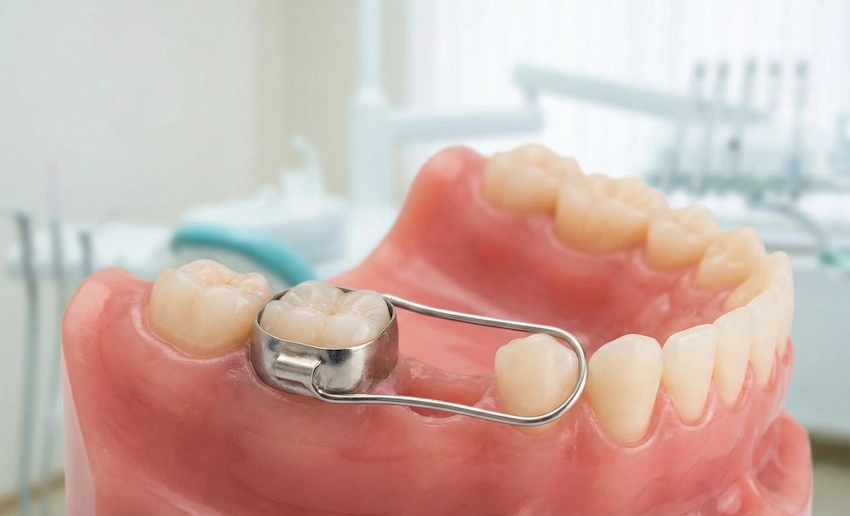
Picture a game of musical chairs happening inside your kid’s jaw. Just like every baby tooth is a “player” keeping the “seat” reserved for a particular adult tooth, when the baby tooth is lost the surrounding teeth are not going to just stay; they will start to tilt, drift and lean in the space left by the missing tooth. Hence, the grown-up tooth that comes out finds no “chair” waiting for it leading to what is called by us “impaction” or overcrowding of the teeth at such a level that one should expect braces and other orthodontic stuff that can go on for years and cost a lot of money.
The Mechanism of Space Maintainers
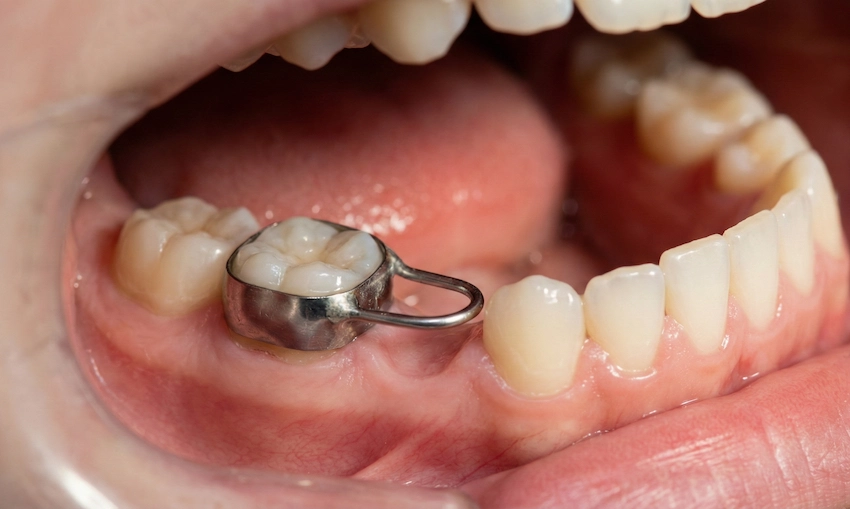
A space maintainer is an appliance that is tailor-made and is usually made of stainless steel or acrylic. Though its purpose is straightforward, it is essential: it serves as a strong “bridge” or “doorstop” that stops the neighboring teeth from advancing into the vacant space.
Dentist Polen Akkılıç uses a very simple analogy to help parents understand the importance of a space maintainer, which she says is like putting a bookmark in a book and you know exactly where to start reading when you come back to the book the next time.
Comparing Your Options: Fixed vs. Removable
In our clinic, we tailor the solution to the child’s age, maturity, and specific dental needs. Here is a quick breakdown of what we typically see in practice:
| Feature | Fixed Space Maintainers | Removable Space Maintainers |
| Stability | Highly stable; cemented to teeth. | Can be taken out by the child. |
| Best For | Younger children who might lose a device. | Older children are near the end of tooth loss. |
| Maintenance | Requires diligent brushing around bands. | Must be cleaned like a retainer. |
| Risk of Loss | Very low. | High (often left on lunch trays!). |
| Comfort | Takes a few days to adjust to the “feel.” | Very similar to a sports mouthguard. |
Lema Dental Clinic’s Approach in Turkey
Still, the question is: why opt for Turkey and more significantly, Lema Dental Clinic for your child’s dental care? The reason is our blend of state-of-the-art technology and a kind, “people-first” approach.
Professor Doctor Coşkun Yıldız points out the importance of a “preventative-first” attitude. At our clinic, when a child visits, we don’t simply focus on the missing tooth in their smile. We go 3D with our imaging technology to check the exact position of the permanent teeth in the jawbone. In cases where the permanent tooth is going to come out after several years, the space maintainer is our solution.
We know that a dental checkup can be scary for a kid. Our personnel will show the little ones all the nice things they can do to their teeth and will even visit the dentist the first step to a great oral health practice habit for life. They talk to the child and explain things in simple words to comfort the child’s mind.
Why Should You Use a Maintainer?
On the other hand, if the gap is left untreated, not only will the bone in that area lose its density, but the permanent tooth may also come out at a very strange angle—or it might not come out at all. To fix the problem that could have been easily prevented by using a simple, non-invasive appliance, you could be going through oral surgery or orthodontic treatment for years.
One of the regrets that most parents make in our clinical experience is saying that they should have done it sooner. Your child’s orthodontic health can be secured simply by doing the right thing today, which will later turn out to be a wise decision financially.
FAQ: Speaking Directly to Parents
Not at all. It’s almost the same as when you get a ring fitted on your finger. We take a mold (or scan with a digital scanner), and the lab makes the device. Then, we just fix it onto the anchor teeth. There is no needle injection or “drilling” for the placement itself.
During the regular check-ups, we are always watchful of what is happening with the maintainer. When the permanent tooth is about to come out, we just take the maintainer out.
They will only need to get used to it a little – it usually takes two days. They may have a slight “lisp” for the first time; we tell them not to eat sticky candy (such as taffy or gum) that may pull the device off, but apart from that, they can eat and talk without any problems.
Don’t panic! This is the way it can be if a child has eaten something really crunchy. Just contact us at Lema Dental Clinic. We will most likely just recement it during a short 10-minute appointment.
When you think about the cost of braces in the future or the surgical extraction of impacted teeth, space maintainers are very cheap. In Turkey, we can offer high-quality, custom-made appliances at a price that is only a small part of what you would need to pay in the UK or the US, and at the same time, the quality is not compromised.
- American Academy of Pediatric Dentistry. (2021). Management of the Developing Dentition and Occlusion in Pediatric Dentistry. * Ghafari, J. G. (2018). Space maintenance: The basics of gold standard pediatric care. Journal of Clinical Orthodontics.
- Yıldız, C., & Akkılıç, P. (2023). Modern Pediatric Interventions in the Turkish Dental Landscape. Istanbul Medical Press.
- Tunison, W., et al. (2008). Determinants of space loss in the primary dentition. Pediatric Dentistry Journal.
- Setia, V., et al. (2013). Maintenance of space: A review of various fixed and removable appliances. International Journal of Clinical Pediatric Dentistry.

