


Revisions ensure your ideal result.
It’s the first worry we hear most frequently in the dental office. You’re all set for the change, you are eager for the confidence, but a little voice inside your head asks: What if I spend the money, go to Turkey, and hate my reflection?
This fear is justified. A smile makeover is more than a dental treatment; it’s a change of self.
During our clinical practice at Lema Dental Clinic, we see that “not loving” a result is generally because one of two areas: a communication gap at the design phase, or the natural psychological reaction to seeing a sudden, dramatic change. The truth is that nowadays, cosmetic dentistry has completely stopped being a gamble. It is an engineering science where the result is calculated, predicted, and even confirmed with you well before we cement a single porcelain piece.
Why the “Shock” Factor Matters to Your Initial Reaction
Think about going from jet black to platinum blonde in a single appointment. Even if the hair color is flawless, your brain needs some time to accept the new person in the mirror. That’s what happens with teeth, too.
After placing a Hollywood Smile or veneers, we are just restoring the volume that is lost. So if you have been wearing down your teeth over the years, properly-sized veneers for the first time might feel “too big” or “too bulky” for the initial 72 hours. This is not a clinical mistake; it is sensory adaptation. Your lips and tongue have to locate the new landscape of your mouth.
So, here is a typical example of how this adjustment period goes:
- Speech Adaptation: You may notice the slightest lisp on “S” or “F” sounds at the beginning of the 2-3 days.
- Lip Posture: The lip line may change in its resting position due to the new involvement of tooth volume.
- Bite Sensation: The brain highly registers the new contact points between upper and lower teeth.
The Lema Protocol: When We Work to Keep Regret at Bay
We don’t depend on luck. To be sure of the happy ending, Dentist Polen Akkılıç and her aesthetic team are very careful to adhere to an established protocol that is aimed at leaving no surprises. Besides that, it is you who has the full say in the matter:
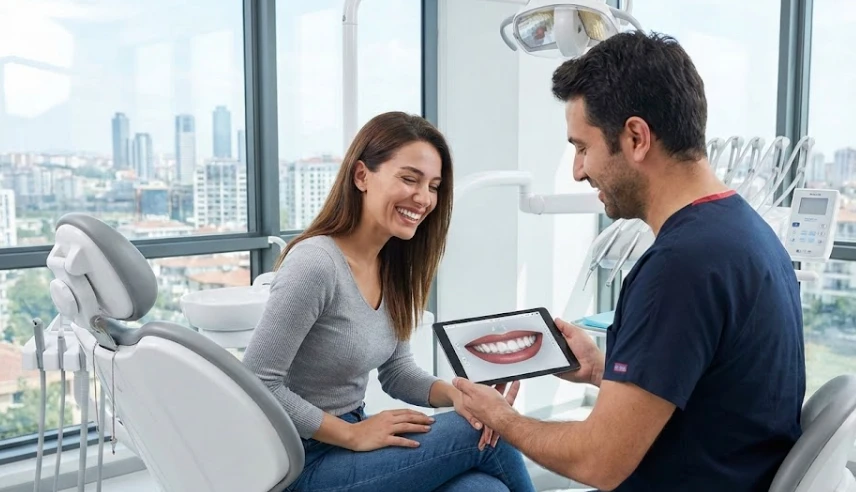
- Digital Smile Design (DSD): We photograph and scan the teeth in high resolution even before we touch them. We superimpose the possible tooth shapes and sizes over your face. We consider the symmetry of your eyes, the shape of your lips, and the gum line. The blueprint is shown to you on the screen.
- The “Mock-Up” (Trial Run): This is a radical change. After the approval of the digital design, a mock-up is made in resin and that exact design is placed right over your natural teeth. Now you can stand up, move to the mirror, smile, talk, and even take a selfie.
- Instant Adjustments: This is the time for you to say, “I want them shorter” or “Let’s make the edges softer.” Those modifications are made right away. We do not go ahead with the manufacture of the porcelain until the mock-up is signed off by you.
Finishing the Work of Art
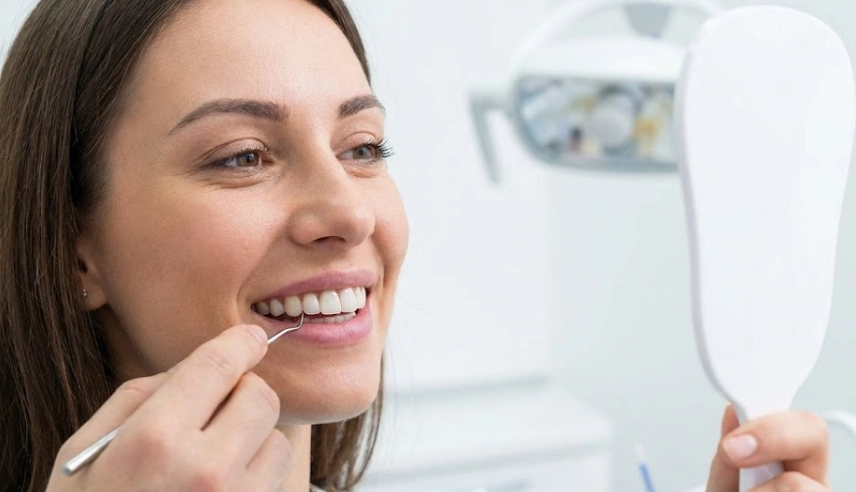
Understandably, you could ask for changes even after the final appointment when everything is fitted. Professor Doctor Coşkun Yıldız is always telling the patients of our clinic that beauty and function are combined.
Sometimes, a patient may dislike how a tooth looks because their bite feels “wrong.” Even if you already have permanent veneers and one side of a tooth seems too sharp or the other too squared, you can still get a little makeover:
- Contouring: To lessen a sharp corner, a careful, gentle polishing of porcelain can be done.
- Length Adjustment: If the edge of the tooth seems to dominate, it can be chipped back.
- Bite Calibration: We correct occlusion in such a way that your jaws can relax comfortably.
Adjusting Options at a Glance
Knowing when alterations can be made is a major mental relief. Here’s how we handle changes at the clinic during your trip to Turkey.
| Feature to Change | During Mock-Up Phase (Resin) | Try-In Phase (Before Bonding) | Post-Bonding (Permanent) |
| Tooth Length | Easy. Can cut back or add resin instantly. | Easy. Lab can shorten or reshape. | Moderate. Can shorten (contouring), but cannot add length. |
| Tooth Color | Easy. Can choose a different shade guide. | Moderate. Cement shade can slightly alter warmth. | Impossible. Color is baked in. Requires replacement. |
| Shape/Style | Total Control. Square, oval, or natural styles. | High Control. Can round corners or flatten surfaces. | Limited. Minor reshaping only. |
| Bite/Comfort | Estimated. Rough idea of bite feel. | Verified. Checked for high spots. | Refined. Final bite adjustments made here. |
Critical Questions on Cosmetic Satisfaction
Yes, to an extent. We can carefully shorten and contour porcelain veneers after they are bonded. We use diamond polishing burs to reshape the edge and re-glaze the surface so it remains smooth. However, we cannot make them longer once they are bonded—this is why the “try-in” session is so vital.
Color selection is the one thing that cannot be changed after bonding. If you choose a “Bleach White” (BL1) shade and later decide you wanted a natural ivory, the veneers would need to be replaced. This is why we check the shade in natural daylight and clinic light during your trial fitting in Turkey before finalizing the cementation.
It is rare for speech issues to be permanent. You may have a slight lisp for the first few days as your tongue adjusts to the new length of the teeth, specifically when making “S” and “F” sounds. If the issue persists beyond two weeks, it usually means the teeth are slightly too long or thick, and we can make minor adjustments to correct the airflow.
Absolutely. The “Try-In” appointment is specifically for this. We place the actual ceramic veneers on your teeth using a temporary try-in paste. It holds them in place so you can see the color, shape, and fit. If you don’t like something, we send it back to our on-site lab for correction before we glue them in permanently.
Our reputation depends on your happiness. We do not finalize treatment until you are satisfied. While medical procedures cannot legally guarantee a subjective “feeling,” our protocol ensures you approve every stage—design, mock-up, and try-in. If there is a technical defect or mismatch with the agreed design, we correct it.
- Coachman, C., & Calamita, M. (2012). Digital Smile Design: A Tool for Treatment Planning and Communication in Esthetic Dentistry. Quintessence of Dental Technology, 35, 103-111.
- Gurel, G. (2003). The Science and Art of Porcelain Laminate Veneers. Quintessence Publishing.
- Magne, P., & Belser, U. (2002). Bonded Porcelain Restorations in the Anterior Dentition: A Biomimetic Approach. Quintessence Publishing.
- Rufenacht, C. R. (2000). Principles of Esthetic Integration. Quintessence Publishing.
- Alothman, Y., & Bamasoud, M. S. (2018). The Success of Dental Veneers According to Preparation Design and Material Type. Open Access Macedonian Journal of Medical Sciences, 6(12), 2402–2408.

