


Recovery takes patience and discipline.
The leaflet is always identical: a shining model, a flawless smile, and a promise of “forever.” While dental implants are undoubtedly the gold standard of contemporary dentistry—basically the biological rebirth of a tooth—people usually don’t hear the real and raw story about the journey that leads to getting implants.
At Lema Dental Clinic in Turkey, we aim for happy patients who are happy because they are informed. We don’t want you to just “buy” a surgery; we want you to understand the biological investment you are making.
Professor Doctor Coşkun Yıldız is the first to say to the patients during the consultation stage, “To build a new house, we have to check the soil first.” Here is what most patients tell us they wish they had known before sitting in the chair.
1. It is the Bone that Decides Everything (Including the Price)
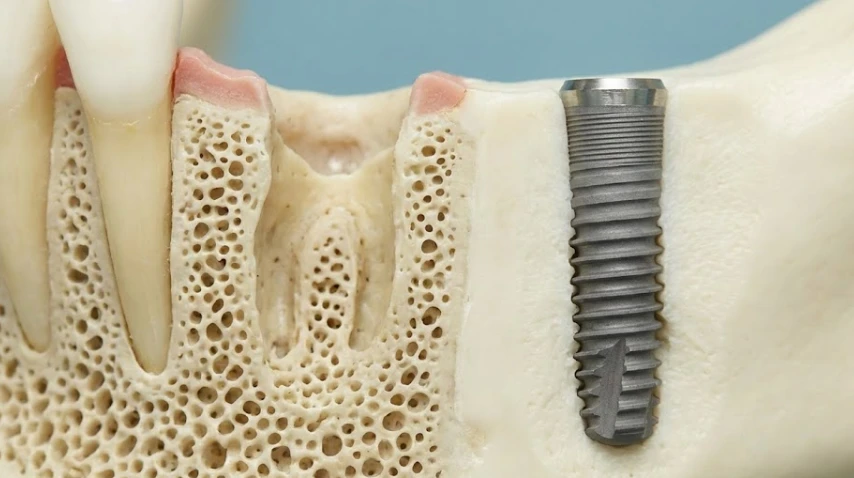
You may only see a gap in your teeth, but Dentist Polen Akkılıç will look at the bone underneath. When a tooth is lost for a long time, the jawbone becomes thinner and weaker because of disuse just like any other muscle if it is not exercised. Commonly, patients referred to be “site development” patients require that the implant placement can be done. A Sinus Lift or a bone graft is likely to be the method used.
A heavy painting requires a good hold where you put up the nail or screw. You cannot simply push a screw in a piece of drywall; you need a stud. If the “stud” (your bone) isn’t sturdy enough, the implant will fail. The time and money needed for this aren’t usually included in the original “package price” you see online.
2. “Teeth in a Day” is a Marketing Term, Not Always a Medical Reality
Ads for “Same Day Teeth” are everywhere. Also, yes, in Lema Dental Clinic, the immediate loading surgeries are implemented when you can walk out with temporary teeth the very day.
But biologically, looking at it from the inside, the titanium implant (the screw) should allow osseointegration, a biological process where new bone will form intimately around the implant. It takes 3 to 6 months.
Meanwhile, you will be on a “soft food diet.” No biting into apples. You will be carefully using that implant. The permanent, diamond-hard Zirconia teeth only come along after the fusion gets confirmed. Here being patient isn’t a virtue only; it’s a medical requirement.

3. You Can’t Get Tooth Decay, But a “Gum Disease” is Still Possible
This fallacy is rather hazardous. They usually think, “Because it’s a fake tooth, I don’t have to wash my mouth as much.” Based on our experience, it is just one of those relationships. While titanium is resistant to decay, peri-implant tissues may become diseased around them and get infected. This condition is called Peri-Implantitis. It is very destructive, and if left untreated, it can lead to the loosening of the implant due to the loss of bone. You will have to take even better care of your oral hygiene than you did with natural teeth. Water flossing is definitely among your best options.
4. The “Pink” Aesthetics Are as Important as the “White” Ones
Most people get hung up on the whitening of the teeth. But even if the crown is flawless, if your gums are not symmetrical or have receded, the crown will look unusual.
Professor Doctor Coşkun Yıldız very much cares about “soft tissue management.” At times, the natural look can be achieved only after a gum graft or after the temporary crown is used to first shape the gum. If you have a high smile line (when you smile, you show your gums), this situation has to be treated as an architectural work.
5. It Feels Different (At Least Initially)
Your natural teeth have ligaments that serve as shock absorbers. Additionally, they have nerves that inform you about the strength of your bite. Implants, on the other hand, do not have ligaments or nerves. Implants are therefore hard.
During the first few months, due to a lack of “proprioception” (sensory feedback) you may inadvertently bite your cheek or clack teeth together. Your brain will eventually get used to this; however, the sensation of chewing on a rigid anchor is very much different from that of a natural tooth.
Expectations vs. Clinical Reality
| Expectation | Clinical Reality at Lema Dental | Time Impact |
| “I’ll eat steak immediately.” | Soft diet is mandatory for 3-6 months to ensure bone fusion. | High |
| “It’s a one-time surgery.” | Often involves two stages: Placement, then Uncovering/Prosthesis. | Medium |
| “I don’t need to floss.” | Water flossing is critical to prevent peri-implantitis. | Daily |
| “They last forever automatically.” | They last forever only with maintenance and night guards. | Lifetime |
Critical Patient Insights on Implant Realities
You cannot build a blueprint without a map. A panoramic X-ray is 2D; it doesn’t show the width of your bone. We use 3D Tomography to measure bone volume. Without this, quoting a price is just guessing.
Sometimes. During the healing phase, we might place a flat “healing cap” that peeks through the gum to shape the tissue. It looks like a small metal button. It is temporary and ensures your gum heals in a perfect circle for the final crown.
True “rejection” (an immune response) is incredibly rare because titanium is biocompatible. When implants fail, it is usually due to infection (bacteria) or overloading (biting too hard too soon), not an allergy.
We are working on living tissue. Bruising moves downward due to gravity—so you might see a bruise on your neck even if we worked on your upper jaw. This is normal and usually fades in 7 days.
Yes. Nicotine constricts blood vessels. Blood carries the oxygen and nutrients needed for the bone to fuse to the titanium. Smoking increases the failure rate by up to 20%. We strongly advise quitting at least weeks before your trip to Turkey.
- Buser, D., Janner, S. F., & Bornstein, M. M. (2019). Surgical Site Development in Implant Dentistry. Periodontology 2000, 80(1), 12-25.
- Schwarz, F., & Derks, J. (2020). Peri-implantitis: Causes, Diagnosis, and Treatment. Journal of Clinical Periodontology, 47(S22), 345-360.
- Esposito, M., Maghaireh, H., & Grusovin, M. G. (2018). Immediate Loading of Dental Implants: A Cochrane Systematic Review. Cochrane Database of Systematic Reviews, 10.
- Misch, C. E. (2015). Dental Implant Prosthetics (2nd ed.). Elsevier Mosby.
- Albrektsson, T., & Wennerberg, A. (2019). Oral Implant Surfaces: Part 1 – Review Focusing on Topographic and Chemical Properties. International Journal of Prosthodontics, 17(5), 536-543.

