


Infection spreads, risking tooth loss.
One moment, you are enjoying a glass of cold water and it immediately causes a sharp pain in your tooth. The pain then keeps coming back and the fourth step is unbearable, constant pain at night. But then, suddenly… the pain disappears. It is really tempting to believe that the problem has just vanished by itself, isn’t it?
At Lema Dental Clinic in Turkey, we are in contact with patients who were hesitant until the last moment. Their sicknesses are usually so far gone through surgical emergency that a simple toothache is the very last thing on their minds. According to Professor Doctor Coşkun Yıldız, a necessary root canal procedure is like a hidden fire in the house’s walls. You may not see the flames yet, but the whole house may be collapsing as the hours go by.
The Danger of “No Pain”
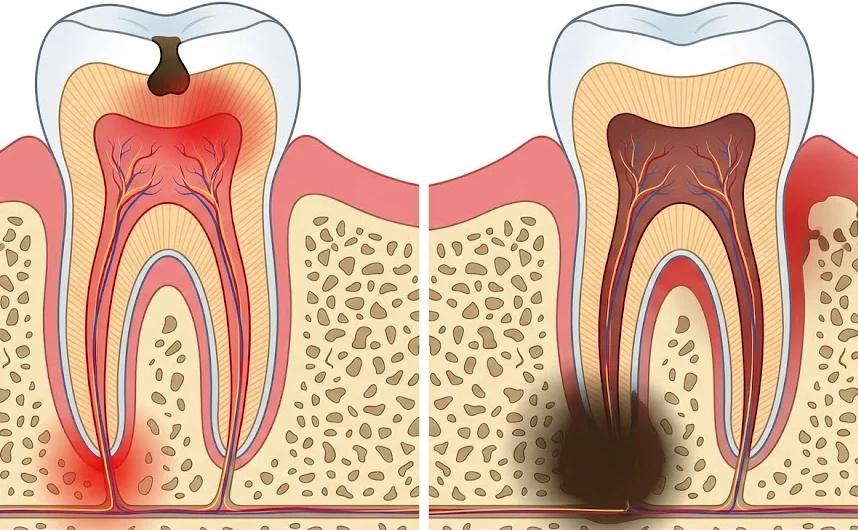
How come the biggest risk during a tooth infection is a phase when pain has just disappeared? It’s simply because the nerve tissues inside the tooth pulp chamber have been damaged and thus cannot send pain messages to the brain anymore.
Nonetheless, the bacteria that are responsible for killing the nerve are still quite alive. When there is no blood supply around to chemically neutralize the bacteria, they start to rapidly reproduce and extend their rods down to the root canals and through the root tip to the jawbone area. That is the place where local oral infection changes into general health hazard situation.
According to Dentist Polen Akkılıç and her team, they warn that once the infection passes the root tip, dental treatment changes from being a simple and quick dental procedure to a very complicated and extensive surgery.
The Domino Effect: From Abscess to Extraction
When you disregard the signs, the infection causes a build-up of pus in the form of a pocket around the root tip (an abscess). This, of course is not limited to the issue of dentistry only; it is a biological battle. The pressure that increases in the limited area where the abscess is located starts to break down your bone. (osteolysis). Here we can easily compare your jawbone to the load-bearing concrete of a multi-story building.
Just like water slowly erodes concrete, the infection dissolves the bone tissue surrounding the tooth until ultimately the tooth loses its support and becomes loose. At this stage, not only is it difficult to preserve the tooth, but in some cases, it can even be beyond saving.
The Cost of Waiting: A Clinical Timeline
Delaying treatment doesn’t just hurt your health; it hurts your wallet and your schedule. Here is the trajectory we typically observe in our clinic:
| Stage | Symptoms | Treatment Complexity | Prognosis |
| 1. Reversible Pulpitis | Sharp sensitivity to cold/sweet. | Simple Filling or Crown | Excellent (Vital Nerve) |
| 2. Irreversible Pulpitis | Lingering pain, heat sensitivity. | Standard Root Canal | Excellent (95% Success) |
| 3. Necrosis (Nerve Death) | Pain stops. No sensation. | Root Canal + Disinfection | Good (85-90% Success) |
| 4. Abscess Formation | Swelling, pimple on gum, fever. | Complex Root Canal / Surgery | Guarded (Risk of recurrence) |
| 5. Systemic Infection | Facial swelling, sepsis risk. | Extraction + Implant | Tooth Lost |
Why Patients in Turkey Stop Waiting
The main reason patients procrastinate is due to fear. They fear a “root canal” because it means a lot of pain. But let us consider the actual situation in modern dentistry.
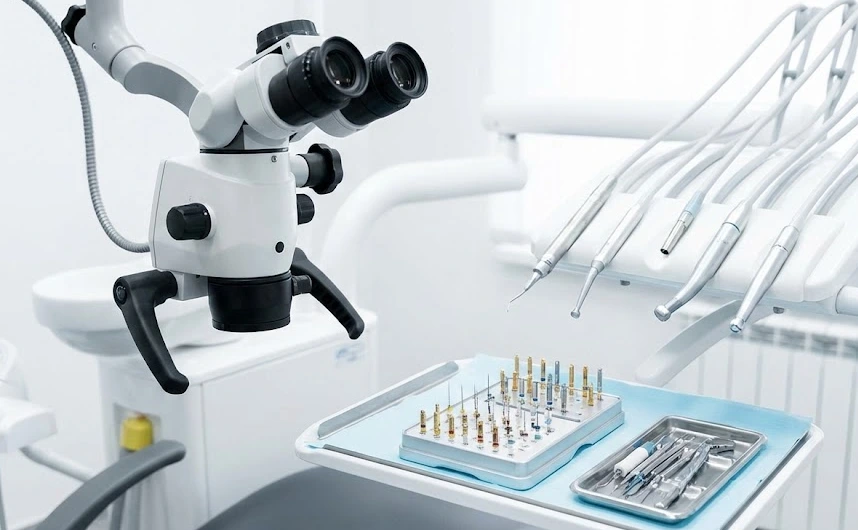
We at Lema Dental Clinic use new rotary tools and laser disinfection. The outcome is that the treatment is absolutely quiet and mostly without pain. So, the root canal is the way to stop your pain, not the root of your discomfort. Prof. Dr. Coşkun Yıldız makes sure that before you take a seat, the infection is under control and your anesthesia is deep enough.
If you postpone, it usually means that the final treatment will have to be more invasive. A conventional root canal will maintain your natural tooth, which is always biologically better than even the finest implant.
The Systemic Connection
First, you have to be aware that your mouth is not separate from your body. A dental infection that is not treated continuously releases bacteria into your blood. This ongoing immune stimulation has been associated with infections of the heart valves, problems with diabetes, and systemic inflammation. By postponing, you are not only risking a tooth, but you are also putting your whole immune system under pressure.
FAQ: Direct Insights from Our Doctors
This is the most dangerous myth. The pain stops because the nerve is dead, but the infection is now spreading into your jawbone. The ‘silence’ is actually the calm before a much bigger storm.
Antibiotics are like putting a lid on a boiling pot. They can temporarily reduce swelling, but they cannot reach the bacteria inside the dead tooth because there is no blood supply left to carry the medicine there. The physical removal of the infection is the only cure.
In our clinical experience, nothing functions quite like a natural tooth. It has its own shock-absorbing ligament. We always fight to save the natural tooth first. Implants are fantastic, but they are a ‘Plan B’ for when the tooth is truly unsalvageable.
It varies by patient, but once an abscess forms, bone loss accelerates. You might have weeks, or barely days, before facial swelling forces an emergency extraction. It is a gamble we never recommend taking.
With the anesthesia protocols we use at Lema Dental Clinic, you should feel no more discomfort than you would during a regular filling. The relief from the infection pressure is often immediate once the procedure begins.
- Siqueira Jr, J. F., & Rôças, I. N. (2008). Clinical implications and microbiology of bacterial persistence after treatment procedures. Journal of Endodontics, 34(11), 1291-1301.
- Nair, P. N. (2004). Pathogenesis of apical periodontitis and the causes of endodontic failures. Critical Reviews in Oral Biology & Medicine, 15(6), 348-381.
- Ingle, J. I., Bakland, L. K., & Baumgartner, J. C. (2008). Ingle’s Endodontics (6th ed.). BC Decker.
- Ricucci, D., & Siqueira Jr, J. F. (2010). Biofilms and apical periodontitis: Study of prevalence and association with clinical and histopathologic findings. Journal of Endodontics, 36(8), 1277-1288.
- American Association of Endodontists. (2011). Root Canal Safety. AAE Fact Sheet.

