


Understanding Aligners and Their Limitations
Teeth aligners are a type of dental treatment that can be found inLema Dental Clinic. They appeal to people because they are less visible than metal braces. The aligners are created to slowly shift the teeth into the correct position and hence, are a good choice for patients with mild or moderate orthodontic problems. In general, it appears that people opt for the use of these appliances, yet they can only work in certain situations. First of all, aligners cannot be used for any type of dental problem, more specifically, problems that need a more complex approach like those of bite disorders or severely misaligned teeth.
Dr. Polen Akkılıç and her team at Lema Dental Clinic point out that the patient has to do their part and the doctor has to plan well the progress in order to make the treatment with aligners successful. For the treatment to give the right results, the patient has to wear the appliances continuously for at least 20 to 22 hours per day. The situations that are incorrect due to the rotation, tooth loss, or a severe bite in which aligners cannot be used to correct may require resorting to traditional braces or other dental interventions.
What Orthodontic Problems Can Aligners Treat?
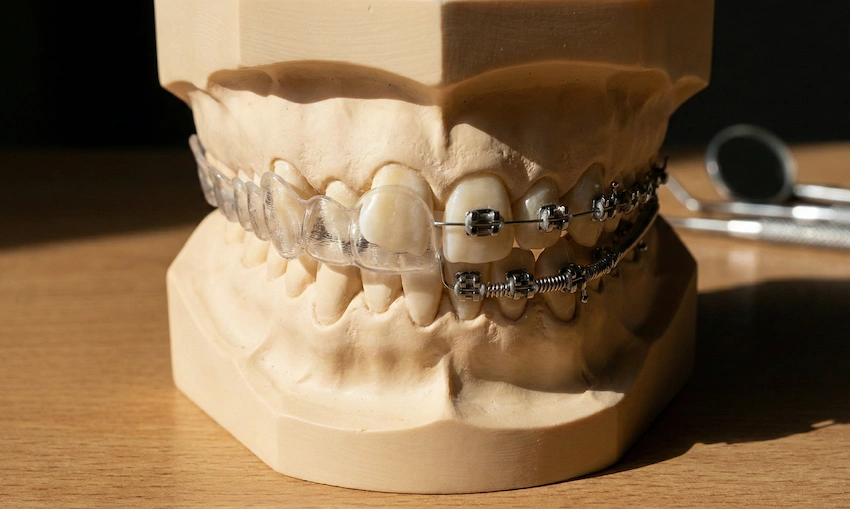
The application of dental aligners is a top one of the most efficient methods to fix dental problems of minor and moderate nature. Usually, Dr. Polen Akkılıç suggests the usage of aligners in the treatment of patients whose teeth are locally twisted, overlapped, or have slight spaces between them. Through these aligners, the patient will have the teeth slowly changed to their correct positions and so, they make an excellent choice for those who want a less visible way of treatment. The patients at Lema Dental Clinic can experience the discomfort and the exposure that come along with traditional braces but not the improvements in alignment.
In addition, aligners can be good enough to fix the problem if a patient’s overbite or underbite isn’t very serious. Those patients who want cosmetic improvements or slight changes in their bite can use aligners as a perfect alternative to invasive treatments. The main reasons why they are recommended for persons who have minor orthodontic needs are that they are easy to maintain, removable, and more comfortable than metal braces.
The Limitations of Aligners
Aligners are generally effective in solving various orthodontic problems; however, they have some limitations that patients should know before deciding to use them as a treatment. The limitations of aligners are as follows:
- Extreme Bite Problems: Aligners cannot be used by patients with extreme bite issues, such as a deep overbite, underbite, or crossbite. In general, these problems are solved with the help of traditional braces and, in some instances, surgery is performed to make the jaw and teeth straight again.
- Complicated Rotation of Teeth: Aligners may not work for teeth that are extremely rotated or even severely misaligned. In such a case traditional braces are recommended as they provide more force and control which is essential in the correction of the severely rotated teeth.
- Excessive Gap Between Teeth: Aligners can bridge the gap between teeth if it is slight or moderate; however, they might not be able to work efficiently if there are large spaces between teeth. Bigger spaces may be occupied with the help of additional orthodontic tools or procedures, for example, traditional braces.
- Severely Damaged or Decayed Teeth: Aligners are not the means to fix the teeth that are severely damaged or decayed. If a tooth is extremely worn out or missing, the only solution is restorative treatments such as crowns, fillings, or implants and then alignment can be addressed.
- Correction of Jaw with Limited Movement: Aligners can only help with the shifting of teeth, but the jaw cannot be repositioned in this way. In case of misaligned jaw surgical intervention may be suggested for correction as aligners do not have the capability of resolving jaw-related problems.
Serious Dental Problems That Aligners Cannot Fix
Aligners are not capable of solving serious dental issues such as an extremely misaligned bite, missing teeth, or extensively damaged teeth. Let me give you an example, patients with severely misaligned jaws or complicated bite problems such as deep overbite or underbite may not get the result of their teeth being straightened by aligners. Such problems require different kinds of treatments like traditional braces or even jaw surgery. Furthermore, patients with missing teeth may be the ones who need restorative treatments like implants or bridges first before they can be utilized effectively in the remaining teeth to be straightened.
Dr. Polen Akkılıç and her team will gladly assist and support patients in making this decision. They will be right there with you every step of the way. If necessary, restoration of dental work is also possible through such means as root canals, crowns, or dental implants in order to restore the original functionality and beauty of your teeth.
Which Teeth Are Not Suitable for Aligners?
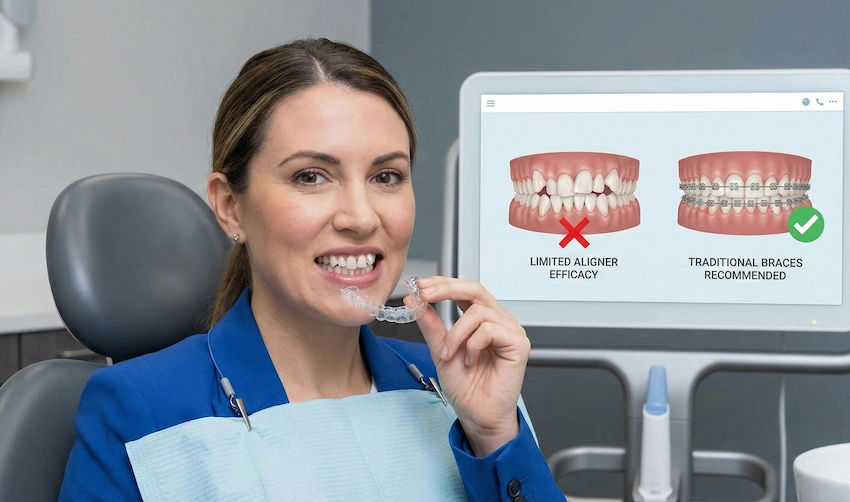
Not every dental structure is qualified to be corrected through the use of aligners. Several situations exist where teeth cannot be aligned by means of aligner technology. These are the kinds of teeth that cannot be treated with aligners:
- Rotated Teeth Beyond 20 Degrees: Rotation beyond 20 degrees of a tooth may result in ineffective movement by aligners. Such a tooth needs to be given more force to make it reach the correct position, thus it is suggested that traditional braces are used.
- Teeth with Significant Damage or Decay: A tooth that is terribly damaged or decayed may not be a candidate for aligner treatment. On top of that, the damaged teeth must be restored first (e.g., fillings, crowns), then the alignment process with the use of an aligner can be started as it is the only way they fit properly.
- The Extensively Restored Teeth (Crowns or Bridges): If a tooth has been excessively crowned, bridged, or otherwise restored, it may be unsuitable for simply correcting with aligners. Restoration interference causes aligner discomfort, which in turn causes ineffective results.
- Extreme Malpositioned Teeth: Teeth that are significantly out of place (e.g., teeth that are deeply impacted or severely misaligned) may not only be treated with traditional braces but surgery might be needed as well. The problem here usually is the need for complete/control of movement which cannot be done by aligners.
- Missing Teeth: Missing teeth cannot be fixed with the help of aligners. In the case of patients with missing teeth, treatment can start with the restorative options such as dental implants or bridges and later on, orthodontics with the use of aligners can follow.
Aligners’ Limitations in Treating Missing and Severely Damaged Teeth
Aligners are not the tools that can be used to fix missing or heavily damaged teeth. If the tooth is missing or overly damaged, there is no way that aligners can bring it back. Restorative treatments such as dental implants, crowns, or bridges will be the first step if the alignment is going to be taken care of later. Dr. Polen Akkılıç states that patients with missing teeth need treatment plans that cover both the aesthetic and the functional aspects of the problem along with possible solutions like dental implants or bridges to restore the teeth.
Moreover, the same goes for the cases of extremely worn or cracked teeth, which can even result in incomplete execution of the alignment process due to the insufficiency of the treatment. Restorative treatments for the repair of the teeth will also be necessary before the application of aligners for the alignment stage. The patients who have these problems and need to see a dentist for guidance on solutions are the ones who can benefit most from this information.
Aligners’ Limitations in Severe Bite Cases
When an individual suffers from severe bite problems, for instance, a very deep overbite or underbite, using aligners to treat them will not bring the expected effects. In most cases of severe bite issues, the problem lies in the misalignment of the upper and lower jaws and thus it is not possible to solve them by simply using aligners. In these instances, the use of traditional braces or the decision to have surgery performed might be the way one achieves the best possible results. Dr. Coşkun Yıldız, a highly qualified orthodontic professional, believes that aligners can only be used for minor bite adjustments and that they are not sufficient in the case of more complex bite misalignments.
People who suffer from severe bite problems might have to undergo both orthodontic and surgical treatments to solve their issues with tooth and jaw alignment properly. Besides Dr. Polen Akkılıç, Professor Dr. Coşkun Yıldız and the entire crew of Lema Dental Clinic are committed to working with every patient individually until the most suitable mode of treatment – whether it is aligners, braces, or surgery – is decided.
Why Are Jaw Problems Difficult to Correct with Aligners?
Jaw misaligned problems like a misaligned jaw or a temporomandibular joint (TMJ) disorder can’t be fixed by using aligners. Teeth can only be moved by aligners inside the jaw, so the jaw cannot be changed physically by them. Those who have a severely misaligned jaw or any kind of jaw-related problem may have to choose surgery as their only solution. Dr. Polen Akkılıç points out that the teeth can be made to look better with the help of aligners, but the jaw position cannot be changed with them, thus, they cannot be used for the treatment of jaw-related problems.
Jaw misalignment may first necessitate the resort to a mixture of surgery and orthodontic treatment to reposition the jaw. It can also be about the involvement of corrective jaw surgery or other specialized procedures. Patients are advised to have a thorough consultation with a specialist like Professor Dr. Coşkun Yıldız who will direct them towards the most suitable treatment plan for their condition.
Why Are Wide Spaces Between Teeth a Challenge for Aligners?
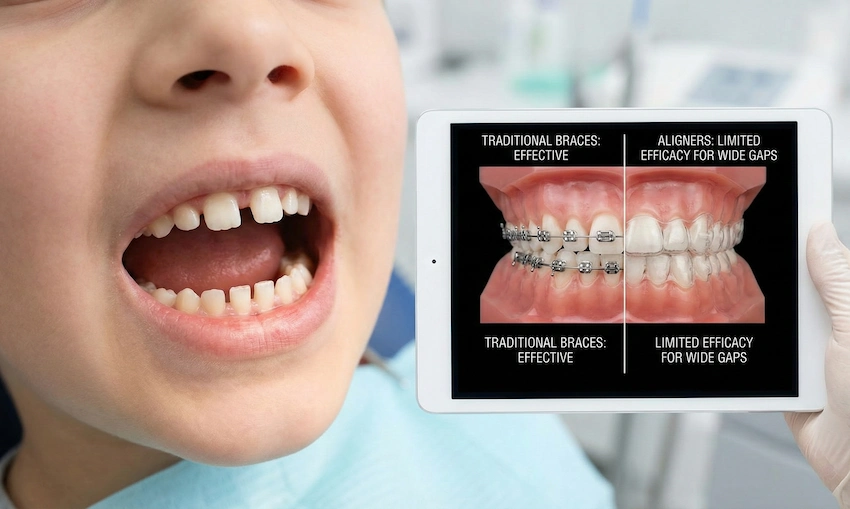
Generally, aligners are the most common devices to close small and moderate spaces between teeth, but they might be unable to do so if the gaps are large. If the spaces are extremely wide, aligners may not be able to produce enough force to move the teeth to the right place. The use of conventional braces can therefore be a way out in such a case, thus allowing the patient to close the gaps gradually. Dr. Polen Akkılıç suggests that patients with large gaps between their teeth first consult a professional who could help them decide wisely whether aligners or other orthodontic treatments would be more effective.
Sometimes the patients may choose cosmetic dental procedures such as bonding or veneers for the purpose of filling the gaps between their teeth and enhancing their smile. Wearing aligners is a treatment that suits most patients, but those who have big spaces or complex dental issues might need additional treatments to reach the desired goal.
Types of Dental Issues Aligners Can and Cannot Fix
| Dental Issue | Can Aligners Fix? | Recommended Treatment |
| Mild to Moderate Crowding | Yes | Aligners |
| Mild Bite Issues (Overbite, Underbite) | Yes | Aligners (for mild cases) |
| Severe Bite Issues | No | Traditional Braces or Surgery |
| Severely Rotated Teeth | No | Traditional Braces |
| Missing Teeth | No | Dental Implants or Bridges |
| Severely Damaged Teeth | No | Crowns, Root Canals, Implants |
| Wide Gaps Between Teeth | No | Traditional Braces or Bonding |
Frequently Asked Questions About Teeth Aligners
Aligners are great for fixing slight bite issues, but they are not capable of ones those that are severely misaligned. In a dramatic situation, it is possible that conventional metal braces or surgery will be required.
Severely rotated teeth may not be properly fixed with aligners. For such situations, it’s advised to use traditional metal braces for more effective results.
Aligners are not able to treat missing teeth. In case of having missing teeth, you will need restorative treatments such as dental implants or bridges.
In order to have a treatment that is effective and to achieve the best results, aligners must be worn for 20 to 22 hours every day.
Aligners probably won’t be as effective for those who have several dental restorations since these might cause the aligners not to fit properly. It is definitely a condition that a thorough examination by a qualified dentist is required before deciding if aligners can be used.
- Smith, J., & Thompson, R. (2021). The effectiveness of clear aligners in treating orthodontic issues: A review of clinical outcomes. Journal of Clinical Orthodontics, 55(4), 213-220.
- Harris, L., & Miller, S. (2019). Limitations of clear aligners in orthodontics. American Journal of Orthodontics and Dentofacial Orthopedics, 157(6), 820-825.
- Wilson, A., & Lee, P. (2018). The role of traditional braces in severe orthodontic cases. Orthodontic Perspectives, 32(2), 104-109.
- Patel, R., & Thomas, C. (2020). Challenges in treating severe malocclusions with aligners. Journal of Dental Research, 99(7), 785-791.
- Johnson, T., & Carter, B. (2022). Comparing aligners and traditional braces for complex dental cases: A systematic review. The Journal of Clinical Dentistry, 45(1), 39-45.

